Thursday, December 17, 2015 

That all new, all improved Westminster Christmas tradition.

Don't you just love Christmas traditions?  Kisses under the mistletoe, roasting chestnuts in the microwave, the EastEnders Queen Vic fight, the Boxing Day ripping apart of defenceless animals by braying hoorays, the opening up of wrists by people with no one to share all these magic moments with?  To which we have a relatively new innovation to add: the annual mass dumping of ministerial statements and other government business on the very last day of parliament before the Christmas recess.  Think of it as the polar opposite of spending the last day of school before the holidays playing games or watching Cool Runnings.

The aim fairly transparently is to bury any unpleasantness contained therein, leaving already put upon hacks with an impossible choice as to what to feature and what to leave out.  Add in how newspaper sales always plummet in December, when concerns are traditionally far from the news, especially at this point in month, and the chances of getting away with putting out a release authorising the slaughter of the first born increases exponentially.  They couldn't have counted on our tame Russian asset stripper deciding to get rid of Maureen today, but it could have hardly worked out better with Cameron also off at his latest EU masochism summit.

Almost certainly best or rather, worst or the bunch is an official DWP study into the bedroom tax, or as only the government calls it, the spare room subsidy.  The study finds that it works, as long as by works you mean impoverishes those subject to it to the point where they either go hungry or take out loans, therefore robbing Peter to pay Paul, and has also failed in regard to incentivising those penalised to move to smaller properties.  Seeing as punishing moochers for daring to claim anything seemed to be pretty much the point from the outset, Iain Duncan Smith must be delighted.

Coming in a very close second must be publication of the list of ministerial special advisers in post as of today (PDF).  This reveals David Cameron has a quite astonishing 32 SpAds, 31 of whom dish out their advice (call leader of opposition terrorist sympathiser, start war with Russia, don't fuck that pig) on a full time basis.  As the government doesn't need to make clear how much any SpAd paid under £63,000 is earning, we can only be certain that of those whose salaries have been disclosed, the total cost to the taxpayer for telling Dave to do his flies up is a mere £2,164,000 a year.  George Osborne by contrast gets by with just the 6 SpAds, with James Chapman, Thea Rogers and Sue Beeby sharing £296,000 a year between the three of them.  They'll presumably get by on such a pittance, unlike say those who were due to be getting the letters right about now telling them how much they would be getting cut from their tax credits, a wheeze that his 6 advisers presumably also thought was a terrific plan.

Which brings us neatly onto the Lord Strathclyde "rapid" review into what to do about the Lords daring to vote down the statutory instrument needed to push through the cuts to tax credits.  That the Lords' refusal to countenance the slashing of the benefit that helps make work pay was subsequently accepted as unnecessary by the err, chancellor himself, albeit with the cuts instead worked into the universal credit system makes no odds.  Strathclyde's recommendation is that the Lords still be allowed to reject a statutory instrument, but only the once.  If the Commons then overturns that vote, its decision would be final.  Whether this would amount to the effective curtailment of the Lords' ability to block secondary legislation obviously depends on the government of the day's majority: probably not in the case of the Tories now, as theirs is so slight, with the Lords' veto likely to make MPs think again and increase the determination of the opposition.  If there was to be a return to the days of the majority of the coalition or the 2005 Labour government though, let alone the 1997/2001 varieties, it would clearly amount to a power grab by the Commons, something there is not the slightest evidence it needs.  As plenty of others have pointed out, this is a mess of Cameron's own making: he had the opportunity to reform the Lords, and he declined to go along with it.  The government also has a majority of only 12 for a reason: the electorate declined to endorse the Conservatives more fully.  They should act like it and listen accordingly, not attempt to govern as though they have a majority of 100.  A bit like telling a toddler it has to share, I realise.

Lastly, and most amusingly, there's the long-awaited, much delayed report into how the Muslim Brotherhood are a bunch of extremist bastards.  Or at least that's what the likes of the Saudis and the Emirate states demanded of the government in one of their periodical hissy fits after being called out for being extremist bastards themselves.  Not that we still have the report itself, as that's for Dave's eyes only, us proles only being provided with the main findings (PDF) .  Suffice it to say, the Muslim Brotherhood is amazingly, a religious organisation that has at times not always been down with democracy, and has also never fully renounced the teachings of either its founder, Hassan el Banna, or most (in)famous ideologue, Sayyid Qutb, he of inspiring various jihadists groups and helping to popularise takfirism, i.e. the practice of declaring anyone who doesn't share your exact same brand of Islamism to be an infidel notoriety.  It also, shock, has at times defended Hamas, unsurprisingly considering Hamas is its sister organisation.

The report doesn't tell anyone a single damn thing they didn't already know, and while Dave in his usual authoritarian style declares that membership or association with the Brotherhood should be considered as a Possible Indicator of Extremism, the ban our allies in the Middle East so wanted does not seem to be on the cards.  Bearing in mind Cameron has repeatedly stated his wish to ban Hizb-ut-Tahrir, and still hasn't managed it despite now being PM for coming up on 6 years, the chance of the MB being subject to such treatment was laughable in the first place.

As is the bulk of the report itself.  Leaving aside the former ambassador to Saudi Arabia's criticisms of the MB's brief period in power in Egypt, brought to an end in a military coup, with al-Sisi recently invited to Downing Street for tea and cakes despite his overall responsibility for massacres of MB supporters and other protesters, not a mention of Syria is made.  If the MB is such a vile organisation, why then are we working with its Syrian branch?  Why if the Muslim Brotherhood is so terrible are we in effect allying with al-Qaida, as the Saudis and Qataris have done?  If the MB is bad, then surely Ahrar al-Sham, the biggest opposition group/militia invited to the Saudi talks, with its determination to create an Islamic state in Syria, is doubly so?  At least the MB has attempted to present a veneer of respect for democracy; the Saudis, Qataris and Emirate nations have no intention of allowing their people to vote for them in anything other than sham elections.

Our government doesn't have quite as much contempt for us as that, it must be said.  Nor though are they going to chance us properly holding them to account either, as days like today demonstrate.

Labels: , , , , , , , ,

Share |

Tuesday, August 07, 2012 

And the winner of the 2015 general election is...

If procrastination was an Olympic event (and if it was, it'd still be more interesting than dressage), it's a sure bet that our politicians would take the gold. Over a century after the passing of the Parliament Act, and come the next election the House of Lords will still look almost exactly the same as it did then. Bearing in mind that it took a slight by comparison 96 years after the Great Reform Act of 1832 for suffrage to be granted to men and women at the same age, this is a pretty sorry state of affairs. The primary reason prior to now for this repeated failure had been a lack of political will; had Labour really wanted to do so, it could have spent the time it wasted "banning" fox hunting on getting rid of peers altogether, instead of just some of the hereditaries.

Under the glorious coalition, the main factor has been the dinosaur tendency in both the Conservatives and Labour. Yes, it's true as Jamie says that the plans were the equivalent of favouring a dog's dinner over a dog's breakfast, but some movement, however small would have been welcome. The Tory opposition it should be pointed out hasn't just been about the loathing of the Liberal Democrats, even if it's thanks to them that the coalition's agenda has up to now been passed, it's also somewhat about the continued ill feeling towards David Cameron. Having had the luck to run against the one of, if not the most unpopular prime ministers of the last half century. against the backdrop of the worst economic climate since since the great depression, he still failed to win his party a majority. Jesse Norman might not be a member of the dinosaur tendency, but his leadership of the rebellion earned him the ire of David Cameron, more than understandably considering what was at stake.

For as was threatened, Nick Clegg has now made clear his party will not support the boundary changes the Tory leadership decided were crucial to their chances of winning the next election outright. Quite apart from the arguments around potential gerrymandering, Clegg is quite right to point out that reducing the size of the Commons to 600 when the number of ministers and their hangers-on seems to keep on increasing is to risk further empowering the executive at the expense of accountability. It wasn't so long back that we were complaining about Tony Blair's effective elective dictatorship, where almost anything he wanted could be passed thanks both to his majority and to the number of ministers and PPSes expected to support government business as a matter of course. Add in how there's always going to be a certain number of MPs either ill or away when crucial votes are held, and it's perfectly legitimate to be worried about the potential for abuse.

The fact of the matter is that Nick continues to sell his party short, although they seem more than happy to go along with it. Consider the best case scenario for the Conservatives come the next election: the economy has at least recovered somewhat, the deficit has been somewhat paid down, although not enough for any giveaways, and the party runs an effective campaign highlighting Ed Miliband's long apprenticeship alongside Gordon Brown and how Labour continues to promise much without being anywhere near specific enough. Even in such ideal conditions, the party's going to find it all but impossible to hold on to the number of seats it currently has, even if it picks some up at the expense of the Liberal Democrats. If as estimated the provisional boundary changes are worth 20 to 40 seats to the Tories, it's possible although still unlikely that they could tip the balance in their favour.

Without them, David Cameron looks destined to be a single term prime minister. That's fine for Clegg and the Liberal Democrats, especially when they look set to achieve nothing other than the worthless pupil premium and the increased income tax threshold, but not for a man who considers himself born to rule. The signs are that some Tory backbenchers are willing to cut off their nose to spite their face: they'd prefer opposition to the coalition, as long as it brings down a leader they believe wasn't right-wing enough to win them power outright. Little wonder then that Cameron is going ahead with bringing the boundary changes to a vote, desperate to reach some sort of deal with the Lib Dems that doesn't involve the Lords. If Clegg wants at least something to be able to crow about come the election, he ought to demand a loosening of austerity, as Simon Jenkins writes. It's something that could staunch the losses come 2015 for both parties, but Clegg seems unlikely to ask for it and Cameron and Osborne appear too far gone to recognise their mistakes now. Which, incidentally, is fine by me. A Labour victory next time round with a small but workable majority seems the least worst of all worlds right now.

Labels: , , , , , , ,

Share |

Monday, July 16, 2012 

Relaunching the relaunched relaunch.

Reality may be dawning about the fundamental differences between the parties, but Britain needs a cohesive government now more than ever. So says John Pugh, Liberal Democrat MP for Southport, in one of those wonderful articles that makes clear the last thing we currently have is a cohesive government. Further proof comes from how we've been treated again today to the latest stop in the Dave 'n' Nick roadshow, this time coming from a railway depot in Smethwick. Last time round it was a tractor factory in Basildon, although they didn't go there to announce a new 5 year plan, sad to say.

Somewhat closer was the announcement today that there will be a mid-term review come the end of the summer, which hopefully will resemble a school report. "Although David and Nicholas both try hard, neither is prepared to work outside of their own little clique. Their differences are clearly insurmountable, yet they continue to insist that they must sit at the same table as it is in the national interest. I would send both to the nurse for monitoring, but she has been sacked pending her rehiring on lower wages." It certainly couldn't be any sillier than the document we we're likely to receive, or indeed Cameron's hilarious claim that he's more committed to the coalition now than he was in 2010. If he wasn't just bullshitting for effect, as he almost certainly was, then rather than being more committed to it now than before he's in fact dependent on it. The reality is that if the Lib Dems were to walk away he'd be left at the helm of a minority government, unable to get any controversial policy through, or go to the country as the polls still show between a 5 to 10 point lead for Labour.

Why Clegg doesn't then demand more than Cameron is now promising on Lords reform is a mystery. Equally unfathomable is why he goes through with ludicrous launches like today's, where the pair of them reannounced £5.2bn of previous projects and then set out £4.2bn of new schemes which won't start until 2014 and are mostly to be paid for out of squeezing rail commuters for every last penny. Yesterday's Sunday Times poll had Clegg's net rating at -59, compared to Cameron's -25 and Ed Miliband's -21, which makes him just about as popular as Ian Brady. The one thing that would improve that rating would be his pulling the plug on the coalition, and it can't come soon enough.

Labels: , , , , ,

Share |

Tuesday, July 10, 2012 

Time for Clegg to go nuclear.

And so, predictably, almost inevitably, the latest attempt to reform the House of Lords has ended in ignominy. It's difficult to know just who to blame the most, as there are so many candidates, and indeed so many traceable turds laying in this particular political creek. We can start perhaps with Nick Clegg, who just by virtue of being himself was probably enough to doom the whole enterprise. The second reason to poke Nicholas with a stick is that just as on the alternative vote, he and his party have settled on a miserable little compromise. In a desperate attempt to gain something of a legacy, they've settled on the frankly awful proposals for reform from the joint committee, who settled on a hodge podge. The only reason not to have a fully elected second chamber is pure tradition; if there really was a case for any peers to be appointed, then it would make far more sense for there to be a 50/50 split, not 80/20 as they settled on.

The joint committee also, ludicrously, said there should be a referendum. That politicians have been trying to change the Lords for 100 years and have (mostly) failed, with numerous promises in manifestos down the years having fallen by the wayside apparently makes no difference. If there was to be a referendum, then it would be a great opportunity to ask which option the public would favour, rather than just a plain yes or no on the compromise between the parties, but for potato's sake they should just get on with it already. Which brings us to the second guilty party: the dinosaurs on both benches. Angela Eagle claimed it was a victory for parliament, when it was in fact a triumph for conservatism. I don't have any quarrel with wanting to defeat the government come what may, but if you're going to do it then do so on the fact this was a flawed reform, not on the poxy timetable.

Next in line to shoulder the blame then is Labour as a whole. Being in opposition is all about opportunism, but blocking reform in this way makes absolutely no sense. If they were saying that they'd be prepared to work with the Lib Dems if the reform was changed for better, by making the Lords replacement 100% elected, and changing the ludicrous 15-year single terms to something more sensible such as 2 5-year stretches, then refusing to support them now would be fine. By instead insisting there should be a referendum when while in power they repeatedly tried to get it through without a plebiscite makes even more of a mockery of their time in office.

Finally then, we have the Tory leadership. Cameron famously described Lords reform as a "third-term issue", and he's proved it in the way that he's carried on appointing new peers like the place isn't going out of business (see what I did there?). If they had truly wanted to help their coalition partners out, then they could have done hell of a lot more to try and "persuade" the refuseniks on their own benches. Instead they've barely lifted a finger.

Rather than blaming Labour, this ought to finally make it clear to the Lib Dems that their being in the coalition has achieved nothing other than their current 8% rating in the polls. Their two major policies that have been put in place, the supposed pupil premium and the raising of the tax threshold to £10,000 are both self-defeating, in that the pupil premium is not new money and that the threshold gives more to the middle than it does to the bottom. They should forget about withdrawing support for the boundary review, and go nuclear: let the Tories govern as a minority. They can't currently go to the country as the polls are against them, so until that changes they wouldn't have any other option. Doing so might just save the Lib Dems from oblivion. Has Clegg got the guts to finally file for divorce from the Conservatives?

Labels: , , , , , , ,

Share |

Monday, April 23, 2012 

I'm the Prince of Wales, and if all else fails...

It's Monday, it's late April 2012, the coalition's second Queen's speech is fast approaching and I'm freezing my nads off, so it must be time for another attempt at reforming the House of Lords. Once upon a time, a long, long time ago, reforming the second chamber of parliament was a simple matter of principle, about how even if we must have a hereditary figurehead, it's bordering on the obscene that our laws are still influenced and changed by the unelected chosen through patronage, those there purely because they quite like God, and those allowed in because 5000 years ago their great-great-great-great-great-great grandfather (some actions have been shortened) was a good mate of King Ethelred.

One of the reasons this is no longer the case is that despite all of the above, the Lords has of late done a remarkable job in the circumstances. True, it rarely manages to block bad acts of parliament entirely, although it did in the case of Gordon Brown's attempt to ram 42 days without charge for "terrorist suspects" into law, but as a revising second chamber it stands in the way of governments of all hues putting truly wretched, ill-thought through and downright abominable legislation onto the statute book. Without wanting to sound like a pompous Tory, we really ought to be sure that the reforms we're proposing are for the better and not just going to result in a mirror image of the Commons.

The other key reason is that reforming the Lords gives innumerable opportunities for the main three political parties to do each other over. Having failed to bring in even the alternative vote for the Commons, the Liberal Democrats see Lords reform as something to fall back on, a legacy their voters can genuinely be proud of. Labour, by contrast, sees it as another way to cause the Lib Dems trouble; why else would the party be demanding a referendum, knowing full well this is also exactly what the Tory backbenchers opposed to both reform and the Liberal Democrats getting their way in any form in the coalition are also asking for? Having previously tried to "wrongfoot" David Cameron in the dying days of the third term, Labour has form in this regard. Cameron himself meanwhile, having previously regarded Lords reform as a "third-term issue", is perfectly happy with not ruling out a referendum entirely as the last thing he needs to do is antagonise his backbenchers further.

In keeping with the old traditions then, the slightly altered plans for reform produced by the joint committee are as much of a dog's breakfast as ever. They too agree that the chamber should be 80% elected/20% appointed, a compromise that reminds of Nick Clegg's characterisation of the alternative vote. They too said that those elected should serve terms of 15 years, which is a ridiculously long time, and that they should only be able to serve once, which makes holding those elected to account rather difficult. They only demure from the template drawn up by the coalition in that the chamber should be slightly bigger than they envisaged, with a total of 450 members, which seems more sensible than a bare 300. This means that peers (or senators, or whatever they'll eventually be known as) would be elected under the single transferable vote, meaning that the process for the second chamber will be fairer and more proportional than that for the Commons.

Which does rather suggest that, 20% appointed or not, the supposed revising chamber will have more of a democratic mandate than the Commons currently does. Just as it is absurd that the Lords currently has more members than the Commons, it seems farcical that this could be the constitutional position in just a couple of years time. Except, of course, that just as before there seems to be no chance whatsoever of MPs being able to agree on the subject. Is it any wonder then that so many hold Westminster in such utter contempt?

Labels: , , , , , , ,

Share |

Wednesday, May 18, 2011 

Calamity Clegg and House of Lords reform.

If politics can at times be wearingly, soul-crushingly predictable, it's the unexpected and especially now the unscripted that makes following it almost worthwhile. A government only just past its first birthday in office shouldn't be in as much apparent trouble as this one is: ministers not just speaking out of turn and (arguably) getting misinterpreted, but veterans failing to even to begin to defend the policy they're attempting to implement, falling into traps of their own making through simply not accurately representing the current laws on the statute book. Today's clusterfuck with Ken Clarke wasn't just down to his usual blasé method of muddling through without properly knowing his brief, it was as much the fault of his advisers who seemingly either didn't know themselves or failed to get through to him that consensual sex between a 15-year-old and 17-year-old under the current laws is not rape as he repeatedly argued; it's legally defined as unlawful sexual intercourse. Only those under 13 are deemed completely unable to consent.

Just as intriguing is that, as we've seen, the myriad problems and contradictions of this hybrid government are currently not being reflected in either the opinion poll ratings or the local election results for the Conservatives. Andrew Lansley's plans for the NHS might be incredibly unpopular, the enlightened, slightly-Liberal Democrat influenced policy on law and order which got Ken in so much trouble today may be similarly disappointing many, yet for now at least it's having next to no impact.

Apparent as it is that the coalition is simply trying to do too much too quickly, primarily for the two key reasons that it isn't clear that it can survive for the full five-year term and even if it does it fears that Labour could still triumph then, while it's also taken on board Tony Blair's advice to pursue reform while the government is still fresh, the flurry of activity on all fronts might also be distracting enough attention to stop opposition coalescing against one specific policy. The march by around 5,000 disabled people against the welfare cuts received a surprising lack of coverage, especially considering the memories of similar protests during New Labour's first term.

It's in this context that we should perhaps see yesterday's statement from Nick Clegg on what the government intends to do about reforming the House of Lords. Having decided that it isn't a "third-term issue" after all, David Cameron was at the side of his human shield, the roles meant to be temporarily reversed. Given a direct choice between the two, everyone still chose to hit Clegg. Not that this wasn't warranted: still the main option on the table is for the new second chamber, a name for which is also yet to be decided upon, to be partially rather than fully elected. You would have thought that the abject failure of the AV referendum might just have suggested to the Liberal Democrats that compromises on such issues are doomed to failure when you don't in your heart of hearts support what you're arguing for, but apparently not.

If the effective abolition of the Lords is meant to somewhat make up for the doomed attempt to change the voting system for Westminster, giving Clegg and the Lib Dems some crumb of constitutional reform to claim as their legacy, then it's a piss-poor substitute. Even those of us who regard the patronage and hereditary nature of the Lords as a ghastly, hideous, enraging anachronism that we've stubbornly clung to for far too long can hardly claim that it hasn't done a reasonably effective job over the last decade and a half of holding successive governments to account. This is all the more remarkable considering how many acolytes and apparatchiks continue to be stuffed onto the red benches, 789 (not including the 41 on current leave of absence or disqualified from voting) at the last count, something continued at an even faster pace by Cameron.

The arguments for change then have the potential to be just as questionable as those given for the alternative vote, especially when the Clegg solution is a long way away from perfect. His proposal for a "senate" of 300 members, elected potentially through a party list ballot under the single transferable vote, with 100 being voted for every 5 years to serve single, 15-year terms is almost as much of a mess as Jack Straw's dog's breakfast back in 2007. Terms of 15 years seem far too long, and as those elected cannot serve again it brings into question how they could be properly held to account once in office. The Lords also works well currently in spite of the party allegiance of its members, something that elections under such a system would have the potential to undermine. The use of PR will lead to accusations that peers rather than their colleagues in the Commons have more of a democratic mandate, even when the use of FPTP would be completely untenable. It's also woefully unclear just how those currently sitting would be removed over the same 15-year time period: not all are going to hang up the ermine without a fight.

In any event, the chances of any such reform happening in the short-term are laughably small. Even after the proposed joint committee reports its recommendations, it remains doubtful as to just how many Tories would vote with the whip on either an 80% or 100% elected second chamber, while it almost goes without saying that the Lords would dismiss either out of hand. Using the parliament act to force it through would also be dubious when the two coalition parties had differing policies in their manifestos on reform. As much then as this is a further sop to the Liberal Democrats, Cameron and friends can be fairly certain that it will never become law. Moreover, it adds to the pile of legislation and various policy papers that seem to be preventing the coalition from being properly held to account. Calamity Clegg, it's fair to say, has struck once again.

Labels: , , , , , , ,

Share |

Friday, November 19, 2010 

It turns out we can go on like this.

I'd written an entire post on the new working peers list announced today, only for Blogger to decide to log me out when I came to publish it and lose the whole thing in the process, so here's an even worse, albeit more succinct version.

Our entire way of doing politics is discredited by the cesspool of patronage and corruption otherwise known as the House of Lords, and all of the parties are equally complicit. The Conservatives however directly campaigned on the basis of this being a year for change, and of how we couldn't go on like this. As far as today's appointments go, with 5 of the new Tory Lords on the list having between them donated nearly £5,000,000 to the party, and "Sir" Gulam Noon, a Labour nominee having given almost £750,000 since 2001 to his party's coffers, it's more than apparent that the status quo is in fact absolutely tickety-boo. It also means we have 142 more Lords than elected MPs, and that's before 50 constituencies are abolished by the time of the next election in the name of equalising the number of voters in each. It's quite some democracy we have, isn't it?

Labels: , , , , , ,

Share |

Thursday, January 29, 2009 

Lording it over us all.

The old cliché regarding political scandals was that Conservatives gave in to temptation over sex, the Profumo affair probably the most notorious, although Cecil Parkinson and David Mellor, not to mention Alan Clark, down the years gave it a run for its money, while Labour MPs sold their souls for money. Perhaps it could be put down to the narrowing of difference between the Tories and Labour that Robin Cook, Ron Davies and David Blunkett all became known for their own sexual dalliances, but few will now forget the loans for peerages affair.

With that in mind, it's no real surprise that the Lords themselves have at long last come under scrutiny. They are the last real target for scandal-mongering: we've had the expenses probes, the immigration and foreign criminal affairs, the hysteria over paedophiles in schools and the already mentioned cash for coronets. Like with the expenses fiddles and the nods and winks in exchange for donations or otherwise leading to peerages and honours, this has also been going on for years. For the most part we've been concerned with the gravy train whereby ministers who find themselves out in the cold suddenly discover that the companies which had an interest in their policy area are prepared to pay for their advice: most notably David Blunkett, having began the ID card process, has been advising the companies bidding for the contract, while at the same time writing newspaper articles and letters without bothering to inform his readers of his own interests; Patricia Hewitt, who did such a wonderful job as health secretary, soon joined Boots and Cinven, involved with BUPA, while also finding time to work for BT, having additionally formerly been a trade minister; then there was Alan Milburn, another former health secretary, who became an advisor to... Pepsico. There are dozens of other examples.

Part of the reason why anyone could have seen this eventually coming is that this government has been more dependent on unelected ministers than any other in the past. The Department for Business, Enterprise & Regulatory Reform has only three elected ministers; the rest are all Lords, including the prince of darkness himself. Combined with the removal of hereditaries, who often had their own (inherited) fortunes, and the fact that the Lords has now been stuffed even further with first Blair's and now Brown's cronies, as well as those who have retired from their constituency so that young blood can take over their seat in exchange for a seat in the Lords, it's small wonder that the entrapment practised by the Sunday Times hadn't been tried before.

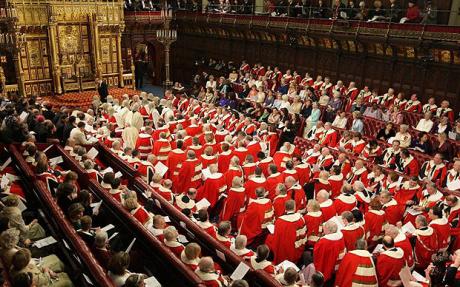
Less easy to propose is just how the Lords should be reformed to reduce the chances of this happening to a minimum. Of course, that the Lords should be elected is apparent, and that the second chamber is still appointed with all that entails is a continuing black mark on our democracy. The saddest thing is that by in effect abolishing the Lords as it currently exists, the end result will almost certainly mean that the second chamber will become just as party political as the Commons is, and with it will go the resistance to which much of Labour's worst legalisation has quite rightly come under. The solution, in turn to that, would be proportional representation, ensuring that no party could ever have as large a majority as Labour had between 97 and 05, and unable to rail-road through so many bad laws as they managed, but Westminster is resistant at the best of times to such sharp, shocking democratic reform, and to do two things at once would almost certainly be an affront too far.

Even with an elected second chamber, we would still have the problem of whether or not the new Lords would be paid, which they would almost certainly have to be to reduce the conflict of interests which are now becoming ever more apparent. Already there is massive resistance to paying politicians anything extra at all, which even when taking into account the generous expenses, MPs are certainly not overpaid for what is a job with long hours (if additionally long holidays) and a heavy workload for little public gratitude in return; paying the Lords, who do far less even if it's still an essential role, would be asking for trouble.

We could just write this off as an anomaly, a case of grasping peers who have already long got fat off the public trough by whoring themselves out to the private one, as Lord Taylor and Lord Truscott are the epitome of. While undoubtedly it still remains the case that we are one of the least corrupt democracies in the world, at the least there has to a mechanism by which peers can be expelled, just as they can currently be denied from taking on the ermine. When Labour tried to introduce something along these lines so that Archer could be prevented from taking to the red benches after his prison sentence, the Conservatives moved to block it, resulting in its dropping. Perhaps Blair already at that time had an inkling of what else was yet to be uncovered and so was happy to oblige; perhaps Labour was just, as usual, moving between cowardice and ruthlessness.

Labels: , , , , , , , ,

Share |

Friday, October 26, 2007 

Buying the Lords.

Ey, calm down, calm down!

Last night's Question Time saw Charles Falconer appearing for Labour. Why the BBC wasn't able to track down any of the current 353 Labour members actually elected to the House of Parliament wasn't up for discussion, but it didn't stop Falconer, a man who has had his whole recent career as a politician handed to him by his former flatmate from defending that bastion of democracy the House of Lords, which coincidentally also provides him with the only legitimacy he has to talk about anything.

There are 99 different reasons for abolishing the House of Lords, the fact that Falconer is a member being 97 of them, with the affront to democracy that an appointed house of so-called representatives still existing in the 21st century and the corruption involved in the appointing of those "representatives" being the other two. Today's Grauniad helps to remind us of the just how the latter goes hand in hand with almost everything the Lords does:

A Labour peer has admitted taking money to introduce an arms company lobbyist to the government minister in charge of weapons purchases. The case of "cash for access" in the House of Lords is likely to ignite fresh concern about ethical standards in parliament.

The lobbyist paid cash for an introduction to Lord Drayson, the defence minister in charge of billions of pounds of military procurement, according to evidence obtained by the Guardian.


Quite why you would pay to meet such a man as Lord Drayson is on its own difficult to fathom. It's on the level of buying a ticket to see Jim Davidson, or putting your face into an angle grinder. Drayson, aka Lord Smallpox, is best known for the completely innocent coincidence of donating £50,000 to the Labour party at a time when the government was deciding who to award the contract for producing Smallpox vaccines to. Seriously, it was completely innocent; the National Audit Office said so, and we can trust a man like Sir John Bourn to have told us the complete truth. Shortly after being made a peer of the realm, Drayson made a further donation of £505,000 to the Labour party, a sort of reversal of how Blair and another Lord, Levy, were alleged to have offered, perhaps not in words but in nudges, peerages in return for loans.

The lobbyist, Michael Wood, who trades as "Whitehall Advisers" and has worked with those completely incorruptible arms merchants, BAE Systems, coincidentally has the equivalent of the key to city of the palace of Westminster, as he holds a security pass as a "research assistant" to the Tory MP and shadow defence minister Gerald Howarth. Howarth had the following to say when it was announced that Saudi Arabia would be purchasing BAE's hopelessly outdated Eurofighters:

"The decision by the Saudi government to purchase the Typhoon is welcome news for the UK defence industry and demonstrates the enduring relationship between Saudi Arabia and the UK.

"The UK defence industry continues to be at the forefront of cutting edge defence technology.

"The Typhoon is a truly world class aircraft and today's announcement confirms the esteem in which UK equipment is held worldwide."


As Politaholic points out, Doug Hoyle, the man accused of taking money from Wood to meet Drayson, stood down so that the Tory turncoat, Shaun Woodward could have his safe seat, realising that he would lose his safe Tory seat of Witney (now occupied by David Cameron) for changing parties. Hoyle was duly rewarded with a peerage.

As might have been expected, as this is after all the House of Lords, taking money to introduce a wannabe arms dealer to the minister for defence procurement isn't "specifically outlawed", although it is "frowned upon". Like so much else, rather than it being out and out sleaze, this just has a stink about it. The same stink that pervades a house that includes those who are there through no other reason than what family they were born into, others purely there because of the religion they belong to, and oh, then there's Digby Jones. Every single reason you could ever need for abolishing the place wrapped together in one bloated corporeal body.

Labels: , , , , , ,

Share |

Thursday, March 08, 2007 

The house of dead men walking.

Last night's vote on the reform of the House of Lords was one of those rare occasions that makes you believe in democracy again. For the first time ever, even with some MPs who oppose election voting tactically, the Lords will have to heed the message that their days are numbered, so overwhelming was the majority in favour of patronage being thrown into the dustbin of history. What made it so surprising was the numbers involved: last time round the 80% elected and 20% appointed option was defeated by 3 votes. This time it succeeded by 38.

The reasons dreamt up by some of the dinosaurs for voting against were comical. Frank Dobson, who ought to know better, claimed that two elected chambers would be in perpetual combat with each other, even though this government's legislation first and thought later approach has meant that the Lords has never been so rebellious. The example of other countries shows that two elected chambers are more than capable of working together. Lord Lipsey, who previously argued against Helena Kennedy on Newsnight on the subject in the most pompous fashion imaginable, made up some figures which claimed that changes to House of Lords would mean it would cost £1bn, ten times the current cost. Even if his figures are correct, it's small change when it comes to establishing once and for all the democratic principle in our legislature. Gerald Howarth was at least honest in his opposition: he noted how the removal of the hereditary peers would undermine the monarchy, leaving it the only post in modern Britain filled in such a way. Personally I can think of nothing more uplifting than finally moving close to getting rid of the whole worthless, inbred lot of them.

There is of course yet a lot to be to decided about just how an elected Lords would work. The last thing that must be allowed to happen is for it to continue as it is, with those who have grown too old for the Commons being putting on lists which make certain their return to a position of power, reformed chamber or not. Straw's original plans were an utter dog's breakfast, and he's going to have to come up with something far removed from that if it's going to get even close to being implemented. If the bishops think they're still going to be able to continue to vote on approving legislation for no good reason, they should have to stand for election like everyone else. In fact, that should be the ultimate challenge to all those members of the Lords who oppose the changes: if you're so certain that you're providing a good service doing what you currently are, then you should present your case to the electorate and let them decide on it.

For now though, the majority of MPs can for once feel proud of themselves. If nothing else, we can take delight in the fact that Blair's favoured option, Straw's 50-50 proposal, was the one that was most heavily defeated, and deservedly so. Not only that, but no longer will governments be able to appoint their ennobled house-pets from the Lords to be government ministers. Lord Drayson, the most egregious example in recent memory, will be rightfully kicked out, and hopefully not before too long.

Labels:

Share |

About

  • This is septicisle
profile

Archives

Powered by Blogger
and Blogger Templates