Monday, October 11, 2010 

Jonathan Powell and the Machiavellian memoirs.

With the political coffee table already buckling under the weight of New Labour memoirs, the market all but saturated even before Gordon Brown and his few allies add to the all but unreadable pile, it's little wonder that the hangers-on and those behind the scenes are already embellishing their accounts with additional asides and analysis in a probably futile attempt to stand them out from the crowd. With Jonathan Powell, former chief adviser to Tony Blair, having already written a worthy if almost certainly little sold account of the Northern Ireland peace talks, his wheeze has been to cast a Machiavellian eye over his time spent in and around Downing Street.

Blair, unsurprisingly,
comes out of this test well, his only real failing being that he wasn't as ruthless as Machiavelli advised when it came to dealing with a potential rival. It wasn't weakness on his part, Powell believes, merely a refusal to deal harshly with an old friend. The rival by contrast, despite his achievement in eventually forcing the prince to abdicate, was weak on exactly the things he needed to be strong on. As an addition to the analysis from figures associated with the last government as to why the party lost the election, it's certainly both more interesting and based in reality than Blair's own view that Brown lost thanks to his abandonment of "New Labour values". It is however just as lacking: while Powell recognises that the TB-GBs were far more complicated than many accounts have portrayed them, admitting that if Blair had sacked Brown he would be ridding the government of the other major talent within it and risk creating a concentrated opposition on the backbenches, even he still doesn't find that Blair and Brown, arguments and fighting aside, were better together than individually. Blair without Brown may well have in fact been brought down sooner, while Brown failed more than anything because he couldn't the party beyond New Labour, not because he repudiated its values as the Blairite thesis has it.

Away from the musing, Powell's account, especially of the last couple of years of Blair's time as prime minister strikes as being just as deluded as his master had become by that point. Having written earlier on of how Gordon Brown avoided responsibility, supposedly originating in strictness of his parents, it's interesting to note how
Powell tries to blame the military for the Afghanistan deployment to Helmand in 2006, having lobbied for troops to be sent there in "strength", while poor Tony and then defence secretary John Reid were "reluctant". Powell tries to convince us that no prime minister "enjoys" going to war, in spite of media consensus, yet if Blair ever was reluctant about sending in the troops he certainly never let it show, although perhaps that's just another example of his taking Machiavellian advice on board.

Just as instructive is the reaction to General Richard Dannatt's outburst on the army's deployment in Basra,
as detailed at length by Powell. To those outside the Blair circle it was little more than a statement of the obvious: that the army had took part in a war of aggression and that their presence in Basra was making things worse. He was right then and he's still right now: they had lost the city, unable to enforce order without using overwhelming force which would have been wholly counter-productive, and were simply acting as a lightning rod for insurgents. This was again though in the Powell Machiavellian analysis a signal of weakness, one which supposedly had the Mahdi army redoubling their efforts, while Nato and everyone else complained about Dannatt undermining morale. It didn't help the troops, and expanding the fallout even further, Blair and Powell both claim that such observations don't just threaten first-division army deployments, they threaten our very status as a country as we step back from putting troops in harm's way. That Powell believes military escapades define us as a nation in the 21st century is damning enough; that he doesn't know when we should either admit defeat or know when to pull back is far worse. To add to the projection, Dannatt is described without irony by Powell as being "divinely convinced of his own rightness". Completely unlike Powell's master then.

This hysterical view of the slightest criticism and its potential consequences was not just limited to Blair and Powell, but also to another adviser, Nigel Sheinwald,
as the "al-Jazeera memo" trial showed when he claimed that its release would have "put lives at risk". It also extended to the belief that even when wielding such power, it was others who were so often out of line, such as the police during the "loans for peerages" scandal. Lord Levy, can you believe it, was only informed the night before that he was to be arrested the following day, while Ruth Turner was subjected to arrest in the early morning. They were, in other words, treated exactly like anyone else suspected of a serious crime would be, yet this was little short of an outrage. Worth quoting in full is Powell's view of the position the police were in:

The problem at the core of the whole fiasco was that the police had got themselves in too deep to be able to retreat with dignity. The more they dug themselves a hole, the more they were determined to turn something up.

Remind you of anyone or anything? Powell paints an image of a Blair administration that felt it was essentially above the law, yet which at the same time also saw itself as hemmed in by enemies who threatened everything regardless of their weakness or righteousness. Unable to see parallels, or rather, refusing to see them, it's difficult to come to any other conclusion than if hadn't been for the transition of power, Blair and his aides would have eventually collapsed under the weight of their own contradictions. Instead, set free and remunerated for their observances, they've been able to carry on believing they were right and everyone else was wrong, challenged even less than they were then.

Labels: , , , , , ,

Share |

Friday, September 10, 2010 

A different variety of book burning.

Today, for my sins, I bought copies of both Voodoo Histories and A Journey.

Which, dear friends, will I burn first? Place your bets.

(I was going to lighten your Friday evening with how Binyam Mohamed has been stopped from suing a firm involved in rendition flights due to how revealing such information might threaten US national security, but BenSix has beaten me rather wonderfully to it. Ho hum.)

Labels: , ,

Share |

Friday, July 30, 2010 

A paean to charity shops.

I'll be the first to admit that only slightly less depressing than a high street full of empty shops is one consisting almost entirely of charity shops. This shouldn't necessarily be the case however. When done right, they can be fabulous places and the "big names" usually manage to do the difficult job of balancing off the unsellable tat from the genuine bargains which they get donated, and to be fair, they can only work with what they're given; it's usually the more obscure, locally based organisations in outlets where the paint is almost invariably peeling which let the side down. Even then though they're always worth a quick browse, especially if they've got a hefty CD rack, where I can almost always manage to find one single or another from the 90s to add to my unhealthily sized collection of dance music and incredibly guilty pleasures, or sometimes both.

Best of all though are the dedicated second hand charity bookshops. Admittedly, for the most part the fiction sections are usually full of intolerable trash, although I've still managed to pick up some Will Self from my local one. Where it continues to amaze me is in what it gets outside of the holiday reading cast-offs. Last time I paid a visit I picked up a first edition hardback of Roy Jenkins' biography of Churchill (complete with message inside from whomever gave it as a Christmas present), as well as Francis Wheen's Tom Driberg biog and have in the past got E.H. Carr's multi-volume history of early Soviet Russia, Bakunin on Anarchy, David McDuff's superb translations of both Crime and Punishment and the Brothers Karamazov and too many other great discoveries to list. Today's haul still must be one of the best yet:

The Prophet Armed - Trotsky 1879 - 1921 by Issac Deutscher (paperback) (also previously got his rather thin Stalin biog from the same place)
Michael Foot by Mervyn Jones (hardback)
As If by Blake Morrison (hardback)
The Gulag Archipelago - Second Volume by Solzhenitsyn (paperback) (got the first from the same place some time back, as well as the First Circle and One Day in the Life of...)
Kalki by Gore Vidal (paperback)

How much? £5.50 the lot. I also nearly picked up Peter Ackroyd's biog of Thomas More, but thought it'll probably still be there next time.

Every town deserves a similar shop, and for every dismal, run-down charity hovel attempting to sell mouldy boardgames, hornpipe trousers and flowery 70s shirts, there's one that's hosting a treasure trove, even if not one to you personally, just waiting to be discovered. Try it sometime.

Labels: , , , ,

Share |

Tuesday, February 23, 2010 

Never open a book with weather.

Letter in the Graun on one of those wonderful articles featuring writers telling everyone else how to write:

• "Never open a book with weather." advises Elmore Leonard (Put one word after another, Review, 20 February). There goes Bleak House.

Lewis Elton

As does Nineteen Eighty-Four, and doubtless dozens of other classic works of fiction. Especially daft considering what a famous opening Nineteen Eighty-Four has, and how I doubt anyone would change a single word in it:

IT WAS a bright cold day in April, and the clocks were striking thirteen. Winston Smith, his chin nuzzled into his breast in an effort to escape the vile wind, slipped quickly through the glass doors of Victory Mansions, though not quickly enough to prevent a swirl of gritty dust from entering along with him.

To be fair to the Graun, it's only Leonard whose "advice" is so dogmatic. AL Kennedy's is the complete opposite, and makes me wish she was teaching creative writing.

Labels: , , ,

Share |

Tuesday, August 05, 2008 

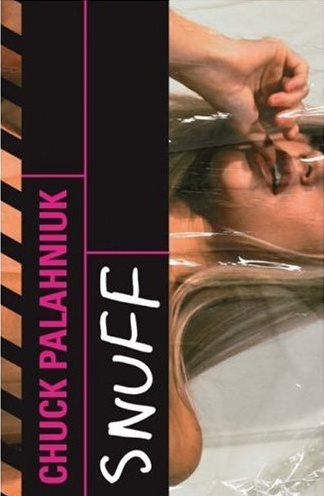
Book review: Snuff by Chuck Palahniuk.

Ever since Chuck Palahniuk (pronounced Paula-nick, fact fans) burst onto the literary scene in 1996 with the incendiary Fight Club, a novel which in just over 200 pages had more ideas than some authors have in an entire career, his star has waxed and waned appropriately. While Fight Club, with its tale of the crisis of masculinity, both warned of and mocked a world in which support groups for cancer sufferers had the monopoly on both self-improvement and emotional solidarity, where former followers and the atomised and abandoned subsequently turned to underground boxing clubs led by the charismatic Tyler Durden, the schizophrenic split personality of the unnamed narrator, which then gradually morphed into a fascist, autonomous anti-capitalist group set on destroying the banking records and bringing everyone back down to an equal zero was instantly translatable into a massively commercially and critically successful film, the possibilities of the rest of his early work, especially Survivor, remarkably similar to Fight Club, going the same way has gradually fallen away.

Although Choke, his ostensible fourth novel, has recently become a film, it's notable also as probably his weakest work, its narrative of a sexual obsessive who earns the money to pay for his sick mother's hospice treatment through tricking people into believing they've saved his life as he pretends to choke to death while eating in restaurants. The thinness of its strands perhaps lends itself to cinema because of the ease with which it can be filmed; something that can't be said for much else of his work.

Undoubtedly Palahniuk's second wind came with Haunted from 2005, a novel built around the conceit that the short stories within are the work of the participants on a literary retreat, getting away from it all to write their masterpieces. The often horrific and gruesome personal stories are tied together with a taut, increasingly absurdist narrative of their time in an old theatre, as the writers increasingly up the ante on their hosts, with the intention of emerging from the theatre at the end of their allotted time, scarred both mentally and physically but with an incredible story to tell that will ensure their financial and celebrity status until their deaths. A satire of reality television, celebrity culture and misery memoirs that takes the genre to its the obvious ultimate conclusion, that death, suffering and huge personal torment, regardless of their actual provenance are now increasingly what sells, it was the kind of work which despite its undoubted provocation simply ached to be both devoured and savoured. Including the infamous story "Guts", which purportedly led to a number of individuals fainting when Palahniuk read it at various sessions, it also features as its final entry "Obsolete", which is at least half the inspiration for the name of this very blog.

Palahniuk followed up Haunted with Rant, also known as Rant: An Oral Biography of Buster Casey. Written in the style of an oral history, a double-pun as Rant is "patient zero" of an especially virulent form of rabies and a reasonably transparent tribute to the works of both JG Ballard and David Cronenberg, it never quite reached the dizzy heights of Haunted, but its background of a dystopian America in which there are "Daytimers" and "Nighttimers" was filled in enough for those turned off by its denouement, where it's implied that Rant might the second coming, to be satisfied.

When the news came through that Palahniuk's next novel was to be set in the porn industry, on the set of an attempt to break the record for the number of sexual partners one woman has got through in an allotted time, it was hard not to be discouraged. Even by his generally high standards, to get anything out of such a restrictive setting, and from the three characters from whom the story emerges, three men lined up to take part in the record attempt was going to be difficult. It really did seem that Palahniuk was trying to live up to the criticism, where he increasingly broaches more and more lurid topics, to top each new degradation with something worse.

Snuff then is perhaps not as bad as it might well have been. Told from the perspective of three of the six hundred men Cassie Wright intends to have sex with in one session, each labelled by the wrangler Sheila, who also enters the narrative, we have Mr.72, the virgin who's grown up with Ms Wright's films, bought the plastic vagina and right breast modelled on her own and who's also convinced that he's the son whom Wright gave away; Mr.137, a former star on a prime-time detective show brought low by the revelation that he himself starred in a gang-bang porn film, albeit a gay one as the receiver, looking to restart his career by proving he isn't passive after all; and Mr.600, also known as Branch Bacardi, a celebrated "woodsman" long past his prime, whose relationship with Wright is as long as both their careers.

As always, Palahniuk has done his research. Annabel Chong, Jasmin St. Claire and Sabrina Johnson all feature, as do, as the pages turn, the Roman empress Messalina, Kegel exercises, Andrea Dworkin, Naomi Wolf, Ariel Levy, Catherine Blackledge and then actors and actresses that either suffered for their craft through injury or otherwise. The one thing that perhaps make you wonder whether this was a cynical, quick exercise is one obvious mistake, on a passage on how pornography and its users have been early adopters and influencers down the years, claiming that HD won the battle against Blu-ray for the world's dominant high-definition technology. As any geek will tell you, the opposite is the case, although the porn producers of America did mostly stump for HD. That error undermines the rest of the book's quick-fire, ratatat style synonymous with Palahniuk of producing "facts" along with the underlying narrative. It's impossible to check all the examples of the silent film actors who never appeared again due to their voices not being considered up to the task who are mentioned, of the tragedies that befell others due to the vagaries of production mistakes, but that one falsehood makes you wonder about the truthfulness of all the rest. That sloppiness previously wouldn't have happened.

Slow to start, despite its brevity, and with the puns and jokes on film titles parodied by porn producers quickly wearing very thin indeed, Snuff doesn't come into its own until the final 60-70 pages, although the chapters from the perspective of the wrangler Sheila are vastly superior to anything from any one of the three male characters, and even then it doesn't come close to recreating the intense, page-turning atmosphere which some of his previous work created.

Indeed, what's most noticeable is just what Palahniuk has abandoned from his usual story-telling. Gone are the explanatory passages which set the scene, although the minimalism and usual perspective are still in evidence. The broader brush-strokes and driving, defining narrative have also been left out, but what's most lacking is the disappearance of the satire itself, especially when there's so much scope for it. There's little more homoerotic and also disturbing than 600 almost naked men queueing up to have sex, three at a time with one exhausted, in incredible pain and apparently set on dying porn veteran, yet this is instead driven by character rather than by the author's usual mordant social analysis. Wright is in fact surprisingly amiable and friendly despite everything, even towards the end.

That's what most frustrates about Snuff. For all the supposed daring involved in putting this situation into a novel as the blurb claims, very little is actually done with it. What is an extraordinary setting makes for what is perversely, a mostly straight novel. Even the sex itself is probably less graphic than that in Choke. The shame is that you would have most certainly expected Palahniuk to have something to say about a society in which the young are growing up with porn stars as their idols, where it is increasingly defining our notions of sex and where the ultimate sign of love (or power) seems to be for the male to ejaculate on his partner's face (the "facial"). The one bright spot is that Palahniuk's next project is a far more tantalising prospect: 'Pygmy', described by him as a dark comedy about terrorism and racism, set around an exchange student sent to the states whose science project is set to explode in Washington DC killing millions. It might well be that pornography at the moment still fluxes even our finest critics and satirists.

Labels: , , , ,

Share |

Friday, December 21, 2007 

We need to talk.

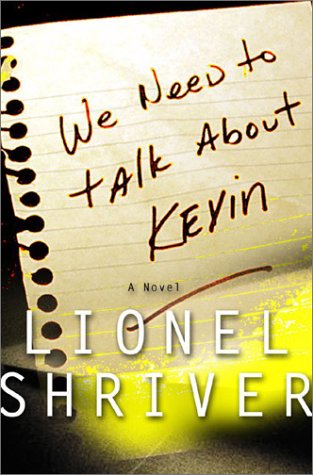
I realise I'm very late to the party on this one, but in the last couple of weeks I finally got round to reading We Need to Talk About Kevin by Lionel Shriver. I have a terrible habit of starting books, especially novels, and not finishing them: I must have at least 4 or 5 that I've recently began and either lost enthusiasm for or simply find myself picking up another when I go to grab one. It doesn't help that Age Concern have recently opened up a second hand charity bookshop in town, which proves too much of a temptation, especially when I find gems like Bakunin on Anarchy for less than a pound. (Even more rewarding was that inside was a cutting from the Guardian on the 100th anniversary of his death from 1976!)

I found Kevin though completely impossible to put down. Whilst I have read Shriver's articles in the Guardian, they don't in anyway prepare you for the sheer virtuosity of the prose: flowing, vivid and thrilling. The questions it asks which are never answered in the pages are put into a perspective which you never previously would have seen them from. The only real flaw is that if anything Kevin is just too benevolently vile, so much so that it justifies Eva's cruel unwillingness to really attempt to like him, yet alone love him, even from when he was first placed on her breast. While not wishing to give anything away for those who haven't read it, I didn't quite foresee the final explanation for why Eva is writing to her ex-husband, although I came very close to doing so. By most accounts Shriver's follow-up seems to have simply tried drawing her narrative out too far: Kevin is by contrast just the right length. Shriver's opus is the diametric opposite to Vernon God Little, also a fine recent novel on school shootings, although nowhere near as satisfying.

Next up, apart from the Looming Tower by Lawrence Wright and Imperial Life in the Emerald City by Rajiv Chandrasekaran for my non-fiction fix, I've got The Road by Cormac McCarthy.

Labels: , , , ,

Share |

About

  • This is septicisle
profile

Archives

Powered by Blogger
and Blogger Templates