Monday, March 19, 2012 

Divide and rule.

I've mentioned David Cameron's new year message a couple of times now, mainly as a wonderful example of a politician imagining that what he thinks the year should be about is also what everyone else is looking forward to. The Olympics! The glory of the diamond jubilee! Many others stuck on benefits, without hope or responsibility! Oh, that last one doesn't quite work. Never mind, you can never get enough attacks on the scroungers into a political dispatch.

Now you can also read it as portent of just what the coalition was planning. Cameron might have used the past tense when he said "we've set out big plans for the transformation of our infrastructure", but obviously his new super scheme for PFI roads was waiting in the wings. Likewise, we should have realised when he said this was the " year Britain sees the world and the world sees Britain" that it meant we would soon be encouraged do about the only thing we're still world class at - shopping. Who cares that there's never been more time to keep on consuming, the big retailers quite clearly need to be able to keep their doors open longer on a Sunday leading up to the Olympics - it just wouldn't do to turn away all those tourists with cash burning a hole in their pockets.

And to show that we are truly open for business, the 50p top rate of tax for those earning over £150,000 is to be cut. There may be "a few" at the top who "get rewards that seem to have nothing to do with the risks they take or the effort they put in", but now that Occupy has been wiped from the steps of St. Paul's we no longer need to even pay lip service to the idea that we're all in this together. The young especially can get knotted - they're not even worth an extra 11p an hour. Just to rub in it, those who live in areas that tend not to vote Tory and work in the public sector have long-term wage freezes or even cuts to look forward to. Still, as Cameron says, if only "we lift our eyes to the other side we have it in our power to come through this stronger, better balanced, focused on what this fantastic country does best". It's called divide and rule.

Labels: , , ,

Share |

Tuesday, January 03, 2012 

Oh, for a pessimistic new year.

One of the first, perhaps greatest lessons of modern politics is that unless you're an optimist, you're unlikely to get anywhere. It doesn't seem to matter too much which political party you belong to, or who the individual is, just that the message is positive and forward-looking. It can still be sober in detail when it comes to be analysed, and realistic in the problems which the leader is also going to face, just that it has to be delivered in an upbeat style and be believable. It's been proven to work, whether the leader in question is a former B-movie star backed by a cabal of right-wingers, the most capable and also most mendacious politician of recent times, or as we saw last year, a man without much else than an avuncular personality to recommend him by.

Alex Salmond is also proof that even if the politician is realistic in the problems which he has to face, the solutions to them don't have to be up the same standard. Arcs of prosperity aside, his and the SNP's vision of an independent Scotland, powered by offshore wind and funded by what remains of North sea oil isn't exactly fully grounded, yet his mix of immense chutzpah and old-fashioned grievance, combined with unelectable opponents saw him stroll to victory. Alternatively, you can promise much which is achievable, as Barack Obama did, alongside his own brand of ultra-optimism and can-do attitude, and then comprehensively fail to deliver. True, he's been hampered both by the crash and the resolve of the Republicans in Congress to block some of his legislation, yet that's no excuse for failing to close Guantanamo, or his incredible decision to sign into law a bill that allows the president to authorise the detention of anyone suspected of association with terrorists indefinitely.

Compared to all of the above, David Cameron is an amateur in the optimist stakes. He may have started off hugging huskies, urging love for hoodies and calling for "sunshine to win the day", but it's never really felt believable. Much of it was also an attempt at "detoxifying the Tory brand", something else that hasn't been wholly successful. With the big society continuing to fall flat, especially as no one is able to define what it truly means beyond the further involvement of the private and voluntary sectors in education, health and welfare, and with almost everyone predicting that this year will be worse even than the last, Cameron has been left to draw on the most woeful of material in his new year message.

Yep, it seems as though all we have to look forward to this year is circuses, as for some bread will be hard to come by. And truly, what circuses they will be: not only is there that most extravagant, not to mention expensive of fortnights, the wonderful Olympics that will truly put out septic isle on the map, we've also got the Queen's diamond jubilee to look forward to! As Cameron put it, the sheer glory of it, this finest example of British traditions, putting someone by virtue of birth into a life of luxury, interrupted only by occasionally having to visit johnny foreigner and by pretending to be interested in that abstract concept known as the Commonwealth; who couldn't possibly want to celebrate this remarkable landmark?

Well, probably some of those "stuck on benefits, without hope or responsibility" as Cameron so beautiful puts it. After all, if there have ever been benefit claimants that have shown responsibility, it's the royal family. Why wouldn't some be envious of their vastly superior haul through the civil list? If only they could show the dedication, duty and steadiness our monarch has lived her life by. Having barely emerged from the supposed season of goodwill to all men, it's nice to see our politicians shift so swiftly then back to what is becoming one of their chief obsessions, trying to outdo each other in whom can be the beastliest to those down on their luck, or as it increasingly seems to be, those who are derided nearly as a whole as "Shameless".

For if you're optimistic about what we can still achieve, then some poor suckers have to be found to take a kicking. The BBC is showing its series titled "Saints and Scroungers" again, the kind of beyond parody title that once would have only been used in a satire, and doing so in the morning when those without jobs are most likely to be the ones watching. Also entering the fray is Labour's Liam Byrne, in one of those wonderful articles opposition politicians so often write that say, when you bother to delve a little deeper, almost nothing. Attempting to reclaim the mantle of Beveridge, he appears to be suggesting he wants to introduce a degree of conditionality, but this is already the case for those who are on jobseeker's allowance for over a year anyway, who have to take part in the Work programme. Does he want this to come in earlier, or for those on JSA to have to volunteer to do work in the community at the same time as trying to find a job? He doesn't say. What rewards and extra incentives should those who are "desperately trying to do the right thing, saving for the future and trying to build a stable, secure home" receive? How should the system be reformed to ensure the system isn't skewing "social behaviour"? Again, answers came there none.

Sunny is right of course that this is the same old fight over welfare that the left keeps on having. The point is though that the Labour party, or at least its leaders seem to have fallen into the view that being associated with benefits claimants is a terrible thing. They should indeed be worried about being seen as being too soft on cheats, but not on those who desperately need the state to pick up the pieces when they fall on hard times, or who are too ill or disabled to be able to work. Caring for the most vulnerable is also hardly incompatible with also sympathising with the plight of the "squeezed middle". Moreover, every single time someone calls for some form of conditionality for those out of work, it has to be drummed into them that there are simply not enough vacancies available at the minute for those who are on JSA, let alone on the other sickness benefits. Byrne does mention long-term unemployment, and calls for "determined action from government to get communities working once again", but you'd never know that turning the situation completely around is an absolute impossibility. If this is setting the tone for the rest of the year to come, it'd be nice if just for once a politician could be pessimistic but realistic rather than just continuing to layer on the sugar-coated bullshit.

Labels: , , , , , , ,

Share |

Friday, January 04, 2008 

The darkening of democracy.

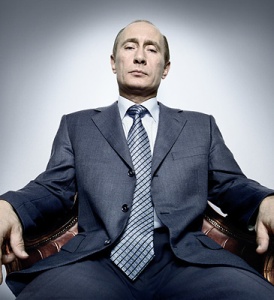
Even before the assassination of Benazir Bhutto and the apparent stealing of the Kenyan elections by Mwai Kibaki, resulting in violence which has left 300 dead and displaced 180,000, the omens for democracy in 2008 were looking ominous. Time magazine, never the most astute judge of character, having previously chosen Hitler, Stalin, the American soldier (perhaps would have been justified post-WW2; not after Korea or Iraq) and "you", as in the individual in the information age as the person of the year, bizarrely decided that Vladimir Putin, having started the year belligerently fusillading against the west as if the cold war hadn't ended while finishing it by interfering in elections which he would have won anyway was worthy of the title. Elections in Nigeria and Uzbekistan were similarly denounced as flawed and rigged, while only the shock, marginal defeat of Hugo Chavez's proposed constitutional reforms in Venezuela emphasised the power and justice of the least worst system of government of the lot.

Pakistan and Kenya's problems seem on one level to be intertwined. The elections in Pakistan were postponed to February the 18th on the back of the torching of electoral lists and facilities that would have been used in the vote, although one is also mindful of the Pakistani states' interest in hoping that the sympathy towards Bhutto likely to manifest itself in support for her Pakistan's Peoples Party will evaporate over time; in Kenya meanwhile, independent recounts and confirmation of the vote have been made impossible by the rioting which included the destruction of polling stations which still contained the ballot papers. A week after the vote, only now is Kibaki apparently offering a re-run of the election, and even then only if a court orders it, something which would never have been necessary had he and his party not so contemptuously ordered the election co-ordinator to announce the results before he was even certain of them, and then swiftly had themselves sworn back in. Both countries are also frayed on ethnic and tribal lines, Bhutto's supporters from the Sindh denouncing the Punjab at her funeral, while the faults in Kenya have become only too apparent in the aftermath of the burning of the Pentecostal church in Eldoret, carried out by members of the Kalenjin tribe, supporters of the opposition leader Raila Odinga, against the Kikuyu, the tribe to whom Kibaki belongs.

It is however far too easy to slip into hyperbole and exaggeration about the situation in both countries. The BBC's coverage of the fallout following the elections in Kenya, for some reason sending Ben Brown to present short segments from Nairobi, pieces more than saturated with the notion of making the worst out of what has happened so far, seems out of all proportion with what has actually occurred. When the politicians themselves are talking about genocide and ethnic cleansing with all seriousness, when what has actually took place so far have been random acts of savagery committed by those who are always looking to take advantage of such short crises, it encourages the fear and paranoia that has apparently left 500,000 needing immediate help. Before even the torching of the church had took place newscasters were breathlessly murmuring the magic terms, "civil war", just as they had just after Bhutto was murdered, despite her death only leading to understandable rioting and little more. Even less realistic has been the doom-mongering emanating from America about the possibility of the mullahs getting their hands within reach of Pakistan's nuclear trigger, despite the Islamist parties never previously receiving more than 10% of the vote and the conflict in the Afghan border region showing no signs of no spreading, the odd suicide bombing usually targeting the military or not.

The current dip of faith in democracy worldwide can't be written off as one of those blips that occur from time to time. While subverting the vote goes all the way back to the rotten borough, it was the hanging chads of 2000 that showed you can steal an election and get away with it. After all, if you can do it in the greatest democracy in the world, who the hell's going to care when the brutal dictator of a former Soviet state quite clearly breaks every rule going? While Simon Jenkins flails about a little in why we can't ourselves say much, it's an indictment of both own politics when only 22% of the electorate vote for a party which then gets a 60-seat plus majority on such a meagre share of the vote. The irony of the Bush administration's original rhaspodising about the very democracy that had favoured its opponents was only followed by hypocrisy when the wrong people won in the elections forced in Egypt, with the Muslim Brotherhood candidates, although standing as independents, gaining a large number of seats, whilst in the occupied territories Hamas surged to a huge victory over the corrupt Fatah, earning them a boycott still in place for their refusal to compromise with the demands of the international community which says nothing about Israel's continued breaching of UN resolutions and building of settlements in the West Bank, even if Ehud Olmert pays lip service to the road map. The quiet abandoning of the democracy project afterwards was inevitable.

Some solipsists claim that democracy is vital because they don't tend to go to war, or go to war against one another. The west though has only ever been supportive of democracy when it gives a result which is to its liking; from Chile in 1973 to Palestine in 2006, and now Pakistan and Kenya, with America's plans ruined with Bhutto's assassination, and its original welcoming of the result in Kenya, likely because of its support for the "war on terror", only to later embarrassingly withdraw it, democracy is only ever a means to an end. While to those on the ground who find themselves in the thick of it, where it really can be a matter of life and death, we haven't far moved on from the days of putting up with a son of a bitch as long as he was our son of a bitch. Whether this century goes towards Putin's model of managed, illusionary, autocratic democracy or back to its true, localised and liberating form isn't likely in our hands, but in those who still wield the ultimate power of deciding what is righteous and what is against our interests.

Labels: , , , , , , ,

Share |

About

  • This is septicisle
profile

Archives

Powered by Blogger
and Blogger Templates