Monday, February 08, 2016 

The fundamental lack of imagination remains.

If there's one thing worse than telling the son of a deceased political figure how ashamed or upset they would be with the decisions they've made, as clearly the likes of Alex Salmond know better than Hillary Benn how his father would have reacted, then it's squabbling over which side a passed on political behemoth would have chosen.  

Yep, in case you missed it, the big debate in the Tory press over the past couple of days has been whether Margaret Thatcher would have been on the side of staying in or leaving the EU.  Charles Powell is convinced she would have been for in, with much the same reservations as David Cameron; Norman Tebbit and assorted others regard that as heresy.  That Thatcher had gone as crazy as a coot by the end of her time in Downing Street seems to have passed them all by, as does the fact they got rid of her for precisely that reason.  You could argue the Tory worship of Thatcher is more healthy politically than Labour's attitude towards Tony Blair, and it probably is.  It doesn't alter how unutterably creepy it is, not to mention unanswerable: failing Boris Gypsy Rose Johnson managing to channel the spirit of Thatch from the other side, we're never going to be any the wiser.  Which in a way, is the point.

Quite how miserable the next few months are going to be is summed up by the big politics story of the day, the claim from Downing Street that should the referendum result in our leaving, the migrants camped out in Calais and Dunkirk will instead be setting up tent cities in Dover.  The idea is so absurd many have claimed it's another "dead cat", designed to move the debate on, and judging by the coverage of the ensuing argument compared to that of the speech Cameron gave today, it seems to have worked.  Apart from anything else, the obvious point is that if those camped in Calais and Dunkirk make it to Britain they wouldn't then be sitting around waiting to do anything; they'd be claiming asylum or moving on to find work.  The French might be less cooperative than they are now, it's true, but why would you trouble yourselves overly with people who don't want to stay in your country anyway?

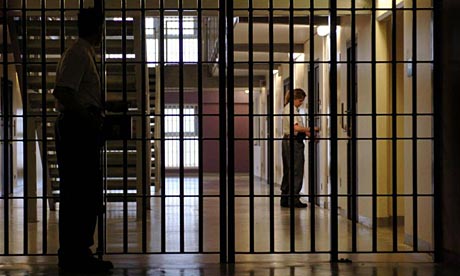
We can then only ready ourselves for weeks of claims and counter-claims, all on a subject that few are truly interested in and even fewer know anything about.  If, on the other hand, there is something approaching truth in the rumours today's speech by Cameron on prison reform is part of the move to guarantee justice secretary Michael Gove's support for the remain campaign, there might be the very slightest of silver linings.

That's a silver lining dependent on first, some of Cameron's proposed measures being implemented, and two, their working.  When you then consider that Cameron himself claimed today's speech was the first in 20 years by a prime minister focusing exclusively on prison reform, when it soon turned out Dave had forgotten he gave a speech promising a rehabilitation revolution back in 2012, the omens are far from good.  It's true, as various commentators have noted, that simply hearing a prime minister saying things like prisons are "often miserable, painful environments", "full of damaged individuals" and that "being tough on criminals is not always the same thing as being tough on crime" is novel, and welcome.  Referring to prisoners as potential diamonds in the rough, and turning remorse and regret into lives with new meaning is language of the sort politicians rarely use, often for good reason as it sounds hollow and fatuous.  That it didn't coming from Cameron today is itself something to cheer.

This said, the problems of the prison estate are obvious, and there's little to suggest that Cameron or the Tories are willing to recognise them.  The first is plain and simple, funding: the cuts to the Ministry of Justice have been some of the most swingeing, and prisons are expensive.  Part of the reason there is so little chance of rehabilitation in prison and so much idleness is lack of staff, and the amount being spent on overtime for those remaining is astronomical.  Second is overcrowding.  While it is true as Cameron says that very few, only 7% he quotes, are imprisoned for a first offence, and over 70% of prisoners have 7 or more convictions to their name, most of those will be minor, or non-violent.  As he goes on to say, almost half will have an identifiable mental health problem, while others will have an addiction of one variety or another.  Reducing the prison population by say 20% would be perfectly achievable and help massively if there were alternatives available, either in the form of expanded secure accommodation for those with mental health problems or monitoring in the community for those guilty of non-violent offences, women in particular.  This might have been possible prior to austerity: now it seems laughable, despite Cameron asking Gove and Jeremy Hunt to look for alternative provision for the most severely mentally ill.

As Frances Crook writes, it doesn't matter how much independence or autonomy you give a prison governor if they don't have the staff, the resources, or the space for their ideas to take root.  More promising is the idea of "secure academies" as an alternative to young offender institutions, although the obstacles frankly look overwhelming; it's all well and good saying you want to make it "aspirational" to work in a prison and attract the best, but again why would you when there is very little here to suggest this is anything other than rhetoric?  Similar schemes in schools themselves have fell by the wayside.  Indeed, at worst, Cameron's plans smack of introducing further privatisation where the true aim undoubtedly will be on achieving savings, at the expense of the very rehabilitation and reforms he claims to want.

Great as it is to hear a prime minister saying he wants prisons to be places of care, not just punishment, the one metric we have to judge Cameron and the Tories by so far is as he apparently accepts, the reports of the chief inspector of prisons.  By that measure prisons have got worse in the last 5 years, not better, with the reasons why staring the government in the face.  Closing the worst of the Victorian jails and building replacements will do no good if they are to be just as overcrowded and short-staffed.

Last weekend Nick Hardwick criticised the "lack of imagination and failure of empathy" of policymakers.  Today's speech by Cameron showed that when pushed, politicians can be compassionate and point towards innovations that could help.  Fundamentally however, that lack of imagination or refusal to question the failed shibboleths of old remains: prisons cannot work when they are the equivalent of warehouses for the sick, the damaged and the dangerous.  For all his fine, often empathetic words, David Cameron still refuses to recognise this.

Labels: , , , , , ,

Share |

Monday, March 31, 2014 

50 shades of Grayling.

(I am really, really sorry for the title.)

Isn't Chris Grayling brilliant?  Most other politicians would have realised within a week they were fighting a losing battle over something so petty and self-defeating as preventing prisoners from having books and clothing sent into them by their relatives, and backed down, setting say a limit of one parcel allowed every six weeks.  Grayling instead has decided to resort to every excuse possible as to why such a scheme couldn't be established, even if his choice reason is one he didn't even mention in his first missive on why prisoners have to earn the right to everything under his new tough rehabilitation/privileges regime.

Yes, the real reason why prisoners can't be sent books from outside is, of course, drugs, with a side order of not allowing in extremist or pornographic material.  Grayling didn't mention a thing about illegal substances in his first response for politics.co.uk, only that allowing in unlimited parcels would never be secure.  No one had suggested such a thing, but let's put that to one side.  Next, in a piece for Conservative Home, Grayling did open his case by asking whether it should be made easier to smuggle drugs into prison, yet he then spends much of the rest of his article complaining about how a "left-wing pressure group" (not the most accurate description of the Howard League) and other opponents are liberal lunatics for daring to disagree with him in general.  Lastly, in an open letter to the poet laureate Carol Ann Duffy, who took part in a protest outside Pentonville prison last Friday against the ban, he strikes a far more emollient tone, while sticking to the whole drugs argument.

The obvious problem with Grayling's it's the drugs, stupid rhetoric, apart from how he's only grasped for it once everyone realised even some of the most ruthless governments on the planet still allow those they incarcerate to read as much or as little as they want, is that it's so easily solved.  Until recently Send Books to Prisoners acted as an intermediary through which relatives could send packages, making the chances of anyone trying to get banned materials through far more remote.  Rolling out such a system across the prison estate would be fairly simple.  In any case, the idea that the main way drugs get into prisons is in parcels is a nonsense: they're either brought in by the prison officers themselves or chucked over a wall, although visitors have also long chanced their arm.  In any case, more recently the most smuggled items by visitors have been mobile phones rather than drugs.

Still, you can't be too careful even if it is just books and not drugs, hence why Grayling also brings up the spectre of paedophiles "accessing illegal written pornographic material" if books aren't properly checked as to their content.  This seems to ignore how people will masturbate to almost anything if they can't get their hands on their favoured stuff, or indeed how the more ingenious will write their own such stories to be shared if they have no intention of addressing their behaviour.  Nor should the prison librarians themselves have to put up with slurs on their work, again despite no one suggesting they were at fault.  It's just that as library provision outside prison has been cut back, with local authorities also being in charge of their equivalents behind closed walls, it's hardly going to be surprising if the offering isn't as comprehensive as it could be.

Throughout his responses, the one question Grayling has failed to answer is why the privileges scheme can't be altered to allow such vital, humanising items as books, underwear and homemade cards from relatives to be sent in, while still leaving the rest of his changes unaffected.  Is it because cuts to the Ministry of Justice/Home Office have left prisons with too few staff to possibly process anything other than letters?  Is it down to how he really does believe denying prisoners the most basic things that make life worth living, unless they are earned, builds character and helps rehabilitation?  Or is it this has all been bluff, and that once the furore has died down, Grayling will allow a compromise whereby books and other items can be sent through an intermediary every so many weeks?

You have to hope it's the third and Grayling can be embarrassed into doing the right thing.  It does however speak volumes that not so much as a peep has been heard from backbench Liberal Democrat MPs on the matter, while Simon Hughes has supported Grayling.  If the intention has been to prevent any other former jailbirds from getting a Graun column on release though, perhaps we shouldn't be quite so hasty.

Labels: , , , , , ,

Share |

Monday, March 24, 2014 

If hospitals cure...

There's been much comment, understandably, following the blog post from Frances Crook setting out how the new privileges regime in prisons means that the sending in of books, or indeed, almost anything other than a letter or a bought as opposed to homemade card has been banned.

This also covers magazines, and in my view, most outrageously, clothes.  At the discretion of the governor, as the prison service instructions on incentives and earned privileges set out (DOC), prisoners may be allowed to receive a "one-off clothing parcel" after conviction.  Otherwise, that's that.  Unless they're one of the few lucky enough to get a job in the prison and earn money to buy themselves some extra apparel, they'll be stuck wearing prison issue clothes, most likely worn by dozens of inmates before them.  Just how draconian these new restrictions are is made clear by the exception for unconvicted prisoners, who must be allowed to have "sufficient clean clothing sent into them from outside" (page 45).  In other words, those convicted may be stuck wearing the same, dirty clothes for much of their time inside.  As one of the conditions for getting on to even the standard level of privileges is to have "due regard for personal hygiene and health (including appearance, neatness and suitability of clothing)", this seems to have been designed specifically to make life as miserable as possible.

Suitably excised by all the liberal do-gooders demanding that prisoners have the right to read books when most have no intention of doing so, Chris Grayling has duly responded.  Why, the idea prisoners cannot have books is a nonsense!  They are allowed to have up to 12 in their cell at one time, so long that is as they brought them in to start with, as trips to the prison library are infrequent and there's no guarantee they'll have something the inmate will want to read.  Besides, they can also buy books with the money they earn from their job while detained at Her Majesty's Pleasure.  Those with a job are guaranteed the princely sum of at least £4.00 per week, meaning that if they don't buy anything else they can afford a paperback every two weeks.  That is if the paperback is £5.99, as those with a television set in their cell have to pay £1.00 a week rent for that privilege.  Those who don't have a job are guaranteed at least £2.50 a week, which with the £1 taken off for TV rent leaves them with £1.50 to spend as they please.  They're also not allowed to watch the TV when they could be working, even if there aren't any jobs or programmes for them to attend.  Grayling also says prisoners were never allowed unlimited parcels, which they certainly weren't.  To completely deny them anything other than letters and cards sent by friends or relatives however is a new and drastic change.

The reasoning behind all this is supposedly to decrease reoffending.  For years we heard of how "cushy" prisons had become, with even certain Sky channels allowed in private sector prisons.  Stop allowing inmates to lounge around watching daytime TV, get them either working or learning, and soon the astronomical recidivism rate will come down.  Except the reality is that even before the cuts made to the prison system there weren't enough jobs to go round, nor can every minute be spent either on specific programmes or in education (spot checks found an average of 25% of a prison's population locked up during the day).  Those not doing either are banged up, and deprived of TV or reading material the obvious result is boredom.  Boredom leading to depression, or alternatively, aggression.  How this is meant to reduce reoffending is not explained, nor does it seem there is any actual evidence suggesting a stricter privileges regime could help.  The PSI certainly doesn't suggest this is an attempt to reduce reoffending; the desired outcome section only sets out that "prisoners will engage with their rehabilitation".  Engaging is meaningless if their circumstances are much the same on release, which for most they will be.

Why then do it, when the risk surely is that even if not directly, the new restrictions might lead to the opposite of what is intended, even to riots?  The answer that it appeals to both the tabloids and to those who believe, more than reasonably, that prison is meant to be harsh and unpleasant doesn't really cover it.  That hardly anyone apart from those affected and their relatives knew is testament to the tiny impact it would have on the overall impression of the government, Grayling, or the prison system.

Instead, it's hard to shake the impression that Grayling gave the OK to such changes precisely because he could.  As with Iain Duncan Smith and his unshakeable belief that he is right and all of his critics are wrong or far worse, Grayling gives the impression of a man who always knows best.  We don't need any trials of probation privatisation, it just needs to be done.  Prisoners have wronged society, therefore allowing them new, clean underwear apart from that bought with their own money is a luxury they have forfeited.  Depriving someone who enjoyed reading outside with the means to keep up their habit is a punishment.  That some will have read to improve their literacy skills is irrelevant.  Posing as tough rarely costs votes, as long as that stance doesn't lead to prisoners on roofs.  And let's hope for Grayling's sake that doesn't happen.

Labels: , , , , , ,

Share |

Thursday, May 09, 2013 

Probation policies exchanged.

If the constituent parts of the coalition seem determined to do one over on their enemies within purely out of spite just at the moment, for which see the Tory backbench attempt to get a vote on the EU referendum next week, designed to make things even more difficult for poor old Dave, as well as Clegg doing the equivalent of poking his finger into the eye of Liz Truss over her beloved childcare plans, it's worth remembering that elsewhere relations seem just as cosy as ever.

Take the Home Office and Ministry of Justice.  Apart from Clegg's attempt to kibosh the "snooper's charter", the Lib Dems have barely raised a squeak over anything that's from the departments helmed by Theresa May and Chris Grayling.  True, they've made clear their opposition to any Tory attempt to withdraw from the ECHR, but then that has never been considered a serious option.

The latest policy they seem to be at one on is Grayling's pet privatising of the probation service.  As is so often the case in government, it involves one idea that could be a genuinely good reform, introducing probation for those serving short sentences in an attempt to reduce re-offending, and then covers it with two others that completely negate any potential benefit, in this instance putting the likes of G4S and Serco in charge and making life for those under supervision even more miserable than it may have been inside. Think of it as a shit sandwich reversed, which underlines just how stupid the Lib Dems have been to take a bite.

Grayling's only justification for not allowing the state to bid for the new contracts (unless the local bodies set themselves up as co-operatives, in which case their bids will be considered and then rejected) is that due to the cuts, more has to be done with less. While there is always the potential for waste to be identified, it's mostly found in the back office rather than at the stretched front line. Indeed, that the state will continue to have a monopoly in supervising the most serious offenders and those under MAPPA rather suggests that on the whole the current system is working. Why not extend that expertise rather than rely on companies and third sector organisations that are either untested or have had poor results in other payment by results schemes?

The answer is that this is another of those off the rack policies provided by Policy Exchange. Their spokesman today spoke of vested interests, but at least we know why NAPO is opposed. Policy Exchange by contrast is one of those think-tanks that refuses to say where its funding comes from, although we can make a few educated guesses based on the reports it's churned out over the years. PE has been instrumental in the pushing of the payments by results model, which so far has led to much in the way of payments (although not enough to keep some of those sub-contracted from going bust) but little in the way of results, the latest set of Work programme figures having been delayed repeatedly in the hope something will turn up (see recent Private Eyes).

Lest it be forgot, the Lib Dem position at the election was for short sentences to be all but abolished. That was never going to happen unless judges and magistrates had their discretion further eroded, which would have been a retrograde step, yet it looks as though we've somehow ended up with a system that will combine the questionable parts of community service with the alienation of prison life. It could well help some, while making things even more problematic for the majority.  Which is a perfectly good summary of what the coalition as a whole has achieved so far.

Labels: , , , , , , , ,

Share |

Tuesday, April 30, 2013 

Let's be beastly to crims (and dole bludgers).

It's the week of the local elections, which means it's the absolute opportune time to announce a new round of unpleasantness to those considered to be unpleasant.  Moving away from the usual targets, benefit claimants (on whom more in a moment), Chris Grayling has pounced upon the only people less popular with politicians, those convicted of crime rather than just deemed guilty of a moral one.

Out then go the old soft regimes where it was somewhat left up to prison governors how they operated the privileges system in their respective nicks, and in comes a new tougher scheme which seems focused on making the first two weeks in prison even more uncomfortable and depersonalising than it was already.  No longer will prisoners be allowed to wear their own clothes to begin with, have a TV in their cell (Ben Gunn says those on the basic level don't as it stands now; they also have to pay for them, contrary to popular belief), an increased number of visits or access to private cash; all must instead be earned.  Plenty of people will look at that and think that all sounds perfectly reasonable, and on one level it is.  The problem though is that it's the first few days in prison when those who are new to the experience are at their most vulnerable, both from other prisoners and themselves.  If the purpose of prison is to both punish and rehabilitate, then it helps no one if further avoidable harm is done to the individual at the very outset of their sentence.

As with so much of our policy on prisons, a little honesty and humility would go a long way.  Again, few are going to protest at prisoners being made to work a longer day, but they might if they knew there aren't enough jobs to go round in the first place, or what prisoners get in return for their labour.  There are a few schemes where they can earn in the region of £30 a week, although far more usual is pay of £4 to £10.  This is often work of the most menial kind, as a recent Howard League for Penal Reform report set out, and which hardly gives the kind of experience likely to impress employers on the outside.  For those who can't be found a job, they're likely to spend most of their time banged-up. While it's not explained exactly how prisoners can be stopped from watching TV in the daytime if they're on the higher privilege level and have one, what else are they expected to do? Read, if they haven't already finished those books they've got? Continue with any education programmes they're on, regardless of the lack of access to a tutor? Just kick their heels? Imposing boredom might be considered a punishment, but it brings with it its own set of obvious problems.

Nor do these changes take into consideration those who continue to maintain their innocence.  As admitting guilt is the first thing you have to do in order to take part in the rehabilitation programmes designed to prove your readiness to be released, those who refuse to do so will forever be stuck on the basic level, something that seems bound to lead to a legal challenge.  Then there are just the silly inconsistencies: prisoners won't be allowed 18 rated DVDs (they've long been prohibited items in medium or low security hospital wards), but will presumably be able to watch such films if they're shown on television.

The ultimate test of such changes ought to be whether they improve behaviour while in prison or decrease recidivism upon release.  One expects that studies will be established once the changes start in November to measure if this turns out to be the case.  Otherwise you could be forgiven for thinking the entire episode was designed as a purely populist measure to win a few votes during the traditional period of purdah.

Definitely not designed to win votes is the latest imposition on those without a job, a questionnaire apparently put together by the government's behavioural science unit, which must be completed on pain of the loss of benefits.  Those looking for work are presented with 48 statements, some of which are patently ridiculous ("I have not created anything of beauty in the last year"), and then asked whether they agree or disagree.  Any possibility this might help those lacking self-esteem or self-confidence is only slightly undermined by how the results at the end are largely identical regardless of whether you fill in the boxes or not.  For those worried about the creepiness of a test that bears more than a resemblance to the Oxford Capability Analysis carried out by Scientologists, it doesn't seem as though the results are recorded, which nonetheless isn't much of a reassurance.  Nor is it apparent what the point of it is, although that seems a perfectly adequate summary of the work of the "nudge" unit thus far.

Labels: , , , , , , , , ,

Share |

Wednesday, January 09, 2013 

Couldn't organise an audit in an accountants.

It says something about just what a pig's ear the coalition is making of almost everything at the moment that it can't even get the launch of an audit into itself right.  If you thought that Monday's mid-term review was pointless and self-indulgent rather than illuminating of what the government's achieved over the past two and a half years, then this is the political equivalent of Peter Jackson imagining that everyone would dearly love to see a short book extended into not 2 but 3 separate films.  Monday's review was 52 pages no one was ever going to read; today's audit is 122, and it's effectively a re-hash of the review except with a little more often completely irrelevant detail.  

You can understand completely why there was discussion within Downing Street as to whether it should be released or not, as it seems designed to annoy everyone.  For a start it doesn't keep a tally of which pledges have broken, as this would apparently have been "too simplistic"; translated that means would have given hacks an easy negative headline.  Not doing so though has just pissed them off instead, as they've had to do it themselves, with differing results.  The Telegraph this morning claimed 70 pledges hadn't been kept, while Andrew Sparrow has calculated it at around 33.  Either way it's meaningless as this is the coalition marking its own work, hence why there is again no mention of the double-dip recession or the lack of growth, while it brushes over the failure to meet the "supplementary element" of the fiscal mandate, that debt as a proportion of GDP should be falling by 2015-16.  In fact, as Jonathan Portes has argued, "Plan A" as a whole is effectively dead, Osborne and friends just haven't admitted as much.  

When Cameron then claimed that the audit would be "full, frank and unvarnished" he was as per usual, talking out of his hole.  The whole idea of this pledge system was foolish in the first place, especially when in all the government made hundreds of the damn things.  It was especially pointless when the coalition had no intention whatsoever of keeping some of them: look at the one pledging no further top-down reorganisations of the NHS, which was promptly broken within weeks.  And as you might expect, the ones that have to be marked as failures are mostly the major ones, whether it be on civil liberties where the government is doing the opposite to bringing an end to the keep of internet records without good reason, on child poverty, protecting those on low incomes, Europe, or increasing capital gains tax to a level similar to that of income tax.

What use the document will have beyond this initial sniggering, as that is frankly all it's produced, is dubious in the extreme.  An MP can't direct a constituent to it as they'll wonder what on earth it is they've been told to read, while it's far too subjective to be used by anyone else.  More to the point is that pledges are worthless when they're pledges to introduce bad policy, something the coalition has done to abundance, a case in point being the police commissioners no one wanted and almost no one voted for. 


Much the same can be said of today's announcement from Chris Grayling on the privatisation of the probation service.  Anyone who isn't Grayling looking at the problems this is bound to throw up would think a major pilot scheme (the long-standing scheme at Peterborough jail is no indication of how how it would work nationwide, with many different providers) would be in order, not least because of the failures both of the Pathways to Work scheme under Labour and Grayling's own Work programme, neither of which bode well for the success of further payment by results schemes.  Add in that we're dealing with public protection, which in the past has been the downfall of many past home secretaries, and caution would be the obvious option.
 

Not for Grayling though.  There are times when you simply have to do something, and this apparently is one of those.  It's certainly true that re-offending rates are far too high, yet there isn't the slightest indication that private firms will be any better at stopping those out after serving a short sentence from re-offending than the state is currently.  Indeed, that the probation service will continue to look after the most serious and high risk offenders is hardly a vote of confidence in the capabilities of those that will shortly be submitting bids, and you can guarantee it'll be the same old companies that have cocked it up so marvellously in the past: G4S, Serco and Capita will almost certainly be first in the queue.

As Harry Fletcher argues, it's difficult not to see this both as purely ideological and to cut costs to the bone.  If it wasn't the former, then Grayling would have expanded the pilot scheme; if it isn't the latter, then there's no reason whatsoever why the probation service can't also take control of the new requirement to monitor those out after serving less than 12 months.  Regardless of the motive, the responsibility will still lie with the secretary of state, and anything with the potential to bring Grayling down can't be all bad.

Labels: , , , , , ,

Share |

Thursday, November 22, 2012 

David Cameron is duly invited to the vomitorium.

All things considered, there are relatively few things I find so anathema that they make me feel physically ill.  Coming from someone who was so often throwing up at one point that I was ironically nicknamed "sick", factor in I barely feel comfortable in my own skin at most times, and this is quite the statement.  Compare me to David Cameron for instance, who finds the mere prospect of prisoners gaining the right to vote so terrible that he gets the urge to purge, and it's apparent my constitution is positively cast iron.

Cameron is by no means the only politician moved to blow chunks at having to give the franchise to those currently detained at her majesty's pleasure.  Truth be told, I'd wager the vast majority couldn't care less or quite probably even privately support giving some behind bars the opportunity if they so wish to vote.  It's that this is something being forced on them by the European Court of Human Rights.  If there's one thing politicians can't stand it's being told that they have to do something, unless of course it's the Daily Mail or the Sun doing the ordering, in which case they immediately hop to it.  Combine this with how it's the European court saying we have to change the law, even if the ECHR doesn't have anything to do with the European Union, as well as how this is about the supposed human rights of those who some on the right feel should count themselves lucky they aren't given just bread and water and left with only a bucket to piss and shit in, and it's a no brainer.  If they can't pontificate about this at pompous length, just what can they hiss and moan about?

Sadly, like it or not, the government has to look as though it's at least starting the process of changing the law or the Council of Europe might start imposing a few tiny fines over our intransigence.  In reality it's not so much the Council the government's worried about as it is prisoners starting legal action demanding compensation for being denied their rights, something that will almost certainly cost far more than any fines from Europe.

In line with the deadline set by the ECHR expiring tomorrow, the coalition has then duly set out the earliest possible draft of its prospective legislation (PDF).  In clear defiance of the court is that one of the options available to MPs will be to vote against any prisoners gaining the franchise, with the other choices to extend it to those serving sentences of less than 6 months and 4 years respectively.  Since the last skirmish over these proposals, the legal situation has changed slightly, as the draft bill sets out.  The grand chamber of the ECHR found in the case of Scoppola v. Italy (No.3) that it wasn't necessary for the judge at the time of sentencing to specifically remove the right to vote from the guilty party.  It did however reaffirm the principle that a blanket ban was discriminatory, so the inclusion of the do nothing option in the draft bill is the equivalent of sticking two fingers up to the court.

As Joshua Rozenberg (always worth remembering Rozenberg is married to Melanie Phillips, so he must have had a really enjoyable past week) sets out though, the government does still have significant leeway.  The ECHR doesn't demand that the law be changed immediately; merely that they set in motion the process of altering it.  This it has duly done, albeit at the last possible moment.  Whether the eventual published bill will make its way to the statute book before the next election is therefore highly doubtful.

Nonetheless, by including the status quo option at all the government seems to be setting itself up for a fall.  If it had really wanted to make things difficult for the ECHR while still complying with successive rulings, it could have gone for an even shorter limit than 6 months; why not 3 months, or 4 weeks?  It may well be that the joint committee will subsequently reject the option of offering no change in the bill, but that seems unlikely considering the strength of feeling among MPs.  The thinking appears to be that as long as the issue is defined in law, regardless of how, the court will have to bow to the will of parliament.

Not only is this foolish considering the legal advice, it's at odds with the coalition's somewhat enlightened views on attempting to reduce the level of reoffending.  Only this week Chris Grayling announced that all those sentenced to a year or less would be given a mentor on release who would try to guide them away from a return to crime, a sound idea, albeit one that needs resources and ingenuity the government and its favoured private sector contractors tend not to have.  Recognising that cutting those serving short sentences off from society until the day they're dumped back on the street is damaging rather than beneficial ought to be the first step towards designing a rehabilitation programme that truly works.  By allowing those serving under a year to vote if they so wish would be a further sign that regardless of what they've done, they will shortly be a member of their local community again, with all the rights and responsibilities (ugh) that entails.  Plus, if it means David Cameron and Tory backbenchers heaving as they go through the division lobbies, that's an incalculable bonus.

Labels: , , , , , , , ,

Share |

Thursday, February 10, 2011 

Bullshit, vindictiveness and classic little Englander syndrome.

You wouldn't normally consider Denis MacShane likely to be one of the few MPs to stand up for "classic, bleeding-heart, do-gooding British liberalism". MacShane's voting record, possibly influenced by his time as a minister, includes voting very strongly for ID cards as well as 90 days detention without charge for terrorist suspects; he also made one of those poor souls administering the new expenses regime cry, later returning with chocolates in an attempt to make up for his behaviour. It's come to something then when his intervention into the debate on votes for prisoners is almost certainly the best informed and most cogently argued of the few to make the case for the extension of the franchise to some of those currently languishing in our prisons.

As to how heavy an influence the fact he's an ardent Europhile is on his opinion is open to question, but at least it's better to be somewhat consistent rather than just an eternal opportunist, a description which doesn't quite do justice to the wretched Jack Straw. There simply isn't a more loathsome individual left in the Commons than this lickspittle, a politician so repulsive that he must even have dogs vomiting when they set eyes on him. Lest we forget, Jack Straw oversaw the introduction of the Human Rights Act, which enshrined the European Convention in UK law. Since then he's done everything he possibly can to undermine it, culminating in him agreeing with the Daily Mail that it was seen as a villians' charter, all thanks to those completely irresponsible judges daring to come decisions that the right-wing press and populists everywhere simply can't abide.

No surprise then that of all people he could have shacked up with over the ECHR's judgement that some prisoners must have the right to vote, he decided to do so with David Davis. Davis at least is consistent in that he's a traditional libertarian: opposed to any restrictions on freedom for those who do no harm to others, highly punitive on those who do break the law. Even he however erred badly during the debate, saying that the concept "if you break the law, you should not make the law" is sound. This would be applicable if voters actually made the law: they do not. We elect representatives to do that for us, and that seems to have been the point most grievously missed by MPs. Those imprisoned currently, despite what some of the tabloids would have you believe, have next to no one who represents them and their concerns, and as a result prison reform is occasionally discussed but hardly ever acted upon or put into practice. It would be more than pushing it to suggest that giving prisoners the franchise would greatly improve the chances of this happening, but it would as has been previously argued put votes into it. Prisoners should be able to challenge the conditions under which they are held, something they can currently only do if they can prove their remaining rights are being infringed.

Straw meanwhile was as dependent as ever on being disingenuous. According to him to problem is not with either the HRA or the ECHR, but rather with "judicial activism", with the judges trying to carve out a role for themselves as an ultimate supreme court of Europe. Judicial activism is a phrase more associated with the right in America, used to condemn any decision which offends their morals. Anyone who reads the Hirst vs UK ruling in full will see that not only was much leeway given, but that it was also conciliatory and a majority rather than unanimous decision. It has since been built on by the Frodl vs Austria judgement, which is slightly more prescriptive, yet it's still clear that the court is not ordering that every prisoner must have the vote, only that a full ban is disproportionate. Despite much comment otherwise, and as the attorney general Dominic Grieve made clear, we are not obliged to follow the ruling to the letter, it's just that simply ignoring it completely is not an option. The Council of Europe criticised the UK last year for not introducing a full ban on smacking after we changed the law as a result of an ECHR ruling, but has not as yet gone any further. The same would almost certainly be the case if we allowed those imprisoned for two years or less to vote.

The end result, considering the media comment, was hardly as overwhelming as might have been expected. Only a third of the house voted with ministers and their shadows all abstaining, along with many others. 22 bravely voted against, MacShane strangely not among them according to the list on ePolitix, with Peter Bottomley deserving a special mention for being the only Tory to swim against the tide. We don't need so much "classic, bleeding-heart, do-gooding British liberalism" it seems as a few with a backbone prepared to stand up against bullshit, vindictiveness and classic little Englander syndrome, made even more ridiculous by how we drafted the ECHR in the first place.

Labels: , , , , , , , , , ,

Share |

Friday, December 17, 2010 

Burying bad news? Never!

It's good to see that regardless of the political shade of government, unpopular decisions still get mysteriously announced on Friday afternoons when the hope is that almost no one will notice.

As far as almost inevitable compromises go, the decision to give those serving prison sentences of less than 4 years the franchise seems to be about the best that could have been hoped for. Certainly, it would have been far fairer to either allow the judge to decide who should and shouldn't be denied the vote at the time of sentencing, although that leaves things very much on his whim and could also lead to countless cases of those told they won't be allowed the vote challenging the decision when others given similar or even the same term have been, or alternatively to give the vote to everyone not sentenced to life. This might also save time and further expense: as the Heresiarch points out, the more recent Frodl case decided by the European Court of Human Rights makes clear they favour either of the two aforementioned solutions, leaving the door wide open for a further legal challenge. Whether the court will be prepared to rule against a piece of legislation specifically designed to deal with their judgement remains to be seen.

Labels: , , , , , , , ,

Share |

Wednesday, November 03, 2010 

Votes for prisoners and John Hirst.


John Hirst is not an easy man to like. Convicted of manslaughter on the grounds of diminished responsibility after killing his landlady in what can only be described as an almost entirely detached manner, he served 25 years when he had been sentenced to only 15, either as a result of his continuing violence in prison or his repeated challenges to authority, depending on whether you rely on the account of the authorities or Hirst and his defenders. Less often mentioned is that he was abused as a child after being placed in the care of Barnardo's, has Asperger's syndrome and having been given a life sentence, will remain on licence until he dies. Believing that he's paid his debt to society, feeling if anything it's society than now owes him something, he didn't come across in an interview with the Guardian back in 2006 as someone truly repentant for his terrible crime, at times sounding callous. Equally, he doesn't want to be forgiven for his offence, just to be accepted as he is.

If the opponents of giving prisoners the right to vote could have chosen someone to front the campaign, Hirst might not have been their first choice, but he'd have definitely been in with a shout. You'll also probably have accordingly conflicting emotions about his celebratory video posted on YouTube (see above), in which he opens a bottle of champagne from Sainsbury's, then lights a spliff, courtesy, as he says, of the local drug dealer, either finding it, as the Sun has already described it, sickening, or as I have to admit I did, rather amusing, although his line about murders, rapists and paedophiles gaining the franchise was getting very close indeed to the bone. Some of the reactions from politicians have also been needlessly hysterical, with David Cameron himself saying he feels "physically sick" at the thought of giving prisoners the right to vote, which is about as hyperbolic as you can get. While Hirst's various media appearances may not have helped win over many new supporters, the almost entirely personal tone that Andrew Neil took when Hirst appeared on the Daily Politics reflected poorly on him also.

The arguments against giving those serving prison sentences the right to vote are obvious: having committed a crime felt to be serious enough to deserve a period of time spent outside of normal society, it follows that while someone is inside that they shouldn't be able to influence what's happening outside. Making a convincing case for the other side is much more difficult: Hirst himself maintains that currently the only way to make your voice heard while in prison is to riot, which isn't quite true; they are other ways of seeking redress, and while MPs might not take you as seriously as those who do have the right to vote, there have been plenty that have taken up the causes of either former constituents or those currently indisposed in their local jails. Others have posited that prisoners would more likely to engage with politics - and as a result with politicians themselves if they had the right to vote, smoothing a way towards possible personal repentance and reform. While such claims are dubious, as Neil Robertson has previously stated, on firmer ground is how giving prisoners the right to vote would put votes in prison reform itself, and give the reform groups themselves something resembling a mandate.

Previously I was of the view that those imprisoned should be denied the vote for exactly the reason first mentioned in the previous paragraph. Having reassessed that, it then becomes just as difficult to decide whom of those incarcerated should get it. While Labour did effectively sit on its hands following the ECHR's ruling back in 2005, knowing full well that eventually it would have to legislate as the coalition is now facing up to, it did issue two consultations on the matter, first on whether they prisoners should have the vote or not, then on how long the sentence should be which precludes someone from the franchise. Unsurprisingly, the respondents to the first overwhelmingly either didn't want prisoners to have the vote at all, or for all prisoners to be given it. Certainly, it's difficult to justify in terms of the length of the sentence whether someone should or shouldn't be able to vote: are we seriously arguing that someone serving 4 years shouldn't be, whilst someone doing a two-year stretch should? Should recidivism for instance have an impact, with the amount of time from previous convictions coming into play? If not, then should it come to down to the nature of the crime itself, with only those guilty of the most serious offences forfeiting the ability to have any influence on politics?

The best option would seem to be to disallow those given either a life or indeterminate sentence from being able to vote. In both cases those who receive them have to prove that they are ready to re-enter society after serving a stated minimum, rather than being able to do so once they have completed it regardless of remorse or reform. While many who have committed terrible crimes would still be able to vote as a result, those considered to have gone so far beyond the realms of civilised society that they have to be permanently monitored would be denied it, hopefully satisfying the dilemma of not giving more rights to those who have denied them to others. John Hirst might not like that the end result of his case would still have meant he would not have been able to vote while in prison, and few are likely to thank him for his efforts, yet if in spite of everything he's done his campaign helps in reassuring those currently regarded as beyond the pale that they are not completely excluded from society and can turn their lives around, his efforts if not his motives will in time come to be seen as anything but ignoble.

Labels: , , , , , , , ,

Share |

Friday, July 23, 2010 

How government works.

1. Crispin Blunt, the prisons minister, gives a speech containing a mixture of the fatuous and encouraging on how he intends to reform the system. Choice quotes:

We recognise that arts activities can play a valuable role in helping offenders to address issues such as communication problems and low self-esteem and enabling them to engage in programmes that address their offending behaviour I confess before getting this job I was not aware of Prison Service Instruction number 50 of 2008, though was vaguely conscious of some row in the tabloids about offenders being recorded as enjoying themselves. As a measure it was typical of the last administration’s flakiness under pressure. At the slightest whiff of criticism from the popular press policy tended to get changed and the consequence of an absurd overreaction to offenders being exposed to comedy in prison was this deleterious, damaging and daft instruction.
I’m pleased to have marked the actual day of the 100th anniversary of Churchill’s speech on Tuesday by rescinding it.

...

We face the harsh reality of rescuing the public finances or as the Justice Secretary so pithily put it in our area of responsibility effecting a change from an era of policy making with a chequebook in one hand and the Daily Mail in the other.

2. The tabloids referred to, duly insulted, take his comments personally, as they always do. The Sun features the change in policy on their front page, while the Mail makes it their main splash. The Mail, naturally, doesn't feature the quote about itself in its coverage.

3. Downing Street makes clear that there will be no parties in prisons. David Cameron has full confidence in Crispin Blunt.

4. Crispin Blunt is moved from his post at the first opportunity (probably).

Labels: , , , , , , ,

Share |

Tuesday, December 23, 2008 

Flagrant injustice.

On the 19th of December the prison population stood at 82,918 (DOC), 1,807 places from "Usable Operational Capacity". Operation Safeguard, which involves the use of police and court cells to hold prisoners, "remains activated", and the early release of prisoners to help with overcrowding is also still in operation. This time last year the prison population was 80,707, showing that although the massive rise in prison population since Labour came to power has slowed, it still continues to grow.

It would be nice to imagine that all of those 82,918 individuals spending Christmas in their cells thoroughly deserve to be there, but two thoroughly different cases over the last couple of days show the vagaries of the court system.

How many, honestly, would genuinely argue that a custodial sentence for Robert Holding is either appropriate or likely to protect the public? Holding, a milkman aged 72, rather than also selling orange juice and yoghurts to his customers ran a more exotic sideline, supplying cannabis resin to fellow pensioners. Whether they were genuinely using it as Holding argued for "aches and pains" is open to question, but even if they weren't, who exactly in this scheme was losing out or being harmed? Furthermore, Holding pleaded guilty at the earliest opportunity, and although the article doesn't mention it, it seems likely to be his first offence. Either a fine or at the most a community service order would surely suffice and have seen justice being done; yet Judge Lunt warned Holding that when he passes judgement the "likely outcome is an immediate custodial sentence". This is taking the so-called "drug war" and indeed our laws regarding Class C drugs, as cannabis will remain until the government reclassifies it and as result increases the likelihood of not just the "dealers" like Holding going to prison but also his customers, to ludicrous extremes.

If such apparent injustice doesn't bring the law and the courts into disrepute, then surely injustice piled upon injustice does. The Cardiff Three were convicted after police techniques which were subsequently described by the lord chief justice as "almost passing belief". Not in question was that three witnesses who gave evidence against them were treated in a similar fashion - but yet 20 years after the murder of Lynette White, all of them found themselves being sentenced to 18 months in prison after they were convicted of perjury. Two of them, Leanne Vilday and Angela Psaila, who at the time had been working as prostitutes, pleaded guilty, possibly misguidedly but presumably because they expected that doing so would lessen any custodial sentence. The third defendant, Mark Grommek, pleaded not guilty on the grounds that he had committed perjury under duress, again, something not contested by the court. They were however all convicted on the grounds that the duress they had suffered was not of the kind which was likely to make them either fear for their lives or believe that they were likely to suffer serious injury, making their testimony voluntary rather than involuntary. The judge in the case, Mr Justice Maddison, ruled that despite Grommek's testimony that he was on the verge of a nervous breakdown due to the police's actions, he still had "ample opportunity" to tell the truth. Maddison even accepted that the police's conduct had been "unacceptable in a civilised society", yet he decided that 20 years on, when those really in the dock should be the police themselves, sentences of a year and a half were the best course of redress.

How exactly is the public by served by all 4 individuals spending time in prison? We certainly aren't by the cost, which averages out, according to a written answer given in parliament in April 2006, at a staggering £40,992 a year. Ultimately responsible are not the judges and police that enforce the law but instead our politicians, who are completely hooked on punitive measures and increasing the prison population, which has risen by 25,000 since 1996. Both Labour and the Tories seem to imagine that despite all the evidence to the contrary, they can build their way out of overcrowding. The Tories even want to cancel the early release scheme, which would swiftly result in the police cells being filled again, at further exorbitant cost to the taxpayer. By the same token, it's been noted repeatedly that when judges believe there to be a punitive mood, either in the public or in politicians, or indeed both, they pass harsher sentences. Often whipped up by the tabloid press, the evidence in fact suggests that such punitive prison policies are dropping in popularity: a recent poll gave an almost equal split between those who thought prison worked and those who wanted alternatives.

On the whole, the courts do a decent job, and mainly get the balance right. It sometimes takes cases like those of Robert Holding and the second Cardiff Three to force reform through, to show that such expense and waste is not the answer. We shouldn't expect however that those so wedded to authoritarian crime polices will have their minds changed, regardless of the evidence of such flagrant injustice.

Labels: , , , , , ,

Share |

Tuesday, July 22, 2008 

Sleeping in the jacuzzi.

Remember that just over a month ago our prisons were so cushy that prisoners were opting to stay inside rather than experience freedom and that others were attempting to break in? Such conclusive evidence has been decidedly backed up by the prison inspectorate's report on Doncaster prison, dubbed by Erwin James Doncatraz:

Some inmates are living and sleeping in toilets because of jail overcrowding, a report says.

HM Inspectorate of Prisons found Doncaster jail's two-man cells had been turned into three-man cells by putting an extra bed in the toilet area.

Doncaster jail, run by the private firm Serco, holds almost 1,000 male prisoners - 200 more than it can accommodate in uncrowded conditions.

The Chief Inspector of Prisons for England and Wales, Anne Owers, said using the toilet area as accommodation was "unacceptable" and called for the practice to end.


This itself raises the question of where the prisoners did administer their deposits; "slopping out" was meant to have been banned years ago. You have to admire the thinking behind stuffing an extra bed in the toilet area on one level: now that's private sector efficiency and productivity in action. Whether Serco are paid by how many prisoners are in the premises at any one time is surely beside the point.

Could this initiative use of cell space possibly be related to this?

Incidents of violence and self-harm have also increased.

Thankfully, things in some areas have improved since Anne Owers' last visit. It would have been rather difficult for them not to; Owers then said conditions in some areas of the prison were "squalid", that less than a third of ethnic minority prisoners thought they were treated well and that the "first night centre" put prisoners in danger from others, making 156 recommendations on which to improve (PDF).

All of which hardly provides even the basics for any sort of rehabilitation. Speaking of which, also convienently shoved out on the last day of parliament before the recess, the justice committe more or less ripped Labour's criminal justice policy to shreds:

The Commons justice committee found Labour's flagship criminal justice reforms had been a "significant contributor" to prison overcrowding.

"We urge the government to address sentencing policy in a more considered and systematic way and to reconsider the merits of this trend," the cross-party committee of MPs said.

The Criminal Justice Act 2003 was the centrepiece of government plans for delivering clear, consistent sentencing. But MPs said the act had "fallen short of its aims".

The committee blamed a desire to appear tough on crime and a failure to inject sufficient resources into community punishments for a rise in short jail terms, which they said could lead to increased reoffending.

"There is a contradiction in stating that prison should be reserved for serious and dangerous offenders while not providing the resources necessary to fund more appropriate options for other offenders who then end up back in prison," the committee's Liberal Democrat chair, Alan Beith, said.

"Short custodial sentences are very unlikely to contribute to an offender's rehabilitation; in fact, short custodial sentences may increase re-offending."

Vulnerable groups such as women, young people and the mentally ill were found to be particularly susceptible to being imprisoned even though "their needs could be dealt with both more effectively and more appropriately in the community".


The solution to all of this is simple: build even more prisons, ones that will have overcrowding built into them. Oh, except, the review that recommended the "titans" was, according to the committee:

a "deeply unimpressive" review of sentencing by Labour peer Lord Carter that they said was based on "wholly inadequate" consultation.

Carter's report was "a missed opportunity for a fundamental consideration of problems with sentencing and provision of custodial and non-custodial facilities in England and Wales", the MPs found.

No surprises there: all the evidence suggests that the truly effective prisons are local, small ones which don't completely remove the offender from their local community and help with their resettlement and opportunities once they're inside. Titan prisons however are far more attractive to the government because they don't need to go through the hassle of going through multiple planning processes across the land, instead building some of them near to already existing ones. They're also tough: just look at that word, "titan". Ooh, that's hard, isn't it?

Who cares whether those within prisons are reformed while they're inside, the point is that while they're inside they can't commit crimes, right? That's the view the government's pandering to, one which cares only for immediate results and tomorrow's headlines and not for the long-term. There isn't however any dispute between the Conservatives and Labour on this: both are convinced that more people need to be locked up despite everything that suggests it simply doesn't work. To do otherwise would mean having to challenge the orthodoxy on the right and in the tabloids which has bequested us the current mess. Perhaps if ministers themselves had to sleep in toilets it might concentrate a few minds.

Related:
David Ramsbotham - We need a royal commission into our prisons


Update: I just noted I misspelled "jacuzzi" in the title as "jazuzzi". Whoops.

Labels: , , , , , ,

Share |

About

  • This is septicisle
profile

Archives

Powered by Blogger
and Blogger Templates