The creation of an anti-hero.
There had been school shootings before Eric Harris and Dylan Klebold drove to Columbine high school on April the 20th 1999, and there have been since. Something however was different about the massacre they committed of their fellow students and one teacher, and it wasn't just that the death toll was the highest of any similar incident at the time. Unlike others, they recorded videos showing off their weapons, taking part in target practice, even featuring shots of the parts of the school where they would later hunt down their prey. They wrote down in journals how their plan was progressing, alongside fantasies of spreading the carnage across an even wider area. Then, half an hour before they drove to their high school, they shot a final video, explaining themselves and apologising for what was to come.
Probably without knowing it, they were mirroring what terrorist groups were already beginning to do and have since done on a far larger scale: documenting their weaponry, attempting to explain and justify why they're doing what they're doing, and leaving as a final record the images of themselves before they take part in what they term martyrdom operations, which are themselves now often filmed as well. There are two main purposes behind this, both of which are examples of propaganda in its purest form: the first is to create fear in the general public, even if in some cases it does the opposite, through showing how these men are prepared to give their lives for the cause, no matter how deranged or self-defeating it is, as well as giving an indication of how they can be stopped if they are willing to give into their demands; and secondly to inspire those sympathetic or already signed up, to give them role models, showing them that they too can follow in their footsteps if they so wish, they just have to want it. These videos, along with more spiritual fare from the religiously trained, and other written material are now an integral part of jihadi culture.
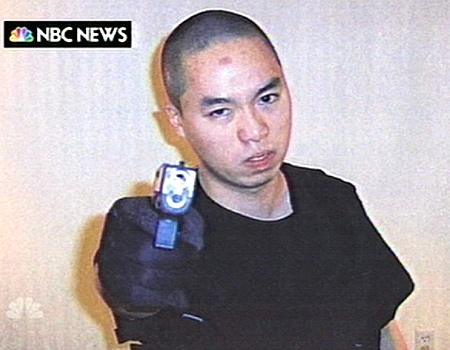
Without doubt, Harris and Klebold inspired others. Not just through their own "martyrdom" tapes and the CCTV cameras in the school which recorded their actions, but also down to how they were portrayed by the media. They became the "trenchcoat mafia", a group as it turned out they had only the very vaguest of associations with. No matter. Simply the way they were dressed as they committed their massacre, in supposed "goth" style, set it running with the dangers of this incredibly harmless subculture. More than anything else, they became, perversely, the ultimate expression of teenage alienation, angst and self-destruction. Again, just how isolated they actually were has been disputed, having had a close circle of other friends. Nonetheless, Harris expressed his rage online at those he felt had wronged him, back when mass use of the internet was still in its relative infancy. Hundreds of thousands of others have since done the same, without going on to commit similar acts. Still, among a very small section of those who find themselves in what they consider to be a similar place, Harris and Klebold were individuals who took matters into their own hands. Cho Seung-hui named them in his own effective last will and testament, and his entire "media pack", posted to NBC, owed a massive debt to both them and jihadist groups, again whether or not he was directly inspired by the latter.
Raoul Thomas Moat did, it must be said, follow some of the examples of "media" killers before him. He left messages on Facebook saying that he had lost everything and that everyone should watch what was about to happen. He phoned 999 and taunted the police for not being able to find him. He wrote voluminous notes and letters which he clearly expected the police to find and which they subsequently referred to in press conferences. It was however a media which couldn't believe its luck which decided that the hunt for Moat and everything about him was suddenly fair game. Moat didn't need to record anything he did, because the media were there to do it for him. In effect, Moat was one of the first people in this country to have his death broadcast almost live on television on radio. On Friday night the journalists were breathless with excitement as Moat had finally been cornered, informing the world that they themselves had had to be moved further away as they were so close to where Moat's stand-off was taking place. They knew that the denouement was near, after Moat had given both the police and them the run around for close to a week, and didn't want to miss a second. They wanted the "money" shots, especially one of Moat holding his gun to his body, but in the meantime ones of the police gurning with delight as they aimed their weapons at him would do. The press, having to go to bed as the impasse continued, had to settle on "GOT HIM" as their front pages, along with shots of Moat from behind. They almost certainly didn't want Moat to give himself up and so ensure that the outcome they knew would sell more papers and ensure more viewers didn't materialise. There is, after all, nothing more boring than such a week of drama ending with a whimper instead of a bang.
Moat ought to have been one of the most unsympathetic characters you could possibly have come across. In prison for assaulting a member of his own extended family, deciding that if he couldn't have his ex-girlfriend than no one else would either, murdering her new partner in cold blood, shooting a completely unconnected police officer simply because he could, he should be the epitome of repugnance. Instead, thanks partially to the fact that he had convinced himself that his girlfriend's new partner was a police officer, he informed the world, via the media, that it was the police he had a vendetta against and that he wouldn't stop until they stopped him. As it turned out, he didn't shoot anyone else but instead ran rings around the police through simply having superior knowledge of the area where he took refuge than they did. Making the police look stupid for so long is something that will amuse many, as will holding a grudge against a section of the state which inspires as much hatred as it does respect. Moreover, since the police so clearly took Moat's threats so personally, regardless of the actual danger he posed to the wider public, it ensured that it came down to either them or him. Understandably, some chose him.
In effect, it came down to the old cliché, one man against the world. With so many officers drafted in to hunt just one man, and with the media camping on Rothbury, it was always likely to end in the way it did. Whether Moat had complete access to the media and what they were saying is still unclear, but at least three mobile phones alleged to belong to him have been found, and a news blackout was requested after he appeared to threaten others, apparently having been especially upset by comments from his estranged mother, who told the Sun that "he would be better off dead". How much influence, if any, media reports had on him is also unclear, but if the police themselves were worried that ought to have been a indication that they should step back. They didn't.
The same media which created this image of a man who no longer had anything to lose while at the same time having nothing to live for, which felt it had to devote rolling coverage to the search for him, which was live throughout the night as Friday evening wore on, right up to when he shot himself and as the ambulance rushed to take him to hospital now wonders why some, rather than seeing Moat as a "cold-blooded killer", "a cruel, cowardly murderer", and "an evil beast" (all epithets given him in today's Sun leader, which has already disappeared down the memory hole) instead having been leaving floral tributes, setting up Facebook groups and calling him a "legend". The same media which published the grainy shots of Moat with a gun up against his throat wonders why some find him faintly heroic for his stand, with those turning up to take photographs of where it all took place derided as "ghouls" and "sickos", denouncing them for ignoring the distress of his victims which they themselves have devoted so little time and coverage to by comparison. They were of course just providing a service for those who were interested; this was news, the best sort of news, the kind that gets them hooked, that makes them say "gee whiz", where the demand to know even the slightest details about the man and why he's doing what he's doing trumps everything else.
Let's not overlook the complicity of those who kept watching and listening. The media doesn't do things in a vacuum, it's true. It reacts to demand like any other business. That doesn't however remove their responsibilities. They knew what they were doing as they kept the cameras rolling and the insights into Moat being written and splashed across the pages. Their reaction on that Friday night is however instructive: GOT HIM. They knew full well that he might be dead by the following morning when those papers would actually be bought, when it would seem, regardless of what he had done, to be in exceedingly poor taste at best and incredibly offensive at worst. It also though has a double meaning: that they had finally got him, got him right where they wanted him, salivating at the prospect of what was to come. And they got it all.
Those same sickos and ghouls were the same ones who were lapping up everything that was printed and broadcast across the nation. After all, if broadcasting someone's final moments alive isn't the definition of sick, what exactly is? They were the ones who settled in Rothbury, regardless of the concerns of those actually living there, the ones who got those last shots, yet they were there providing a public service, acting in the public interest, doing what their readers, viewers and customers wanted. As for anyone else turning up to have a look for themselves, well, you're just sick pal, you should be ashamed of yourselves, you "idiots appear as sick in the head as Raoul Moat himself". Not content with just creating a perfect anti-hero, someone likely to live long in the memory, to be recalled when someone does something similar, perhaps even someone directly inspired by Moat, they then damn those who followed it to a lesser extent than they did for wanting to share a piece of the action. Before, the killers and terrorists had to record their last few moments themselves; now the media apparently wants to corner even that tiny market, and when the predictable occurs, they can only condemn rather than for a moment consider that they perhaps might just have a case to answer for themselves.
Probably without knowing it, they were mirroring what terrorist groups were already beginning to do and have since done on a far larger scale: documenting their weaponry, attempting to explain and justify why they're doing what they're doing, and leaving as a final record the images of themselves before they take part in what they term martyrdom operations, which are themselves now often filmed as well. There are two main purposes behind this, both of which are examples of propaganda in its purest form: the first is to create fear in the general public, even if in some cases it does the opposite, through showing how these men are prepared to give their lives for the cause, no matter how deranged or self-defeating it is, as well as giving an indication of how they can be stopped if they are willing to give into their demands; and secondly to inspire those sympathetic or already signed up, to give them role models, showing them that they too can follow in their footsteps if they so wish, they just have to want it. These videos, along with more spiritual fare from the religiously trained, and other written material are now an integral part of jihadi culture.
Without doubt, Harris and Klebold inspired others. Not just through their own "martyrdom" tapes and the CCTV cameras in the school which recorded their actions, but also down to how they were portrayed by the media. They became the "trenchcoat mafia", a group as it turned out they had only the very vaguest of associations with. No matter. Simply the way they were dressed as they committed their massacre, in supposed "goth" style, set it running with the dangers of this incredibly harmless subculture. More than anything else, they became, perversely, the ultimate expression of teenage alienation, angst and self-destruction. Again, just how isolated they actually were has been disputed, having had a close circle of other friends. Nonetheless, Harris expressed his rage online at those he felt had wronged him, back when mass use of the internet was still in its relative infancy. Hundreds of thousands of others have since done the same, without going on to commit similar acts. Still, among a very small section of those who find themselves in what they consider to be a similar place, Harris and Klebold were individuals who took matters into their own hands. Cho Seung-hui named them in his own effective last will and testament, and his entire "media pack", posted to NBC, owed a massive debt to both them and jihadist groups, again whether or not he was directly inspired by the latter.
Raoul Thomas Moat did, it must be said, follow some of the examples of "media" killers before him. He left messages on Facebook saying that he had lost everything and that everyone should watch what was about to happen. He phoned 999 and taunted the police for not being able to find him. He wrote voluminous notes and letters which he clearly expected the police to find and which they subsequently referred to in press conferences. It was however a media which couldn't believe its luck which decided that the hunt for Moat and everything about him was suddenly fair game. Moat didn't need to record anything he did, because the media were there to do it for him. In effect, Moat was one of the first people in this country to have his death broadcast almost live on television on radio. On Friday night the journalists were breathless with excitement as Moat had finally been cornered, informing the world that they themselves had had to be moved further away as they were so close to where Moat's stand-off was taking place. They knew that the denouement was near, after Moat had given both the police and them the run around for close to a week, and didn't want to miss a second. They wanted the "money" shots, especially one of Moat holding his gun to his body, but in the meantime ones of the police gurning with delight as they aimed their weapons at him would do. The press, having to go to bed as the impasse continued, had to settle on "GOT HIM" as their front pages, along with shots of Moat from behind. They almost certainly didn't want Moat to give himself up and so ensure that the outcome they knew would sell more papers and ensure more viewers didn't materialise. There is, after all, nothing more boring than such a week of drama ending with a whimper instead of a bang.
Moat ought to have been one of the most unsympathetic characters you could possibly have come across. In prison for assaulting a member of his own extended family, deciding that if he couldn't have his ex-girlfriend than no one else would either, murdering her new partner in cold blood, shooting a completely unconnected police officer simply because he could, he should be the epitome of repugnance. Instead, thanks partially to the fact that he had convinced himself that his girlfriend's new partner was a police officer, he informed the world, via the media, that it was the police he had a vendetta against and that he wouldn't stop until they stopped him. As it turned out, he didn't shoot anyone else but instead ran rings around the police through simply having superior knowledge of the area where he took refuge than they did. Making the police look stupid for so long is something that will amuse many, as will holding a grudge against a section of the state which inspires as much hatred as it does respect. Moreover, since the police so clearly took Moat's threats so personally, regardless of the actual danger he posed to the wider public, it ensured that it came down to either them or him. Understandably, some chose him.
In effect, it came down to the old cliché, one man against the world. With so many officers drafted in to hunt just one man, and with the media camping on Rothbury, it was always likely to end in the way it did. Whether Moat had complete access to the media and what they were saying is still unclear, but at least three mobile phones alleged to belong to him have been found, and a news blackout was requested after he appeared to threaten others, apparently having been especially upset by comments from his estranged mother, who told the Sun that "he would be better off dead". How much influence, if any, media reports had on him is also unclear, but if the police themselves were worried that ought to have been a indication that they should step back. They didn't.
The same media which created this image of a man who no longer had anything to lose while at the same time having nothing to live for, which felt it had to devote rolling coverage to the search for him, which was live throughout the night as Friday evening wore on, right up to when he shot himself and as the ambulance rushed to take him to hospital now wonders why some, rather than seeing Moat as a "cold-blooded killer", "a cruel, cowardly murderer", and "an evil beast" (all epithets given him in today's Sun leader, which has already disappeared down the memory hole) instead having been leaving floral tributes, setting up Facebook groups and calling him a "legend". The same media which published the grainy shots of Moat with a gun up against his throat wonders why some find him faintly heroic for his stand, with those turning up to take photographs of where it all took place derided as "ghouls" and "sickos", denouncing them for ignoring the distress of his victims which they themselves have devoted so little time and coverage to by comparison. They were of course just providing a service for those who were interested; this was news, the best sort of news, the kind that gets them hooked, that makes them say "gee whiz", where the demand to know even the slightest details about the man and why he's doing what he's doing trumps everything else.
Let's not overlook the complicity of those who kept watching and listening. The media doesn't do things in a vacuum, it's true. It reacts to demand like any other business. That doesn't however remove their responsibilities. They knew what they were doing as they kept the cameras rolling and the insights into Moat being written and splashed across the pages. Their reaction on that Friday night is however instructive: GOT HIM. They knew full well that he might be dead by the following morning when those papers would actually be bought, when it would seem, regardless of what he had done, to be in exceedingly poor taste at best and incredibly offensive at worst. It also though has a double meaning: that they had finally got him, got him right where they wanted him, salivating at the prospect of what was to come. And they got it all.
Those same sickos and ghouls were the same ones who were lapping up everything that was printed and broadcast across the nation. After all, if broadcasting someone's final moments alive isn't the definition of sick, what exactly is? They were the ones who settled in Rothbury, regardless of the concerns of those actually living there, the ones who got those last shots, yet they were there providing a public service, acting in the public interest, doing what their readers, viewers and customers wanted. As for anyone else turning up to have a look for themselves, well, you're just sick pal, you should be ashamed of yourselves, you "idiots appear as sick in the head as Raoul Moat himself". Not content with just creating a perfect anti-hero, someone likely to live long in the memory, to be recalled when someone does something similar, perhaps even someone directly inspired by Moat, they then damn those who followed it to a lesser extent than they did for wanting to share a piece of the action. Before, the killers and terrorists had to record their last few moments themselves; now the media apparently wants to corner even that tiny market, and when the predictable occurs, they can only condemn rather than for a moment consider that they perhaps might just have a case to answer for themselves.
Labels: media analysis, media coverage, Raoul Moat, school shootings, Scum-watch, spree killings, Sun-watch
| Permalink