Thursday, March 01, 2012 

An ex-policeman's lot is not a happy one.

I realise I've been just ever so slightly fixated on phone hacking/the Leveson inquiry this week, something I shouldn't really be apologising for. This is definitely the most important part of Leveson's work so far, which isn't to belittle the "first module", just that this section is the part where the police's relationship with News International is being examined in real detail for the first time. We all knew that the tabloid press was treating certain individuals abysmally, as they have been for decades; what we didn't know is how the Metropolitan police in particular had become so close to certain sections of the media that it was posing a clear conflict of interest.

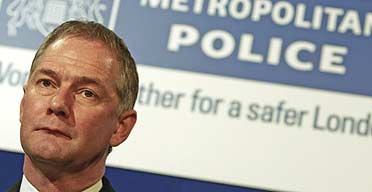
We heard today then from both John Yates and Andy Hayman on how they'd often shared lunch or even the occasional glass of expensive fizzy wine with journalists. Hayman, who left the Met partially as a result of an inquiry into his expenses claims, thought absolutely nothing of it at the time, just as how in his witness statement he explains why he couldn't possibly be stepping over the line by working for the Times as it was an entirely separate part of News International to the News of the World. He naturally doesn't mention that he also didn't think there was any conflict in ridiculing both John Prescott and the Guardian in the pages of the Times when he had almost no real role in the initial phone hacking investigation whatsoever, dismissing out of hand the idea that there had been any sort of cover-up or failure on the behalf of the police to properly go through the evidence they had initially seized.

Of the three giving evidence today, Peter Clarke was the most convincing but also the most infuriating. He more than reasonably maintains and continues to believe that the investigation of terrorist plots was far more important than the serious but not life threatening hacking of mobile phones. The problem is that he continues to exaggerate his case, as he did at the time. No one can dispute that between 2004 and 2007 there was a significant terrorist threat to this country, as the number of plots disrupted shows. There may well have been as he says 70 separate investigations going on, but the number of those that resulted in convictions for serious crimes is far lower. Indicative of his attitude then and now is that the media were "at that time ... frequently sceptical and critical of the UK police counter terrorist effort" and that they "needed to be made aware of the reality of the threat the country was facing" (paragraph 16 of Clarke's witness statement). This is absurd: only a few commentators in the broadsheets and on TV suggested that the threat was being exaggerated, whereas the tabloids were practically willing an attack. Ian McEwan in the Graun the day after 7/7 wrote that everyone had been expecting it.

Clarke, for instance, still claims that the police discovered a "ricin factory" in North London in his witness statement, when there was no ricin, the recipe Kamel Bourgass had for making it was bogus, and his plan to use it had he achieved the impossible would not have worked. He goes on to mention Operation Rhyme, which led to the conviction of Dhiren Barot who definitely was a "veteran jihadist" as he describes him. Where he heads into the land of make believe is in describing his ambition to mount an attack using "radiological devices". In practice, this amounted to the impressively infeasible plan to harvest the tiny amounts of Americium from smoke detectors, something which Barot admitted in his plan was only ever likely to lead to "disruption or panic", ala the antics of the "radioactive boy scout" David Hahn. His other ideas were similarly ambitious, such as constructing bombs of such power that they would blow through tube tunnels and flood the system, or alternatively the use of gas canisters as explosives to bring down buildings, both of which it seems those back in Pakistan whom he was reporting to thought ridiculous. Not Clarke though.

Clarke explains his reasoning for not widening the initial phone hacking inquiry beyond the royal family and a few token others firstly as he thought this would increase the risk of the then secret investigation being compromised and evidence lost as a result, and that secondly that if he were to do so those others who were victims would continue to be victimised while the investigation took place. While this might have been compelling at the time, it looks ridiculous now. As we've learnt, the investigation was compromised by the police themselves through contact with the NotW, and it's alleged evidence was hidden/destroyed by the company in any case. Second, while phone hacking for the most part did stop with the arrests of Goodman and Mulcaire, it was ridiculous that the potential victims were not subsequently contacted so they could take their own private action if they wished as Clarke had supposedly decided they should be. It in fact took an incredible five years before this began to happen under Operation Weeting.

The biggest ultimate failing is that Clarke decided there should not be an "exhaustive analysis" of the evidence seized in August 2006, which was mainly Glenn Mulcaire's notebooks. Even a sub-standard analysis of the notebooks showed there were hundreds of potential victims, as Andy Hayman today admitted. Clarke says he could not justify "the huge expenditure of resources" this would entail when the terrorist threat was its height, and it was unrealistic that the task could have been transferred elsewhere in the Met when it was felt that the original investigation success. This was the wrong decision, plain and simple, and it led to all the subsequent ones. As Michael White writes, politicians were arrested on the basis of far less evidence during both the cash for honours inquiry and the Damian Green leak case. Clarke may not have been influenced by News International directly in his decisions, but those doing the investigation cannot possibly have been so blind to the information they had, even if it was not properly analysed. It really was there in black and white.

As for John Yates, his fall from grace is summed up in how he's currently providing "advice" to the Bahrain government on policing. As well as his friendship with Neil "Wolfman" Wallis, we also learned today of how he was pally with the NotW's crime editor, Lucy Panton, who is happily married to an officer at the Met. One email from the news editor at the paper to Panton suggested that it was time for her to "call in all those bottles of champagne" and get Yates to advise on the discovery of the printer bomb in 2010.

This may well have been a jokey message, and Yates said there was being an "unfortunate emphasis" put on it, but it sheds light on the others he would have been affecting when he had to "establish the facts" following the Guardian's revealing of the Gordon Taylor settlement and then the "for Neville" email in 2009. He at least admits as he has done before that he got it wrong, yet he took only 6 hours to decide there was nothing new in the Guardian's story that would justify reopening the inquiry, just as he did when the New York Times published their investigation a year later. Leveson suggested that at the least Yates could have ordered a "scoping exercise" rather than a full reappraisal but it seems even that wouldn't have been a justifiable use of resources. For Yates, an ex-policeman's lot is most certainly not a happy one.

Labels: , , , , , ,

Share |

Tuesday, July 12, 2011 

The decline of Murdoch and Andy Hayman's relationship with News International.

The turn in political fortunes for Rupert Murdoch and News Corporation continues to frankly, amaze. Two Thursdays ago Jeremy Hunt rose in the Commons to all but rubber stamp the swallowing whole of BSkyB by News Corp; tomorrow the House will vote on a Labour motion which urges Murdoch to drop his takeover of Sky in the public interest, with all three parties due to support it. From having a seeming unshakeable grip on any politician seeking power, all of whom had to seek if not his open support then at least hope he wouldn't reject them outright to having almost no influence whatsoever is a fall of immense significance.

It's such a huge change that it's still impossible to even attempt to predict just where the crisis triggered by the phone hacking will eventually lead politics in this country. Where previously I imagined that things would soon return to something approaching normality, it's now difficult to see just how that can happen, at least for Murdoch and his papers. The latter are understandably in something approaching shock, wondering just whether they might remain under his ownership if their disposal is what it takes for the BSkyB deal to now go through.
Link

The response from the Sunday Times and the Sun over the allegations from Gordon Brown is the first sign that they're not going to take just anything which is thrown at them without fighting back. In his interview today with the BBC he wasn't perhaps as specific as he should have been: where he quite rightly said that there is evidence that the News of the World employed convicted criminals as private investigators, there isn't as yet the ocular proof that the Sunday Times did the same, let alone that they were the ones who specifically repeatedly targeted him. Indeed, their story on the flat he purchased looks on the surface to be the kind that was perfectly in the public interest, even if it turned out to be inaccurate. Far less clear cut is the blagging of his bank details, and other attempts at gaining access to private information.

On even more shaky ground is the Sun's reporting on his son Fraser's cystic fibrosis, despite their attempt at defending it today. Rather than being obtained through accessing his medical records, they claim that it was given to them "by a member of the public whose family has also experienced cystic fibrosis". This raises the obvious question of just how this "member of the public" managed to come by information which the Browns themselves were only just beginning to come to terms with, and also just why they decided to deliver it to the Sun. Notably, they haven't specifically denied that this person wasn't paid for the story, nor have they denied that Brown was determined to stop them having it as an exclusive, with Rebekah Wade phoning him up in an attempt to browbeat him into not issuing a spoiling statement. Regardless of how the Sun presented it, it's the kind of story which should only be published with permission from the parents, something which is clear they never directly gave (Slight update: the Sun claims Sarah Brown did give permission, see below, although whether this is the whole story or not remains to be seen).

In a way, Brown's intervention isn't especially helpful even if it's wholly justified, as it distracts attention from those who never sought any publicity or advantage through the media whose privacy was invaded in much the same way. It also gives the scandal a party political dimension which hasn't really been there so far: everyone after all was fair game to the News of the World, and Brown's time as prime minister is still far too controversial for any sympathy towards him to be universal. It's obvious that Brown, while wisely deciding not to comment on Andy Coulson directly in the interview, believes that if the true scale of the hacking scandal had been revealed at the beginning of last year rather than now that he could still be prime minister, such would have been the impact on Cameron and his team.

It also meant that the real action of the day before the home affairs select committee (not the media committee, as I first had it) was shunted into second place on the news bulletins, which meant that Andy Hayman's extraordinary evidence didn't get quite the billing it deserved. One of his first utterances was to admit that he'd had dreams of being a journalist, before he went on to admit that he'd received hospitality from News International at the same time as he'd been heading the original phone hacking investigation. The MPs for some reason found this to be shocking, although the laughter was louder after he said that not to have attended the dinner would have been even more suspicious. His subsequent employment by the Times as an occasional columnist "was a private matter" between him and the paper.

In hindsight, it's easy to be highly suspicious of the relationship between Hayman and News International while he was still assistant commissioner at the Met. Hayman was in overall charge of the notorious Forest Gate terror raid, which resulted in the shooting of one of the Koyair brothers. Having failed to find anything incriminating besides a large amount of money which was explained by the family's Islamic beliefs concerning bank accounts which paid interest, the brothers were smeared relentlessly in both the Sun and News of the World, with the latter breaking the story that child pornography had been found on one of their mobile phones, although no charges were brought. Who the source was for all these stories can only be speculated about.

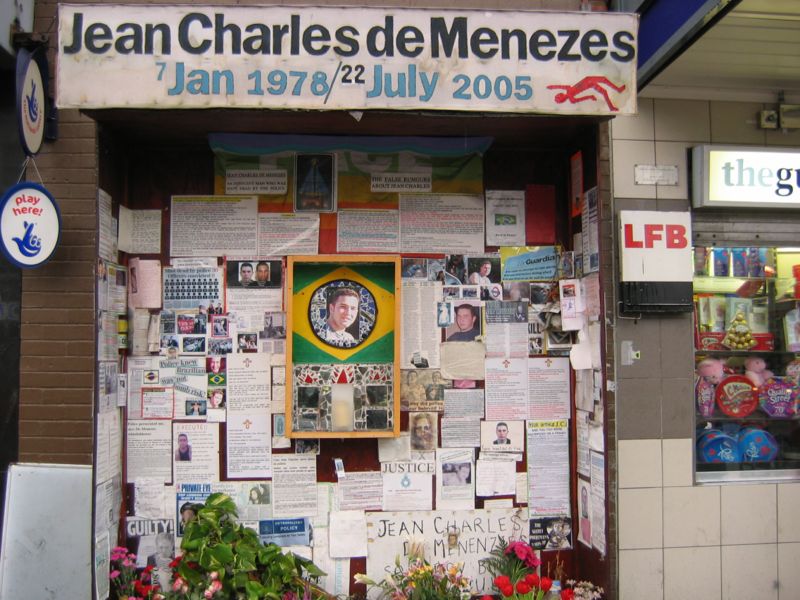
Hayman certainly did have form however for briefing the press, as the investigation into the death of Jean Charles de Menezes showed. Hayman had told the Crime Reporters' Association on the day of the shooting that an innocent man had been killed, only to report to the Met's management board that

[T]here is press running that the person shot is not one of the four bombers. We need to present this that he is believed to be. This is different to confirming that he is. On the balance of probabilities, it isn’t. To have this for offer would be low risk.

When questioned by the Independent Police Complaints Commission on what he'd told the CRA and why he then decided to present the absolute opposite as being the "official" story, he said he couldn't remember what he'd said to the CRA, a failure of memory which was repeated today. When Hayman subsequently resigned from the Met in December 2007, the Sun's crime editor Mike Sullivan wrote that it was a "sad day for British policing" and that he "was one of the good guys", while the day after the release of the IPCC's report the Sun's editorial thundered that

ANDY HAYMAN’S brilliant leadership in the fight against terrorism has saved dozens of lives.

He is admired by his men just as he is feared by the terrorist scum determined to destroy our way of life.

It's doubly odd how Hayman thought it was appropriate to join the News International stable two months after he left the Met when his direct underling, Peter Clarke today outlined how he felt that the company had obstructed their investigation into phone hacking. As I've wrote this post tomorrow's Sun editorial has been posted up, for the first time commenting directly on the phone hacking through attacking Brown's accusations against the paper. It helpfully distracts from Clarke's view that if NI had offered "meaningful cooperation instead of prevarication and what we now know to be lies" then things could have been different. He later went on to state that he believed they had been "deliberately trying to thwart a criminal investigation".

This still doesn't explain why Clarke's team decided not to extend their inquiry beyond the Royal family and a few token others. No one is going to argue that the Met's anti-terrorist team had more pressing concerns than breaches of privacy during 2006, yet it stretches credulity that a thorough going through of Glenn Mulcaire's notebooks couldn't have been delegated or passed on to a different team within the force, as does his claim that some crime went uninvestigated as a direct result of his uses of resources on it at the time. As Sue Akers, the new broom brought in to helm Operation Weeting later said, having 45 officers working on the inquiry is not going to have much impact on an organisation which has 50,000 staff. Likewise, John Yates's evidence on why in 2009 he took only the best part of a day before he decided not to reopen the investigation remains as wholly lacking as it was originally.

Tomorrow we'll learn of the remit of the inquiry or inquiries to come. They obviously need to be as broad as possible, preferably with witnesses having to give evidence under oath, and investigate how the "dark arts" became so widely used across the tabloids especially towards the end of the 90s and into the 00s. The only thing that seems absolutely certain is that regardless of the fight the likes of the Sun are now beginning to put up, things only seem likely to get worse for News International. Editorials denouncing the previous inquiry by the media committee and calling their report a "dark day for parliament" now ring very hollow indeed.

Labels: , , , , , , , , , , ,

Share |

Monday, October 06, 2008 

Hayman strikes!

Much talk of the government supposedly backing off on 42 days. As the Lords are quite clearly not going to pass the bill in any shape or form, the only way to get it through would be to use the parliament act; but using the PA, especially as it would breach all the precedents of using the PA, including the Salisbury convention, would indeed probably be "political suicide" as advisers have supposedly briefed.

How then to step back from the brink without being too embarrassed in the process? Perhaps they'll take the advise of Andy Hayman, formerly chief anti-terrorism officer:

But the Government's current proposals are not fit for purpose: they are bureaucratic, convoluted and unworkable. The draftsman's pen has introduced so many hoops to be jumped through that a police case for detaining a terror suspect will become part of the political game.

Hayman of course along with his former acolytes in the Met is still deeply wedded to absolutely any extension, such is the pressing need for more time. Hayman goes on to detail his unerring support for 90 days, when such "bureaucratic, convoluted and unworkable" conditions were not part of the bill, which would have just seen a judge authorise continued detention as is currently the case. Hayman's real problem with 42 days is not the time limit, but that the police cannot just waltz into a court-room and sweet-talk a judge with how he'll be named and shamed in the tabloids should the man he releases go on to bomb somewhere.

Accountability though has never been Hayman's strong point. He was the officer in charge of "Operation Helios", the witch-hunt against Ali Dizaei which cost millions of pounds and even more when Dizaei sued for discrimination. He was the person most heavily criticised by the IPCC after they established that he told one story to crime reporters on the day Jean Charles de Menezes was executed and another later to the Met's management committee, briefing that they should be saying de Menezes was one of the bombers, even if it turned out he wasn't, when he already knew that he wasn't. He was in charge of the Forest Gate raid, and not satisfied with shooting one of the Koyair brothers, his officers commenced a smear campaign similar to that ran against de Menezes. He resigned last December after allegations that he had ran up a Met credit card bill of £15,000, as well as taking a female officer on foreign trips with him. One has to wonder if his fee for the Times article will be going towards his paying off of that account.

With their plans not fit for purpose currently, the government will probably have to admit defeat this year. There's nothing stop them however from trying again in the next session, or putting in their manifesto, even if the chances of Labour winning that election are slight to say the least. Don't however completely rule out the Conservatives swiftly adopting 42 days as their own however, especially should there be another attack, of significant magnitude or not. George Osborne and Michael Gove had to be convinced of the benefits of opposing it this time round, and in government will be just as obsessed with handing over power to the police as Labour have been.

Labels: , , , ,

Share |

Friday, February 22, 2008 

A pointless exercise in clearing everyone and questioning no one.

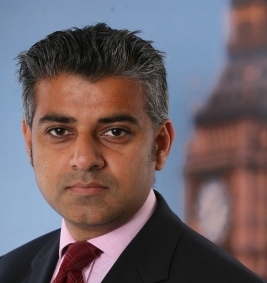
Reading Sir Christopher Rose's report (PDF) into the bugging of Sadiq Khan MP while he visited Babar Ahmed at Woodhill prison, you have to wonder what exactly the point of the whole exercise was. The findings may as well have been written by the police themselves; so unquestioning is Rose of the officers he interviewed who authorised the bugging, that he writes this in the 9th paragraph of the 18-page report:

I have borne in mind, in relation to all of those from whom I have obtained information, the possibility that serving some interest of their own might inspire a departure from candour and that none of them has been subject to the rigour of cross-examination such as a trial process would provide.

In other words they might have told me a complete cock and bull story, but nonetheless I've taken their comments in the spirit in which they were given. This is hardly the way to run any sort of investigation, let alone one into the bugging of an MP.

A good place for Rose to have started his inquiry might have been to talk to the
former detective sergeant Mark Kearney, now facing what appear to be highly trumped up charges for "aiding and abetting gross misconduct in a public office". This is related to how Kearney was a source for local Milton Keynes Citizen journalist Sally Murrer, but the police themselves admit that no money passed between their hands. The Citizen is so dirt poor that its journalists are currently out on strike over pay and conditions; it simply couldn't afford the cheque-book journalism of the nationals. Kearney was just the sort of source those local journalists who get out of their offices on occasion have always had. The charges are supposedly based on stories Kearney told Murrer about a drug dealer and a footballer, but that now seems like the excuse for getting rid of him after he objected to bugging an MP. Kearney has since suffered a nervous breakdown because of the charges, while Murrer, a respected journalist, had her phone bugged, her home raided and was strip-searched after being arrested.

It's therefore rather surprising to read that Rose, who refers to Kearney as "X" in the report, hasn't talked to him. His reasons are as follows:

With regard to the former police officer, identified in the media, awaiting Crown Court trial on serious charges, to whom I shall refer as X, I have taken into account a further factor in addition to those referred to in the last paragraph. He is entitled to a fair trial. It would be highly unfortunate if the conduct of my inquiry were to have, or could be claimed to have, an adverse impact on that right.

Seeing as he's not been charged in relation with the bugging of Khan, how could talking to him possibly have an adverse impact on his right to a fair trial?

I have a statement from the then Deputy Governor of Woodhill (Mr Robert Davis) to whose office X had regular access and with whom Prison Intelligence Officers from Thames Valley Police (TVP) including X, had daily contact. I am also aware that, representing TVP, between mid-2004 and January 2007, X attended a total of about 17 regular meetings, every two or three months, of the ACPO Prison Intelligence Working Group chaired by Commander Sawyer of the Metropolitan Police Service (MPS). Those meetings were attended by, among others of varying ranks from Detective Constable upwards, Detective Superintendent McKinney, Head of the Counter-Terrorism Prisons Intelligence Unit and Detective Superintendent Report of Investigation Deal, Head of the Prison Advisers Section. Furthermore, Detective Superintendent McKinney, in the course of reviewing technical capability at Woodhill Prison, met X and other officers from TVP Prison Intelligence Unit on 3 September 2006, which was only a few weeks after Mr Khan’s last visit to Babar Ahmad in late June. At none of the many meetings which I have identified did X express to anyone concerns of any kind as to how counter-terrorism surveillance in prison was being carried out by him or anyone else. Nor did X take the less formal opportunities of access to Mr Davis to express any such concerns. Nor did he express such concerns to either of his two colleagues in TVP Prison Intelligence Unit based at Woodhill. In the light of these matters, I concluded that it was neither necessary nor appropriate for me either to seek information from X at this time or to delay this report until the criminal proceedings against him have been completed.

Rose doesn't mention if there were minutes taken of any of these meetings, which would show whether Kearney actually had raised his concerns. Instead it seems that he's simply taken the words of the officers at face value that he didn't ask questions about the righteousness of bugging an MP. The latest Private Eye (No. 1204) suggests that a Special Branch detective superintendent specifically thanked Kearney at one of these meetings for bugging Khan. This would presumably be McKinney. Rose has therefore dismissed any need to talk to Kearney, either because it might prejudice his trial but also because his superiors would be in trouble if they admitted that they had knowingly bugged an MP, and they told him that Kearney hadn't said anything to them about it. Brilliant!

Khan, in his statement to the inquiry, has quite reasonably expressed his exasperation and anger that the those authorising the bugging of Ahmed didn't know who he was, stating "[I]t beggars belief that [the police and prison authorities] did not know who I was". This isn't just someone with an ego throwing their weight around when they're not recognised; as Khan states, he visited Ahmed in 2004 on a legal visit before he dropped his work as a solicitor and became the Labour parliamentary candidate for Tooting. Khan was well known to the Met especially: for one, he was the National Black Police Association's solicitor, while he performed the same role for detective superintendent Ali Dizaei, who "Sir" Ian Blair was found guilty of overseeing the bugging of. Since the bugging, the police have quite openly said they knew of Khan, even allegedly describing him as a "subversive", presumably because he worked for Liberty. That they hadn't followed his move from lawyer to member of parliament is hardly likely.

The man who ultimately authorised the bugging of Khan was none other than our old friend the head of the Metropolitan police's counter-terrorism unit, Andy Hayman. He presided over the Forest Gate debacle, while he was also the officer severely reprimanded by the second IPCC report into the death of Jean Charles de Menezes. He resigned last December after other allegations were made that he had ran up expenses of £15,000 on police credit cards, and taken a female officer on foreign trips with him. He denies both. Rose writes this of what the bugging of Khan actually contained:

I called for the product of the monitoring on 21 May 2005 and 24 June 2006. It is obvious from the product that the conversation monitored on 21 May contained material plainly showing that Mr Khan was an MP. The record of monitoring on 24 June contains an express reference to him being an MP. It follows that those officers who monitored the visits and reviewed the detail of the product later had knowledge of that fact. There is nothing to suggest that any of these officers believed at the time that this fact was of any significance in relation to the surveillance.

This is important, as Rose goes on to record

That authorisation, subject to monthly review and three monthly renewal, effectively remained in force until December 2006. It was reviewed on 7 June by Mr Fuller and on 14 June 2005 by Mr Hayman. The record of that review indicates that information had been gained that a recently elected Member of Parliament had offered Babar Ahmad help to fight extradition but there is no indication that the Member of Parliament in question was Mr Khan. In relation to 24 June 2006, the authorisation was reviewed on 7 June 2006 by another Detective Constable, recommended to ACPO rank by Detective Superintendent McKinney, agreed to by Deputy Governor Davis and continued by Mr Hayman on 9 June 2006.

Hayman and all the other officers involved in authorising the surveillance would have presumably had the transcript of the first visit from the year previous where it was made obvious that Khan was an MP. Did they actually read it? If they had, they would surely have realised that Khan was the recently elected MP who had offered help to Ahmed to fight his extradition. There are a couple of other possibilities: that they were dealing with so many of these requests to bug terrorist suspects and those convicted alike that they were effectively just rubber-stamping them; or that they knew full well that Khan was an MP, were complicit in the bugging, and lied to Rose that they didn't know who he was.

Khan had submitted his request to visit Ahmed under the Approved Visitors Scheme for Category A prisoners prior to becoming an MP. This entailed him being visited by a detective constable from Special Branch, where he made clear that he had given up being a solicitor and was the Labour parliamentary candidate for Tooting. The DC recorded that Khan was "very affable and forthcoming". The report seems to consider that he was at fault for not thereafter informing the prison service that he was now an MP, where he didn't need to use the scheme at all. It seems if anything that the police and prison service took advantage of Khan's mistake, rather than it being his fault for not announcing himself properly.

Rose is quite right in concluding that the officers actually doing the bugging shouldn't have been expected to either know that Khan was an MP or of the Wilson doctrine, but those who authorised it certainly should have done. What they're relying on, apart from their denials that they knew that Khan was an MP, is that bugging as such isn't covered by the Wilson doctrine, which only deals with intercepts. Therefore, seeing as it was all done legitimately, this has been blown out of all proportion and MPs have been getting out of their prams for no good reason. At least, that seems to be the impression that the government wants to convey and that also the police want to remain. Rose also, despite the notable report in the Telegraph just over a week ago, says that there have been no requests to monitor legal visits to prisoners since 2005. As Spy Blog asks, what about prior to 2005?

Seeing as Jacqui Smith has since said that the law and guidelines covering bugging will be reviewed and that all visits by MPs to constituents must be confidential, is that the end of the matter? Well, no. The report is simply inadequate. As David Davis said, Rose concluded that there was "no useful purpose" in explaining the series of police authorisations, which on the contrary would have opened up why junior officials knew that Khan was an MP yet those authorising it claimed not to. Not to interview Kearney is frankly astonishing. It was also completely beyond the inquiry's remit to ask exactly why it was necessary to bug Ahmed in the first place. He's never faced any charges in this country, but is continuing to bring a civil case against the Met, alleging he was assaulted during his original arrest; something attested to by photos showing his injuries, but the officers were cleared by the Independent Police Complaints Commission. Was that the real reason why he was bugged, or was it at the request of the US? The report shows that almost 20 people, mostly with names of Middle Eastern origin were on his visitor list, but that hardly on its own justifies the continuing bugging of everyone who visits him on the grounds of "ascertaining the extent of Babar Ahmad’s terrorist activities and contacts within the United Kingdom." It also does nothing about the situation that Kearney himself and Murrer are still in; if every police officer were being charged purely for being a local newspaper journalist's source, there'd be even less on the streets than there currently are. If this isn't a whitewash, it's hardly got anywhere near to the bottom of just a small section of our fast expanding surveillance society.

Labels: , , , , , , , ,

Share |

Wednesday, December 05, 2007 

Scum-watch: More thieving migrants and an eulogy for Andy Hayman.

It's been a few months since the last figures showed that immigrants from eastern Europe were supposedly bleeding the exchequer dry with benefit claims, so it must surely be time to resurrect them once again. After all, the Sun has to find non-news stories to fill the paper when it can't be bothered to report on small things like Iran being declared not to have a nuclear weapons program:

MIGRANTS claim £1.4million a month in child benefit for kids living ABROAD, shocking new figures show.

The cash is given to 18,000 workers from new EU countries, without any checks on if the children actually exist. The number of East Europeans pocketing the handout soared by almost a third in just three months, the latest figures show.


Happily, when the Sun last flagged up this heinous outrage, I emailed the child benefit office and despite them taking the best part of two months to reply, I did finally get a very helpful explanatory response. Here it is in full:

Thank you for your e-mail of 17 September about Child Benefit. Your e-mail has been forwarded to HM Revenue & Customs and I have been asked to reply. I apologise for the delay in doing so.

You ask if foreign workers are entitled to claim Child Benefit for their children, even if they do not reside with them in this country.


The main purpose of Child Benefit is to support families living in the United Kingdom. In this regard, the general rules for this benefit do not provide for them to be paid in respect of children who reside outside the United Kingdom. However, these general rules are supplemented by the co-ordinating rules in European Community Regulations which the United Kingdom has applied since it joined the European Economic Community (now the European Union) in 1973.

The Regulations protect the acquired social security rights of European Economic Area (EEA) workers and their families moving within the Community.
The Regulations have detailed rules that determine which social security scheme a worker should contribute to, and which State has responsibility for the payment of family benefits. In general, it provides that the worker pays into the social security scheme where the work takes place and that State is responsible for the payment of family benefits. If entitlement to family benefits arises in more than one Member State, the Regulations contain priority rules to determine who has responsibility for paying. More detailed information relating to these Community rules can be found in leaflet SA 29 “Your social security insurance, benefits and healthcare rights in the European Economic Area”, published by the Department for Work and Pensions and available from its website at www.dwp.gov.uk/international/sa29. Similarly, the thousands of UK nationals who live in another EEA country also benefit from these rules in a wide number of areas.

The vast majority of Eastern European migrants, who were the subject of recent media publications, are in employment, paying UK taxes and National Insurance contributions and in many cases in hard-to-fill jobs in sectors with high levels of vacancies.


When a claim is made under the EC Regulations, there are long-standing checks in place to prevent fraud. For example, the relevant authorities in the family’s country of residence are required to confirm the identity and address of the children in the claim. In addition, the person claiming can be required to provide the original birth or adoption certificate of the child in support of their claim.


I hope that you will find this helpful.

This immediately demolishes the Scum's spurious claim that there are no checks that the children actually exist. Secondly, it makes clear that anyone living in any current EU member state while their children live in their "home" country can claim that country's equivalent of child benefit on the exact same basis, similarly without the children actually being present.

The Sun article accordingly doesn't deign to mention that only those paying national insurance are entitled to claim child benefit. They're contributing to the economy and are just as entitled to claim the benefits available to "us" as anyone else. The simple fact they're foreign automatically means this is "shocking".

Last time round the Sun introduced the notion that the fact that 200,000 more British children are living in poverty is somehow related in any way whatsoever to the fact that 14,000 migrants are claiming child benefit, with the disingenuous Tory Philip Hammond following up. This time Hammond just jumps straight in:

Shadow Treasury Chief Secretary Philip Hammond said: “About 3.8million British children are living in poverty yet Gordon Brown is siphoning off more than £320,000 per week to children abroad.”

Shall we do some elementary maths? £320,000 x 52 weeks = £16,640,000. Divide £16,640,000 by 3,800,000 and you get 4.3789473684210526315789473684211. In other words, if we took all the money back from the Poles which they are legitimately claiming, and redistributed it between those children, each could look forward to having an early Christmas present of £4.37p. Don't spend it all at once kids!

Going on:

HM Revenues and Customs said: “Under EU rules, an EU national working and paying compulsory contributions in one EU country can claim child benefits for their family resident in another.”

Which is a more concise and dumbed-down version for the Sun readership of the email I received.

Naturally, the good burghers of MyScum are enraged by this insult to the English working man, although one or two do dare to suggest that this is actually only fair. JanJud is representative:

It's an absolute disgrace, the working man is being taxed to death to pay for children that have no right to anything from the British Taxpayer. This Government are totally incompetent & corrupt, this throwing money down the drain must stop. British families can't even get housing, yet immigrants can!!!!!

And where does JanJud hail from? Err, South Africa.

I read a far more interesting fact in one of today's Grauniad articles on the Nimrod crash. The cost of operations in Iraq, despite the draw down in troops, is estimated to come to £995m, a rise of 2%. You decide which is more of a burden on the humble British taxpayer.

Elsewhere, the Sun is mourning the loss of Andy Hayman. Says crime editor Mike Sullivan, previously featured here, here and here:

THE resignation of Andy Hayman is a sad day for British policing.

...

Unlike others, Hayman fell on his sword and for that he must be praised.

I obviously cannot condone any wrong doing but he was respected and admired by grassroots police officers.

Andy Hayman was one of the good guys and our police force is a weaker force without him.


One has to wonder if Sullivan's sadness might be related to the "unique" relationship between the Sun and the police. Rebekah Wade has previously admitted to paying officers for information, while the stories which were so horribly wrong about Rochelle Holness and Janet Hossain were likely sourced on information from the police. Last week, when Harry Redknapp was arrested, the photographers from a certain newspaper had turned up at the same time as the police did, which might just suggest the two were in cahoots. The newspaper? The Sun.

Finally, this. Fucking this:

Labels: , , , , , , ,

Share |

Tuesday, December 04, 2007 

One down, one to go.

Good riddance then to Andy Hayman, the man who in the Sun's words "is feared by the terrorist scum determined to destroy our way of life." I'm sure that those willing to "martyr" themselves were terrified of him, while anyone unfortunate enough to get in the way of the anti-terrorist operations he was responsible for had plenty of reasons to be frightened, as the death of Jean Charles de Menezes and the Forest Gate fiasco more than demonstrated.

Like Ian Blair, Hayman should have resigned after the second IPCC report into the Met's operation on the 22nd of July found that he had failed to inform Blair that an innocent man had been shot dead. According to multiple accounts, Hayman informed the Crime Reporters Association that an innocent man had been shot dead at around 4pm. When questioned about what he told the CRA by the IPCC, he said he couldn't remember what he had. At 5pm he attended a sub-meeting of the Met's management board, where he said the following:

AC HAYMAN: There is press running that the person shot is not one of the four bombers. We need to present this that he is believed to be. This is different to confirming that he is. On the balance of probabilities, it isn’t. To have this for offer would be low risk.

Having started the press running that the man shot was not one of the four bombers, he then commenced the squall of lies and smears which wouldn't be fully corrected until the IPCC's preliminary investigatory findings were leaked.

Rather than going with something approaching dignity, Hayman has now "retired" after allegations were made that he had ran up credit card expenses of £15,000 and that he took a female officer on foreign trips with him, which he has described as "unfounded accusations". Accurate or not, it's difficult not to see them as poetic justice.

Labels: , , ,

Share |

Friday, August 03, 2007 

de Menezes: The backlash commences.

The day after the IPCC report ought to have destroyed Andy Hayman's police career, it would have been expected that sections of the gutter press would have set out to attack the man (the IPCC) and not the ball as it were, but for the Guardian to join in is something that shows just how deep the apologism for the police's actions on that day has infected the media.

More on that further on in the piece, but first to the Scum, the police's eternal friend, so long as they're not investigating Tony Blair, which has some of the most disgraceful coverage of the aftermath of the report in quite some time:

One senior Met source blasted the inquiry, saying: “This has been a 21-month witch hunt that was determined to find a scapegoat.

“The shooting is something the Met profoundly regrets but what the IPCC never took into account was that on that day we were fighting a war. It feels like being left on the battlefield wounded. Scavengers, watching from the sidelines, have come along afterwards and stabbed the injured.”


Except the IPCC hasn't managed to even find a scapegoat, has it? Hayman, as the Scum article presents, despite being a liar personally responsible for the smearing of de Menezes, has been supported by Ian Blair, Jacqui Smith and Ken Livingstone, the latter of whom really should know better, but because of his personal admiration for Blair and his "reforms" has chosen to blot all the unpleasantness surrounding the shooting out of his memory.

To try and pretend that the IPCC never took the situation the police were facing that day into account is a joke. The report itself makes this clear in its very introduction. It's rather fitting that the "source" has chosen to put what was happening on the 22nd of July into the context of a war, as the Scum leader also does. Through this prism, you can either see de Menezes as a victim of friendly fire or as collateral damage, depending on your view. The point is that when fighting a war, you do everything you possibly can to avoid killing either those on your own side or innocents, something which the Met abjectly failed to do. When the police themselves think that they were fighting "a war" rather than trying to catch 4 attempted murders as quickly as was possible, it's little surprise that de Menezes' death was treated as something regrettable (collateral damage will always happen) rather than as a result of systemic failure. He was just another unfortunate who got in the way, rather than a living breathing person in the wrong place at the wrong time. To compare the IPCC to scavengers stabbing the injured is just as laughable. The two officers who shot de Menezes were back on duty before it was even decided if disciplinary action was necessary. Andy Hayman, responsible not just for the lies on that day, but also for the handling of the Forest Gate raid, was handed a CBE. Cressida Dick, who gave the order that resulted in de Menezes' death, was promoted.

Former Met Deputy Assistant Commissioner Alan Given, in charge of firearms operations during the July 2005 bombings, also defended AC Hayman.

He said: “The IPCC has come up with a few criticisms based on the language that was used in communications. It seems a long time and a lot of public money to have achieved that.”


Which proves that Given hasn't even bothered to read the report.

To the Scum's leader:

ANDY HAYMAN’S brilliant leadership in the fight against terrorism has saved dozens of lives.

He is admired by his men just as he is feared by the terrorist scum determined to destroy our way of life.


And also resulted in the end of at least one and in the destruction of others. Still, that's OK, because he's saved dozens of lives of innocents, not people like de Menezes or the Kamal family. I doubt any of the "terrorist scum" even know he is, let alone fear him. As defined by their very act, suicide bombers are generally without much fear or morals, as both tend to get in the way of ending your own life by the method of explosive backpack.

The Queen awarded him a CBE for his handling of the aftermath of the 7/7 bombings which tore the life from 52 innocent commuters in London two years ago.

Yet the Metropolitan Police Assistant Commissioner had his name dragged through mud yesterday after an inquiry by the academics and do-gooders of the Independent Police Complaints Committee.

His crime? He was late in telling his boss, Met Commissioner Sir Ian Blair, a man shot dead at Stockwell Tube station was not one of a group of madmen who tried to repeat the 7/7 carnage a fortnight later.

It's a commission, not a committee. Secondly, just a couple of weeks ago the Scum was in hysterics
after the BBC owned up to misleading the public over phone-in competitions. Hayman not only didn't inform Blair, he, to quote the IPCC report:

AC Hayman either misled the public when he briefed the CRA that the deceased was not one of the four or when he allowed the 18:44hrs 22 July press release to state that it was not known if the deceased was one of the four. He could not have believed both inconsistent statements were true.

When the BBC does it, there needs to be root and branch reform. When a top-ranking police office lies to the public, his name gets dragged through the mud for no good reason.

London Mayor Ken Livingstone was right yesterday when he ridiculed the idea that Assistant Commissioner Hayman was responsible for some “catastrophic error of judgment”.

He hit the nail on the head when he said it was all very well for the complaints panel to criticise while sitting safely in their office but “you try doing it when you’re waiting for the next bomb to go off.”


He wasn't responsible for a catastrophic error of judgment, he was personally responsible for misleading not just those around him, but for lying to the public when the probabilities suggested the man shot dead was innocent. Either you don't give a running commentary to the press, or you make damn sure that what you tell them is right to the best of your knowledge at that time. He comprehensively failed to do this, resulting in the continuing belief right down to this day that de Menezes ran from the officers when he did no such thing, as shown in the comments on the Scum's article.

And that is what those who make a living from the civil rights lobby would like us to forget.

That when the unfortunate Jean Charles de Menezes was shot by police, four would-be bombers were on the loose and London faced another disaster.

The cops who shot Mr de Menezes were in a “damned if they do, damned if they don’t” situation where a moment’s hesitation could have led to a repeat mass murder.


"Unfortunate", rather than tragic. The cops were not in any sort of damned if they do situation; de Menezes was being held down on the ground with his arms behind his back when he was shot, meaning he would have been completely unable to trigger any explosive even if he had been carrying one. That there was four bombers on the loose is no excuse for the numerous failures of that day which led to his death.

The IPCC spent £300,000 on this investigation into one small aspect of what happened on July 22, 2005.

All they managed to do was make a mountain out of a molehill.


One small aspect? This goes to the very heart of what happened and what went wrong: that the Met was responsible for lying statements and for attacks on Menezes' own character, which were only corrected when an outraged IPCC worker leaked them to ITV News. We wouldn't have known the truth for possibly over a year if she hadn't done so; her reward was having her door broken down at dawn.

It is time we let Andy Hayman get on with hunting our enemies.

Further raking over of this sad incident would lead to the charge of wasting police time.

And giving comfort to the enemy.


I agree with the second statement. If Hayman won't resign, he should be fired. The police's actions on that day were the only comfort to the "enemy"; if they fail to kill anyone, they can at least rely on the police to do their job for them.

The Guardian's leader, while at least acknowledging that mistakes were made, fails to even mention Andy Hayman, concentrating instead on Ian Blair. After attempting to excuse the police in the same manner as the Sun does because of the "context" of what was going on that day, it then instead turns its fire squarely on the IPCC:

However, yesterday also poses questions about the IPCC itself. Its report examines inconsistencies in the way the police processed information during a frantic 36 hours, at the end of which the Met got the essential facts right and owned up to them in public - and it has never subsequently wavered from them.

This is patently untrue, as examined above. The Met continued to maintain its own version of events until the evidence which exposed the reality were leaked.

Yesterday's report is long and detailed. It comes more than two years after the events it examines. It cost at least £300,000. The public is entitled to ask if this is proportionate to the problem, and whether it could have been done more quickly and less expensively. Independent police complaints procedures are important and necessary. But this has not been the finest hour of the police, nor of those who watch over them.

The IPCC then, having done all the hard work of getting to the very bottom of what happened, having been sued by officers for daring to even think of criticising them, gets just as much blame as the Met itself. It's little wonder that the police thought themselves so above this that those in charge on that day were promoted: even the Guardian won't dare to raise its voice loud enough against them.

Labels: , , , , , , ,

Share |

Thursday, August 02, 2007 

de Menezes: The most comprehensive account, but still no comfort.

As I mentioned when the 21st of July bombers were sentenced, the only casualty of their chappati flour and hydrogen peroxide mix was a man who had the misfortune of living close to where some of the suspects had taken up residence. While it took a length of time for the death of Jean Charles de Menezes to be almost forgotten, few reports on the bombers mentioned that the only victim of that day's events was killed the next day, and not by them, but by bungling police officers.

Reading the second IPCC report (PDF), investigating what senior officers knew and when they knew it in conjunction with the statements put out by the Metropolitan Police Authority which were subsequently discovered to be strewn with inaccuracies which effectively smeared de Menezes, you quickly understand why one police officer subsequently described the events of that day as "a complete and utter fuck-up". The main abiding image is not one of collusion, or deception, although that does certainly occur, but of confusion and general incompetence.

While we are still likely some way of from acquiring a copy of the first IPCC report into exactly what happened and what went wrong that led to the shooting of de Menezes in the first place, this second report provides us with the most comprehensive summary of what happened and when yet released. Within minutes, as you would expect, it was discovered that de Menezes was not carrying any sort of explosives, yet this in itself was never made clear in the subsequent press releases by the MPA. At 11:22 hrs, just over an hour and fifteen minutes after police officers had initially informed Scotland Yard that a man had been shot dead, D/Supt. Kavanagh, working under assistant commissioner Brown, who was responsible for the strategic response to the previous day's attempted attacks, informed D/Supt Levett, who had been appointed to investigate the shooting that a lone "Pakistani male" had been shot; that he had not been carrying a bomb; and that he was in possession of a mobile phone.

Rather than basing the identification of de Menezes on his skin colour, which ought to have told anyone with more than six braincells that he was almost certainly not of Pakistani descent, it seems that this initial identification was based on the fact that de Menezes had been carrying a Pakistani business card. This was despite the fact that de Menezes had also been carrying both a wallet containing identification which confirmed he was of Brazilian origin and a mobile phone which had a photograph of himself on it, as well as other numbers which ought to have punctured the Pakistani connection fairly quickly. In any case, none of the four bombers were Pakistani in origin; all were of African descent. The fact that de Menezes, brutally shot 7 times in the head and once (correction 3/08/07: once, not 3 times as originally stated) in the shoulder with dum-dum bullets, was left with such substantial injuries (one would imagine there was little left of his head) made it more difficult to make a quick identification, but this is little excuse for mistaking him for Pakistani.

It was not until 14:47, more than 5 hours after de Menezes had been killed that the wallet, put on a seat in the tube train (we're not informed whether it was browsed before this time) was finally removed. This delay is put down to the need for both the area to be declared free of explosives and also secured and forensically analysed. Regardless, by then the news channels had been running interviews with witnesses, who made understandable mistakes about what had happened, in some cases mistaking the officers running to intercept de Menezes as the bomber himself, which is where the jumping the barrier myth came from. The police, if they had wanted, could have quickly corrected these mistakes, but did not do so and indeed, included them in their press releases, describing de Menezes as having behaved suspiciously and not obeyed a warning to stop, one which he was never given. Even with the wallet finally removed from the scene, which made it obvious that the man who had been shot dead was most likely of Latin American origin, Kavanagh still bizarrely informed AC Brown that he appeared to be of Eastern European ethnicity.

By 16:00, AC Brown was chairing a meeting to consider the community impact of the shooting, with the knowledge that the man was likely a Brazilian, although this had not yet been confirmed.

It's only now that those accused of misconduct come into view. Assistant Commissioner Hayman was due to address the Crime Reporters Association with what had occurred that morning. According to multiple accounts of those present, he informed the CRA that the man shot dead was not one of the four being sought. Strangely, when interviewed by the IPCC, Hayman couldn't remember what he had briefed the CRA.

The real, most egregious deception occurred next. At 17:00 hours the Management Board held a sub-meeting, at which, according to notes made by Ms Murdoch, the commissioner's chief of staff, AC Hayman made the following comments about what should be presented to the media regarding the shooting:

AC HAYMAN: There is press running that the person shot is not one of the four bombers. We need to present this that he is believed to be. This is different to confirming that he is. On the balance of probabilities, it isn’t. To have this for offer would be low risk.

Keep in mind that this is the same man that had already briefed the CRA that the man shot dead was not one of the four bombers; he had started the rumour, which he was now going to try to shut down. Knowing full well that it was unlikely that de Menezes had been connected in any way, not just that he was most definitely not one of the bombers, he and those at the meeting agreed that he should continue to be presented as having been one of the four, even though "the balance of probabilities" suggested he wasn't. As for the offer being low risk, if there is now any justice, Hayman must resign for failing both to inform Ian Blair of what had occurred, and for continuing to inform the media that the man was one of the bombers when on the balance of probabilities he wasn't. Nor was either of the meetings which took place at this time informed of the recovery of de Menezes' wallet, his mobile or his quickly emerging identity.

Where then was Sir Ian Blair in all of this? The report comes to the conclusion that as he has always stated, he had no idea that an innocent man had been shot dead until the next day, the 23rd of July. Indeed, the IPCC found no direct evidence that he even knew about the emerging identify of de Menezes, the recovery of any of the items from his body, and the likelihood that he was not involved in any way with the attacks of the previous day. As Blood and Treasure notes, it seems that everyone other than Blair within the higher ranks of the MPA knew that the man was most likely not one of the suicide bombers by the end of the 22nd of July, and most certainly did by 9am the following day. The only contradictory evidence is that of Brian Paddick, who came forward after Blair gave an interview with the News of the Screws in which he claimed he didn't know. Quoting from the report:

16.14.3 On 22 August 2005, DAC Paddick went to the Commissioner’s office and told him that he had had been concerned since he had heard him (the Commissioner) state at the press conference that the deceased was directly linked to the anti-terrorist operation. He explained to the Commissioner that he had been in the Commissioner’s Staff Officer’s office when the Commissioner had walked past on his way to the press conference and that he had been told by the Commissioner’s Staff Officer and Chief of Staff that the MPS had shot a Brazilian tourist (DAC Paddick does not suggest that the Commissioner was party to or even heard this conversation). He states that the Commissioner disputed this and said he had checked with Ms Murdoch and it was about 19:00hrs when he knew the deceased was Brazilian. DAC Paddick states that the Commissioner told him that the fact that the deceased was Brazilian did not mean that he could not have been a terrorist. He states the Commissioner cited the case of an Argentinean who had been found with a hand grenade at Gatwick Airport.

Blair, in his interview with the IPCC, disputes this and claims that he only knew that the dead man was Brazilian when briefed by AC Brown on the 23rd of July between 10:15 and 10:30. In its findings, the IPCC states:

The evidence of DAC Paddick and the Commissioner in relation to their meeting on the 22 August 2005 cannot be reconciled. DAC Paddick maintains that the Commissioner told him that he knew by 19:00hrs on 22 July that the deceased was Brazilian and the Commissioner maintains that he did not. DAC Paddick is supported by the notes that he made of the meeting and the Commissioner is supported by Ms Murdoch who states that she does not recollect ever concluding with the Commissioner that he knew of Mr de Menezes’ nationality by 19:00hrs. The weight of evidence supports that the Commissioner did not know anything of the emerging identity by the time he left NSY.

When it comes down to it, it doesn't really make much difference whether he knew the man shot dead was Brazilian or not. The real point is that he was either out of the loop, not informed by his staff of their suspicions which were increasing by the hour, or not paying proper attention, as the evidence of the Management Board sub-meeting suggests, when none of those present disagreed with Hayman's gambit that the balance of probabilities suggested the man shot dead was not one of the suicide bombings and that it needed to be presented to the press that he in fact was. Despite apparently not lying, Blair needs to explain why he was held in either such apparent contempt or feared by those around him that they didn't bother to inform him of their concerns. The previous attempt at doing so, that Blair tended to take bad news badly, most certainly does not cut it.

Despite all of this, the de Menezes family still has no closure. Their son, shot dead in the most distressing circumstances imaginable by a body of the state that felt it was perfectly acceptable to subsequently smear the man they killed in cold blood when there was not even any need to have done so, has still not received justice. The original report on what went wrong remains inaccessible, its findings and conclusions ignored and ridiculed by the police on the grounds that the situation on the 22nd of July justified the decision to shoot to kill, regardless of the innumerable mistakes made. The Health and Safety prosecution is a joke doomed to fail, while those responsible have all so far got off without so much as a slap on the wrist. The exposing of Hayman's lies and deception is no comfort whatsoever.

Labels: , , , ,

Share |

About

  • This is septicisle
profile

Archives

Powered by Blogger
and Blogger Templates