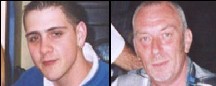
Rachel Manning: some justice, at last.
The conviction of Shahidul Ahmed for the murder of Rachel Manning at last lifts any remaining cloud of suspicion from her boyfriend Barri White and his friend Keith Hyatt. White and Hyatt were convicted of murder and perverting the cause of justice respectively back in 2002, the victims of one of the worst miscarriages of justice in recent years. White would almost certainly still be in prison if it wasn't for the BBC's Rough Justice programme, which in its last edition comprehensively dismantled the case against the two men. Key to White and Hyatt's successful appeal was the debunking of the forensic evidence used by the prosecution, which was found by an independent reviewer to not only be wrong, but to have not been conducted sufficiently to have proven anything.
Not that the miscarriage of justice was purely down to the failings of the forensic lab. For White and Hyatt to have been in the area where Manning was attacked and then acted as described by the prosecution, they would have needed to do so in a incredibly short timeframe. As the BBC reporter Mark Daly put it after trying himself to recreate their alleged movements and failing, they would have needed to be commandos to have pulled it off. Nor was it explained why the pair first put Manning's body in the front of the Hyatt's van, from which the samples of material were taken, before then putting her in the back.
The only motive advanced for White's actions was that he had killed his girlfriend in a fit of anger after the two separated on bad terms following an argument in a nightclub. For this to be the case, White would have needed to have stalked Manning after they had separated, unless he happened to come across her by chance. He would also have had to struck within a couple of minutes of Manning phoning her flatmate, before phone calls were then made from the same phone box to Hyatt's home, which the prosecution claimed were from White rather than Manning. Despite all these inconsistencies, Thames Valley police either ignored them entirely or brushed them aside. To give them the most possible credit, as Mark Daly again puts it, they seem to have approached the murder with a "lack of open-minded vigour". That almost no one in Milton Keynes believed White or Hyatt were guilty was also of little apparent concern.
Nor was the reopened case after the clearing of White getting anywhere until Ahmed carried out another opportunistic crime, sexually assaulting a woman who got into his car, wrongly believing it to be a taxi. Even so, and perhaps because of the disproved forensic evidence used at White's trial, the jury at Ahmed's first prosecution failed to reach a verdict. In spite of the lack of an apology or so far compensation for their own ordeal, White and Hyatt gave evidence for the prosecution at both trials, and were once again accused of being responsible under defence cross-examination. The defence even went so far as to call a witness who claimed White had confessed to his guilt in prison, a witness whose testimony was only slightly undermined by his own conviction for murder, as well as how he's currently applying for parole for a third time.
With justice having finally been done as Manning's actual murderer begins a life sentence, it's surely time for that apology to be made. The Manning family are entitled to hold the opinion they do, that had White not left Manning on her own in an area she wasn't familiar with she would still be alive, as they are also that the police have always "followed the evidence" (they complained at the time about the Rough Justice programme, believing White to be guilty), but Thames Valley police and the CPS shouldn't be allowed to hide behind those sentiments as they appear to be attempting to. What was already a tragedy was turned into something far worse for three families through incompetence and an apparent eagerness to pin the blame on the "bit of a lad" boyfriend. Lessons hopefully have been learned. Those mistakes should now be properly recognised.
Not that the miscarriage of justice was purely down to the failings of the forensic lab. For White and Hyatt to have been in the area where Manning was attacked and then acted as described by the prosecution, they would have needed to do so in a incredibly short timeframe. As the BBC reporter Mark Daly put it after trying himself to recreate their alleged movements and failing, they would have needed to be commandos to have pulled it off. Nor was it explained why the pair first put Manning's body in the front of the Hyatt's van, from which the samples of material were taken, before then putting her in the back.
The only motive advanced for White's actions was that he had killed his girlfriend in a fit of anger after the two separated on bad terms following an argument in a nightclub. For this to be the case, White would have needed to have stalked Manning after they had separated, unless he happened to come across her by chance. He would also have had to struck within a couple of minutes of Manning phoning her flatmate, before phone calls were then made from the same phone box to Hyatt's home, which the prosecution claimed were from White rather than Manning. Despite all these inconsistencies, Thames Valley police either ignored them entirely or brushed them aside. To give them the most possible credit, as Mark Daly again puts it, they seem to have approached the murder with a "lack of open-minded vigour". That almost no one in Milton Keynes believed White or Hyatt were guilty was also of little apparent concern.
Nor was the reopened case after the clearing of White getting anywhere until Ahmed carried out another opportunistic crime, sexually assaulting a woman who got into his car, wrongly believing it to be a taxi. Even so, and perhaps because of the disproved forensic evidence used at White's trial, the jury at Ahmed's first prosecution failed to reach a verdict. In spite of the lack of an apology or so far compensation for their own ordeal, White and Hyatt gave evidence for the prosecution at both trials, and were once again accused of being responsible under defence cross-examination. The defence even went so far as to call a witness who claimed White had confessed to his guilt in prison, a witness whose testimony was only slightly undermined by his own conviction for murder, as well as how he's currently applying for parole for a third time.
With justice having finally been done as Manning's actual murderer begins a life sentence, it's surely time for that apology to be made. The Manning family are entitled to hold the opinion they do, that had White not left Manning on her own in an area she wasn't familiar with she would still be alive, as they are also that the police have always "followed the evidence" (they complained at the time about the Rough Justice programme, believing White to be guilty), but Thames Valley police and the CPS shouldn't be allowed to hide behind those sentiments as they appear to be attempting to. What was already a tragedy was turned into something far worse for three families through incompetence and an apparent eagerness to pin the blame on the "bit of a lad" boyfriend. Lessons hopefully have been learned. Those mistakes should now be properly recognised.
Labels: Barri White, Keith Hyatt, miscarriages of justice, police, Rachel Manning, Rough Justice, Thames Valley police
| Permalink