Thursday, June 24, 2010 

Why I (might) be joining the Labour party (for at least a year).

This blog has been running for very nearly 5 years. In that time, it could probably be classified as being written by a stereotypically angry leftie who felt dispossessed from the movement he felt he ought to be comfortable within, if not proud to say he belonged to.

Well, nothing's changed, or at least has with me personally. I still feel dispossessed from the movement I should be able to belong to; I'm still a stereotypically angry leftie, still naive and still completely uncertain of my own surroundings. The change, it has to be admitted, is that the government I found myself raging against which I felt I ought to be able to at least sympathise with, is now no more.

Frankly, I should have taken a reality check a long time ago, but a change of government to the traditional opposition is something that always results in a reappraisal. I can't help but wonder, especially in the aftermath of this week's budget, whether Polly Toynbee and those like her have had a point all along; that while the economic situation for so long was, if not rosy, at least neutral, that we took it for granted and instead focused to the detriment of inequality on civil liberties and also foreign policy.

Before I start recanting almost everything I've written over those 5 long years, all I'm admitting is that she has something approaching a point. Civil liberties should never have become a middle class concern because they affect everyone equally; it's the Labour party and the authoritarian streak which it has always had which ensured that was the case.

While in government, there was never the slightest possibility that I could have justified to myself being a member of the Labour party. I was never going to be able to have the slightest impact on party policy. In that sense, nothing has changed. I'm still highly unlikely to have the slightest impact on party policy. I can however, this time, at the very least vote for the next leader of the party. I can at least attempt to make my voice heard.

I'm not completely decided yet. And it's true, I could make a different case, in fact probably a far better one, for joining the Greens and helping to build them as a real alternative. I've voted for them the same number of times as I have for Labour after all (both times in the European elections, and last month, which I don't in the slightest regret. I've voted for Labour twice locally and, to my still eternal regret, in 2005, in a futile attempt to save a doomed MP who had at least abstained on the war and voted against the worst of the anti-terrorism legislation). They'd probably be far more in tune with my actual views though, and as this blog perhaps has shown, where's the fun in being in a party where people actually agree with you? Complaining, moaning and conducting why-oh-why exercises like this one are far more fun and intellectually nourishing, if not actually helpful in the long. Oh, and I can join for the colossal sum of a whole pound, so it's not even that I'm vastly contributing to the coffers or a party which will take my money, ignore me, and carry on as before, as it undoubtedly will. You can of course, if you so wish, persuade me otherwise. And let's face it, the more votes that go to people with names other than Ed Balls, Andy Burnham and David Miliband the better.

Update: This has been crossposted over on Lib Con, with the usual fine debate following in the comments.

Labels: , , , , , , , ,

Share |

Tuesday, May 04, 2010 

The desperate hours.

If there has ever been such a thing as a genuinely enlightening, enjoyable and informative election campaign, and that's a very, very big if, then the 2010 general election season has most certainly not been it. The last four weeks, despite all the hype about this being the first social networking election, first internet election or the Mumsnet election, or whatever other hyperbolic nonsense was concocted prior to the beginning about how this time everything would be different, have been staunchly traditionalist, despite the innovations. Ignoring what the eventual outcome will be, at best 2010's campaign is going to be remembered for three things, if that: the leadership debates, the Liberal Democrat surge in the polls, and Gordon Brown calling Gillian Duffy a "bigoted woman" once in the safety of his Jag. Without those three things, this would have been just as dismal and forgettable a campaign as those we suffered in both 2001 and 2005, with the odd exception.

Part of the problem has undoubtedly been that even as the parties and the politicians themselves have arguably been under the most scrutiny they've ever faced, they've responded by endlessly repeating themselves on the same few policy differences, while refusing to face up honestly to the true scale of the problems, chiefly economic, which the country faces. Those only paying the most scant of attention would be justified in believing that the real difference between the Conservatives and Labour was that the Tories will begin cutting this year, but only slightly, while opposing the "jobs tax" or national insurance rise Labour plan to bring in next year. To call this obscurantist would be putting it too delicately, as both policies have been demonised in equal measure: if the Tories only cut waste by £6 billion this year, and that's another big if, it will change next to absolutely nothing. Likewise, Labour's national insurance rise is hardly going to destroy the recovery, and the costs will probably be passed on to the consumer, rather than result in jobs being cut. The almost unmentionable fact is that both parties, especially the Tories if they continue to oppose the NI rise, are going to have put up VAT to at least 20%, a regressive measure which will hit those who can't afford to save far harder than the terrifying "jobs tax" ever will.

As refreshing as the first television debate was, the three set-pieces have only exacerbated the focus on the leaders at the expense of their parties, with what they have decided are the "key" policies following suit. By half-way through the third one, Nick Clegg's distancing strategy was wearisome rather than impressive, Gordon Brown's deliberate confusing of the economy with the government was rage-inducing and David Cameron's constant intoning against the "jobs tax" which is nothing of the sort was becoming as transparent as his forehead threatens to be in years to come. Along with immigration, the only other continuing theme of a lacklustre four weeks, yet one which tabloid newspapers and bores seeking to benefit continue to maintain you can't talk about, admittedly not helped by politicians' continuing refusal to be honest about how we need it, let alone defend or support it as a cause for good, it's a small wonder that turnout looks likely to increase. It certainly can't be down to excitement at the difference on offer, or to inspirational rhetoric or policies; only the uncertainty of the result itself seems to explain it.

Even if you have to accept that the media were always going to focus on the debates to the detriment of everything else, the ultimate blame for this sorry campaign has to be laid at the parties themselves. For politicians that constantly bang on about and obsess themselves with the almost mythical "aspirational", hard-working voter, the poverty of thought and strategy over the last month should have been expected. As both Cameron and Brown went to the umpteenth supermarket or school, achieving absolutely nothing but delivering a few pictures which the newspapers and broadcasters would be able to fleetingly use that night or the next morning, you just might have imagined that someone might have reconsidered how they were attempting to reach voters. While you can apportion blame to both sides, the media on one hand for wanting desperately to catch something approaching a "gaffe", the politicians equally determined to avoid falling into the trap while also maintaining the fiction that they were meeting real people rather than the carefully vetted and stooges, it's the politicos and their advisers that should be breaking out of such confines. You can understand why the Tories have hidden almost everyone other than Cameron himself, especially when the public have yet to warm to the undisputed charms of George Osborne, yet why have Labour had only the incredibly popular Gordon Brown out doing the rounds? Who possibly thought it could be a good idea to let Ed Balls do Question Time last week? Where have any of the Labour women been? Where's Alistair Darling? Where are the Milibands? Are they all off already plotting who's going to be the next leader? Why, when the focus hasn't been on the economy, has it been on the seemingly worst parts of their other policies? Did Labour really think their campaigning on CCTV or making out the Tories to be the burglar's friend would wash? Weren't they ashamed of standing on the same platform as Linda Bowman? Did the Conservatives really think winning the support of Brooke Kinsella for their own authoritarian policies was a massive victory?

Perhaps this was to be expected of Labour. From the moment of the launch of their manifesto, which revealed the absolute dearth of any new ideas, bereft as it was of any compelling reason to vote for the party except to keep the Tories out, the campaign has been little short of a disaster. Gordon Brown clearly wasn't being trusted enough to do any actual campaigning, especially without Sarah being by his side, yet there has been no one else out there even trying to make the case for another term in government. The closest was Peter Mandelson, and now he's stopped being the distillation of the evil of spin in human form the media's lost interest. Everything appears to have been left to an exhausted and ever diminishing activist base, which in the circumstances has as always done its best, but when the leadership of the party is completely failing to articulate why they should be supported how can even the most dedicated and persuasive of local party figures convince the wavering?

Just how abject the Conservative campaign has been is far less easy to understand. Compare the Conservatives now with Labour in 1992 and almost everything is in their favour: the majority of the press behind them, Cameron a fresher leader than Kinnock was, an incredibly unpopular prime minister in Gordon Brown and a far worse recession having just ended than the one ongoing then, yet still they can't be guaranteed even the smallest of majorities come Friday morning. For all the attempts at positioning himself as the foremost agent of change, David Cameron has failed time and again to convince the country as a whole that he is anything more than very slightly preferable to the incumbent. This time round it can't be the organisation itself to blame, however unloved the Tory party remains; Cameron has installed himself as the equivalent of the Dear Leader. If the party fails on Thursday, then it's his failure. This can't just be put down to voter cynicism after Blair, whom Cameron has so modelled himself on, it's something more, especially a failure to convince younger voters of his gravitas and abilities. One thing that it might be is that they simply don't believe in their own policies, and so can't expect anyone else to: why launch a manifesto inviting everyone to join the next government and then say that a hung parliament is anathema? Why base the entire thing around the "big society" and then say almost nothing about it afterwards? It it because they can't explain it easily on the doors or because, as one Tory source put it, it's bollocks? Why argue repeatedly that society is broken, as they did so often, only then to seemingly forget about it and imagine you can instantly move from Broken Britain to helping each other to help themselves in apparently one bound?

One small thing that can be taken from this otherwise mundane campaign is that it hasn't been as dirty as some of its predecessors, at least as far as the parties' attacks on each other have been concerned. Instead the right-wing press especially has stepped into the breach, terrified of the terrible spectre of their chosen messiah not entering Downing Street, thrashing out almost in harmony first at Nick Clegg and then at Gordon Brown. It would be wrong to pretend however that it's just a tabloid disease: check the Observer's attack on Philippa Stroud, which is even more ancient in origin than the Daily Mail's was on Clegg.

As we enter the final, desperate hours, so the despairing reaches new depths. The Mirror pleads on its front page for tactical voting, as do the more hand-wringing of ministers, even while they're decried by others and ridiculed by Nick Clegg, of all people. Labour step up their dreadful scaremongering over tax credits, as if it would be truly unacceptable if those on over £50,000 a year were denied access to them, an indictment of how they've abandoned the poorest to attempt, however unsuccessfully, to bribe the middle. The usual coalition of Guardianistas, led by Polly Toynbee, trying to blackmail readers into voting Labour by amplifying how the poor will suffer under anyone other than the party she herself abandoned in 1983 when there really was a choice on offer which would have made a true difference, ignoring as they do every single illiberal, disastrous, even murderous decision which the government has made since 1997.

It's undeniable that this is the most important election of my lifetime, although considering that only covers a quarter of a century that may not be saying much. There is, if you bother to dig beneath the veneer, a clear choice between the parties, yet their campaigns have been for the most part so execrable and so limited as to dilute this down almost to nothing. Just as politicians have repeated to themselves time and again that we deserved better than we got from the parliament that will be remembered for the expenses scandal, so we deserved a campaign that would have illuminated, inspired and demonstrated the policy differences that would have truly made the case not just for themselves, but also for voting as an act in itself. We instead got the same, tired old phony dividing lines combined with at times an utter contempt for saying anything other than the obvious or expected, which is in turn a contempt for the public as a whole. Whoever emerges on Friday as the victor, the real winner will remain that party and leading politician, rather than the democracy which they so ascribe to.

Labels: , , , , , , , ,

Share |

Friday, May 29, 2009 

Beyond parody.

At first sight, I imagined that the subs at the Graun had had a bit of fun with Pollyanna T's latest column. After starring in the latest Private Eye's Hackwatch with the emphasis being on just how many "last chances" she had given both Labour and Gordon Brown, it would have been a laugh to headline it with just that description. Then I actually bothered to read the text:

Anything that makes enough splash to stop the one story that really matters: will the cabinet and leading MPs seize this last chance to sack their failed leader?

...

What will it take? They don't need to wait for Thursday's poll results. I have no idea if a coup will happen, but if they let this moment slip, history will record this as the spineless cabinet that threw away Labour's last chance.


Either Pol doesn't take Private Eye, she's sticking two fingers up at them, or she really can only find just the one way to express herself. Perhaps Pol herself should be in the last chance saloon.

Labels: , , , , , ,

Share |

Tuesday, May 12, 2009 

The curse of Toynbee.

Even those of us who are sympathetic towards Polly Toynbee's politics have found her on-off relationship with Gordon Brown to be bordering on the strange. The stream of articles singing his praises, then condemning his failures, then giving him one more chance, then repeating the pattern have all the sophistication of pulling the petals off a flower while saying he loves me and he loves me not in turn. Finally, it seems that all bets are off: yesterday Toynbee called for Brown to be overthrown after the European elections. To be fair, her main argument for the defenstration of her past hero is sound: he has, as she says, made the poor poorer and the rich richer. This however was always to be expected when New Labour felt that it couldn't actively redistribute, or even use the word, such was the fear that the newspapers and Conservatives would cry class war (which they did regardless). Instead, it had to do what it wanted to below cover, using the tax credit system primarily, a fantastically inefficent and expensive way to do so when it could have just lifted the very poorest out of tax altogether and instituted a citizen's basic income, for instance.

Again, to be fair to Toynbee she made much the same argument, but that didn't stop her calling for the nosepegs in 2005, and supporting Brown even when it was apparent that he was unlikely to prove the change from Blairism which was required. How could he when he was the person who signed the cheques, and who indeed, some argue was ostensibly the prime minister when it came to much domestic policy, especially that interwined with the Treasury? She even admitted at one point that the SDP, the party she stood as a candidate for in 1983, was far to the left of the party she now allied herself with.

Like how the SDP was the wrong move at the wrong time, when the enemy was Thatcherism rather than the Bennites and the Militant Tendency, it's now also surely not the right time to get rid of Gordon. The time for doing that was last summer, when it would have given the successor a chance to bed in before the election, and also now we realise before the banks were to be bailed out. Even then it was difficult to believe that the replacement, whether it be David Miliband, Alan Johnson or someone else would be able to win a fourth term; now it seems just as plausible as Dr Death himself returning, winning the leadership and doing just that. Even if the polls continue in the way they're going, with both Labour and the Conservatives suffering as a result of the expenses debacle, the Tories are going to romp home, and David Cameron's performance today will have only increased the chances of that. Getting rid of Brown now will only damage Labour further, and while having one "unelected" (I loathe the implication that Brown is unelected; we vote for parties, with the individual standing for the party only being of significance in the constituency itself. Do we really want a completely presidential system?) prime minister might just about be OK, having two in one parliament is simply not going to wash. If Brown goes now, is the replacement, when he inevitably loses the next election, going to resign then as well? Better that the next year is spent limiting the damage, ensuring that there is a viable successor, as there isn't at the moment, and then making certain that the Conservatives face an actual opposition from the very beginning, as the Tories failed to provide during Labour's first term and more or less up to the Iraq war.

In any case, as Toynbee has now pronounced, it seems the opposite will most likely happen: expect a crushing Labour victory this time next year and Gordon Brown still being Labour leader and prime minister in ten years time.

Labels: , , , ,

Share |

Friday, May 08, 2009 

More unequal than ever.

It's been completely overshadowed by other events, but what really should be the final nail in Labour's coffin was quietly slipped out yesterday: the income gap is now the widest it has been since records began. This should be the very knife in the heart of New Labour: the entire political deal which shaped the party was that even if the rich would be allowed to become filthily so, through subtle and stealthy redistribution the poorest would be lifted out of poverty, with child poverty to be abolished altogether.

Arguably, for a while it worked: the poor were not getting poorer, it was just the rich getting richer more quickly which prevented Labour's record from being noteworthy and successful. The latest figures however show that even before the banking meltdown, the poorest were having to make do on less, while the richest continued to benefit. As alluded to above, this should be the final straw: the whole reason that Labour supporters were meant to put up with the triangulation, the constant appeasing of the tabloids, the wars, the constant reactionary rhetoric on everything that the Home Office deals with and dealt with was because that below the surface, things were slowly but surely getting better for the most vulnerable in society. Now even Polly Toynbee at her most desperate cannot pretend that her nosepegs can keep out the smell that emanates from New Labour's corpse.

Labels: , , , ,

Share |

Tuesday, April 08, 2008 

Beware the Tory wolf in Labour clothing.

Beware the lesson of the Tory wolf in liberal clothing, writes La Toynbee. As it happens, she's talking about how the centre-right in Sweden, after getting into power on a programme of policies not much different to that of the centre-left, have turned out to be rather more right-wing than they promised, the implication being that no one must vote for that nice Mr Cameron, as despite his message, he'll undo all of Labour's hard work in abolishing poverty and establishing total equality.

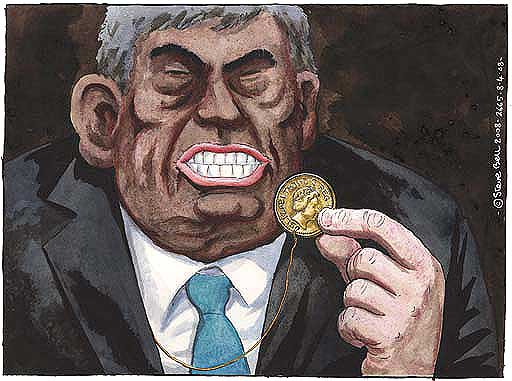
I exaggerate slightly. The headline could however just as easily be about Brown. Toynbee strangely doesn't mention in her column something rather more important to the average low-paid worker who's most likely to actually vote Labour, but Brown could be that Tory wolf in Labour clothing. What else to say of someone who, through abolishing the 10p starting rate of tax, has just redistributed mainly from single workers without children earning under £18,500 to those earning over £35,000 a year, who gain under the tax changes introduced in his last budget?

It's important to set the background to how this change came about. This was back shortly before Brown was to inherit the Earth - or at least the Labour party leadership. His stewardship of the economy was not yet as threatened or criticised as it is now, but it was starting to come under some strain, and he didn't have much room for manoeuvre. He needed something that would grab the headlines, but that wouldn't smack the most crucial constituencies, the cliched hard-working families, pensioners, or the City. It might not have had anything to do with it, but the weekend before a number of newspapers called for tax cuts, with the News of the Screws almost begging for some sort of slash. The 10p top rate, introduced by Brown himself some years previously, was the obvious contender. The reasoning was that due to the introduction of tax credits, those on low pay who would have otherwise have been whacked had something of a fall-back, while the only real major losers would be those under 25 without children who couldn't claim them and part-timers who didn't work enough hours to qualify.

The signs that this wasn't thought through properly, or that it was, and Labour either didn't care or thought that the majority wouldn't care, are fairly clear. If there's one thing that New Labour has always been aware of, it's the polls, and time after time they show that around the only remaining demographic that supports the party consistently and in spite of everything is the 18-24-year-olds. How could they have not noticed it regressively targets them if the Treasury hadn't been frantically searching for the proverbial rabbit to pull out of the hat?

Regardless of that, the giving with one hand and taking away with another didn't fool hardly anyone else in any case. The most grateful headline the budget received was the Sun's "reasons 2p cheerful", which was rather mitigated against by the following day's headlines elsewhere on Brown's "tax con". Questions have been asked of why the Labour MPs now concerned and angry about the change didn't recognise it sooner and speak up - the reason why they didn't because at the time they didn't care as they had no reason to think it was going to affect them personally. Even if the local elections were coming up again, the losses were thought unlikely to be as severe as previously, especially considering Blair was on his way out and acting as a lightning conductor for discontent. With him gone, Brown was bound to re-energize the party and re-engage with the public itself. This was exactly what happened - until the Northern Rock crisis broke out, Brown fluffed his opportunity to call the election last autumn, and the economic weather significantly turned with the credit crunch, still now reverberating and having a chilling affect across the board.

Backbench MPs are concerned now because a tax change they thought they could bluff their way through has come home to roost. However much the Supreme Leader and Alastair Darling chunter about how we're in an excellent position to deal with the lack of liquidity in the financial markets, with inflation low, the lowest paid are the ones feeling the pain of the price of food especially rising. Then, just as things are getting worse, they get further stabbed in the back by Labour taking away the 10p rate. Taking into conjunction with other matters that Labour has dismissed or poo-pooed, such as the closing of post offices and now the most dramatic fall in house prices since the dark days of 1992, and it's little wonder that the Labour MPs are so worried. Even though the Conservatives continue to offer very little of any substance or great difference, they see the upcoming local elections as the precipice they may be about to fall off. They remember the almost wiping out of Tory councils back in the local elections of the mid-90s, and fear it's about to happen to them. The only major council Labour still controls in the south outside London is Reading - and it's under great pressure.

This was not how it was supposed to happen. If Brown had gone for the election back in October, then Labour would now most likely still be in power, albeit with probably a further reduced majority, and while all the above issues would be of concern, they'd have the four or five years to once again turn it around. Instead Labour is increasingly hemmed in from all sides, but Brown himself doesn't either seem to recognise this, or if he has, he's not showing it. I personally couldn't care less about house prices falling, especially seeing if I'm ever going to be able buy one at some point in the future they're going to have to drop a lot further, but when it's possibly the number one issue for the middle classes it seems to be asking for it to refer to the drop as "containable". That doesn't even come close to the apparent contempt he feels for the very individuals he's shafted with the removal of 10p rate however, who have to realise that he's taking the "difficult long-term decisions" and that in a few months they'll see the results - I'm sure they'll appreciate that when their pay-checks come in.

Quite why the Labour MPs are complaining however, as opposed to why are they complaining
now is the better question. It's with a piece of everything else Labour has done of late. When John Hutton does the greed is good routine just as the banking sector has brought the Western economy to its knees, when concessions over the non-doms are made almost as soon as the City howls, when Caroline Flint continues to spout about evicting those on benefits from council houses and when the entire cabinet seems to have decided to out Blairite the worst excesses of the Blair years across the board, they ought to have realised by now that Labour stopped caring about its base a long time ago. Instead of letting them eat cake it urges them to eat tax credits, even if they mask the problem rather than anywhere near address it, are incredibly difficult to claim in the first place and there continues to be huge problems in the administering of the scheme, leading to both under and over payments. Rather than offering the change he promised, Brown has been a continuation of the same without the undoubted political nous which Blair had. You might remember that David Miliband said on Question Time that a year into a Brown prime ministership some might feel nostalgic for Blair and want him back; someone more perceptive might have instead said that a year in and everyone would be saying that nothing had changed. The "tragedy" has been that they would have been proved right.

Labels: , , , , ,

Share |

Friday, October 12, 2007 

Social democracy died long ago, Polly.

Unlike some others in the "blogosphere" who love to tear apart Polly Toynbee's twice-weekly prognostications in the Grauniad (she's columnist of the year, doncha know?), I usually just read her articles, filled as they are with a bizarre Labour love fetish, agree or disagree, and move on. Sure, she talks a lot of bull on occasion, but then so do most newspaper comment piece providers.

Today though she's having one of her twice yearly doubts about just how marvellous Tony/Gordon are. These inevitably follow the latest budget/pre-budget report, which again failed to allocate significant amounts of money to tax credits and abolishing child poverty. It happens invariably every year, but still Polly brushes it off and goes back to pleasuring herself with the clunking fist still foremost in her mind, unable to see the reality that should be staring her in the face: Labour's finished, and all it cares for now is staying in power and standing very, very slightly to the left of the Conservatives.

The really perplexing thing about all this is that Polly once admitted as much in a rare, truly honest piece back in January last year, when she wrote that the Social Democratic Party she was a part of back in the "bad old days" of Militant and Foot was to the left of where New Labour is now. She opined:

But there is a need for a party more radical than Labour, a party that says no to war and no to wasting billions on new nuclear weapons or nuclear reactors, that dares to talk of the greed of the rich, of boardroom kleptocracy and the duty of top earners to shoulder a fairer share.

She wrote that then, and must have believed it. She must have seen all the warning signs since Brown has taken over: after the competent start and the refusal to play politics with the almost immediate "terror" attacks, it's been all downhill. Where Blair once delighted in playing the hard man and trying his best to appeal to the Sun, Brown's every movement was calculated to please Paul Dacre and the Mail. First the u-turn on the reclassification of cannabis, the change on the supercasinos which so exemplified the Blair era of ultra-consumerism, mass-materialism and living for today, now replaced by the Scot son of the manse's almost puritanical stance which Dacre espouses almost as much as a "double-cunting" to his hacks. Like with Blair, such a ploy was doomed to failure from the beginning. No one, even on the soft centre/centre-right like Blair and Brown can keep such right-wingers on their side for long; after a while they start hankering for the real thing, as Toynbee in today's article herself notes, but even going by the short attention span that afflicts the tabloid press the change in tone after Monday's daylight robbery was brutal. The result was Tuesday's Daily Mail front page: vicious, wounding, and more than accurate.

Why only now then does Toynbee finally realise that it was this week that Labour's leaders left social democracy for death? For years she's put up variously with Labour's ruthless social ill-liberalism (notoriously writing one abysmal article on how the middle class is more concerned about ID cards and civil liberties than child poverty), the disastrous foreign policy post 9/11, its incestuous relationship with the rich and powerful and its complete contempt both for the truth and the public, at the last election urging voters to wear nose pegs and disregard Iraq to vote for the party, yet it takes a predictable and nowhere near as egregious as some of Blair's manoeuvres (rules of the game are changing, dropping of SFO's investigation into BAe, refusal to call for an immediate ceasefire during last year's Lebanon conflict, years of spin and lies) act of political shamelessness for Toynbee to get the message.

Toynbee writes:

We now have a centrist government in Europe's most unequal country. Our government stands somewhat to the right of Angela Merkel's coalition in Germany, to the right of economic policy in France, where Nicolas Sarkozy has absorbed social democrats. Fusion politics, like fusion music and food, is one description of this strange death of the centre-left. At least in Europe there are leftwing parties still to make the public arguments: in England, due to our malfunctioning electoral system, a political generation has barely heard the case for social justice.

Yet whose fault is this? Toynbee helped cut the Labour vote at the exact time when it needed it most in the 80s, and then she urged support for it when it deserved it the least. Through her undying belief that Labour's mild policies on redistribution have been making the difference, she might well have helped destroy any chance of the exact leftwing policies she yearns for being introduced. It's come to something when the Liberal Democrats are the only even slightly appealing mainstream political party, and they're flatlining in the polls, stuck with a decent and honourable leader but one who can't make the difference up. The need for a genuine alternative has never been greater, but Polly has helped towards ensuring that any such alternative is almost impossible under our current system.

Related post:
Mr Eugenides - Polly's Viking lets her down

Labels: , , , , , ,

Share |

Friday, April 13, 2007 

Hypocrisy and hysteria smother everything.

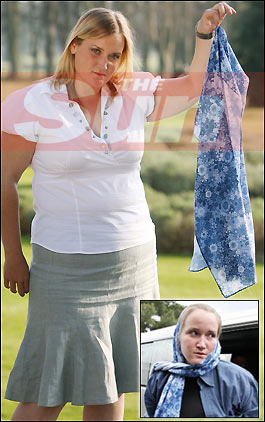
And what am I bid for this historic, traumatised headscarf?

For those who often, and on occasion quite rightly attack Polly Toynbee for her more vapid rantings, today's piece was one of those rare ones where she more or less gets it right. Sure, she overplays her hand in claiming we have the worst press in the western world when she should have instead said we have the worst "popular" press, as the broadsheet media is rightly seen by comparison as one which gives space to a wide range of different voices, whether you agree with them or not, but apart from that and the final paragraph which it could do without, there's little to quibble with.

It's always nice to have your suspicions confirmed, and to discover that the Daily Mail is indeed as hypocritical as you thought it was is uplifting, at least for a few minutes. If they hadn't tried to acquire Turney's story, as we know now for certain they did, then their anger which has been thrown towards the government would have at least had some legitimacy. Instead, the whole charade of making as much as possible out of the fuck-up just seems humourous, which is the attitude which ought to be taken towards the rag in the first place.

That said, equally amusing is how the Sun has now called on Randy McNob (© Alan Partridge) to defend both the newspaper and Turney herself. Some choice cuttings from this tale of woe are:

THEY volunteered to serve Britain by patrolling some of the world’s most dangerous waters.

This is complete nonsense. By the MoD's own admission, HMS Cornwall was mainly there to stop the smuggling of, err, cars. Truly a vital enterprise, and one which involves keeping your wits about you at all times, as Arthur Batchelor's angst about having his iPod stolen showed.

One of their most senior reporters offered a “very substantial sum” but Faye wanted to go with The Sun. The Sun is the Forces’ paper, the one most soldiers read. Many officers won’t even have the Mail in the mess.

Quite right, which is why the good people of ARRSE were referring to the Sun as the err, Scum.

I was in Afghanistan on Wednesday and the attitude of our troops there was, “Good on you, Faye.”

Yeah, well, I was in Basra on Tuesday and they all thought she was just grabbing the green.

In fact, it was the MoD who suggested Faye receive a fee for describing her ordeal in the first place.

Because the papers weren't already offering vast cheques to their families and relatives were they, one of the main reasons why the navy made the decision in the first place. Oh no, this is all the MoD's fault! The Sun was a mere bystander, the £60,000 just magically appearing in Turney's back-pocket without anyone so much as talking about payment.

It's times like this when you have to hand it to the Sun readers', or at least those that leave comments. They might come across as right-wing lunatics on some of the articles, but they can also spot a pile of excrement when they read it:

WASN'T MCNABBS BOOK BRAVO2ZERO LAUGHED AT ,BECAUSE IT WAS MORE FICTION THAN FACT?

Yes McNabbs book was more fiction than fact. In fact an ex SAS seageant fron the good old days of the Radfan battles, followed his footsteps and found out the truth from some locals, like one of the fire fights was an old bloke with an AK thought someone was trying to pinch his goats and started firing in their direction.


Andy Mcknob believes it's right for her to sell the story beacuse he did the same, though his stories ususlly involve magic beans & kingdoms far, far away.

It's hard not to sympathise with the Scum though when the Mail is printing such hysterical tripe as this from another ex-General they've bought off:

Leading Seaman Faye Turney and her 14 fellow captives were 'distinctly un-Nelsonic' in the way they failed to fight back and behaved as though they were on a 'Mediterranean cruise', he says.

Actually, there are more similarities between Nelson and Turney than you think. Both saw no ships, at least until it was too late in the latter's case.

'But as Wellington said, to live in disgrace is the worst thing of all. To die glorious is something to be envied.'

I'm more reminded of the old Italian man in Catch-22 who told Nately he had Zapata's quote backwards. He knew that it's better to live on your feet than die on your knees, as Rose would apparently have had the 15 sailors end their days for no discernible reason whatsoever other than "glory" or "heroism". There isn't anything noble about coming home in a body bag for Blair, as the families of those who did die last week know only too well.

We may have to wait a while for the Catch-22 of the Iraq war to emerge, although the madness of war, and especially this war, could not be more apparent when reading the tabloids tearing chunks off of each other because of the meaningless, moronic stories which they were prepared to pay far too much for. They'd rather regal us with those than actually act to bring the troops they claim to support home, instead only abusing their pointless deaths when it means they can bash the government over something inconsequential, especially to a war which has killed so many and done so much harm. As Toynbee said, death, particularly when it's not "ours", is boring. The screaming souls of Iraq are left to screech only to an empty sky.

Labels: , , , , , , ,

Share |

About

  • This is septicisle
profile

Archives

Powered by Blogger
and Blogger Templates