Monday, September 22, 2014 

All transitory.

Despite everything, I still felt a pang of disappointment on waking up on Friday morning.  I'd stayed up for the first results, Clackmannanshire, Shetland, Orkney, the first setting the pattern mostly to be repeated throughout the night: Yes had come close, but still not close enough.  For all my contempt for both campaigns, for the naivety, the scaremongering, the chauvinism, shallow nationalism and baleful bigotry, had I a vote I could only have crossed the yes box.  Given the choice between a state retaining a belief in solidarity, even if not with the neighbours south of the border, something akin to a social democracy, and the atomisation offered by all three Westminster parties? There is no choice.

True, the SNP weren't in reality offering anything like that.  Independence was always just a means to an end, with everything to be determined afterwards.  The idea Alex Salmond isn't an establishment politician is as much of a hoot as Nigel Farage presenting himself as the insurgent; it's how debased and safe our politics has become that both just about get away with it.  When it came down to it, the Yes campaign's failure to answer convincingly the most basic economic questions about an independent Scotland cost it.  The undecideds stripped from the polls simply made it look closer than it was.

We can't of course without further polls know exactly what it was that made the undecideds say no.  Were they always going to, was it last minute doubts, the Daily Record "vow", Gordon Brown's interventions (or the just as electrifying condemnation of the SNP from Vicki Greig for that matter), the warnings from businesses, the horror of making Salmond even more smug and self-assured?  All we do know is the commentariat made its mind up straight away.  Scotland might have said no, but no actually meant yes.  Moreover, despite the rest of us not having a vote, Scotland's no also meant yes to more devolution for rUK.

First though, let's not get too carried away with the 85% turnout.  Present a country with a yes or no choice on whether it remains part of a 300-year old union where every vote counts, and if turnout isn't approaching that level you've got severe problems.  More concerning ought to be how 25% of the electorate of Scotland's biggest city still couldn't be persuaded to make a decision either way.  Alternatively, it could be those 25% are the smartest people around, indifferent to the political weather and perfectly happy with their lot in life.  Perhaps they should be envied, rather than getting us dead inside political junkies why-oh-whying about how they can't be reached.

By the same token, only so much can be made about those who've spent the last year or so hoping against hope Yes would pull it off at the last.  Political movements are prone to collapsing the minute after the moment has passed; remember Occupy, or indeed any real organised opposition to austerity for that matter? Thought not.  When Martin Sorrell remarks on just how quiescent the young are, dulled he no doubt believes by the very promise his advertising offers, we ought to be taking notice.  The radical independence people are most likely to be this decade's Iraq war marchers: there for the extraordinary moment, and left bitter, angry and depressed at the failure to achieve their goal.  Nor is there much comfort to be taken from the level of debate: yes, more people than ever informed themselves via the internet and made their minds up that way; no, it didn't make up for the underlying tenor, the shouting down of the opposition, the all too frequent recourse to the language of betrayal and surrender, the never-ending torrent of shit thrown in all directions by more than just the usual suspects.

Equally, you can appreciate the irony of the London media, so often to be found either bemoaning Scotland or England both suddenly desperate for these septic isles to remain united, seemingly for subconscious atavistic reasons rather than out of any real affection, but it doesn't last long.  Not least when nationalism of one variety leads all but inevitably to the rise of its equivalents, understandable grievance followed by pitiful whinging.  Of all political bores, and let's face it, we're never the most engaging of folk, the most crushingly dull are the constitutionally fixated ones. England needs its own parliament like it needs two John Redwoods, West Lothian question aside.  The word devolution means whatever those clamouring for it say it does, and it's more power for them rather than true localism.  Time and again the public has made clear it has no interest in yet more politicians, whether it be through often rejecting mayors, the north-west assembly or most recently in the derisory turnouts for the police and crime commissioner elections, a creation no one asked for and no one wanted, and yet still a section of the media and the Westminster bubble thinks otherwise.

The dream might live on.  It's just the dream, as always, is transitory.

Labels: , , , , , , , ,

Share |

Tuesday, September 09, 2014 

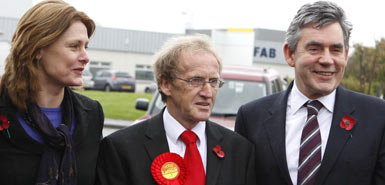
Cometh the hour, cometh Brownman.

Every so often a political crisis comes along that just can't be solved by the usual, ordinary methods.  In such times, there is but one man you can turn to.  He can't be reached by phone, his real identity is known only to a select few, and there's no guarantee then he will help out, liable as he is to years of sulking and plotting.  Your best bet of attracting his attention is to ask Commissioner Gordon Hogan-Howe to illuminate the brown signal.  For he is, and will always be, The Brownman.

Yes, now recuperated from the exertion of saving the world from financial meltdown in 2008, Brownman is back to smash the Salmon(d)'s nefarious plot to break Scotland away from the United Kingdom!  Could Brownman this time have left it too late however?  Should he rather than the Boy Darling have led the battle against the Salmon(d)?  And what of the swirling rumours Brownman is only intervening due to the machinations of Two-Face Cameron and Poison Crosby?

Describing the actions of Better Together over the past couple of days as panic doesn't just do a disservice to those who suffer from anxiety attacks, oh no.  We're talking full on, head-just-been-cut-off, running around the farmyard with blood spraying everywhere type attacks of fear-induced mania.  It speaks volumes of the confidence of the no campaign that a single, solitary, within the margin of error, with don't knows stripped out poll giving Yes its first ever lead causes a quite staggering outbreak of oh my god what are we going to do we must do something anything and right now-itis.  These, remember, are politicians meant to be calm, collected and resolute in the face of any threat.  Menaced by the divisions of YouGov they've turned tail and ran straight for the high road.

Leaving it till now, both to use a figure who might make a better emotional case than Alistair Darling and to set out exactly what a no will mean in the form of further devolved powers is baffling, except when you know what a basket case the no campaign has long been.  They believed they could just go on saying no to everything Yes said they could do, and that would be enough.  No currency union, no EU membership, no deals, no friendship, no help, no chance of Scotland becoming Norway.  In fairness, the polls suggested this approach worked, except until the vote got so close you could start to feel it, more people began paying attention and Salmond played the if-you-hate-the-Tories-even-if-you-don't-know-why-vote-Yes card (PDF).

I've tried not to pay too much attention to the Scottish independence campaign for the reason that both sides equally depress, or rather infuriate me.  Generally in politics and as I've often tried to argue here, all involved are ghastly but there's usually one slightly better than the rest, even if the differences between them are almost imperceptible.  Yes peddles a fantasy vision of a Scotland freed from the perfidious English establishment, a country where the sun will always shine, the oil will perpetually flow and the welfare system will forever be more generous and fairer than its south-of-Berwick equivalent.  Sure, every so often either Salmond or Nicola Sturgeon will say they're not claiming independence will be a panacea or transform the nation overnight, but it usually comes after a very particular flight of fancy.  No by contrast paints a picture of a nation too wee, too poor, too stupid to go it alone, one where London knows best and to prove exactly that point will block any proposal, however modest, to give the Scottish people more say.  This is without getting into the petty grievances of both sides, the dead horses beaten daily, the phony differences played up by those who really, really ought to know better, the we're more Scottish than you attitudes on display by all concerned.

Just as sad is how otherwise intelligent people have been sucked in by this cavalcade of bullshit.  Some of those on the left backing independence really seem to believe this is the first step on the road to socialism in one country.  Never mind that the SNP is about as radical as those people wooing and cheering as Apple launches yet another slightly better iPhone than the last one, a party that as Shuggy says has not during its 7 years in power instituted a single redistributive policy, that Salmond is more than happy to pal up with those pinkos Donald Trump and Rupert Murdoch, as once the independence deal is done and dusted they can elect someone better.  Like whom?  The Greens?  A reinvigorated Scottish Labour party, suddenly receptive and open to policies they weren't when tied to the English party?  Or do they seriously think the tax cutting yet still somehow able to spend more SNP will turn from yellow to red?  The notion Scotland is more left-wing than the rest of the country doesn't stand up to any kind of real scrutiny; hating Thatcher and not voting for the Tories in the same proportion as us southerners have certainly doesn't equal the same thing.

Yet it's also impossible not to see the attraction.  Forget the chest-beating nationalisms for a second, and why wouldn't you want to take a chance on independence when the alternative is more years of austerity, whether delivered either by a Tory-led or a Labour-led coalition?  No one seems to have connected the spectre of another war on the horizon with the leap in support for Yes, despite independence suggesting a break from the overseas adventurism of the recent past.  Listening to David Cameron speaking last weekend from the NATO conference was to hear a man suffering from the most extreme delusions of grandeur, imagining the nation he leads is still a world power, able to project itself around the world as it builds a second aircraft carrier and ensures defence spending remains at high percentage of GDP.  Who wouldn't want the insufferable, jumped-up arse to be forced to go to the Queen and tell her in the space of four years he's managed to oversee the dismantling of the union?  The idea he could stay as prime minister in such circumstances is laughable, as is the one the general election would go ahead next year as planned.  Besides, do you really want to align yourself with the gimps in power at Westminster, complacent with the apathy they usually encounter, until at last they realise the situation is far more serious than first thought?

The problem with this is both that it's a strange independence movement that wants to break up the United Kingdom yet keep the pound, if necessary without a currency union, all while staying in the European Union, and that even if we accept at face value most of the claims about the true potential of the Scottish economy, it still leaves the country facing an incredibly tough initial decade, such are the levels of debt the newly independent state would take on.  This is if everything goes smoothly in the negotiations between Scotland and rUK, of which there is absolutely no guarantee, with Mark Carney explicit today about the incompatibility of sovereignty and a currency union the SNP insists will happen.  It could just be my natural pessimism talking, but I'd like to think it's in fact realism.

All three main party leaders are then off north tomorrow in their bid to lovebomb Scotland into submission.  It's a pretty pass we've come to when unleashing Brownman is the more rational, more likely to have an impact stunt of the week.

Labels: , , , , , , , ,

Share |

Thursday, August 07, 2014 

If Simon Cowell wants us to stay together, then who are Scots to argue?

One of the absolute finest qualities we as humans possess is our ability to admit when we're wrong, or when we don't know something.  By contrast, never back down, never apologise is the mantra of such towering figures as Kelvin MacKenzie, and even if not immediately, such principles tend to eventually catch up with you.

I will then freely set out how at times this politics thing completely and utterly bewilders me.  Do politicians seriously commission focus groups, which are often nothing of the sort, and use them as their ultimate guide for which policies are most likely to reach the nation's collective erogenous zones?  Did they really imagine that an obviously catastrophic in retrospect ploy would work, when anyone with half a brain could of told them it was beyond idiotic?  Is Grant Shapps a real person and not a fictional creation designed to destroy the Tories from within, ever ready with a charmless, redundant anti-Labour soundbite?

The ultimate example of this has to be, at least in my eyes, the celebrity endorsement.  Absolutely no good can come of it, either to the famous person or the cause they take up/are persuaded to support.  It doesn't matter how noble it is, whether it be trying to stop Sexual Violence in Conflict, a notion that seems to ignore that they the two have always and will always go together and the best way to end the former is to stop the latter, or as we're getting on to, urging the United Kingdom to stay united, someone out there will take against you for it.  Just tweeting #FreePalestine is enough to make an image consultant have kittens, while Javier Bardem and Penelope Cruz are naturally, according to the Times of Israel and other celebs, antisemites for their comments.  Bono was always a twat, but he didn't really become such a stupendous bell end (yes, equal opportunities sexual organ based insults are here again) until he started his philanthropic work.  At the same time as being a tax exile, natch.

So it is with the 200 or so celebs and semi-celebs who've signed the Let's Stay Together letter.  The sentiment expressed is mild, and done in such a way as to make it unlikely anyone could be genuinely offended by the simple plea for voters to consider all that we've shared over the past 300 years of union.  At the same time, those behind the campaign have what could be described as a murky past, and the message is one anyone contemplating voting yes will have already thought over themselves.  They really don't need people without a vote, famous ones at that, to tell them something they already know.  Some might also recall the Guardian's Clark Country fiasco back in 2004, when the paper urged readers to write to voters in America as to why they shouldn't re-elect George Bush.  It didn't go well.

Nor does it help when the vast majority of those who've added their signature are exactly the kind of celebs you'd be tempted to move to an independent Scotland to avoid.  The very first name is David Aaronovitch, for crying out loud.  Kirstie Allsopp swiftly follows, and once you realise both Trinny and Susannah have signed, along with Neil "paedophiles have more genes in common with crabs than they do with you and me" Fox, it's easier to note those on the list who aren't complete tools.  Like Olivia Colman, David Mitchell and Tamsin Greig.  Or Stephen Hawking and Doreen Lawrence.  Then you realise Simon Cowell, Tracey Emin and Andrew Lloyd-Webber have also etched their initials, and heading north of Gretna after a Yes vote once again looks incredibly attractive.

It wouldn't be so bad if the lead No has in the opinion polls didn't look all but impregnable, or had Alex Salmond trounced Alistair Darling in the debate as so many expected he would.  As it happened, Salmond fell shortest on the currency question, the exact quandary Yes campaigners have repeatedly and with some justification said is a non-issue.  The problem is voters don't believe the rUK will roll over after a Yes vote and say OK, let's discuss this in a civilised fashion now it's happened, even if that's most likely what would happen.  Nor did Salmond help himself by bringing up the scare stories over a Yes vote, as it's one thing for a blog like Wings to do it, and quite another for the prospective first prime minister of an independent Scotland to.

Much as you don't want it to be the case, Project Fear looks as though it's done its job.  The Yes campaign's insistence everything will be absolutely fine post-independence just hasn't worked when set against the apocalyptic visions painted by Better Together.  A better society as Salmond promises is a fine sentiment, it just doesn't seem able to win out against those worried about what might happen if things don't go according to the SNP's plan.  Add in what you can only describe as the naivety of the Radical Independence campaigners, convinced supporting the SNP now will mean jam tomorrow, and it will take something miraculous for the gap to be made up.  A bunch of well-meaning if jumped up celebrities aren't going to piss off that many wavering voters, sadly.

Labels: , , , , , , , ,

Share |

Tuesday, April 08, 2014 

Scottish independence and "the forces of darkness".

The Better Together campaign against Scottish independence hasn't had a great time of it recently. Ever since the Graun quoted an unnamed minister apparently due to be involved in the negotiations should there be a yes vote as saying a currency union would be possible in exchange for Scotland continuing to host nuclear weapons at Faslane it's seemed more on the backfoot than usual. They must know "Project Fear" isn't working, but as yet they still haven't come up with an alternative. Last week instead saw a step-up in the complaints about online nationalists supposedly abusing their opponents, the internet equivalent of taking your ball and going home.

Lord Robertson wasn't speaking on behalf of Better Together at his Brookings Institution speech, although that won't stop everyone, myself included, from linking his ridiculous scaremongering to the No campaign's overall message.  As a paragon of the substrata of the political and military establishment seemingly unable to address any matter without seeing it through a prism of what's good for NATO is good for the world, he naturally thinks the United Kingdom breaking up would be the second great victory for dictators and annexers of the year. What's more, it will encourage all the other separatists in Europe, could undermine peace in Northern Ireland and also prepare the ground for the four horsemen of the apocalypse. To call it unhinged doesn't quite do it justice; the idea Scottish independence "could ... impact on the stability of the world" is only slightly less absurd than suggesting Colonel Gaddafi could rise from his grave and come back to power in Libya.

It doesn't even begin to make the slightest sense.  You could understand it more if Scotland were, as some would like, not intending to rejoin NATO or the European Union immediately, except that's precisely what the SNP is proposing.  Despite some on the no side comparing the SNP to the UKIPs, the differences couldn't be more stark: the SNP if anything wants to play more of a role in the EU than the UK currently does, and also favours immigration.  They might be similar in the way both insist that any problems with becoming independent/leaving the EU will be overcome as soon as the decision has been made, and in the personality cult surrounding their respective leaders, but that's about as far as it goes.

Robertson's argument is all the more mystifying for coming at the precise moment when such pleading to think about the consequences for everyone else appears to have lost the impact it once had.  Nigel Farage's man love for Putin is revealing for a supposed libertarian, and his claim that the EU has blood on its hands over Ukraine the most specious nonsense, yet one of his most telling blows against Clegg in the second debate was his attack on the deputy prime minister for being "hell-bent" on bombing Syria.  As exemplified by the coalition not crowing about what should be one of its crowning achievements, having now reached the point where 0.7% of gross national income is spent on international aid, going out of our way to "help" other nations is not currently in fashion.  While there's a world of difference between going beyond the bare minimum in helping developing countries and bombing those said countries, or at least there should be, the fact is the political class is no longer trusted when it comes to either.

This poses a problem when so much of the establishment still earnestly believes in interventionism.  We've just had the 20th anniversary of the beginning of the Rwandan genocide, from which the notion of the responsibility to protect emerged, despite how peacekeepers were on the ground both there and in Serbia at the time of Srebrencia.  The same human rights organisations opposed to the Iraq war were practically cheerleading for an attack on Syria last year, with those of my generation who were in favour of removing Saddam Hussein now ensconced in positions of power in both Amnesty and Human Rights Watch.  Despite the failures of Iraq, Afghanistan and Libya, there isn't the slightest indication that any lessons have been learned from the mistakes, hardly surprising when the Western media en masse celebrated Afghans "defying" the Taliban to vote last weekend, as though that was their main reason for casting their ballots, nor have any reflected on whether those interventions might just have influenced Russia's annexing of Crimea.  Instead we have Tony Blair (who we shouldn't be calling a war criminal apparently) once again given the time and space to say we will regret not acting on Syria, as though that isn't precisely what we've been covertly doing now for over 2 years.

Much as I loathe the moaning about the metropolitan elite, much of which ironically comes from those who are, err, a part of the metropolitan elite, they've started to have a point when it comes to foreign policy.  If we're to believe Seymour Hersh's latest report for the London Review of Books, the real reason Obama pulled back at the last minute from attacking Syria is it was discovered the sarin supposedly used by Assad's forces in Ghouta didn't match with the batches in Syrian government possession, and was instead part of a false flag attempt to force just such an attack by the Turkish government.  As incredible as that seems, there is evidence of other Turkish skulduggery in Syria, notably the conversation posted on YouTube, prompting the site's shortlived ban in the country, and which seemed to be between government figures discussing staging an attack the Turks could then use to justify intervening more widely themselves.  If the international community can come so close to being so spectacularly fooled, not to mention shown up over Crimea,  it takes a hell of a lot of chutzpah to then lecture ordinary Scots on what they should consider before they cast their vote come the referendum.

Labels: , , , , , , , , , , ,

Share |

Wednesday, March 26, 2014 

Stratchclyde Partnership for Transport gives you wings.

It's fair to say that I am yet to be convinced by any of those arguing in favour of Scottish independence. Apart from how I find it extraordinarily difficult to separate narrow nationalism from short-sighted political chauvinism, being constantly reminded of Renton's outburst in Trainspotting, I simply don't follow the case made by the radical independence people.  Should Scotland vote yes it certainly won't mean that the SNP will be in government for perpetuity, but the idea this will open a gap for those further to the left just doesn't tally. The SNP is fundamentally an authoritarian party, albeit one closer to social democracy than Labour has been in two decades. It's made the exact same compromises though, as evidenced by Salmond's sucking up to Murdoch and pledges on corporation tax and air passenger duty.  Imagining that giving them their greatest ever victory will in turn result in a triumph for those opposed to neoliberalism is just wishful thinking.

This said, it's difficult not to be slightly overawed by the efforts of some on the Yes side, as epitomised by Wings Over Scotland. Having already crowdfunded two opinion polls, Stuart Campbell's last appeal for cash to keep up the site's campaigning brought in over £100,000, a sum which astonished everyone. With some of this extra money, Campbell booked an ad to run on the Glasgow subway, a simple yet bold design pointing out that not a single national or daily paper supports independence.

Almost entirely predictably, within hours of the ad appearing it was being pulled.  The reason? It's difficult to tell, as the advertising contractor Primesight and Strathclyde Partnership for Transport have now taken to blaming each other, but it seems as though the justification remains that the ad is "political". Except, as should be clear to anyone even passingly impartial, it's not. While you can quibble over the exact number of papers that are Scottish owned, with Campbell accepting he forgot about the Greenock Telegraph, no Scottish paper does support independence.  The Wings advert is no different from a newspaper declaring what its political affiliation in the same way; how anyone could claim that makes the advert itself political completely escapes me. If anything, it reminds of the Guardian's well known advert from the 80s, which also advocated taking a wider view.

Whether the decision itself was political, and it's difficult to shake the feeling it might well have been, the knock on effect has been just as predictable: news articles on the controversy mean that thousands more people than would ever have seen the ad on the tube are now aware of it and Wings Over Scotland (Wings has also had its money refunded).  It also shows the Tube operators in an extremely poor light, especially when the newspaper distributed on the network today carries an advert attacking, err, the Yes campaign and directs readers to a website. Even if the Yes campaign does fail, and while I suspect the end result will be far closer than most polls suggest you'd have to be a brave man to bet against an No, the Scottish media and their friends in power have been shown up as never before.

Labels: , , , , , , ,

Share |

Monday, February 24, 2014 

Aberdeen is full of crushing bores.

You have to feel for the people of Aberdeen.  It's bad enough one group of politicians taking it upon themselves to pay a visit to your city, predicated on the strange belief that doing so will suggest that the metropolitan based elite aren't just concerned with the bright lights of London and the south east but also them there yokels; when two turn up, it's enough to make you reach for the digitalis.  About the only such jaunts that gain anything approaching a hubbub are royal ones, for goodness knows which atavistic reason.  Even more bizarre is the Tory insistence on both Dave n' George being seen to visit businesses that demand they don the necessary gear, generally white or blue overalls, hi-vis jackets and hard hats.  Whether this is meant to conjure up the impression of the pair caring deeply about our manufacturing and construction base, or that had they followed a different path they could have been working in such an environment, all it does is make them look like prize twats, successors to the mantle of Hugh Abbott, although as yet neither have been accosted by a woman asking if they know what it's like to clean up their own mother's piss.

To be fair, the real reason both the UK and Scottish cabinets made a stop off in places close to Aberdeen today is due to the city being the country's oil and gas capital.  It would be a bit off to make major announcements about investment in the North Sea sector without at least referring to the damn place, not that it's much consolation to those who had to suffer Salmond, Cameron and the media apparatus descending for a few hours.

Quite why Cameron and pals felt they had to go so big with the report by Sir Ian Wood is something else entirely.  The big questions about an independent Scotland are those that have been discussed over the past few weeks, which currency would it use, would it be able to join the EU, is the SNP promising dick pills to those who vote yes and the Better Together clan suggesting the four horsemen will descend on the 19th of September should the result be yes an unsustainable strategy, and so on.  When it comes to oil, there are a few facts that are difficult to argue against.  That Scotland and indeed the UK as a whole didn't benefit as they should have done from the oil rush, with successive governments preferring to spend at the time rather than save for later making it the SNP and Alex Salmond's trump card, the party promising to right the wrong.  It might turn out that it's too late to set up a sovereign wealth fund now, even if an independent Scotland implemented the recommendations of Sir Ian Wood, but at least it's an attempt to do something.

Which makes it all the more head scratching why Cameron insisted it was only under Westminster tutelage that such funding and investment would be possible.  Take the worst case scenario in the event of independence, that Osborne and the other parties carry through their threats not to agree to a currency union, Scotland as a result refuses to accept its share of the national debt and so is penalised by the markets when it wants to borrow.  Even in such circumstances it's difficult to see why investors wouldn't want to grab a share of the £200bn it's suggested could still be underground, difficulties in extracting it or not.  As overblown as the SNP's vision of Scotland as the new Norway is, you can't help but think it might just put the windfall to better use than the UK has up till now.  Cameron's rhetoric comes as close to the bluster we've heard about recently as anything, his supposed "positive case" laughably inept.

Despite all the carping from Salmond on the basis of a single opinion poll that support for independence had gone up in the wake of the Better Together currency union gambit, a broader view suggests it's done relatively little to alter the standings.  This is hardly surprising when many are yet to make up their minds and almost certainly won't until the last minute.  The polls will narrow as we approach the 18th of September, it's whether Yes Scotland can continue to make a case that convinces the head as much as the heart.  The way the three unionist parties handled the currency union argument was botched yet the right idea, focusing on the uncertainties the SNP have brushed over.  Paul Krugman's intervention shows the SNP doesn't have all the Nobel laureates on its side.  They might also have a few less of those who have a vote, so long as Cameron and friends can be persuaded to keep a low profile from now on.

Labels: , , , , , , , ,

Share |

Monday, February 17, 2014 

Breaking up is hard to do.

While there's been little polling as yet on whether or not the gambit by the three Westminster parties to oppose currency union with an independent Scotland outright has had any impact, although indications suggest it may well have backfired, Alex Salmond's response today was billed as being a "point-by-point deconstruction" of their stance.  As was predictable when both sides prefer hyperbole to anything so much as resembling dispassionate analysis, it was nothing of the sort.

Salmond's first problem is that regardless of the spin put on it by Osborne and friends, it's a policy based on the analysis from the permanent secretary to the Treasury, an independent figure.  Salmond can dispute the merit and strength of Sir Nicholas Macpherson's reasoning, but not its source.  Instead then he dealt purely with Osborne, only mentioning the paper from the Treasury once.  Second, of the two new points he made, his publication of an analysis suggesting a £500m cost to UK businesses if there wasn't a currency union is based on the obvious assumption that, rather than using sterling informally, Scotland sets up an entirely new currency.  This would be fair enough if this was the SNP's Plan B, except it clearly isn't.  For someone who denounces the negative campaigning and calls out the No campaign as being Project Fear, this is rather desperate stuff, as making the argument has been from the outset.  It's also as transparent as can be - if Scotland votes yes, it will use the pound, whether within a currency union or not.  No business is going to fall for the same bluster as Salmond has been condemning

On surer ground is the response from Salmond and others to José Manuel Barroso's renewed comments that an independent Scotland joining the EU would "be difficult, if not impossible", if only because Salmond's point that Scotland would almost certainly have an easier time agreeing to join than Cameron will "renegotiating" the rest of the UK's relationship was spot on.  This said, we simply don't know how those negotiations will go until they happen, or indeed whether Spain or other states might object, despite suggestions they will keep their own opposition to Catalonian independence as a separate matter.  By the same token, Salmond is continuing to bet everything on rUK being more receptive to a currency union once the referendum has been won, as Osborne and pals may well be.  Salmond's other argument however, that it is "insulting as well as demeaning" to be told you have no rights to assets built up jointly cuts both ways.  He imagines that public opinion in the rUK will side with the newly independent Scotland's claims to the pound, disregarding how bloody-minded and parochial the nationalists south of the border are also.  Breaking up is hard to do, as it would be nice for the SNP to acknowledge every now and then.

Labels: , , , , , , ,

Share |

Thursday, February 13, 2014 

The weirdest good cop/bad cop strategy in history.

The Tories have come up with what might be the oddest good cop/bad cop strategy in history when it comes to Scottish independence.  Just last Friday David Cameron was invoking the spirit of London 2012, summoning up all the usual boilerplate about this being the greatest country on Earth, something the Americans are much better at claiming because they genuinely believe it, urging reluctant unionists to tell undecided Scottish friends to stay. 6 days on and George Osborne is back to ramping up the fear, allied with the gruesome twosome of Ed Balls and Beaker Danny Alexander. Should Scotland vote yes, there will be no currency union, end of.

For those who like me think that every time a Tory opens their mouth on independence the yes campaign cheers, it doesn't exactly strike as a winning formula. Not that there was anything spectacularly wrong with Cameron's speech, despite the wearying nonsense about Britain being a brand; if anything, more misjudged was the response from Nicola Sturgeon, complaining about the PM leeching off past sporting glories, apparently letting the fact Alex Salmond had been far more shameless in unfurling a Saltire as Andy Murray won Wimbledon slip her mind.


While David Cameron can do charm, even if it's patently insincere, George Osborne by contrast can only do smarm.  Putting him up in what seems to be a Better Together orchestrated operation to say there will be no negotiations for a currency union is the equivalent of a two finger salute, and the obvious response is to reciprocate.  Yes, he was essentially just presenting the advice provided to him by the permanent secretary to the Treasury, but surely a better option would have been to release the letter and allow someone else to make the case.  Far more than the whole thing being a stitch-up between the Westminster parties, that it was once again a Conservative telling Scotland what it can and can't do seems to play straight into the SNP's hands.

This in turn undermines how this is certainly the most significant challenge yet to Yes Scotland's narrative, and it's one they could have avoided.  Scotland's Future was weakest where it should have strongest, glossing over any potential problems in keeping the pound, as well as in joining the EU.  It might indeed be the "most logical option" to have a currency union, yet independence supporters despite their arguments are playing a weak hand.  The threat to default on taking a share of the national debt if a currency union is refused would almost certainly lead, as Robert Peston says, to investors demanding a punitive interest rate when the newly independent country seeks to borrow.  This would doubtless drop within a few years but could still be crippling.  The SNP's enthusiasm for a currency union also downplays the disadvantages to one, namely that it brings into question how independent a sovereign nation is when its monetary policy is decided in another country entirely.  Using the pound without currency union is certainly an option, just as the dollar is used without permission as the official currency in a number of south American states, and the Euro is in Kosovo, but carries risks (not having a lender of last resort) as well as benefits.

The SNP's response has been, as always, to claim plucky little Scotland is being bullied by the big boys, with a secondary line of it all being bluster and bluff.  It could well be, but the whole point is to plant doubts, something the ploy will certainly achieve.  The other implicit threat is that regardless of the Edinburgh Agreement, the rest of the UK on independence would refuse to just go through the motions when it came to the discussions on (re)joining the EU, NATO, etc should Scotland in turn renege on paying its share of the national debt.  Macpherson suggests this cutting off your nose to spite your face strategy could potentially cost less than currency union with a nation that has "misaligned tax and spending policies", which seems a more devastating critique of the SNP's vision of independence than anything yet come up with by Better Together.

All of which goes to the heart of the campaigns so far run by both Yes Scotland and Better Together. The SNP's case at times has, as Flying Rodent puts it, been only slightly off "promising every man in the country a bigger dick and a Lexus full of cocaine".  Scotland certainly could be a successful independent country,  just not necessarily the social democratic paradise they're so keen to paint it as becoming.  By the same token Better Together hasn't even bothered to present a positive case for the union despite the impression conjured up by its name, preferring instead to scaremonger and also bleat about supposed smearing by cyber-nationalists.  Both would benefit from dialling it down a shade, presenting a more realistic case and even, gasp, accepting their opponents' arguments are legitimate.

And the three bears.

Labels: , , , , , , ,

Share |

Tuesday, November 26, 2013 

Promising too much, too soon.

The old adage if something looks too good to be true it probably is applies just as much to politics as everything else in life. To go by the extensive and also exhausting document produced by the SNP making the case for independence, Scotland is a veritable land of milk and honey, only held back by the perfidy of everyone south of Berwick. If given the opportunity to go it alone, taking back control of North Sea oil, within a matter of years the country could be rivalling Norway for wealth, its own sovereign fund guaranteeing prosperity for decades to come. Benefits would rise, hated impositions such as the bedroom tax will be abolished, the minimum wage increased, and yet taxes will either stay the same or in some cases be cut.

To give the SNP their due, it is undoubtedly a positive, progressive and admirable vision of what they believe their nation could become. For an obsolete old leftie like me, on the surface it's incredibly attractive, and promotes the kind of policies I'd (mostly) love to see implemented at Westminster. Getting rid of Trident? Check. Promoting and welcoming immigration rather than demonising it? Check (answer 359). Looking towards decriminalising drugs? Check (answer 418). Celebrating being, or in this instance becoming, a member of the EU rather than edging towards the exit? Check.  Rethinking the disaster of the work programme and workfare in general?  Once again, check.

Why then does the entire thing leave me cold?  It's not just that to call much of it pie in the sky would be an insult to flingable pastry based products, it's where it's come from and who's offering it.  I can of course understand the grievances that have built up over the past few decades (or centuries, in some cases), not least the impositions of the Thatcher years and the squandering of the wealth the aforementioned oil could have brought to Britain as a whole.  It's also true Scotland has been dismally represented down the years, and continues to be to this day.  Whether by Tory Scottish ministers who put forward the country as a testing ground for the poll tax, or catastrophically inept Labour politicians who prospered thanks to a complete lack of opposition, the country has long deserved better.

Does it deserve the SNP though?  With the exception of Alex Salmond, lower down the ranks the party isn't in a much better state than its rivals.  Indeed, that Nicola Sturgeon has long been Salmond's deputy is enough of an indictment of the party's lack of talent.  It triumphed in the 2011 Scottish parliament elections not so much due to having a unique selling point, more that it's either them or Labour, with Lib Dem and Tory supporters favouring the SNP, at least that time round.  Considering they are exactly the people likely to be either against or leaning towards voting no, there's really very little in Scotland's Future designed to appeal to them.  Strip away the updated parts that point the finger at the coalition, and it's almost exactly the same case as Salmond and the SNP were making before the crash, just with far less talk of "arcs of prosperity", and Iceland and Ireland exchanged solely with Norway.

For all the claims of encouraging growth, the economic priorities set out amount to their childcare plans, which they believe will result in women being able to return to work as well as creating 35,000 jobs, and cutting corporation tax and err, air passenger duty.  The result of the cuts in corporation tax by the coalition so far? A fall in the amount expected to be collected.  As we've learned over the past couple of years, getting multinational companies to pay corporation tax at all is difficult enough; why would they suddenly decide to just because it's been cut by a further 3%?  It also raises the spectre of a race to the bottom: why would any future chancellor of England, Wales and Northern Ireland not reduce it to the same level as in Scotland in order to match it?  Salmond seems to want to rerun the boom years, spending plenty, while not explaining how it will all be paid for.

This is the obvious disjunct and flaw in the SNP's otherwise better than could have been expected case.  Scotland may be rich in natural resources, but the reason countries such as Norway, Australia and others in a similar position have managed to avoid recession or the worst of the crash is that they had the foresight and will to plan ahead.  Should the country vote yes, the SNP will be starting from scratch.  You don't need to take the IFS report on the SNP's proposals as gospel to think they're promising far too much, far too soon.  At the same time, they dismiss out of hand any suggestion that a currency union might not go too smoothly, that the EU might not immediately welcome an independent Scotland into its fold, while indulging also in pettiness, setting up a Scottish Broadcasting Service out of the ashes of BBC Scotland, not apparently expecting those working for the corporation to object.  Scotland's Future might answer 650 separate questions, but it doesn't bring us any closer to knowing what the only one that matters will be.

Labels: , , , , ,

Share |

Friday, May 06, 2011 

Disunited Kingdom.

The majority for the SNP in the Scottish parliament has come as a surprise, but it probably shouldn't have. Even if the opinion polls before the start of the campaign showed a Labour lead, the party under Iain Gray has done almost everything in its power to turn-off potential voters, running a magnificently negative campaign, the only thing it now seems its strategists are capable of devising. Up against an SNP that's done the equivalent of stuffing voter's mouths with gold, the staggering collapse in Liberal Democrat support which the party hoovered up almost whole, a positive if more than slightly fantastical campaign based around an economy built on renewable energy, the Scottish Sun calling for a vote for the SNP and the disadvantage of having a crop of politicians with all the initiative and wisdom of a wet fish, it's a marvel that Labour's share of the vote has only gone down by less than 1%.

Not, it should be said that the SNP are much better on that last score - I'd vote for a donkey before I'd vote for Nicola Sturgeon - it's more that we're seeing the broad left to centrist vote split between the SNP and Labour, with the former Lib Dem and Tory supporters preferring the SNP. What this certainly isn't, despite Adam Ramsay attempting to make the point, is any great broader problem for the centre/centre left - if anything, it shows just how scarred Scotland continues to be by memories of Thatcherism. With the exception of their differences on crime and on some of the giveaways the SNP has brought in, the two parties overwhelmingly favour the continuation of the same neo-liberal economic policies which brought the world to the brink 3 years ago. Indeed, Alex Salmond famously looked to Ireland and Iceland as to how an independent Scotland would prosper, or not, as might well be the case.

The other truly noteworthy result is just how well the Conservative vote has held up in England, with the party gaining rather than losing seats. This has mainly come from the widely predicted Liberal Democrat thrashing, yet they've also won seats in some areas from Labour. Too much can and will be made of local results just a year after the forming of a government, but this hasn't really been a normal first year considering the cuts and VAT rise. Labour has made steady, decent, unspectacular gains is the best that can be said. Ed Miliband and the shadow cabinet's performance in general has been low key and understated, and simply has to improve: David Cameron hasn't been so much as touched thus far. Nick Clegg has becoming the coalition whipping boy, much to the Conservatives' delight.

Staggeringly obvious is that it's now in the Liberal Democrats' best interest for the coalition to last the full five years, just as the clamour grows among the grassroots for Clegg to demand further concessions. Impossible as it is to predict what will happen a year from now, yet alone in four, it's difficult to see how the party will be able to recover significantly before then to put up much of a challenge in some of the highly marginal Westminster seats they currently hold. Cameron meanwhile, especially if the AV vote also fails, is in the best of all worlds: his mastery out of the coalition, never in doubt in the first place, is now close to total. If the Tories disengage, they can be more than optimistic about their chances of gaining a majority, especially when Labour clearly isn't ready for a snap election. The odds on the coalition lasting the distance have suddenly lengthened dramatically.

As for the AV referendum, the hope has to be, even as the first result from Orkney has just come in with 60% voting no that the showing of the SNP with a close to 50% turnout in Scotland will count in the yes campaign's favour. The 35% turnout in London where no other elections were held is also encouraging: even if it turns out to be a no, it can't be said any longer that this is an issue the public don't care about. Update 17:00: with the next few coming results coming in, with even those in Scotland voting overwhelmingly no, it already looks hopeless.

One final thought: with the SNP with a majority in Scotland (and under a form of proportional representation no less, no campaigners), Labour able to rule in Wales as a minority and the coalition in power in Westminster, this suddenly doesn't look very much like a United Kingdom.

Update 18:00: More than safe to say that the noes overwhelmingly have it. I'm disappointed, naturally. What's ultimately counted against the yes campaign more than anything else is that from the beginning this was the reform that no one bar a tiny minority wanted. All the rest of us were either voting yes hoping it would eventually lead to AV+/PR or on the basis that it's an ever so slight improvement on FPTP. Combined with the staunch opposition of the entire right-wing press, the association of the referendum with the Liberal Democrats, rightly and wrongly, the dire nature of the yes campaign which never managed to properly explain just why FPTP ought to be a historic relic of two-party systems, the often little short of disgraceful no campaign, and the misinformation which even Lib Dem voters fell for, the result can't really be called a surprise. As those of us on the left often do, we underestimated just how powerful those opposed to any change whatsoever still are.

No real reason to be too downhearted, though. As said above, the decent turnout, around the usual level associated with local elections, shows that people do care about electoral reform, even if it's to oppose it. Moreover, support for reform is still only going to grow. The SNP majority in Scotland under a form of PR gives the lie to the idea that such a system can't result in "strong" government. As support for the two, even three main parties continues to decline, as it will, while still shutting out the Greens, UKIP and others from anything approaching fair representation for their share of the vote, it's inevitable that'll we'll have to return to this subject, even if it takes another 15-20 years. We then might also manage to get something better than a miserable little compromise on the ballot.

20:50 update: Well, resounding doesn't even really cover it. For there to be any chance yes had to triumph in Scotland, Wales, Northern Ireland and London, and it lost even where there's a form of PR in operation for the devolved elections. My own hope was to be able to claim there was as many people voted yes as voted for the Lib Dems last year, and with 2 areas still to declare, even that's around 1,000,000 short. Can't really complain about the turnout - 42% would have been above the 40% threshold the Lords were looking to impose at one point, and it's the failings of the campaigns respectively for not managing to persuade more people to take an interest.

Speaking of which, Daniel Hannan of all people skewers the yes campaign most effectively - I'm not exactly convinced that Nigel Farage would have made the difference, as he undoubtedly turns off as many people as he manages to speak for, but it clearly needed to have been far broader, less metropolitan and with better celebrities if they were to be involved at all. Full Labour support would have also have been vital, and instead we had the splitting between those who love the unmitigated power FPTP can deliver such as in 97-05, and those who realise that it was exactly those years that dragged Labour into the abyss of 2010. Still, there's always the next generation, isn't there?

Labels: , , , , , , ,

Share |

Tuesday, January 19, 2010 

The depressing political fight over binge drinking.

There's little that's more depressing than politicians attempting to outdo each other when it comes to the latest social evil to have been sporadically identified. We went through it on gun crime, on knife crime, and now as we approach the election it seems we've decided on binge drinking as the next thing to be cracked down upon, at least until the new and even deadlier scare comes along, which looks at the moment to be shaping up to be mephedrone.

While it's often been the moralising tabloid press that has screamed loudest and longest about the damage being down to the centres of our towns and cities at weekends in the usual hyperbolic fashion, alongside the health workers who find themselves at the sharp end, it's been the Scottish National Party that started the arms race and which is attempting to legislating a minimum price for a unit of alcohol sold off-licence. It goes without saying that this is the equivalent of using a sledgehammer to crack a nut, penalising everyone regardless of how little or how much they drink, a flat tax on booze if you will.

It is though the kind of policy that ensures you know where you stand. The same can't be said for either the government's changes to the current licensing conditions or to the Tories' counter proposals. Labour seems to be completely ignoring the fact that it isn't the pubs or clubs which are overwhelming flogging cheap alcohol to the masses, as anyone who visits either even casually will notice, but the supermarkets with their offers on cases of the stuff, usually with either 2 for a £10 or a similar slightly higher sum. The Tories admittedly have recognised this, with their new policy being to ensure that supermarkets can't sell booze at below cost price, but their other proposals are even more draconian than Labour's, and typically stupid. The idea that imposing extra tax only on strong lagers and ciders, as well as alcopops, which those drinking to get drunk rarely imbibe will have any effect when they can downgrade to the only slightly less strong "ordinary" beers is ludicrous, and seems more designed to sneer at those who drink them than anything else.

As always, the real reason why there's something approaching a drinking problem in this country is not mentioned. When quality of life is so poor that the one thing to look forward to is getting smashed at the weekend, or indeed every night to take away from the everyday nightmare of living and working, the problem is not with individuals or with the opiate, but with the entire philosophy of a nation and the modern nature of capitalism itself. We then further promote an immature attitude towards drink by denying it to teenagers as a matter of politics, while families across the countries connive in breaking the law to give it them. When politicians are not prepared to so much as consider the first as a factor, while continuing to regard alcohol as a terrible thing until we reach a certain arbitrary age, we're always going to be reduced to a political auction where everyone asks how much without considering why we're bidding in the first place.

Labels: , , , , , , ,

Share |

Friday, November 07, 2008 

A blip?

What a difference a couple of months can make: back then we were seriously discussing the possibility that Glenrothes could be Gordon Brown's last stand as Labour leader, where a defeat to the Scottish National Party would mean his cabinet colleagues would move against him, with David Miliband the most likely successor. Harold Macmillian said that it was events that were most likely to blow a government off course, but it was the apparently imminent collapse of the banking system which has turned out to be Gordon Brown's saving grace. Having bailed out them and by his own spin, having led the world at large to decide upon a similar policy, he's almost certain now to lead Labour into the next election.

The circumstances of the win in Glenrothes are enough to make you question whether there was a cock-up or conspiracy in Labour's apparent acceptance that were going to lose yesterday's vote. Use of Occam's razor would suggest the former, but how on earth do you go from the apparent doom expressed to the media by Nick Palmer, who said that he didn't know any Labour MPs who expected to win, to what looks like a remarkable in the circumstances 6,000+ majority? The betting was all on the SNP to win, with Paul Routledge alleging there was a conspiracy amongst SNP supporters to lay bets around the country in order to get the odds back in their favour, and the pundits all agreed that the SNP were likely to take it, but how do you not apparently manage to realise that you've got a more than healthy majority in the bag?

Labour's share of the vote in actual fact increased, despite their majority dropping by around 4,000, something which has not happened to a government fighting a by-election since 1982. The vote for both the Conservatives and the Liberal Democrats collapsed, possibly because of their failure to campaign in what was seen as a straight fight between the SNP and Labour, but it's hardly encouraging for the leadership of either party, especially David Cameron, whose hopes for the next election were on the SNP taking Labour's Scottish seats in the areas where his party is not close to being in the running.

Most impressive is perhaps not the result, but the way in which Labour so successfully, at least for now, turned the onus onto Alex Salmond. Despite the fact that it's Gordon Brown himself who's primarily responsible for the bursting of the biggest economic bubble of recent times, the attack on Salmond's plans for independence was pointed and damning. An independent Scotland would not have been able to bail out the likes of Royal Bank of Scotland and HBOS in the way that Westminster had, went the argument, whilst the television networks happily played along, repeating and replaying Salmond's in hindsight naive rhetoric about how Scotland, along with Iceland, Ireland and the Scandanivan nations could form an arc of prosperity if only it was freed from the union.

The last few days, in contrast, really should have been horrendously damaging for Gordon Brown and New Labour: first the European commission reported that the UK would face the deepest recession among the EU's mature economies, then the IMF issued a similar verdict, which also said the UK would be the worst hit of the world's developed economies. For a man and a spin machine which had boasted repeatedly that we were well-placed to deal with the economic downturn, if not among the best-placed, this should have been enough to puncture any sign of personal political recovery. Instead, with the election of Barack Obama helping to distract attention away from events here, the story has been the exact opposite.

To draw much else from the victory in Glenrothes would be wrong. It's almost as if the whole by-election was conducted in a vacuum: the opinion polls show at best that the Brown bounce has been fairly negligible, at least in personal terms. Labour has clawed itself back up from 20% behind the Tories to between 8 and 9% behind, which in a general election would deliver either a hung parliament or a very slight majority for David Cameron, which for a government in the middle of a third term in a soon to be recession isn't bad, but certainly isn't going to save it. As the downturn starts to really bite and unemployment rises further, it's then the resentment against Labour will likely start to really affect things. The odds are most certainly still on for a Conservative victory, and Labour's hopes in the long-term still look fleeting at best, Gordon Brown saviour of the world economy or not.

Labels: , , , , , ,

Share |

Thursday, September 04, 2008 

The SNP: even more socially illiberal than New Labour.

If you thought that New Labour was socially illiberal, spare a thought for those above Berwick:

Scotland is considering a ban on alcohol sales to under-21s in a bid to make "the streets safer and communities better", Scotland's first minister, Alex Salmond, said today.

The SNP is considering the ban on alcohol sales outside pubs and clubs as part of its legislative programme for the year ahead.


This idea is the absolute worst of all worlds. It not only discriminates against those who are above the legal drinking age but don't especially want to go out of an evening, it also instantly means that those who are even over 21 have their legal right to buy alcohol potentially curtailed if they don't bother to carry ID around with them the entire time.

In any event, most stores already operate a scheme where those who look under 21 are required to take ID with them. This on its own prevents those who are borderline-18 from being able to drink, and it's much the same in pubs and clubs. The problem with underage drinking has not been with them buying it - but with their older friends and family, including their parents buying it for them. Additionally, now these schemes are being extended even further as the moral panic about binge drinking and general youth crime continues apace - some stores are now requiring all alcohol transactions, including by those who are clearly above the age limit, to be confirmed by ID. Others have raised the age limit to those who look younger than 25 requiring ID, and not because a distinct minority of those who drink are causing trouble, but due to the cravenness of politicians to the idea that something has to be done.

Which is exactly what this is. It's ludicrous because it still means that those under 21 can go and get smashed in a pub or a club and cause potentially just as much trouble either in the venue or outside of it on the way home, but that's somehow regarded as being less bothersome than a group of teenagers daring to drink either in suburban areas or somewhere where they might be seen other than in a town centre. The obvious unfairness in this is palpable, and it's because the young are partially regarded as an easy target that this can even be considered. As someone has already said, this means that a 20-year-old who wants to buy a bottle of wine to have with his girlfriend at home while they watch a film isn't able to, but that those who go out with the intention of getting paralytic are in no way hindered. It regards all those under 21 who buy from off-licences as morons who are potentially a danger to both themselves and others, while putting no imposition on happy hour promotions or other special drinks offers which encourage people to drink more.

Similarly daft is another potential policy also still in the bill - minimum price setting by unit of alcohol. You don't need to be a polymath to realise that this means drastically increasing the price of bottles of spirits, often drank in moderation and over time, if of course you're not now too young to be able to buy one from a supermarket or off-licence. The high-strength lagers and ciders are affected, but only slightly, and as a news article pointed out, it also doesn't affect the price of Buckfast, the tonic wine which like the so-called "alcopops" has been singled out for special attention by politicians that ought to know better.

To complete the trifecta of idiotic, ineffective and illiberal social policy, the SNP also want cigarettes to be taken off general display, lest anyone see the highly seductive sight of packets of fags with "YOU WILL DIE IF YOU SMOKE THIS" in huge bold lettering on them and think it'd be a pretty wizard idea to take up the habit. This really is almost beyond parody - it does nothing whatsoever to help those who already have the habit, except to make life more difficult for both the shop-keeper/assistant in getting the brand which you want and making it take longer while they dive under the counter as if they were selling you the latest animal porn shot in Bavaria featuring blonde German maidens swallowing horse cock. What it does do however is further stigmatise the smoker, as if they weren't already demonised and isolated enough due to their filthy habit. Rather than suggest to them that they really ought to give up, all this does is promote victim status, and quite rightly too, with the person even less likely to kick the habit.

While things have not got as bad for the drinker as the smoker and are unlikely ever to, it is the senseless drip-drip of measures, always attempting to out-do the last cure-all which deeply rankles with the average person who just wants to be left alone and treated like an adult when they dare to want to imbibe intoxicating liquor. If the SNP were serious and wanted to be something approaching fair, they would raise the age limit across the board on alcohol to 21. This though is already shown to be a complete joke in America, where it is completely unenforceable, just as it would be here, ostracising the under-21s from clubs and pubs where the majority tend to drink more sensibly, and instead pushing them towards house parties where the opposite is usually the case, where the alcohol has been purchased by those old enough or those who can get away with it.

There are two measures that will help with the attitude towards alcohol which the young increasingly are characterised as having: stop perpetuating the idea that all youngsters should abstain entirely until they are 18 and instead encourage families to introduce them to alcohol as they are growing up, and that includes not going over the top when the latest figures lead the tabloids into a frenzy over the increasing numbers of the young drinking however many units a week; or, alternatively, increase the tax on alcohol as a whole across the board proportionally according to market fluctuations, i.e. increase it when it's falling and reduce it when it's rising so that the price is stable but high, while discouraging the discounting and offers in both supermarkets and pubs/clubs. If it isn't obvious, my preferred option is the former. Fundamentally though, what also needs to be examined is exactly why so many in this country drink to get drunk or similar every weekend, which can't just be put down to our attitude towards alcohol and how it differs to on the continent. That might however involve the unpleasantness of examining the daily grind for the average person and how little there is that is otherwise offered in the way of pleasure, something which no politician can ever pretend to solve with the waving of a magical, populist, but completely draconian policy.

Labels: , , , , , ,

Share |

Friday, July 25, 2008 

To oblivion or half-way there.

The response by Gordon Brown and the top of New Labour to the catastrophic by-election result in Glasgow East would be comical if it wasn't so deeply sad. It truly is a purest example of the clichéd deer in the headlights - a party that simply has no idea what to do except to keep on doing what it's currently doing. Witness Brown yet again inform us all of how he feels our pain. Witness Des Browne laughably suggest that everyone unite around Brown, as if that wasn't they've been doing, or to suggest that no one votes for disunited parties; they're not voting for you at the moment either though, are they?

The loss of Glasgow East is a terrifying prospect for New Labour because it indicates that the perfect storm which can irrevocably destroy the party is potentially gathering momentum. In Wales and Scotland, Labour is not to any great extent being pressured by the Conservatives; the Tory vote was actually down half a percent last night on the general election. Instead, they're fighting against either the nationalist parties, which are undoubtedly to the party's left, even if their nationalism is parochial and self-serving, and the Liberal Democrats, who despite their apparent recent shift to the right, are still far preferable on most factors to Labour. In England however, the party faces the prospect that despite everything, it isn't right-wing enough. It has to be remembered that the Tories won the popular vote in England in 2005. It was hardly likely to improve upon that next time round, and indeed, it's now staring disaster in the face.

We can take the idea that Labour faces collapse too far, especially when just dwelling on by-election results which are never going to be indicative of what's going to happen two years down the line, and Brown today dropped a huge hint that he will be waiting possibly the full 24 months before having to call the election. At the moment though the picture is utterly bleak: even in the worst of times, Labour should have managed to hold on to seats such as Crewe and Nantwich and Glasgow East. They are overwhelming Labour's rock. For them to be giving Labour such a kicking is a warning that the party, unless it changes its way dramatically, is facing utter oblivion.

The party however has absolutely no idea where to go from here. In fact, it seems to be perversely enjoying the hammering it's receiving. Why else would the party have let James Purnell stand up on Monday and deliver his kicking to the "undeserving poor"? This was a constituency in which a significant percentage of its voters are either dirt poor and in work or dirt poor and out of work. Both, potentially, face becoming the guinea pigs of Purnell's plans. Meanwhile, they can see that despite the regeneration that has occurred in their area under Labour, it's the SNP that are actually in government in the devolved parliament, and what's more, they've abolished prescription charges, they've abolished tuition fees, they haven't introduced the vagaries of the market into the health system, and they haven't tried to appease the very worst imaginings of the right-wing press at every available instance. Come now, who would you have voted for? The only real surprise is that the margin of victory was just 365 votes: that is undoubtedly down not to the national party, but to the efforts of the local party and also Margaret Curran herself. The blow has been so much the harder because Labour had been playing up so much the fact that they were certain they had it in the bag. Not for the first time, it seems that someone can't count.

Perhaps the reality is finally hitting home: it doesn't matter how many relaunches you have, however many times you feebly suggest that you feel pain for the people who you have continuously either kicked in the teeth or not done enough for, or however many changes in policy the unions or Neal Lawson suggest, Labour is simply not going to win the next election. The mood of the country, and that includes the different perspectives in Wales/Scotland and in England, has changed. Again, this isn't by any means all Brown's fault, he's simply picked up the poisoned chalice, however much you can blame him for not putting something aside for the inevitable downturn. He also can't do anything about the so-called "credit crunch", or the rising prices of fuel or food, which the SNP so opportunistically but understandably focused on. Getting rid of him will do nothing to save the Labour brand. The only thing he can do now is what News International is over Max Mosley: limit the damage. It doesn't matter now how much he potentially pisses off the right-wing press, what does is that he makes certain that Labour are not destroyed for a generation because of both his and Blair's mistakes. That does involve listening to the unions, to stopping the attacks on those that can least defend themselves and even, as Tony Woodley suggests, evicting the Blairites. Make clear to everyone that if you're going to go down, you're not going to take everyone with you. That now, apart from ensuring that the slowdown doesn't turn into a deep recession, should be Brown's priority.

Labels: , , , , ,

Share |

Friday, May 04, 2007 

The post election comedown.

No alarms and no surprises from my modern day rotten borough. The Labour candidate did slightly better than last time, if my memory serves me correctly - grabbing second place with a whopping 262 votes. The Tory got 1,218, while all his opponents combined managed only 488 between them.

For some reason known only to myself, I spent the best part of the night/morning watching the BBC coverage of the results as they came in. There's little more painful than witnessing in succession, John Reid, Hillary Armstrong, John Hutton and finally, Hazel Blears try and fail to put a gloss on the massive Labour losses. It wasn't the wipeout that had been predicted by some, but 485 lost seats is still impossible to put a positive spin on. This was Labour being cut down to its core vote that will always turnout, previous supporters staying at home or returning to the Tories, especially in the south. The party simply has no one to blame except itself; this isn't the fault of the individual councillors, it's down to the party being prepared to indulge Blair's vanity for far too long.

This couldn't have been more exemplified by Blears and her eternal loyalty to her master. As some of the poor results came in from Wales, she had the audacity to suggest that this was down to there not being enough public service reform, that Welsh Labour with its policy of "clear red water" between it and Westminster was part of the problem. In fact, as anyone apart from Blears could have pointed out, the only overall losses Labour have suffered were to Plaid Cymru, who had campaigned on a nakedly socialist platform, the exception being Cardiff North which fell to the Tories who had targeted it relentlessly. The reason that the losses weren't heavier was that Labour in Wales still maintains some of its principles which it has long since abandoned in England.

A similar story has emerged in Scotland. While England has moved to the right, Scotland and Wales have shifted back towards the left. The SNP victory is "historic", but they must be secretly disappointed that their major opinion poll leads were cut back to in the end a win of just a single seat more than Labour. The SNP profited in particular from the implosion of the Scottish Socialists, and despite the opposition of the Scottish Sun to independence, running scare stories, they have Murdoch to thank for destroying Tommy Sheridan, who failed to win a seat with his new party, Solidarity. Just how much the SNP mean what they say is open to question: their opposition to the renewal of Trident and to the Iraq war is not going to mean much when they can't do anything about either, while support for independence itself is probably more popular in England than it is north of the border.

Probably worthy of more comment than the actual SNP win is the monumental cock-up of trying to run different elections on the same day with little apparent input on how people were supposed to vote correctly. While it's unlikely that any results might have been different if the spoiled ballots had been counted, the actual disenfranchising of up to 100,000 voters is something we thought was more associated with stripping the rolls of black voters in Florida than in the Western Isles. It doesn't augur well for the SNP's attempt to ram through a referendum on independence only with "additional questions"; it seems plenty of people found it difficult enough to fill in ballots where you had to either mark an x or put your choice in order of 1, 2, 3.

Best news of all was the comprehensive failure of the fascists. This was meant to be their big year, with immigration high up the agenda, and with their largest field of candidates in years, yet they made a net gain of a single seat. Such a result is bound to lead to an implosion within the party, when discontent is at such a high but they can't make a breakthrough. The local activists and councillors across the country deserve major credit for their efforts in stopping them.

As for the biggest and most unexpected losers on the night, they were undoubtedly the Liberal Democrats. They made no progress whatsoever in Scotland or Wales, and lost over 240 council seats. Whether this is down to a poor campaign, the switching of voters back to the Tories after playing coyly with the Libs, the end of the bounce their opposition to Iraq gave them, or the blandness of Ming Campbell is hard to tell, with all probably playing a factor. The most punishing thing for Campbell may not be the losses, but the appearance of Charles Kennedy on Question Time, coming across as well as ever. It's still not beyond the imagination that Campbell could yet be deposed, although Kennedy is an unlikely candidate.

David Cameron's claim that the Tories showing was "stunning" is by the same measures a little hollow. They're still nowhere in Scotland and Wales and in the big cities in the North West, even if they've made slight progress in places like Sunderland. If Gordon Brown were to call a snap election, which he certainly isn't, there's nothing to suggest they'd grab a majority, with a minority government being the most likely outcome. In fact, this is possibly the best possible outcome. Such a result would mean either Labour or the Tories having to call on the Lib Dems to help them form a government, which might finally mean getting PR at Westminster, even if yesterday's ballot wasn't exactly the greatest advertisement for it. Wales and Scotland shows that the left or left policies can still get a result: it's just that Labour has abandoned it.

Labels: , , ,

Share |

About

  • This is septicisle
profile

Archives

Powered by Blogger
and Blogger Templates