Tuesday, July 14, 2015 

A rejection of failed foreign policy.

There could hardly be more of a contrast between the diktat forced on Greece by the rest of the Eurozone, a "deal" that absolutely no one believes can possibly work in the long-term, and the agreement reached today between Iran and the six major world powers.  In the former, the fear of both admitting that the Euro was a flawed project from the start and the refusal to confront electorates, on the part of the Eurozone leaders and the Greeks themselves, has once again postponed the inevitable.  In the latter, an acceptance that it is in no one's interests to continue with the failed policies of the recent past has finally borne fruit.  It's taken 12 long years, and the election of moderates rather than hardliners in both the US and Iran, but it will prove difficult for anyone other than those with a vested interest in the rapprochement to argue it hasn't been worth it.

Iran has without doubt surrendered the most to reach this point.  The conditions of the deal that will eventually lead to the lifting of the sanctions are onerous: only once the IAEA has verified that the country has taken a number of what were previously regarded as humiliating impositions on its right to nuclear energy will anything change.  It's also likely the relief will be slow in coming should the conditions be met.  The deal additionally maintains the ban on trade in conventional weapons for 5 years after sanctions have been lifted, 7 for that in ballistic missiles.  For the west, the thaw in relations with Iran has been apparent for some time, and so the switch from the ridiculous maintaining of the country as one of the biggest threats to one of detached engagement, if not friendship, will not be quite as much of a shock.

The same cannot be said for Israel, where the reaction from those whose policies have only made the US more determined to reach a deal has been as over-the-top as expected.  Last week Binyamin Netanyahu claimed Iran was both 100 times more dangerous than Islamic State, and like IS, was plotting to take over the world.  Netanyahu's obstinacy and treatment of the Obama administration as though it's subordinate to him rather than other way around has seen only to isolate the country, leaving MPs to appeal desperately to Republicans to block the deal.  Even if the Republicans vote en masse against the deal in Congress, with 12 right-wing Democrats joining them, Obama has promised to veto any legislation that prevents it being implemented.

Reaction has also been muted thus far from the Gulf Arab states, Saudi Arabia previously having lobbied the Americans to attack Iran.  They can hardly fail to notice that at the same time as an alliance of Gulf Co-operation Council countries are attacking the Houthi rebels in Yemen, rebels they charge are funded by Iran, and as the proxy war in Syria continues to grind on, the Americans have pursued a policy entirely contrary to their usual allies' interests.  Saudi threats of pushing ahead with the development of their own bomb are likely to be just that, threats.  It does nevertheless signify the breaking of the status quo that has existed since the overthrow of the Shah: Iran has been brought in from the cold.

This doesn't of course mean the re-opening of the American embassy in Tehran is going to happen any time soon.  Expecting a flip in allegiances, even if the deal is fully implemented, just isn't going to happen.  The deal will though be intolerably wasteful if it results only in Iran not pursuing a nuclear weapons programme and the lifting of sanctions.  Iran has long posed not a threat but an opportunity, if only our leaders had been willing to take it: a young country with a population that is far more outward looking than its neighbours, and in turn far more likely to embrace reform as long as it is respected rather than insulted and bullied.  Bullying, meanwhile, is one of the few acts the Saudis have in their repertoire: in the recent past indirectly threatening this country lest their corruption be exposed or their demands for the banning of groups not acquiesced to.  Their worldwide espousal of Wahhabism is one of the major factors behind the rise in international jihadism, while Iran is helping in the fight against Islamic State in both Iraq and Syria.

Hoping today's deal marks a watershed, a step change in the way policy is conducted in the region is almost certainly wishful thinking.  It is though a rejection of the unthinking belligerence that defined the post 9/11 years, the cretinous bombing it better approach that has only made the Middle East more unstable and more dangerous.  There will without doubt be a backlash, and it might not survive whoever becomes the next US president, whether Hillary or an as yet unknown Republican.  All the more reason to entrench the agreement now, and push incrementally for a complete normalisation of relations with Iran.  For a president often accused of achieving little, a legacy of health care, the beginning of the end of the embargo on Cuba, and a deal to end Iran's nuclear programme looks to these eyes from across the Atlantic as not a bad 8 years' work.

Labels: , , , ,

Share |

Monday, November 25, 2013 

A rare moment of optimism.

There is something of a danger in overstating what was achieved at Geneva between Iran and much of the rest of the world (excluding Israel and the Gulf states, as we'll come to) early on Sunday morning.  Much can still happen over the next six months to scupper the agreement, not least that Obama has to convince some of those in Congress that not bombing another Middle Eastern state is a good idea, so twisted has foreign policy in the US become.  If the sanctions against Iran are slow to be lifted, as they may well be, the current goodwill in which Mohammad Javad Zarif and Hassan Rouhani, the Iranian foreign minister and president respectively are held by both liberals and hardliners in the country could soon dissipate.  There's also no guarantee that an interim deal where both sides have claimed victory will inevitably lead to a permanent one all can abide by.

Those caveats out of the way, there's also little reason to underplay the significance of the delicately brokered agreement, apparently overseen with great dexterity by Baroness Ashton, who was widely mocked and patronised when named as the EU's foreign policy representative four years ago.  It is almost certainly the most significant agreement between Iran and the "great Satan" since the overthrow of the Shah, far outweighing the short-lived months of detente after 9/11 when Iran co-operated with the invasion of Afghanistan, before the country was named by President Bush as a member of the "axis of evil".  The potential is clearly there if both sides really want it for a wider understanding and de-escalation, including in Syria, where the US and other Western countries have become involved in a proxy war between the Sunni and Shia Muslim states.

How much responsibility for the past decade of what often seemed like a gradual drift towards a strike on Iran's nuclear program can be placed on that Bush speech and the following war on Iraq is difficult to pinpoint precisely.  The previous period of moderation under President Khatami was rewarded with what was seen by the clerical conservatives as the suggestion they were next on the list.  In fact, the overthrow of Saddam Hussein gave Iran further influence, as still manifested through Nouri al-Maliki.  It's only been a result of the ratcheting up of sanctions against the country over the nuclear program that it was seemingly decided by the highest authority in the land for moderation to be given another try through Rouhani, after reasonably free elections (if elections in which dozens of candidates were disqualified from running can be called free) resulted in his victory.

Also crucial it seems, alongside the secret meetings between the US and Iran dating back to March, was the deal on Syria's chemical weapons.  The agreement on their destruction made clear how the US was prepared to step back from the brink when it seemed to be half-heartedly edging towards another conflagration.  If John Kerry and Barack Obama were able to handle the embarrassment and brickbats of not going through on what looked to be a certain attack on Bashar al-Assad, drawing back from sleepwalking to striking Iran was always going to be far easier.  The deal agreed upon also, as alluded to above, allows all sides to look the victor.  Iran has effectively agreed to freeze its program in exchange for being allowed to exercise its rights under the nuclear non-proliferation treaty, to have a power capability but nothing more.  The US is denying that's the case, but that's almost certainly the basis for the deal.

Perhaps just as important is how the deal appears to mark what could be the first sign of both Israel and Saudi Arabia having their bluff called. Binyamin Netanyahu has repeatedly overplayed his hand since once again becoming prime minister, at times treating the Obama administration as though the US was the minor partner in the relationship.  Rather than tone down the rhetoric with the ascent to power of Rouhani, the Israelis have carried on as though nothing has changed, only to find Obama in his second term determined to take full advantage of the shift in Iranian leadership.  Saudi Arabia meanwhile, still smarting from the US backing down over Syria, now finds its sworn enemy apparently having its role in the Middle East if not accepted, then at least recognised.  It would be lovely to think this was down to the US finally realising that much of the funding for jihadists can be traced back to the country, as has been proved beyond any doubt in Syria, but one suspects it's more that drawing back from the threat of a strike was in everyone's interests.

This isn't to underestimate how solving the stand-off between the West and Iran is just one part of the current crisis in the Middle East.  Regardless of how Assad now seems to have the upper hand in the civil war in Syria, the war there signifies how intractable and dangerous the Sunni-Shia conflict is, while the always with us issue of Palestine remains a problem for the world.  The deal in Geneva does however give cause for optimism, the merest suggestion that the second decade of the 21st century won't be as disastrous or self-defeating as the first was.  There's still a long way to go, but it's a start.

Labels: , , , , ,

Share |

Thursday, September 27, 2012 

Cameron's bizarro world.

There's only one thing to do when you've already made a fool of yourself at the UN: go one better and do much the same on the Letterman show.  Supposedly appearing to promote British business when it's clear to everyone that Cameron was just doing what Boris already had because that's how ultra competitive Old Etonian rivals roll, he didn't know who composed the dirge squeezed out for the last night of the Proms, or that Magna Carta in English means Great Charter!  What a pleb!  Did she die in vain after all?

Of rather more importance ought to be the similar crapola Dave served up before the general assembly.  This time last year the splendid NATO intervention in Libya was still going on, with the civilians in Beni Walid and Sirtre being "protected" through bombing raids and Gaddafi yet to be pulled out of his sewer and sodomised to death, so naturally we heard of how wonderful bombing countries with copious natural resources was.  12 months on and the best that can be said about Libya is that the militia allegedly responsible for the murder of the American ambassador Chris Stevens was flushed out of Benghazi with just 9 deaths in the process reported.  According to Cameron, this popular uprising was "inspiring", although strangely he failed to make mention of the deaths or how it reflects rather badly on the Libyan security services that it was armed individuals rather than themselves who carried the burden of doing so.

Mostly though Cameron dedicated his speech to setting up straw men arguments about the Arab spring and then knocking them down.  Anyone would have thought that as a country we had supported the uprisings in Tunisia and Egypt from the very beginning, instead of all but ignoring the overthrow of Ben Ali and then only dumping Mubarak when his fall from power seemed inevitable, such was Cameron's fervour for what a wonderful thing the downfall of these authoritarian regimes had been.  We don't though support the complete democratisation of the Middle East, as that would obviously be against our interests.  Search for a mention of Bahrain in Cameron's speech and you'll find there isn't one, despite Cameron trying to claim that Somalia's election of a new president is somehow related to the protests that began last year.  That his election was by, err, other MPs rather than by the people themselves also went curiously unexplained.

Every country, you see, takes its own path.  Occasionally we intervene to help them along that path, but others can be left to make progress based around tradition and consent.  In Qatar, Saudi Arabia, Bahrain and the UAE for instance, stability has been brought through either oil wealth, allowing the United States to use the country as a glorified naval base, or making certain areas a Westerner's playground, so long as they don't do anything silly like enjoy themselves too much in public.  That in all of these nations minorities or citizens as a whole are horribly repressed doesn't matter, as they're our friends and allies.

By far the most egregious part of Dave's sermon was this section:


The fact is that for decades, too many were prepared to tolerate dictators like Gaddafi and Assad on the basis that they would both keep their people safe at home and promote stability in the region and the wider world. In fact, neither was true. Not only were these dictators repressing their people, ruling by control not by consent, plundering the national wealth and denying people their basic rights and freedoms, they were funding terrorism overseas as well.


Now, can you possibly think of a country that fits this description exactly?  No, not Iran, as only relatively recently has that country lost all vestiges of being democratic.  It's the House of Saud's rule down to a T.  Except, Cameron can't possibly mean the Saudis, as we seem more aligned with them than ever.  Just as in the 80s when the Americans joined forces with the Saudis to fund the mujahideen in Afghanistan, so now we're promoting Sunni dominance of the region as a bulwark against Iran.  That this means equipping jihadis in Syria to battle against Assad, hijacking what had been a non-sectarian uprising, is just one of the compromises we have to make if we're going to ensure that stability remains.  It also means we'll have to turn a blind eye to the shooting dead of protesters in restive regions of SA, just as we said next to nothing about the crushing of the protests in Bahrain.


Quite how Cameron had the nerve to stand up and say the UN was stained by the blood of children killed in Syria is though something else.  No one can deny that the Assad regime bears full responsibility for the situation in the country as it stands, but to completely ignore the atrocities also being committed by the opposition forces we're supporting is an outrage.  Ghaith Abdul-Ahad, embedded with the FSA, reported this week on how a 16-year-old who said the wrong thing to the rebels was brutally tortured in front of him; if they're prepared to do that to someone who merely spoke out of turn, and in front of a Guardian journalist, then how they are treating those they're supposedly fighting for when there are no witnesses around?  The blocking of resolutions on Syria by China and Russia is partially down to how they were misled on Libya, when the imposition of a no fly zone was used by NATO as the authorisation for regime change.  The blame ought to be shared out equally, not just pinned on those who've dared to point out our hypocrisies.

Only then in this bizarro world of Cameron's imagining could it be Iran that's set "on dragging the region in to wider conflict".  The Saudi and Qatari funding of the FSA seems designed to weaken Iran, which in turn is undermining the stability of Lebanon.  Add in how Israeli politicians have been agitating for an attack on the country now for the last couple of years, with Benjamin Netanyahu today reaching new heights of fantasy, describing a nuclear armed Iran as comparable to a nuclear armed al-Qaida, and it's clear the exact opposite is the case. Iran is trying to consolidate its position in the region while our allies and ourselves are doing everything we can to push it back.

At least on Letterman Cameron only embarrassed himself.  Let loose on the world stage, delivering speeches in which he claims to be a liberal Conservative rather than a neo-con, he comes across as positively dangerous.  An independent British foreign policy seems as far away as ever.

Labels: , , , , , , , ,

Share |

Thursday, September 22, 2011 

Mr Cameron goes to New York.

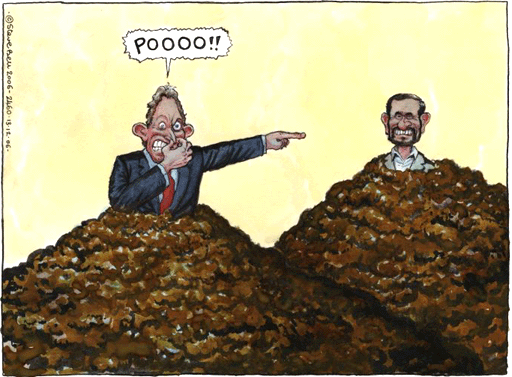
Yes, it's that time of year again. In what seems more and more choreographed with each passing twelve months, it's that bizarre version of musical chairs played out at the United Nations general assembly: Mahmoud Ahmadenijad takes the opportunity given to him to say something vaguely outrageous in front of the planet's dignitaries and television cameras, and out walk those who have somehow found the strength to sit through the terminally dull orations of those who went before him. It's an utterly pointless exercise, especially when Ahmadenijad's obsessions are so dull and if anything, far less controversial than the average tin-foil hat wearer's beliefs. As well as the usual allusions to the Holocaust and how the most well-documented event in modern history obviously didn't happen, he this year brought in a reference to the "mysterious September 11 incident", making him topical if nothing else.

Best practice would be to just treat Ahmadenijad's ravings as the delegates do every other speech: in silence while paying as little attention as they can. Instead the walkouts are ever more contrived, just as Ahmadenijad's reaching for a new sweet spot each year is. When you've already made reference to the lack of evidence underpinning the Holocaust and suggested the United States itself carried out 9/11, the only place left to go, other than Nibiru, the four horseman of 2012 or sovereign citizenry is back to slavery. Should it not be, Ahmadenijad asked, an obligation upon the slave masters or colonial powers to pay reparations to the affected nations?

With the day's cabaret taken care off, by happy coincidence next on was a certain David Cameron. Last year he was excused from attending as Glam Sam Cam had just given birth to Florence; this time, and sadly considering how many times he's had to return from holidays due to various emergencies, he couldn't find a reason not to turn up. With those who didn't walk out thoroughly warmed up by the Iranian president's knock-about antics, Cameron wasted no time in delivering his A material:

You can sign every human rights declaration in the world but if you stand by and watch people being slaughtered in their own country, when you could act, then what are those signatures really worth?

Well, quite. Obviously, this doesn't apply in all cases: Mexico for instance, where around 40,000 people have been murdered over the past four years in a drug war which gets grimmer with each passing week, where the complete dismemberment of the victims of the cartels is common place, and where 35 bodies can be dumped in the street in broad daylight (NSFW). Or Bahrain, where the Saudi-backed royal family (literally) flattened the uprising with nary a squeak of protest from those self-proclaimed upholders of humanity, Obama, Cameron and Sarkozy. Just because we can't possibly intervene everywhere, as we were so sonorously reminded early on in the Libya campaign doesn't mean we can't intervene somewhere, preferably somewhere which is close by and where it's determined the military operation is likely to be over fairly swiftly. This is of course why a month after the fall of Tripoli NATO is still diligently protecting the civilians of the new Libyan army by continuing to bomb the holdouts in Beni Walid and Sirte.

In fairness to Cameron, and to come out of full cynicism mode for just a second, he plays down the NATO role in the Libyan revolution ridiculously, giving all the credit to the forces which are now failing miserably to take the two remaining hold out cities. The reality is that if NATO hadn't taken what was a limited UN resolution putting in placing a no fly zone while calling for a ceasefire to be followed by negotiations, and instead used it to intervene in a incipient civil war and from there facilitate eventual regime change, then the two sides would now still be deadlocked, Benghazi protected but all the other major cities likely under Gaddafi control. Just as everyone can welcome the downfall of another hated dictator and human rights abuser, you still can't get away from the fact a UN resolution was at best very liberally interpreted and at worst was used as the fig leaf to overthrow a sovereign government. When Cameron then lectures everyone on what a good thing this was, it's little wonder that rather than slapping him on the back and congratulating him, China and Russia are rather put out, and their recalcitrance over Syria is directly related to it.

Naturally, having spoken so many fine words about how deserving the Libyans are of their new found freedom and how everyone must help them to build their democracy, Cameron comes to the unpleasantness over the Palestinian attempt to gain recognition from the security council of their state and remains sitting on the fence. Of course they must have a viable state of their own, but only when the Israelis agree to it. Never mind that the Palestine papers brutally exposed how there is no partner for peace when one side refuses to compromise, Israel knowing full well that it can continue to colonise the West Bank without fear of sanction from the US, making a return to the 1967 borders an impossibility, only negotiations between the two sides can settle the conflict. Any attempt to jump start them by doing the one thing they previously haven't tried is simply unacceptable. Don't these Arabs know their place, which is to make our leaders look good while the economy collapses, and then only speak when they're spoken to the rest of the time?

In this at least Ahmadenijad is honest. He acts like a buffoon and gives ridiculous speeches because he is a buffoon and is ridiculous. Our leaders instead simply make it up as they go along, condemning this and ignoring that, knowing all too well of the contradictions and weaknesses in their arguments. Consistency is impossible; get used to it.

Labels: , , , , , , ,

Share |

Monday, January 31, 2011 

Egypt and the green revolution.

Like many others, I've been scrabbling around for a reference point to the tumult in Egypt. Abu Muqawama wisely and humbly requests that we stop reaching immediately for the great European revolutions as analogies, whether of 1789, 1848 or 1989 when we are after all attempting to comment a nation that has been around for a couple of thousand more years than the territory more familiar to most of us.

He's right of course. But while we've got the revolution in Tunisia as part influence and catalyst for the uprising against Mubarak, I can't help but keep thinking back to the "green" protest movement in Iran now nigh on two years ago. That short lived taking to the streets, viciously snuffed out by the authorities was in response to what most agreed was the blatant rigging of the presidential poll in Mahmoud Ahmadinejad's favour. Curiously gone mostly unmentioned is that Egypt also had elections back in November. As has always been the case under Mubarak they weren't even close to free or fair, yet in a sign of just how sure the regime was of its hold on power just two short months ago, where Muslim Brotherhood candidates standing as independents were allowed to win 88 seats in 2005, they were left with nothing this time round. Mubarak's National Democratic party won 97% of the seats in the Egyptian parliament, something which resulted in either no comment from most of the European nations which now feel they have to say something, and in a statement of "dismay" from the US. "Dismay" translated from the diplomatic means "carry on".

Another reflection of the Iranian protests is that the young and the secular have overwhelmingly taken the lead, although it's also true that the protesters themselves have been determined to show that they're united in wanting Mubarak out regardless of their personal differences. The opposition forces which have either been semi-tolerated or remained organised regardless of the repression, whether it be the MB, or the National Progressive Unionists refused to take part in last Tuesday's "day of anger", and have been playing catch up ever since. It's only now that all the forces for change have begun to come together, calling for a million to march tomorrow.

The key difference is that while the Egyptian army is now making clear that it won't put into action any demand for a Tiananmen style crackdown, the key subsections of the Iranian state, nurtured and funded by those opposed to any return to the years of relative liberalism under President Khatami remained completely loyal. The Basij especially were crucial in crushing the protests themselves, the leaders and student radicals either arrested or murdered, while the Revolutionary Guard waited in the wings if it was needed. In Egypt it's clear that while the police, widely loathed for their corruption and addiction to beatings and torture have remained relatively loyal to Mubarak, they've either disappeared in the face of the protests or drawn back, at least for now, with the army having stepped into their role. Those opposition figures that were rounded up or had been arrested prior to the elections have either been released or escaped following the breakdown in law and order. The best the police have managed in the instilling fear and terror stakes is, if we're to believe the theories of those in the major cities, their involvement in the looting and criminal damage which has resulted from the very security vacuum they created.

With the protests now affecting everyday life across the country, something is going to have to give, and with the army apparently refusing to countenance any violent crackdown, everything points towards Mubarak either being forced into standing down, perhaps by his newly appointed vice president or into a similar, humiliating dash for the exit, ala Ben Ali. Even if those now protesting repeat the mistakes made by those who fought for the overthrow of the Shah, the events, slogans, passion for freedom and heroism of the past week will reverberate for decades to come.

Labels: , , , , ,

Share |

Wednesday, July 07, 2010 

Hypocrisy never changes.

If there's one thing that history tells us, it's that hypocrisy never changes, it just ends up being applied to different people. I recently read Francis Wheen's wonderful biography of the lovable scoundrel Tom Driberg, the notoriously promiscuous first William Hickey, Labour MP and finally Baron Driberg of Bradwell. Not only were his fellow members of parliament fully aware of his homosexuality and voracious sexual appetite, not least because he regaled them endlessly with the tales of his experiences, whether they wanted to hear them or not, but he was also protected when he was accused of indecent assault, with his employer Beaverbrook paying for his legal representation and for the most past the rest of Fleet Street staying completely silent about the case. All this happened while homosexuality was illegal and other, less well connected individuals found themselves prosecuted simply for who they were. Some others were less lucky than the likes of Driberg, Alan Turing among them.

When David Laws was recently inadvertently outed by the Daily Telegraph, the surprise was not that he was gay, something known about at Westminster or at least suspected, but that he had felt unable to be open about his sexuality, even in these apparently enlightened and liberated times. It's easy to forget that it was only in the 80s that Chris Smith because the first MP to be openly gay, and indeed that even those who were completely open about their sexuality to those they knew, such as Driberg, still felt the need to wed, entering a loveless and unconsummated marriage for a reason known only to himself.

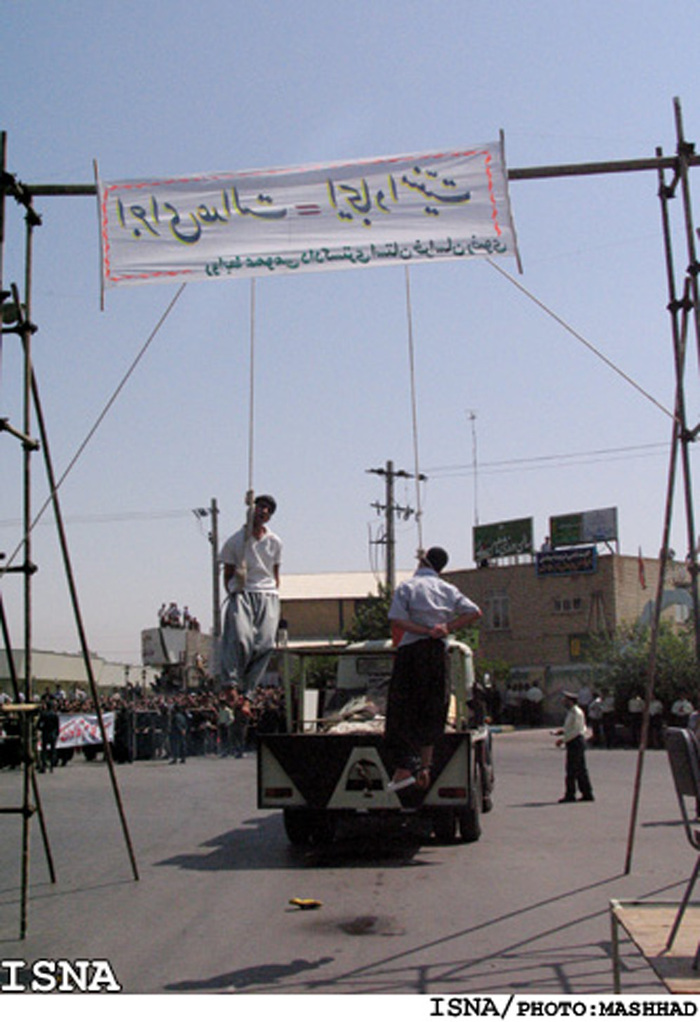
It was therefore always unconscionable that politicians would demand of anyone in this country that they should be "discreet" about their sexuality when they should have absolutely nothing to fear or be worried about by being openly gay. The law is more than clear: it's the problem of those that object, not the person themselves. Why then was it ever government policy that those claiming asylum on the grounds of facing persecution or worse in their home country because of their sexuality were declined refugee status because they should be fine as long as they were "discreet"? They were fully prepared to condemn the men who won their appeal today at the supreme court to a culture which in Iran goes far beyond anything in this country when homosexuality was still prohibited, while the situation is scarcely much better in Cameroon. The idea in any case that by being discreet you should be able to avoid the lash or death in Iran or five years imprisonment in Cameroon is itself morally bankrupt. Everyone in those countries is discreet, including most if not all of those prosecuted; it doesn't save those who are condemned to the authorities or who make even just one mistake of being open, as the appellant from Cameroon apparently did, caught kissing his partner. His account of what followed was not disputed:

In the case of HT it is agreed that, following an occasion when he was seen kissing his then (male) partner in the garden of his home, the appellant was attacked by a crowd of people when leaving church. They beat him with sticks and threw stones at him. They pulled off his clothes and tried to cut off his penis with a knife. He attempted to defend himself and was cut just above the penis and on his hand. He was threatened with being killed imminently on the ground that "you people cannot be changed". Police officers arrived and demanded to know what was going on and why the crowd were assaulting him. They were told it was because he was gay. One of the policemen said to the appellant "How can you go with another man?" and punched him on the mouth. The policemen then kicked him until he passed out. As a result of the injuries which he received he was kept in hospital for two months. After that, he was taken home by a member of his church who told him that he feared for his life and safety if he remained in Cameroon. This man made travel arrangements for HT who flew to the United Kingdom via another European country.

Beyond that, it was always ludicrous that these men could possibly have been returned to their home countries when they would have been almost immediately arrested by the authorities on arrival; the man from Iran certainly would have been. Similarly, it was also a betrayal of our own values: the asylum system is there precisely because of individuals being indiscreet, of demanding change in their societies who are no longer safe as a result of doing so, whether it be directly political or not. It can certainly be argued that sex can take the form of a political act, especially when it takes the form of rebellion against or rejection of the prevailing culture.

Of course, it's always difficult when it comes to policy on asylum to know whether the government really was being homophobic on purpose or "accidentally"; whether it was doing it simply because it thought no fuss would be made, and that it was another way to keep the figures, so ferociously complained about in the tabloids, as low as possible. Whichever it was, the end result was the same: hypocrisy which it would never have demanded of those born here. The case was really moot in any event as the coalition, as well as pledging to end the detention of children in immigration centres, had already said it would not be returning asylum seekers at risk of persecution because of their sexuality back to their home nation. That's a coalition in which the Conservatives are the major force, the party that David Laws would probably have joined had it not been for its support for Section 28, putting the Labour party, the architects of almost all the liberalising measures on homosexuality, to shame. Something really was and remains thoroughly rotten at New Labour's core.

Labels: , , , , , , , ,

Share |

Friday, June 26, 2009 

I hear someone died...

And a few people have been tortured. Not much else really happening though.

You can though rely on the Sun to say everything that everyone else has already said:

THE news is stunning, shocking, unbelievable.

...

And now he lies dead of a heart attack at just 50. It just does not seem real.

...

There has never been anyone like him. Perhaps there never will again.

...

Today's appalling news is as devastating a shock as the murder of John Lennon in 1980.

...

The King Of Pop has gone. His memory will live for ever.


It is indeed stunning, shocking and unbelievable that someone will have been paid for this nonsense. Still, knocked the BBC expenses non-story down the agenda ever so slightly.

Labels: , , , , ,

Share |

Monday, June 22, 2009 

A new media martyr.


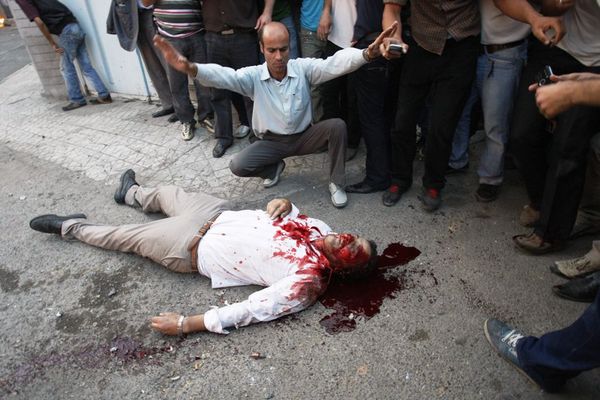
If the events in Iran are the first time that "citizen journalism" has truly come into its own, helped undoubtedly by the fact that the foreign media have for the most part been successfully banished from the streets, then Neda Agha-Soltan(i), a young protester apparently shot dead by a Basij militiaman has become the first most visible martyr, not just of the uprising, but also of the new media age.

Partly this is because the video of her death is both so horrifying and with it, so cathartic. Unlike many of the other videos which litter the internet which show death and violence, few if any so vividly show a life ebbing away, the soul breaking free of the corporeal body. As her eyes glaze over and as the blood, filling her lungs, is breathed out of her nose and mouth, there are few ends that could so disturb, galvanise and ensure that she will be mourned for years to come. It helps that we don't actually see her murderer, or the moment when she was actually shot; that would diminish the empathy that comes naturally, and instead direct the anger at the individual responsible rather than the state that he or she represents.

Undoubtedly, many will be uncomfortable with the fact that this revolution in filming and writing to the bottom means that we get the sort of material, such as the death of Neda, that broadcasters themselves will not generally show. The BBC have only shown grabs of her on the ground, and before the blood begins to pour from her mouth and nose. Some will argue that such censorship, or rather moderation, is not something to object to: after all, not everyone wants to see such material, even on the news, especially when children also might be watching. Yet it also means that we don't have the full picture, or see the brutality and violence at first hand which such crackdowns bring. Even when such material was more carefully veted however, some of the most iconic images of war remain from the Vietnam era: the execution of Nguyễn Văn Lém, and the naked Phan Thị Kim Phúc running from a napalm attack still have the power, even today, to shock and awe.

Others will object that someone's death could be used in ways in which that person may not have wanted, or even how her family would want. Whether she was actually protesting may be in doubt; latest reports say that she left a car she was in for only a period of minutes, but that those minutes turned deadly does only illustrate just what those protesting are defying in order to demand that their votes count. It can't be denied that dying in such a way means that it becomes public property, by definition. Most would rather want their final moments to be private, but no one also would wish to die in such a way. When we lose the choice in how we pass from this world, we can only hope that our deaths are not prolonged and that we are surrounded by friends, although it remains a truism that everyone dies alone, regardless of method or cause. Neda's was not a lonely death, and the power of it may well yet further help the protests towards a brighter future for Iran as a whole. The idea of martyrdom and sacrifice is highly ingrained in both Shia and Persian culture, and despite our reservations, we can only hope that it further denies moral authority from both Ahmadinejad and Khamenei. Regardless of how the next days and weeks pan out, she is unlikely to be forgotten.

Labels: , , , , , , , , ,

Share |

Monday, June 15, 2009 

An open letter to the Iranian youth: one solution, revolution.

Dear friends,

Very few of you are likely to actually read this, what with many internet sites being blocked by the authorities and with the language barrier, but those of us watching overseas with trepidation at the turmoil on the streets of your capital and other cities are both worried and optimistic in equal measure at the sudden eruption of what appears to the beginning of a movement against the lack of freedom which has become all the more burdensome since the election of Mahmoud Ahmadinejad in 2005.

That result was partially sparked by apathy. After two terms of the reformist inclined Khatami, his liberalising measures stymied and stopped in their tracks by the Guardian Council and your supreme leader, Ayatollah Khamenei, it was little wonder that some of you were dismayed and simply didn't turn out. During that time there were protests against the rigidly conservative social mores and censorship imposed upon you, both in 1999 and 2003, both of which ended with more repression and the rounding up of the ringleaders, whilst the candidates who wanted change were denied the opportunity to stand in elections. You had seen what the response was to the slightest call for change, and no one will blame you for temporarily taking the eye of the ball.

It sometimes takes a polarising figure to set off in motion movements which have the potential to lead wherever you want to take them. If you'll forgive the already rather hackneyed comparison, Bush inexorably led to Obama. Ahmadinejad, a Holocaust denier, serial liar, economic disaster and general buffoon, but highly appealing to those who have nothing to whom he offers much, similar perhaps to Hugo Chavez, also attractive but undoubtedly a centralising and double-edged personality, is what led you to coalesce around Mir Hossein Mousavi, someone previously unknown in the West, although our attention span at the best of times is not the greatest. Mousavi was not the most liberal and reformist inclined candidate, but was a happy medium; you knew that Mehdi Karroubi simply couldn't win. For those of us who have recently had to put up with everyone talking about "snouts being in the trough" because their MP claimed a few dinners with taxpayers' money, which it seems is all that we care about, the sight of the vast crowds turning out, the almost party atmosphere as the "morality police" stayed out of the way for the first time in years was inspiring and made us believe that you too were about to choose change.

Doubtless many of you were worried that Ahmadinejad would sneak home, Mousavi having only towards the end of the campaign gained the support that he needed, and if he had, similarly you would have almost certainly accepted it. We can't know for certain, but your response above all suggests that the vote was stolen. Why, the cynics will suggest, would the Guardian Council have allowed Mousavi and Karroubi to stand if they weren't prepared to potentially let them become president, when they could have denied them to begin with, but it seems simply that your rulers didn't expect you to turn out in numbers similar to 1997. How though could Mousavi have been beaten in his home state? Why was the result announced within 2 hours? Why did the Mousavi campaign believe, and indeed have been told that they had been the run away winners by the interior ministry only for it subsequently turn out the Ahmadinejad had won with 67% of the vote?

Your thoughts will almost certainly be turning back to 1979, or rather what you have been taught about it. The overthrowing of the Shah, supported to the hilt by the CIA, with his departure still recently bemoaned by the likes of Donald Rumsfeld, was without doubt a wonderful thing. Sadly though, like many other revolutions, from the French to the Russian to the Chinese, the replacement has turned out to be little better than what came before, if not in some cases worse. While 1979 occurred because the people were united, whether they were religious or atheists, together they triumphed. It was then that those who objected to the establishment of a theocracy were purged, imprisoned and broken. Since then change has had to be incremental, and slight, and you have worked within those imposed boundaries, respecting what your parents and elders had achieved.

Isn't it now clear however, that those very constraints have become intolerable? They allowed you to vote for reform, and then they denied those elected to implement it the opportunity to do so. Now they have denied you the opportunity for your vote to even be counted. In its way, this has turned out to be to your advantage: the change that most of you want would probably have been denied had Mousavi been allowed to ascend to the presidency. Those of you who want to have the choice whether or not you wear the hijab, let alone other far more radical changes, would have almost certainly been left disappointed.

Even when it seems this clear, you are almost certainly scared and hesitant about the conclusion which you have independently reached. Would overthrowing the theocracy be not just disrespecting, but spitting in the face of your relatives and those who fought for that initial freedom, and also then while the West supplied Saddam Hussein with weapons during the war with Iraq, resulting in the deaths of a million? Certainly, there are millions within your country who are happy with the way they are ruled: otherwise no one would have voted for Ahmadinejad, or his even more conservative opponent. This will lead to fissure and disputes, almost certainly within your own families.

Yet the reward which you can now potentially acquire is worth both enduring the above and the lives of those who will fall and have already fallen in pursuit of the freedom you want. Some of you will wonder whether Ayatollah Khamenei's unprecendented offer of a inquiry into the vote is worth waiting for. You have now though a similarly unprecendented opportunity: the government is uncertain of how to react, even as reports come in of the shootings in the middle of the night. You may not have this chance again for years. Whether you want simply Mousavi to be president, or for this to be the end of the theocracy, you need to take to the streets in the same or even higher numbers as today, and stay there until you get what you want. Further action may well be required; you may well have to take arms up to defend yourselves, but you can be safe in the knowledge that the world is watching. It's unlikely now that another Tienanmen could take place: use that to your advantage. And remember, even if despite everything, the authorities win, you carry a new world in your hearts. That is what matters.

With fraternal love,
septicisle.

Labels: , , , , , ,

Share |

Wednesday, August 06, 2008 

The "smoking gun" Iraqi memo and Con Coughlin.

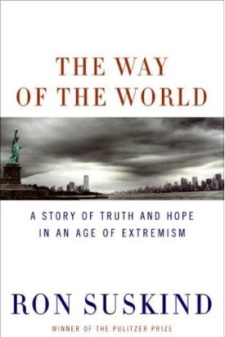
Continuing with the theme of hackery, although on a scale far, far removed from that involving Peaches Geldof, comes the allegations from Ron Suskind in his latest book that the White House ordered the CIA in the middle of 2003 to forge a letter from Iraq's former intelligence chief, Tahir Jalil Habbush, which was subsequently used as the smoking gun to prove links between Saddam Hussein's regime and al-Qaida. The letter claimed that Mohamed Atta, the ringleader of the September the 11th attackers, had trained in Baghdad at the Palestinian terrorist Abu Nidal's camp, and that the Iraqi regime was deeply involved in the 9/11 plot.

The letter was the crudest of forgeries and has subsequently been exposed as such. It is however the first time that allegations have been made that the forging of the letter was authorised at the very highest levels of both the US government and the CIA itself. Suskind minces no words and suggests that is impeachment material. All sides, it must be said, have denied it, and there are reasons to believe, as suggested in the Salon review of Suskind's book, that this might be one of those stories that seem too good to be true because they are, more of which in the conclusion.

The same must be said for those who believed the provenance of the letter, especially considering which journalist was responsible for its publishing. Rather than going to an American source with the letter, perhaps considering the fallout that was yet to come over the leaking of dubious intelligence to Judith Miller of the New York Times and others, the memo was given to a British journalist, the Telegraph's Con Coughlin.

It's by no means the first time that Con Coughlin has been linked either with the security services or with putting into circulation dubious material which subsequently turned out to be fabricated or inaccurate. Back in 1995 Coughlin claimed that the son of the Libyan dictator Muammar Ghaddafi was involved in an attempted international currency fraud. Served with a libel writ, the Telegraph was forced to admit that its source for the story was none other than MI6, with the paper first being informed of the story during a lunch with the then Conservative foreign secretary Malcolm Rifkind. Coughlin was briefed further by another MI6 officer on two occasions before the story was subsequently published.

Despite in this instance Coughlin's links with the security establishment coming back to haunt him, neither did it seemingly alter his friendly relations with them nor their apparent diligence in supplying him with little more in some circumstances than open propaganda. As well as being handed the forged smoking gun linking Iraq and al-Qaida, he also happened to come across the fabled source for the claim that Iraq could launch weapons of mass destruction within 45 minutes of an order to use them. To call it a fantastical tale would not put be putting it too histrionically: Coughlin talks of a DHL flight targeted before he landed in Baghdad by "Saddam's Fedayeen (a Wikipedia article worth treating with the utmost scepticism due to the almost complete lack of sourcing)", that almost mythical organisation supposed to fight to the death for Saddam that didn't put up much of a fight during the invasion, let alone in the months following the fall of the Ba'ath party. The Iraqi colonel claims that weapons of mass destruction were distributed to the army prior to the invasion, but were never used because the army itself didn't put up a fight. It's strange that 5 years on none of these batches of WMD have ever been discovered, despite their apparent diffusion around the country.

Since then, Coughlin's sources have been no less convinced that we're all doomed. Back in November of 2006 Coughlin claimed that Iran is training the next generation of al-Qaida leaders, despite the organisation's view that Iran's brand of fundamentalist Shia Islam is heretical. Allegations have been made that Iran has been supplying help to the Taliban, despite previously helping with its overthrow, but even in the wildest dreams of conspiracy theorists and neo-conservative whack-jobs no one seriously believes that Iran would ever help al-Qaida, let alone train its next leaders. The nearest that anyone can really get to claiming links between Iran and al-Qaida is that some of its members are either hiding there or that its fighters have been using the country as a transit point.

In January of last year Coughlin was back with another exclusive, claiming that North Korea was helping Iran get ready to conduct its own nuclear test, after NK's own pitiful attempt had gone off "successfully" the previous October. This one was not quite as fantastical or laughable as the one linking Iran and al-Qaida, but was still murky in the extreme. The NIE intelligence assessment the following November concluded that Iran had abandoned its nuclear programme 4 years previously. That said, we should be cautious: the Israeli attack on the supposed Syrian nuclear processing plant came after evidence that it was modelled on the North Korean plant, and there are allegations along with that of heavy North Korean involvement in the operating and building of the plant, if it indeed, it must also be said, it was a nuclear site at all.

The latest revelations that Coughlin's 2003 report may well have originated from the very highest levels of US government only increases the level of scepticism with which any of his articles should be treated. At times journalists have to rely on security service figures to break stories which would otherwise never set the light of day, but as David Leigh wrote in an article from 2000, the very least that they should do if this unavoidable is be honest about the origins of such reports. It's one thing to get into bed temporarily with the intelligence community, it's quite another to act for years as their voice in the press, as Coughlin certainly appears to have done, spreading the most warped and questionable of their propaganda. As the Guardian reported in 2002 after the Telegraph admitted to the role of MI6 in their story on Ghaddafi, Coughlin was likely to recover from the indignity due to his good contacts within MI6. That certainly seems to have been exactly the case. Most humourously though, this was how Coughlin opened his commentary on the 2003 Iraqi memo:

For anyone attempting to find evidence to justify the war in Iraq, the discovery of a document that directly links Mohammed Atta, the al-Qaeda mastermind of the September 11 attacks, with the Baghdad training camp of Abu Nidal, the infamous Palestinian terrorist, appears almost too good to be true.

As Coughlin must have certainly knew it was. Just how too good to be true has been left to Ron Suskind to expose.

Labels: , , , , , , , , , , ,

Share |

Tuesday, June 24, 2008 

Scum-watch: Making it up as it goes along.

In its latest leader on how our brave boys and girls are saving the entire world from Islamic tyranny, the Sun is now attempting to tie together the Taliban and the Iranians into one homogeneous bloc:

The whole world — especially the Afghan people — will pay a price if the Iranian-backed Taliban prevail.

Ah yes, the Iranian-backed Taliban. It doesn't seem to matter that Iran helped and co-operated with the overthrow of the Taliban back in 2001, having long funded the Northern Alliance, while our other friends in the Middle East, Saudi Arabia and Pakistan, both funded and recognised the Talibs, but hey, who cares about the past? After all, Bush rewarded the Iranian help by casting them in the axis of evil, and from then on we haven't really seen eye to eye.

The claim of Iranian support or backing for the Taliban-led insurgency (although how much of the original Taliban actually remains, with there being both paid fighters and the wandering jihadists now also joining the mix) is based almost wholly on claims that they've been supplying the same IEDsEFPs) that the likes of the Hizbullah Brigades in Iraq use against the Americans to the fighters in Afghanistan. That this in itself proves nothing, as there are as many arms dealers in Iran as there are here doesn't seem to matter; Iranian weaponry in the hands of anyone fighting against the Americans or British is cast-iron proof of personal Iranian-backing for them. That most of the funding for al-Qaida and the Taliban, that which doesn't come out of the opium crop which they originally destroyed only to turn to once we made our blessed intervention is donated by Pakistani and Saudi businessmen again is one of those facts that just can't be spoken.

Still, it gives the impression to the Sun-reader who won't think of inquiring further that all those Muslims are one and the same and equally dangerous. Just how long will it be until those dastardly Iranians give the Taliban a nuclear weapon? Buy the Sun tomorrow to find out!
(

Labels: , , , , , , ,

Share |

Monday, June 23, 2008 

We are ruled over by vermin pt. 94.


Following the last post, sometimes it would be nice if it didn't require the accusation of racism for someone to either be fired or lose their job. According to Jacqui Smith, as long as homosexuals in Iran are discreet, there isn't a "real risk of discovery of, or adverse action against [them]," hence why it's perfectly reasonable to deport those seeking refuge from there back.

It's easy to reminisce and wear rose-tinted spectacles over the Labour party's past, how it was the home of Bevan and Attlee, and even now of those who have since blotted their copy books, such as Peter Hain and Harriet Harman, with their campaigning pasts, but when you compare such past alumni to the utter dregs we're currently dealing with, whether it be Smith, whose only previous job was a teacher, or the likes of Andy Burnham and James Purnell, who don't seem to have any past at all prior to their becoming researchers or employed by other MPs, it's hard not to come across all lachrymose over a party that is now being so unutterably betrayed by its current leaders.

The sheer wrongness of Smith's comment, backed up or not by the Asylum and Immigration Tribunal, tells you much about the party's current trajectory. As long as you don't bring any attention to yourself, you know, such as dressing up similarly to Big Gay Al, you'll be fine in Tehran. Don't let the punishments for being caught give you the wrong impression that homosexuality in Iran is frowned up: those 100 lashes for the rubbing of the "thighs and buttocks" are simply the state joining in the fun. After all, who are we to decide where the pleasure ends and the pain begins? As for the death penalty, which is the ultimate sentence for homosexuality, it's not employed very often, so don't worry your pretty little heads about it. We've more important things to worry about, like the next set of figures detailing how many asylum claims were made and how many of those whose claims failed were deported. The Sun and the Daily Mail get rather sniffy if the figures don't fall enough for their liking.

Similarly, it doesn't seem to matter that Smith's comments rather undermine the whole point of the asylum system: that it provides sanctuary for those who do raise their heads above the parapet in nations bordering on totalitarianism, in an attempt to not just improve standards for themselves but for their nation and people as a whole, but who might eventually be forced to leave or face death, imprisonment and torture themselves. You could imagine the outrage if an MDC activist fleeing Zimbabwe now after having his or her family killed was then subsequently told on reaching Britain that they'd have been perfectly all right as long if they'd been discreet in the first place, or would be as long as they didn't bring any attention to themselves upon their return. It's almost reminiscent of the tale of the German communists recounted in Antony Beevor's Berlin who proudly showed their Soviet liberators their party cards which they'd kept hidden since the darkness descended in 1933; that the Ivans then proceeded to rape their wives and daughters despite this might well have made them think that they should have been more discreet also.

New Labour's hear no evil, see no evil, speak no evil approach is also remarkably similar to Mahmoud Ahmadinejad's own, having famously commented that there are no gay people in Iran. Jacqui Smith would like that too; then they wouldn't come over here demanding sanctuary in the first place. I, like some others, am starting to count the days until this shower of shits are finally thrown out of office. I might then have to start numbering the days until the shower of possibly even worse shits in the Conservatives are subject to the same treatment, but at least the Labour party in the meantime might finally be forced to sort itself out.

Labels: , , , , , ,

Share |

Tuesday, December 04, 2007 

No nukes? Oh, time to invade then.

Fwwippp, followed by an almighty crash. Heard that sequence of sounds? It's been echoing around the globe, ever since the combined work of the 16(!) American intelligence agencies in the form of the national intelligence estimate was declassified and published yesterday. That fwwippp was the noise of a thousand rugs being pulled from under the feet of a thousand different people, politicians, commentators, bloggers, saloon bar bores, all made to look like fools at best and warmongering loons at worst. Iran not only isn't pursuing a nuclear weapons programme, it hasn't been doing so for four years.

Those who found themselves in a heap on the floor have come up with different ways of adjusting to the new, we're a bunch of liars and chumps, world. For the Sun, which recently informed us that the only thing worse than Iran getting nukes was another cakewalk with 650,000 dead and that anyone who believed Iran wanted nuclear power for peaceful purposes was "hopelessly deluded", the easiest thing to do is to stick your fingers in your ears and pretend nothing has changed, helped along by not reporting on the NIE assessment at all. If you're Oliver Kamm, and the unfortunate author of a piece for the Grauniad which calls for "concerted diplomatic pressure, sanctions and luck" when dealing with Iran published on the same night as the report, then you quickly rehash your bullshit and present it to the hordes on CiF as if it was fresh roast beef, rather than warmed up vomit. If you're Melanie Phillips, then this "this report provokes a high degree of scepticism". Scepticism which Mel naturally didn't show towards the intelligence claims that Saddam was going to murder us all in our beds within 45 minutes, or indeed, towards the claims by one Dave Gaubatz that Iraq's WMD was transported post-war from Iraq to Syria with the help of the Russians. Incredibly, President Bush has been the most magnanimous since the report was unveiled: he's gone from talking of nuclear holocaust and world war three to saying little more than Iran remains "dangerous".

Mad Mel does though have something of a point. We should indeed be sceptical. Why should we believe the intelligence services which got it so completely wrong over Iraq that Iran has abandoned any plans for a nuclear weapons? It's perfectly rational to be concerned over the motives of those delivering the intelligence this time round: they found themselves manipulated and used on both sides of the Atlantic to make the case for a war which has proved to be far more disastrous than their worst predictions suggested. We don't know how much of an impact this has had on their thinking and briefings; intelligence has always been nuanced and uncertain, things which Blair and Bush had no time for. Who's to say that they haven't tried to stop this happening again by being even more timid and diplomatic when considering what they know or even a pre-emptive attempt to stop in Marx's famous quote history being repeated for a second time as a farce after the tragedy of Iraq?

With Iraq however there always were informed voices that struggled to make themselves heard that more or less got it right, such as Scott Ritter, the former weapons inspector who was convinced Iraq had been 90-95% disarmed. He was 5% out. Robin Cook, who had been party to the intelligence as foreign secretary, stated in his resignation speech that he didn't believe Iraq had weapons of mass destruction as in those that could be quickly used in a military situation. Although intelligence agencies the world over were convinced that Iraq had some WMD, contrary to popular belief most didn't believe that it was an imminent, let alone an existential threat. As Richard Dearlove wrote, the "intelligence and facts were fixed around the policy". The ravings of men like "Curveball" were believed.

With Iran, it's different. As Oliver Kamm admits, Iran is not a totalitarian society, even if it is an autocratic and repressive one. Juan Cole speculates over whether the new information about Iran's nuclear program has come from a recent defector, having changed its mind from 2005 when the NIE estimated Iran was pursuing weapons, with now, two years' later, more convinced than before that it isn't and hasn't been for four years.

Wherever it's come from, it has already and will only do one thing: stop, or at least postpone any attack at least for some time to come. It also highlights the irony and inequity of the UN Security Council imposing sanctions on Iran for doing only, according to this latest assessment, what it is entitled to do under the Nuclear Non-Proliferation Treaty, which allows for the peaceful use of nuclear energy. The UN has been breaking international law, not Iran. This shouldn't negate from the fact that Iran has as yet no reactor where the uranium it has been enriching can be used for such purposes; but there is also nothing now to suggest, apart from the predictable and expected dissension from Israel, that the fuel, only being enriched to fuel grade, is for anything other than an energy program.

It also shouldn't stop the search for a complete solution. Still worth pursuing is the deal Russia has offered, where it would enrich the fuel while providing Iran with the reactors, taking away any reason for doubt. More intriguing still will be where this leaves Mahmoud Ahmadinejad himself: he has been hiding behind Iran's nuclear program to negate from the criticism he has faced over the rising cost of living and his broken promise to redistribute Iran's oil wealth. With the nuclear shield taken away, and faced with accusations of endangering the nation for no good reason, his short reign could be brought to an end at the first opportunity. Those also facing defenestration should be those who have so recklessly scaremongered and demanded action: Mad Mel and her second Holocaust have never looked so laughable.

Labels: , , , , , ,

Share |

Tuesday, November 13, 2007 

The only thing worse than more war is Iran getting nukes.

That, in a nutshell, is the argument of today's Scum leader. Doubtless intended as a prod to Brown after last night's dismally familiar and sterile speech on foreign policy at Mansion House, Murdoch makes clear how he considers yet more death, destruction, insecurity and a worldwide wave of terrorism in revenge preferable to Iran acquiring nuclear weapons. Predictably, it resorts to a number of half-truths and deceptions in order to do so:

THERE is only one thing worse than military action to stop Iran acquiring nukes.

And that is Iran with nukes.

Anyone who believes this oil-rich nation wants nuclear power for peaceful purposes is hopelessly deluded.


Despite Iran's oil-wealth, it earlier this year temporarily enforced fuel rationing because of the huge cost of importing petrol, due to Iran's own lack of refining capacity. The Grauniad today also reports that Iran was seriously considering the recent approach from Russia for the uranium needed for their nuclear plants to be enriched there, only for the talks to be abandoned when the US imposed unilateral sanctions on Iran's revolutionary guard.

Sometimes we have to judge a person — or a nation — by what they say.

Iran’s President Ahmadinejad says he wants to “wipe Israel off the face of the map”.


Sigh. How many times have we got to go through this? Ahmadinejad did not say that he wanted to "wipe Israel off the face of the map" or that Israel should be wiped off the face of the map. Because of the difficulties of translating from the Persian into English, Ahmadinejad's statement, which was in fact a quote from Ayatollah Khomeini, was something along the lines of "this regime occupying Jerusalem (een rezhim-e eshghalgar-e qods) must [vanish from] the page of time (bayad az safheh-ye ruzgar mahv shavad)." Ahmadinejad was speaking in the context of the Soviet Union and Saddam Hussein's Iraq having collapsed; he was not calling for the destruction of Israel, or that he personally wanted Israel as in the country to disappear. MEMRI, hardly sympathetic towards Iran, translated his speech similarly. How can you possibly judge someone when you're not informed correctly of what they actually said?

He says the holocaust which claimed 6million Jewish lives, never happened.

This is more clear-cut. Ahmadinejad has certainly dabbled in holocaust denial, something which only an idiot, which Ahmadinejad certainly is, would deny took place. Denying the holocaust is moronic and intellectually bankrupt, but it most certainly does not help towards justifying military strikes when all the intelligence suggests the Iran is still years away from a nuclear weapon.

And he says he wants to impose extreme Islam on the world.

Really? I shouldn't rely on Wikipedia, but there's no mention of this anywhere in the rather copious entries on both himself and the controversies surrounding him, and I can't recall any such statement. In any case, just how would Iran impose extreme Islam on the Middle East, let alone the world? It can't even effectively do it within Iran itself, continuing to crackdown on supposed western influence, crimes such as women wearing make-up and showing hair under their hijab. Saudi Arabia has been far more successful in imposing extreme Islam and spreading Wahhabist doctrine than Iran has been in propagating its own interpretation of Shia Islam.

As Gordon Brown says, the West cannot afford to wait and see if he really means it.

According to the Sun then, 650,000 deaths in Iraq just isn't enough. It wants even more wars, more blood to be spilled to ensure that Iran doesn't even come close to acquiring nuclear weapons. To hell with mutually assured destruction, the fact that if Iran did attack Israel it would be at the same time destroying Palestine, and the inevitable revenge from Iran's proxies, we cannot afford to wait and make sure another Middle East madman actually has WMD before letting lose the cruise missiles. If Iraq is a disaster, attacking Iran would open the gates of hell.

Labels: , , , , ,

Share |

About

  • This is septicisle
profile

Archives

Powered by Blogger
and Blogger Templates