Thursday, June 04, 2015 

Helping jihadists in Syria while still prosecuting those who come back? No, we wouldn't do that.

Speaking as we were of the deficiencies of the Crown Prosecution Service, it would be remiss not to mention the collapse on Monday of the about to start terrorism trial of Swedish national Bherlin Gildo.  Precisely what circumstances were behind the arrest of Gildo, who was only in the country to get a connecting flight to Manila, are opaque to begin with.  Stopped at Heathrow under schedule 7 of the Terrorism Act, he was charged with attending a terrorist training camp in Syria, as well as having in his possession information likely to be useful for terrorism.  And indeed, Gildo made no attempt to deny he had been in Syria, fighting alongside the al-Nusra Front, al-Qaida's affiliate in the country.  He hardly could when like so many other jihadis he was keen on posing for the camera, including with dead bodies.

Surely then another open and shut case.  Except Gildo's defence had the bright idea of bothering to put some work in for their client, and presented evidence mainly in the form of news reports on how the intelligence agencies had been secretly training and supplying weapons to armed groups in Syria.  The government has also recogised the Syrian opposition "as the sole legitimate representative" of the Syrian people, despite how the Syrian opposition mainly consists of a tiny and ever dwindling number of so-called moderates and a complete mess of Islamists of various hues, from the more radical than Hamas variety to our pals in Islamic State.

You might then have expected the prosecution to dismiss the notion the UK government had been in any way helping out a group affiliated to al-Qaida, or even the non-moderate opposition as a whole.  If they refused to, or didn't disclose the information requested by the defence, that would be a tacit admission that we haven't the foggiest idea where the "non-lethal" materiel we do know has been provided has gone, let alone the alleged shipments of weapons, wouldn't it?  It would seem so, and yet rather than dispel such an absurd notion, the prosecution instead dropped the case.

Fairly apparent is that the arrest of Gildo was a result of dealings between the authorities and the Swedish intelligence agencies.  Gildo returned home with the apparent help of the Swedes, where there have been no prosecutions of those who have gone to fight in the country.  Whether he broke an agreement he had with them, or terminated the mutual relationship they believed to have developed, it's difficult to see precisely why he would have been stop and arrested here, various jihadist propaganda found on his laptop or not, unless it was as a favour on the part of MI5.  They clearly didn't expect Gildo to end up being represented by the ever tenacious Gareth Peirce, nor that something done for reasons we'll never know could have potentially exposed the activities of MI6 in providing support to the Syrian rebels.<

The surprise is that in none of the previous prosecutions of those who've travelled to Syria to fight was a similar defence attempted.  The vast majority have involved Islamic State, which the West has never directly backed, although our allies in the Middle East may well have done, but this wasn't the case at the trial of the Nawaz brothers.  Not only did neither of the brothers actually take part in fighting, staying only at a training camp for a month, they joined a group that became part of the Islamic Front, a jihadist but opposed to Islamic State coalition of various factions.  


Despite the Crown Prosecution Service saying the dropping of the Gildo case will have no bearing on other prosecutions relating to Syria, it surely provides the Nawaz brothers with a line of appeal: if the government cannot guarantee it is not providing support to groups like the Islamic Front, then surely their conviction is unsafe.  Considering it refused to do so in a case involving al-Nusra, which is a specifically proscribed organisation, it hardly seems likely to be able to do with Junud al-Sham.  As with policy on Syria as a whole, what an utter mess, and one entirely of our own making.

Labels: , , , , , , ,

Share |

Thursday, April 18, 2013 

Unacceptable in the 80s.

Seeing as we've spent pretty much the last ten days going over old wounds, it seems a shame to break the pattern now.  Let's strike a slightly different note though: of all the myriad of things that Thatcher and Reagan inflicted on their respective countries, one thing neither did was authorise or condone the use of torture.  While it's certainly true that Reagan for one had no qualms about participating in the most dirty, even treasonous (as would be alleged by the opposite side if it was the other way round; they almost got Clinton impeached for having his dick sucked, for comparison's sake) underhand dealings, as evidenced by his administration's funding of the Contras by the secret selling of arms to Iran, 25 years ago today the US signed the UN Convention Against Torture.  On sending it to the Senate a month later, Reagan commented that the treaty "clearly express[es] United States opposition to torture, an abhorrent practice unfortunately still prevalent in the world today".

Quarter of a century on, the record of Thatcher and Reagan's heirs is starting to be laid bare.  We already knew much about the extraordinary rendition programme and how "enhanced interrogation techniques" were authorised in the aftermath of 9/11, but the Task Force on Detainee Treatment report, commissioned by the Constitution Project, is the best effort yet to draw together how the policy progressed and was instituted, starting with the opening of Guantanamo and following on to its practice in Iraq.  Their key finding is that "it is indisputable that the United States engaged in the practice of torture".  No fudging, no moving of the goal posts; torture, whether directly authorised or not, was used.  Nor do they shy away from the argument of some that such harsh techniques had results.  They conclude that there is "substantial evidence that much of the information adduced from the use of such techniques was not useful or reliable".  Views are mixed as to whether the film Zero Dark Thirty actively suggests that the testimony given by one tortured detainee helped the CIA find Osama bin Laden (the report says that it does; I haven't seen it so can't judge), but it most certainly is not the "first draft of history" as claimed by Kathryn Bigelow.

The Constitution Project set up its own panel to investigate the treatment of detainees after the Obama administration decided not to take any further action or open any investigation into what went on during the first phase of the "war on terror".  Back here in Blighty, where there is nothing to suggest that torture was ever sanctioned by a minister but plenty of evidence that collusion with the US in the rendition programme most certainly was authorised, the Gibson inquiry was meant to provide answers.  Instead it was unceremoniously abandoned, ostensibly on the grounds that the police needed to investigate the involvement of the security services and ministers in the rendition to Libya of two former members of the LIFG, which had links to al-Qaida, although one suspects the boycott by human rights groups at the limited scope of the inquiry also had something to do with it.

Nonetheless, Gibson and his team wrote up a report on the evidence they had sifted through and handed it over to the government.  That was nine months ago, and there is as yet no indication as to when it might be published.  Seen alongside the fight over the closed material procedures section of the justice and security act, designed to stop the courts from ever releasing material such as that which confirmed the security services knew about the torture of British resident Binyam Mohamed and did nothing to stop it, it more than implies that the coalition, having been lobbied extensively by both MI5 and SIS, has now decided upon a similar course to that of the US.

We could undoubtedly give too much credit to both Reagan and Thatcher over their stance, although Simon Jenkins was right yesterday to highlight how the latter's response to nearly being killed by the IRA was to carry on almost as if nothing had happened.  Both cuddled up to regimes that most certainly did and continue to torture their own citizens, while at the funeral yesterday were such noted humanitarians as Henry Kissinger, Dick Cheney (arch defender of waterboarding) and Benjamin Netanyahu. There can be little doubt however as to which administrations will be judged most harshly on their foreign policies by history.

Labels: , , , , , , , ,

Share |

Tuesday, March 26, 2013 

Not to speak ill of the dead...

The news of the death of Boris Berezovsky was undoubtedly one of those "oh Christ" moments.  The unexpected death of another of the exiles from Putin's Russia was always going to be investigated extremely carefully, lest there be even the slightest indication that it was anything other than natural or swiftly explained.  Such is the level of mistrust and suspicion directed at the government, much of it warranted, it must be said, the deaths of other dissidents and refugees have all been previously seized upon as potentially the work of the FSB, most notably in the case of Arkadi "Badri" Patarkatsishvili, who was quickly found to have passed away as a result of a heart attack, although that conclusion did little to allay the fears of those who think we should underestimate the KGB's successor at our peril.

It certainly isn't unknown for murders to be presented as suicides, including by those far less competent than state actors.  This said, everything known at the moment does point towards Berezovsky taking his own life.  A man who had spent two decades living in luxury, extremely highly regarded by the elite first in Russia in the 90s and then in the UK in the 2000s, he had been brought low through his own greed.  Described by Mrs Justice Gloster in the case he brought against his fellow oligarch Roman Abramovich as a "inherently unreliable witness" and of being "deliberately dishonest", the massive legal fees probably hurt more.  Combined with a huge settlement with his second wife, it was reported last week he was looking to sell an Andy Warhol print of Lenin worth around £50,000, something that appears to contradict the claims made since by Nikolai Glushkov that he had "managed to resolve his financial issues".  Having lost much if not almost all of his fortune, his friends report he had been depressed, and had sought treatment at the Priory.  Although those same friends have reported he seemed better, it's not much of a stretch to imagine that he may well have relapsed.

Nor does the timing make much sense.  Why dispense with someone who no longer poses a threat of any sort? Who knows just how much money Berezovsky did put in to attempting to get rid of Putin, but the results have been pretty negligible.  We can of course draw the analogy with Trotsky, in that Stalin's nemesis had never been so far removed from influence as he was when Ramón Mercader wielded the ice pick, but Berezovsky was no Trotsky (and Putin is no Stalin for that matter), however much the Kremlin's news agencies demonised him.

One thing Berezovsky's death ought to bring into sharper focus is the rather underreported evidence heard at the hearing ahead of the inquest into the death of Alexander Litvinenko. The lawyer on behalf of Litvinenko's widow, Marina, made submissions that set out the former KGB and FSB officer had swapped sides, and was a paid MI6 agent when he was poisoned with polonium.  It also seems as though he was working with the Spanish intelligence agencies, and that the plan was for him to travel with his alleged murderer, Andrei Lugovi, to the country to provide further information to the authorities there on the Russian mafia.

Not only does this raise questions about whether MI6 breached their duty of care to Litvinenko, it also puts his murder into an entirely different perspective.  This wasn't just a assassination of a man we offered shelter to, it was the murder of a state asset, and it was never felt appropriate that this should become public, at least not before his widow seemed to have exhausted every other avenue in her search for justice.  It also means that for years MI6 had someone on its books (the Mail claimed back in 2007 that Litvinenko had been an officer, but it wasn't widely followed up) who was making the most serious allegations possible about a rival service: that the FSB and Putin were prepared to bomb their own citizens in furtherance of their political aims.  It doesn't really get much more serious.  Were MI6 aware of any specific threats against Litvinenko, or indeed have any concerns whatsoever about having on the payroll someone who had become an enemy of his former employer?  And what of Berezovsky?  Did he have an association with the intelligence agencies too?

Whether we'll learn much from the inquest, delayed now until October, is unclear.  The government files on Litvinenko will be examined in secret before it opens after William Hague applied for a public interest immunity certificate, and so how much will be heard in public remains to be seen.

One vital witness due to appear was Berezovsky.  Something that has never been properly explained is just how far the relationship between Lugovi and Berezovsky went; Lugovi had served as the head of security for ORT, the Russian television channel then owned by Berezovsky and Patarkatsishvili, and so was someone Berezovsky believed could be trusted.  Regardless of the individual circumstances, that almost all those involved have either died or are boycotting the proceedings (Lugovi) doesn't inspire confidence that much is going to be resolved beyond what we already know.

Nonetheless, few in Russia will have shed tears at Berezovsky passing, even if few have much affection for Putin at this point.  Berezovsky's reputation as the robber baron in chief was in place long before he fled.  Indeed, it's arguable that if Russia hadn't been given the economic shock treatment it received after the fall of the Soviet Union, and if the oligarchs hadn't in turn profited so hugely from the rigged sell off of state assets that the Russian public wouldn't have taken so much to the strongman who was determined to put an end to the chaos that has now come to represent Yeltsin's reign.  That the likes of Berezovsky were taken so quickly into the bosom of the British establishment with little in the way of questioning about just what did go on in Russia during the mid-90s ought to be an abiding shame.  The least we can do now is ensure the truth about the death of Alexander Litvinenko comes out.

Labels: , , , , , , ,

Share |

Thursday, January 17, 2013 

Sex on the state must stay secret.

There are some posts you really don't need to add anything to.  This one, from the Heresiarch on the Mark Kennedy sex spying case, is one of those:

Are undercover police allowed, or even encouraged, to sleep with "targets" as a means of gaining intelligence on environmental protesters and other political subversives?
One would hope not.  Such a practice would be deeply unethical. It would represent a fundamental violation of trust and an invasion of privacy and cast senior police officers in the role of pimps. The people (mainly women) targeted in this way are human beings, and citizens. It's not just sex on the job, and it's not just "crossing a line": we're talking about the emotional manipulation of people when they're at their most intimate and vulnerable, what one lawyer has described as "the sexual and psychological abuse of campaigners for social justice". It can't be right.
But that's what spies do, though, isn't it? Sleep with sources. Everyone knows that. It works for James Bond. That's what Mr Justice Tugendhat apparently thinks, anyway.


...

Here's what he said (at paragraph 177):


James Bond is the most famous fictional example of a member of the intelligence services who used relationships with women to obtain information, or access to persons or property. Since he was writing a light entertainment, Ian Fleming did not dwell on the extent to which his hero used deception, still less upon the psychological harm he might have done to the women concerned. But fictional accounts (and there are others) lend credence to the view that the intelligence and police services have for many years deployed both men and women officers to form personal relationships of an intimate sexual nature (whether or not they were physical relationships) in order to obtain information or access.

In other words, he went on, at the time that RIPA was being passed "everyone in public life would have assumed, rightly or wrongly, that the intelligence services and the police did from time to time deploy officers in this way." So yes, RIPA authorisation probably does extend to sex - provided that the relationships themselves are not "degrading".


...

If Bond is a reliable guide on the appropriateness of undercover police officers indulging in sexual relationships with people they are supposed to be investigating for political protest, why wouldn't the officers equally at liberty to liquidate their sources when they cease to be useful? 007 has a licence to kill, after all, and regularly uses it to bump off his conquests. Many members of the public believe that secret agents behave like that anyway, and I don't think Parliament has ever explicitly forbidden it.

Another thing: apart from a short report in the Guardian, today's ruling has had very little media coverage, despite its potentially huge consequences for the rule of law. I realise, of course, that agents of the state engaging in sexual manipulation against peaceful, and essentially law-abiding, protesters matters far less than what some people on Twitter said about what Julie Burchill said in the Observer about what some other people on Twitter said to Suzanne Moore about what she'd written in the New Statesman. You'd think, though, looking at it from the outside (as I do) that the actual fucking police literally fucking duped activists and then using an obscure legal procedure to deny their victims open justice would interest people who call themselves radical and progressive rather more than a throwaway remark made by one self-identified feminist journalist, or even the genuinely offensive comments made by another high-profile feminist journalist a few days later in her defence, which is at the end of the day just words. You'd think so.  

Quite.

Labels: , , , ,

Share |

Monday, December 06, 2010 

A Russian spy farce.

There is more than something faintly farcical concerning the curious case of the Liberal Democrat MP and the alleged Russian spy he was employing as his research assistant. Of all the MPs' offices the SVR could have attempted to infiltrate, one of the last you would have suspected they'd have been interested in was that of Mike Hancock, the 64-year-old member for Portsmouth South. Even considering his constituency's naval links and his long-standing position on the parliamentary defence committee, he doesn't exactly strike as the person most likely to get his hands on the sort of material the Russians couldn't get elsewhere, and the questions he was asking, which some newspapers have found eminently suspicious, back that up. The idea that our friends from beyond the Vistula don't already know about the "location ... of each Royal Navy submarine operational berth" or don't have something approaching a "full historical inventory of the UK's nuclear arsenal" is fairly small.

The Russians have, it must be said, always had their eye on recruiting some of the less glamorous individuals within what can be at a stretch described as the British establishment, if we are to believe the somewhat dubious claims of the likes of Oleg Gordievsky, the KGB colonel who defected to Britain to 1985 after he was outed as a double agent for MI6. He fingered, amongst others, Michael Foot (who successfully sued the Sunday Times over the allegations), Denis Healey, the trade unionist Jack Jones, the famously promiscuous Tom Driberg and Richard Gott, the Guardian journalist who resigned as literary editor back in 1994 over the claims. Hancock would probably not find it too insulting to be included among such luminaries, although whether he will personally be accused of being a Russian asset remains to be seen.

While the KGB may have targeted distinctly unglamorous males to become spies during the Cold War, it seems that in the current era its successor the FSB and its foreign branch the SVR has no problems whatsoever with sending across "sleeper" agents whom, upon discovery, cause the priapic element among the Western media to all but lose all control of themselves. Earlier in the year Anna Chapman found herself at the centre of global attention mainly on the back of sultry photographs which she'd posted on Facebook, while you can almost guarantee that the shots of Katia Zatuliveter currently gracing British newspapers were raided from the same source. Somehow it's difficult to shake the impression that the story may not have had the same impact if the alleged agent was male. Alongside the allegations of spying are the almost inevitable questions concerning just what a 64-year-old man was doing employing a 25-year-old blonde from Dagestan as his assistant, whom if we're to believe the word of Mátyás Eörsi, was just one of a succession of similar young women accompanying him to the Council of Europe's liberal grouping. Innuendo is almost all we have to go on, if that isn't an innuendo in itself, especially when we also have to consider Hancock is currently on bail following accusations of indecent assault.

The only other thing we really know is that Hancock was so sympathetic towards Putin's Russia that was he ousted as head of the all-party Russian group by Chris Bryant as a result of his stance, something which apparently incensed and upset Zatuliveter. As useful as those with a predilection for suspected kleptocrats can be in the parliaments of the West, it's difficult to disagree with Hancock's own assessment: "[W]ho the hell could be interested in what the Lib Dem delegation was doing and what we were thinking?" Certainly almost no one even in this country was interested in anything the Liberal Democrats were doing until very recently.

The whole debacle reflects the continuing disconnect between security and openness which we've now spent more than a week experiencing following the release of the US cables. No one seems to be seriously suggesting that anything Zatuliveter might have obtained or had access to was so secret or sensitive that she's damaged the security of the country; rather, it's that she's simply meant to be in some way connected to the SVR that makes her continuing presence not "conducive to national security", a catch-all phrasing if there ever was one. In the same way that the Sun seems to imagine that simply knowing the location of our "nuclear bases" is in some way a security threat, like it previously claimed Google Earth to be, it's becoming clear that the current rules on what can and can't be allowed to become public knowledge are in danger of falling into open disrepute. As the head of MI6 argued a few weeks, secrecy doesn't need to be a dirty word. It's that both the previous and current governments, not to mention the intelligence services themselves, rather than having as a rule that everything should be out in the open unless there are incredibly good reasons for such information remaining secret, put into practice the exact opposite philosophy. As Wikileaks has shown, never has this been more dubious and unsustainable than in the current interconnected world.

Labels: , , , , , , ,

Share |

Monday, November 29, 2010 

The illusion of secrecy.

Poor Hillary Clinton. It's a hard enough life being married to Bill without having to phone round your supposed foreign allies informing them of how the entire world will shortly know exactly what the US really thinks about their good selves. Just as depressing for her should be the eventual realisation that she - and dozens of other rent-a-mouths - have developed a conditional reflex. Mention Wikileaks and they start foaming at the mouth, spitting flecks of saliva everywhere as they denounce the criminal actions of Julian Assange and friends, putting thousands of lives at risk and jeopardising peaceful relations between nations. According to Clinton, the latest Wikileaks publication, this time of hundreds of thousands of US diplomatic cables covering a period of 44 years isn't just an attack on the US, it's an unprecedented assault on the international community. The only thing she hasn't done so far is urge NATO to invoke Article 5 of its charter and begin preparations for the invasion of Wikileaksistan.

There really is little other way to describe the response, principally from commentators in the US, than as Pavlovian. We're dealing with the sort of mindset where releasing material which exposes the Yemeni government lying to its citizens over bombing raids conducted by US forces is more of a crime than the deaths of innocent civilians that went along with it. From their point of view, the release of a cable signed off by Clinton which urged diplomats to spy and collect "humint" on their hosts, such as their frequent flyer and credit card numbers, and if possible even their "biometric information", is more unethical than the original order. Assange, according to someone who could conceivably be president in a couple of years, should be pursued with the same urgency as al-Qaida and Taliban leaders.

Not that we should even begin to imagine the response from the related quarters in this country would be any different should Wikileaks at some point get hold of our own dear establishment's communication with embassies across the globe. If anything, our obsession with secrecy has always been even more fanatical than that of the Americans: witness the current obscene farce which is the government trying to ensure that the 7/7 inquiry can't hear the full intelligence behind the decision to discontinue surveillance of two of the bombers. This information wouldn't be heard in open court, only in a closed session where the families of those killed would be able to attend. That's the level of contempt which our security establishment has for the public: not even the bereaved can be allowed to know what they do.

More than anything, that's the real reason why new levels of hyperbole are being reached over a very preventable breach of security. These documents not only show in unforgiving and unstinting detail how the Americans view the world, they also make clear, especially so in the case of the cable signed off by Clinton, just how little difference there sometimes is between diplomacy and spying. For years being a "member of the diplomatic service" has been the euphemism of choice for those who've hidden their real career behind a very thin layer of obfuscation. Diplomats almost always have immunity from prosecution as a result of their status, something which spies notably lack should they find themselves exposed, hence why the revelation that diplomats are being urged to do the job usually expected of spies is so unwelcome. Of course, we shouldn't pretend that all sides aren't involved in exactly the same kind of skulduggery, it's just that usually it's the lesser nations that find their undercover operatives being exposed.

The other thing to bear heavily in mind is that these leaked cables were so sensitive that only over 3 million Americans have daily access to them. An "accident" of these proportions was therefore waiting to happen. Whether Bradley Manning, the 22-year-old army private widely fingered as being responsible not only for this latest leak but also the previous Iraq and Afghanistan war logs tranches is the only source or not is impossible to tell, although unlike Craig Murray I wouldn't dismiss entirely the possibility that there may well be more than meets the eye. Certainly, that Assange is still free and only being pursued currently over what may be malicious rape allegations is intriguing; you can't imagine the previous administration being so relaxed over his organisation's continuing ability to release such treasure troves of ostensibly secret material. True, his turning over of the data to newspapers with an at least sympathetic world view has ensured that the information couldn't possibly be stopped from being released, yet there's still relatively little that's emerged so far from the three sets of logs to trouble the Obama White House.

Indeed, much of it bears their foreign policy objectives out, as you would expect it do. There's no surprise either that the Arab states ruled by Sunni authoritarians would very much like the upstart Shias of Iran to be put back in their place. Equally lacking in shock value is the possibility that both Egypt and Fatah were informed by Israel in advance of the attack on Gaza in December 2008. The cables that do contain revelations are the ones which log meetings with prime ministers or other higher up officials, such as this one, containing the minutes of a meeting between Binyam Netanyahu and some members from Congress. According to Netanyahu the main threats facing Israel were Iran's nuclear program, the build-up of rockets and missiles in Lebanon, Syria and Gaza, and the Goldstone Report. That would be the Goldstone report from the UN into the attack on Gaza which found that both sides had committed war crimes. As ridiculous statements from leaders of nations go, it has to rank up there.

Even the insults and the chronicling of the mundane or prurient tell us something about the nature of those doing it. These are the people we should remember who at various points in recent history failed comprehensively to foresee the events that were going right under their noses. They didn't see the invasion of South Korea coming, nor the fall of the Berlin Wall, or 9/11, even if the warning signs were there, but at least they know essential details regarding Alan Duncan's possible relationship with William Hague, Cristina Kirchner's mental health, as queried by Hillary, or whether Gaddafi's going around with a buxom Ukranian nurse (considering he surrounds himself with female bodyguards, it's not exactly a bombshell). And perhaps, despite everything, that's the other key factor behind the furore. The details of confidential meetings they can take being leaked; it's the fact that they look stupid and shallow on so much else that really pisses them off, and as an empire, that simply won't do.

Labels: , , , , , , ,

Share |

Thursday, August 26, 2010 

The sad, fascinating, prurient death of a "spy".

Gareth Williams is dead. That much we know. We also know that he worked at GCHQ, and was on a year's secondment to the Secret Intelligence Service. He was found, so we have been told, in a holdall, in his bath, where he may well have lain for two weeks. The reason he apparently wasn't missed at work was because he was on leave. He was, in any case, an extremely private person, as we've also been told. Despite this however, on the basis of the fact that women's clothing "which fit him" was found in his flat, he may well have been or either was a cross dresser, and could well have been killed by a gay lover. Or, alternatively, he could have been bumped off by another intelligence service, or even murdered by al-Qaida, although other sources are saying that is "pretty low down the list of possibilities". Whatever the truth yet to be established, he was a maths genius, a logician, socially naive, and loved cycling.

Anyone feeling slightly uncomfortable with knowing so much, or alternatively so little so quickly, and I do realise that through repeating the speculation here I'm wholly complicit in spreading it, will hardly be reassured with how his parents only identified his body today, having been "too upset" to comment yesterday, as if that somehow needed stating. Interesting however is just how the news either came to be leaked or publicised that he worked for the intelligence services, even if he was hardly the "spy" or "agent" which he is now being described as. And it's intriguing especially because the fact that he happened to work for SIS and GCHQ seems to be, based on that same speculation, both completely irrelevant and absolutely central to the attention the case is getting.

Not, it should be clear, that it's just the gutter press which is so anxious, as always, to delve into the private life of someone either murdered or missing and where the case is as yet unexplained. Jonathan Freedland, who as Sam Bourne writes Dan Brown-esque thrillers, as he both explains and plugs, mentions both Alexander Litvinenko and Georgi Markov, even though both were dissidents living in London and both were almost certainly assassinated by aggrieved foreign intelligence agencies because they either knew too much or had the insolence to defect. Williams was instead an unknown without foreign enemies (presumably), until he had the misfortune to be murdered, and while his work for MI6 and GCHQ might well have been of great worth to them, he was hardly an internationally known asset considered to be of such interest and danger that foreign agencies would have wanted him dead.

Freeland goes on to say:

The reality is much shabbier, the solitary life led by Gareth Williams surely more typical.

Well yes, although I'm not sure I'd say shabbier. The whole point of the security services and those who work for them, with the exceptions of those who rise to the very top, is that they are unknowns and have to be unknowns to remain of any worth. The likes of Gareth Williams would be highly prized by the security services, if, as friends have suggested, he was this intensely private person to begin with. Not being able to discuss your work, to have to lie to friends and family unless you can take them into your confidence, to have to potentially always be on alert, all will be so much easier on those who were already if not insular, then at least reserved.

All this is however avoiding, or rather ignoring what perhaps should be the obvious point. The very fact that Williams' employment was so willingly revealed suggests (here we go, speculating and criticising that very thing at the same time again) that his murder was almost certainly nothing to do with it. And without that detail, while his death is certainly mysterious and unusual in the way in which his body was left, with the cause of it not being immediately apparent, it would otherwise have not resulted in anywhere near the coverage and speculation which it has, and with it the almost certainly heightened discomfort his friends and family are currently experiencing. There are, admittedly, trade-offs: the coverage could result in his murderer being caught quicker than they would have been otherwise, or alternatively it could force those responsible even further into the undergrowth. Whether that will even begin to make up for the truly unnecessary photographs of his body, shrouded by a red blanket, being placed into an ambulance outside his flat and for the innuendo and prurience of so much of the speculation remains to be seen.

Labels: , , , , , ,

Share |

Wednesday, February 17, 2010 

The riddle of Mahmoud al-Mabhouh.

There's nothing quite like a good old fashioned assassination, is there? As the Western world ties itself in knots over whether or not torturing alleged terrorists is permissible or not, you can always rely on the Israelis, those paragons of morality, to just get on with the job. My personal favourite has to be the execution by Hellfire missile of Sheikh Yassin, the spiritual leader of Hamas, which if you want to dig in the seedier side of the interweb you can find photographic documentation of. Yassin was undeniably a bloodthirsty anti-Semite who justified suicide bombings, but he was also a nearly blind quadriplegic. Politicians often call terrorists cowardly for targeting the public rather than any symbol of the state or a military installation, but I don't think there's an attack which more fits that description than murdering a myopic disabled man from a helicopter gunship with a guided missile and then openly celebrating what you've done.

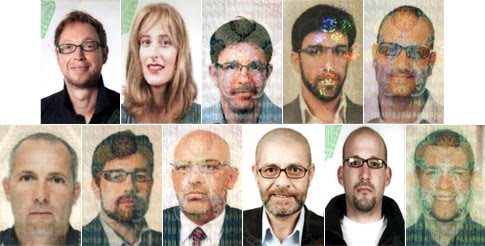
The assassination of Mahmoud al-Mabhouh, for which Mossad is almost certainly responsible, is an just the latest kind of other targeted murder which Israel has routinely carried out in the past. By their usual "high standards" however, as exemplified by the bombs which killed Yahya Ayyash and Imad Mughniyah, this one seems likely to go down as a prime example, not perhaps of incompetence, as the killing itself went off without a hitch, but instead of hubris, with an intelligence agency imagining that it could do such a thing without leaving any trace being proved sorely wrong. Whether the images released of the "11 suspects" actually show Mossad agents or not is impossible to know, and if they do they you can be certain that Israel has already given them new identities and probably even a swift trip to the plastic surgeon, but it's the sheer, well, chutzpah of the entire operation: the CCTV footage of the man going into the toilet bald and emerging with a full head of hair and glasses smacks more of Dan Brown than it does the most ruthless and feared intelligence agency of a democratic country.

The only thing that makes you wonder just slightly about this being a Mossad operation is the use, not of false passports, which they've abused repeatedly in the past, most notably in their failure to kill Hamas leader Khaled Mashal, but the stealing of the identities of actual residents in Israel, even if they've retained the British citizenship. That just seems bizarre: did they seriously imagine that the relatively friendly Dubai authorities wouldn't put much effort into their investigation, or publicly release the names of those it wanted in connection with the killing? At the same time however, there just doesn't seem any rival organisation which has the resources or people to carry out such a hit, certainly not Hamas itself, and while Iran could have, there's been no motive put forward for why Hamas' itself or its erstwhile allies would have wanted to get rid of him. Al-Mabhouh was a weapon buyer and seller, which carries with it its own risks, but why would someone who wanted him dead authorise an operation involving so many people when one man with a gun would have been so much easier and also less expensive?

Israel has form in treating those who it considers to have acted traitorously extraordinarily harshly, as Mordechai Vanunu has found. What did these six do though to deserve such a fate? Those whose identities they stole may not be actual Israeli citizens, yet why put them at such a risk of reprisals, to not even consider the difficulties they're now going to face in travelling almost anywhere. Again, you would expect they'll be compensated or given new identities, but why not simply create them in the first place for the hit? Admittedly, that's far more difficult than simply taking one, but it seems that's what they did at the moment with those who travelled under false Irish passports.

The diplomatic row with London will swiftly blow over; after all, considering what our own courts disclosed just last week, our blessed intelligence services are hardly free from blemish. The point remains though that this was an especially reckless operation, conducted against a minor player in Hamas for no obvious material benefit, and one which has once again brought into focus the fact that Israel remains a nation prepared to authorise what others might well term acts of state sponsored terror. Does it hint at desperation within Israel at the current state of the peace process, or rather show just how out of control Mossad is becoming? Either way, the only losers in this are those that Israel is meant to be dedicated to protecting: both its own citizens and its sympathisers.

Labels: , , , , , ,

Share |

Wednesday, August 06, 2008 

The "smoking gun" Iraqi memo and Con Coughlin.

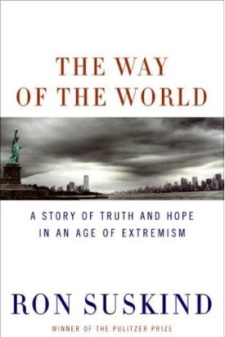
Continuing with the theme of hackery, although on a scale far, far removed from that involving Peaches Geldof, comes the allegations from Ron Suskind in his latest book that the White House ordered the CIA in the middle of 2003 to forge a letter from Iraq's former intelligence chief, Tahir Jalil Habbush, which was subsequently used as the smoking gun to prove links between Saddam Hussein's regime and al-Qaida. The letter claimed that Mohamed Atta, the ringleader of the September the 11th attackers, had trained in Baghdad at the Palestinian terrorist Abu Nidal's camp, and that the Iraqi regime was deeply involved in the 9/11 plot.

The letter was the crudest of forgeries and has subsequently been exposed as such. It is however the first time that allegations have been made that the forging of the letter was authorised at the very highest levels of both the US government and the CIA itself. Suskind minces no words and suggests that is impeachment material. All sides, it must be said, have denied it, and there are reasons to believe, as suggested in the Salon review of Suskind's book, that this might be one of those stories that seem too good to be true because they are, more of which in the conclusion.

The same must be said for those who believed the provenance of the letter, especially considering which journalist was responsible for its publishing. Rather than going to an American source with the letter, perhaps considering the fallout that was yet to come over the leaking of dubious intelligence to Judith Miller of the New York Times and others, the memo was given to a British journalist, the Telegraph's Con Coughlin.

It's by no means the first time that Con Coughlin has been linked either with the security services or with putting into circulation dubious material which subsequently turned out to be fabricated or inaccurate. Back in 1995 Coughlin claimed that the son of the Libyan dictator Muammar Ghaddafi was involved in an attempted international currency fraud. Served with a libel writ, the Telegraph was forced to admit that its source for the story was none other than MI6, with the paper first being informed of the story during a lunch with the then Conservative foreign secretary Malcolm Rifkind. Coughlin was briefed further by another MI6 officer on two occasions before the story was subsequently published.

Despite in this instance Coughlin's links with the security establishment coming back to haunt him, neither did it seemingly alter his friendly relations with them nor their apparent diligence in supplying him with little more in some circumstances than open propaganda. As well as being handed the forged smoking gun linking Iraq and al-Qaida, he also happened to come across the fabled source for the claim that Iraq could launch weapons of mass destruction within 45 minutes of an order to use them. To call it a fantastical tale would not put be putting it too histrionically: Coughlin talks of a DHL flight targeted before he landed in Baghdad by "Saddam's Fedayeen (a Wikipedia article worth treating with the utmost scepticism due to the almost complete lack of sourcing)", that almost mythical organisation supposed to fight to the death for Saddam that didn't put up much of a fight during the invasion, let alone in the months following the fall of the Ba'ath party. The Iraqi colonel claims that weapons of mass destruction were distributed to the army prior to the invasion, but were never used because the army itself didn't put up a fight. It's strange that 5 years on none of these batches of WMD have ever been discovered, despite their apparent diffusion around the country.

Since then, Coughlin's sources have been no less convinced that we're all doomed. Back in November of 2006 Coughlin claimed that Iran is training the next generation of al-Qaida leaders, despite the organisation's view that Iran's brand of fundamentalist Shia Islam is heretical. Allegations have been made that Iran has been supplying help to the Taliban, despite previously helping with its overthrow, but even in the wildest dreams of conspiracy theorists and neo-conservative whack-jobs no one seriously believes that Iran would ever help al-Qaida, let alone train its next leaders. The nearest that anyone can really get to claiming links between Iran and al-Qaida is that some of its members are either hiding there or that its fighters have been using the country as a transit point.

In January of last year Coughlin was back with another exclusive, claiming that North Korea was helping Iran get ready to conduct its own nuclear test, after NK's own pitiful attempt had gone off "successfully" the previous October. This one was not quite as fantastical or laughable as the one linking Iran and al-Qaida, but was still murky in the extreme. The NIE intelligence assessment the following November concluded that Iran had abandoned its nuclear programme 4 years previously. That said, we should be cautious: the Israeli attack on the supposed Syrian nuclear processing plant came after evidence that it was modelled on the North Korean plant, and there are allegations along with that of heavy North Korean involvement in the operating and building of the plant, if it indeed, it must also be said, it was a nuclear site at all.

The latest revelations that Coughlin's 2003 report may well have originated from the very highest levels of US government only increases the level of scepticism with which any of his articles should be treated. At times journalists have to rely on security service figures to break stories which would otherwise never set the light of day, but as David Leigh wrote in an article from 2000, the very least that they should do if this unavoidable is be honest about the origins of such reports. It's one thing to get into bed temporarily with the intelligence community, it's quite another to act for years as their voice in the press, as Coughlin certainly appears to have done, spreading the most warped and questionable of their propaganda. As the Guardian reported in 2002 after the Telegraph admitted to the role of MI6 in their story on Ghaddafi, Coughlin was likely to recover from the indignity due to his good contacts within MI6. That certainly seems to have been exactly the case. Most humourously though, this was how Coughlin opened his commentary on the 2003 Iraqi memo:

For anyone attempting to find evidence to justify the war in Iraq, the discovery of a document that directly links Mohammed Atta, the al-Qaeda mastermind of the September 11 attacks, with the Baghdad training camp of Abu Nidal, the infamous Palestinian terrorist, appears almost too good to be true.

As Coughlin must have certainly knew it was. Just how too good to be true has been left to Ron Suskind to expose.

Labels: , , , , , , , , , , ,

Share |

Wednesday, February 06, 2008 

Just fancy that!

Prime Minister Gordon Brown has backed the limited use of intercept evidence in court, after an independent review.

The Chilcot report says phone tap evidence was needed in some cases in England and Wales for security reasons.

But it says material should not be used against the wishes of the agencies collecting it - or if it could have been gained in another way.

Seeing as MI5, MI6 and GCHQ all pathologically oppose any intercept evidence being made admissible, this is the best possible conclusion that both the review and Brown could have reached. Justice will always come second to "national security considerations."

Labels: , , , , ,

Share |

Wednesday, January 30, 2008 

Not much intelligence from the Intelligence and Security Committee.

Continuing with the security theme, yesterday saw the release of the annual report from the Intelligence and Security Committee. The last report they issued was the gobsmacking whitewash on extraordinary rendition, which decided that MI5's involvement in the CIA kidnapping of Bisher al-Rawi and Jamil el-Banna because they'd changed the definition of what exactly an "extraordinary rendition" is. To quote from the toadying, ridiculously trusting report:

D.Those operations detailed above, involving UK Agencies’ knowledge or involvement, are “Renditions to Justice”, “Military Renditions”and “Renditions to “the Detention”. They are not “Extraordinary Renditions”, which we define as extra-judicial transfer of persons from one jurisdiction or State to another, for the purposes of detention and interrogation outside the normal legal system,where there is a real risk of torture or cruel, inhuman or degrading treatment”.

The security services were therefore cleared of any complicit involvement in extraordinary rendition. Aren't our investigating parliamentary committees wonderful?

Just where do you go from issuing such a laughable written record of sycophancy and admiring disregard for anything other than a clean bill of health for our glorious saviours in MI5 and SIS? To an even more hilariously censored account (PDF) which manages to inform you of almost precisely nothing you didn't already know.

Richard Norton-Taylor on CiF has already said it best, but the whole report has to be read to be believed. There isn't a page that goes by that isn't affected in some way by material it's felt to sensitive for the public to read, and so is instead replaced with asterisks. Predictably, we aren't told how much the security services are either spending or being allocated in funding, but some of the removals just make the whole thing completely impossible to understand or make your marvel at just what the point of even bothering to issue a report was. There's this for example:

We are now engaged in a range of counter-terrorism work; direct pursuit of terrorists, ***, capacity-building with key [countries,] and – this is an absolutely vital point
– ***.
***
***. So put like that and defined like that, this takes up about 56 per cent of our effort… and it is rising.

Or:

SIS has improved its *** and its understanding of the factors that have the potential to affect radicalisation and extremism in the UK.

Its what? Its cookery? Its archery? Its performance? Its dick waving?

The media have focused on the fact that GCHQ suffered from flooding last year and the report's inquest into that, but far more interesting is the report's comments on media relations, the stopping of the SFO inquiry into the BAE slush fund and the possibility of intercept evidence being made admissible. These seem to be Dame Eliza Manningham-Buller's comments on the coverage of the Birmingham beheading plot raids:

We were very angry, but it is not clear who we should be angry with, that most of the story of the arrests in Op GAMBLE were in the media very, very fast. Indeed, before the arrests in Birmingham, the press were pre-positioned and before the police had picked up one of the plotters and the surveillance was still out looking for them, the story was in the press.

So the case was potentially jeopardised by the exposure of what the story was. My officers and the police were jeopardised by them being on operations when the story broke. The strategy of the police for interrogating those arrested was blown out of the water, and my staff felt pretty depressed about the fact that this had happened.

We've never got to the bottom of who was behind the leaking, mainly to the Scum, but most of the fingers were being pointed directly at the Home Office. Not that they're the only guilty parties; the Met, the security services themselves and other interested parties have all leaked stories for their own benefit in recent years. The solution to this though doesn't appear to be to ensure that accurate, non-sensationalist information is supplied by the police or others when arrests are made, transparently making the news available to all rather than just a few, but instead to tighten the screw on the media in its entirety, with again predictably the complaint being that "lives are at risk":

The current system for handling national security information through DA-Notices, and the Agencies’ relationships with the media more generally, is not working as effectively as it might and this is putting lives at risk. We recommend that the Government engage with the media to develop a new, effective system, with a view to protecting intelligence work, operations, sources and criminal prosecutions, whilst ensuring that the media continue to report on important matters of public interest.

The government engage with the media? Who is the committee kidding? Either it will put down more chilling legislation which rather than affecting the sensationalism in the aftermath of the foiling of a "plot" will instead stop legitimate reporting and investigation, or it'll do nothing.

The committee's unquestioning approach to the evidence given them by the security services is once again highlighted by their pitiful investigation into whether there really was a threat of the Saudis withdrawing intelligence cooperation if the SFO investigation into corruption continued:

106. We asked the Chief of SIS about the Saudi threat to withdraw co-operation:

There was some suggestion in some of the media coverage that there was no *** threat to our co-operation… that is not true. There were threats made to the existence of the co-operation [and] there was reason to take those threats seriously…

If the committee is well briefed, it would know that the intelligence between all the major western intelligence agencies is now pooled and shared. Even if the Saudis had withdrawn their cooperation with SIS, they would never dare remove their cooperation with the Americans, who in any case would then have submitted the same information to us. If John Scarlett was questioned about that, it sure isn't in the report.

U. The Committee is satisfied that, at the time, there were serious national security considerations which contributed to the Serious Fraud Ofice’s decision to halt the investigation into BAE Systems’ dealings with Saudi Arabia.

Even if there were, it was still the equivalent of giving into blackmail and letting a foreign country dictate to us what we could and could not do in relation to more than substantiated allegations of corruption. We would never give in to such demands from terrorists or the likes of Iran, so why with our supposed friends? The rule of law means nothing when it comes to continuing the arming of a country with one of the worst human rights records in the Middle East.

Onto intercept evidence. Surprise, surprise, the agencies are firmly against, and the committee certainly isn't convinced either:

113. The Agencies, however, are adamant that their intercept capabilities must not be disclosed in court. If they were, criminals and terrorists would quickly learn what the Agencies can and cannot do, and would emd means of avoiding detection, which would then damage their capability and coverage. Other countries, however, allow the use of intercept as evidence without any adverse impact on their security and intelligence capability, so what makes the UK different?

GCHQ points to a unique combination of factors in the UK:

The UK is the only country which has all three of the following things: an adversarial legal system, subordination to [the European Convention on Human Rights] and a strategic intercept and SIGINT capacity that is worth protecting.

The tabloids' aversion to the HRA seems to be contagious; even the security agencies are now making spurious allusions to the ECHR somehow making it obvious how intercept evidence can't possibly be made admissible. The next paragraph is completely open about how poor some of the intercept evidence is, rather than "strategic" and "worth protecting":

In practice, because of the UK’s adversarial legal system, the defence would be able to test the validity of evidence and thereby explore how it was obtained. As communications technology evolves (particularly internet protocol), we understand it may be dificult for the Agencies to be able to prove intercept to an evidential standard.

So there you are. Admittance that the evidence which currently means those on control orders can't be prosecuted is so flaky or unable to back-up that it would be unlikely to stand up in court. No wonder that the agencies are against it; the last thing they want to look is either stupid or for it to be shown that men innocent of any crime have been held under the equivalent of house arrest for years on their say so.

117. The Director of GCHQ summarised the test for allowing intercept:

… a change to allow intercept as evidence should be introduced only when doing so would have a net benfeit in securing the safety and the security of the UK. By that I mean not just convicting and imprisoning criminals, but also preventing crimes and terrorist actions.

Which just happens to be a test which you'll never be able to come to a definitive conclusion about. Best not to even try then; after all, who cares about those stuck in the eternal limbo of the control order regime, driven to severe depression like Cerie Bullivant, whose only crime seems to have been to have associated with relatives of the fertiliser bomb plotter Anthony Garcia, who had his order quashed yesterday by a judge who was heavily critical of the Home Office.

Its conclusion then:

V. Intercept is of crucial importance to the capability of the Agencies to protect the UK, its citizens and its interests overseas. Any move to permit the use of intercept evidence in court proceedings must be on a basis that does not jeopardise that capability.

In other words, more blackmail. Introduce this and we won't be able to do our jobs properly. Never mind that numerous other countries in Europe also signed up to the ECHR manage it, and that the security services are more than happy with the results of their bugging, crucial to the Crevice trial and now the beheading plot being made available as evidence, intercept would be a step too far. Just what are they so scared of?

The only real showing of teeth by the committee was being denied access to a document prepared for ministers about "an important matter", apparently related to a foreign operation, which the foreign secretary at the time was happy to be given them. The prime minister didn't agree, and the committee said that doesn't say much about his previous pledge to make the committee more transparent.

Indeed, Brown and this government's intentions of doing just that could not be more summed up than in the choice of who to replace Paul Murphy, previous chairman and now the Welsh secretary after Peter Hain's resignation. Margaret Beckett, whose previous performance in her last two jobs, as head of DEFRA and then foreign secretary were both execrable, could not be either more establishment or less likely to ask the pertinent questions needed of the security services. So much too for the independent investigator that the committee was promised. The only way the security services will ever be held properly to account will be if a watchdog similar to the Independent Police Complaints Commission or the Information Commissioner were to be set-up. Why for instance should the head of MI5 be able to make doommongering statements about the terrorist threat in public and then refuse to give evidence to a parliamentary committee under the same scrutiny? Just how far the inroads into everyday life the security services are making were revealed in statistics released this week by Sir Paul Kennedy, which showed that more than 250,000 requests were made to monitor phone-calls, emails and post in just 9 months. The surveillance state is ever growing, yet there is not even the slightest attempt to provide accountability. That simply has to change.

Labels: , , , , , , , , , ,

Share |

Tuesday, December 04, 2007 

No nukes? Oh, time to invade then.

Fwwippp, followed by an almighty crash. Heard that sequence of sounds? It's been echoing around the globe, ever since the combined work of the 16(!) American intelligence agencies in the form of the national intelligence estimate was declassified and published yesterday. That fwwippp was the noise of a thousand rugs being pulled from under the feet of a thousand different people, politicians, commentators, bloggers, saloon bar bores, all made to look like fools at best and warmongering loons at worst. Iran not only isn't pursuing a nuclear weapons programme, it hasn't been doing so for four years.

Those who found themselves in a heap on the floor have come up with different ways of adjusting to the new, we're a bunch of liars and chumps, world. For the Sun, which recently informed us that the only thing worse than Iran getting nukes was another cakewalk with 650,000 dead and that anyone who believed Iran wanted nuclear power for peaceful purposes was "hopelessly deluded", the easiest thing to do is to stick your fingers in your ears and pretend nothing has changed, helped along by not reporting on the NIE assessment at all. If you're Oliver Kamm, and the unfortunate author of a piece for the Grauniad which calls for "concerted diplomatic pressure, sanctions and luck" when dealing with Iran published on the same night as the report, then you quickly rehash your bullshit and present it to the hordes on CiF as if it was fresh roast beef, rather than warmed up vomit. If you're Melanie Phillips, then this "this report provokes a high degree of scepticism". Scepticism which Mel naturally didn't show towards the intelligence claims that Saddam was going to murder us all in our beds within 45 minutes, or indeed, towards the claims by one Dave Gaubatz that Iraq's WMD was transported post-war from Iraq to Syria with the help of the Russians. Incredibly, President Bush has been the most magnanimous since the report was unveiled: he's gone from talking of nuclear holocaust and world war three to saying little more than Iran remains "dangerous".

Mad Mel does though have something of a point. We should indeed be sceptical. Why should we believe the intelligence services which got it so completely wrong over Iraq that Iran has abandoned any plans for a nuclear weapons? It's perfectly rational to be concerned over the motives of those delivering the intelligence this time round: they found themselves manipulated and used on both sides of the Atlantic to make the case for a war which has proved to be far more disastrous than their worst predictions suggested. We don't know how much of an impact this has had on their thinking and briefings; intelligence has always been nuanced and uncertain, things which Blair and Bush had no time for. Who's to say that they haven't tried to stop this happening again by being even more timid and diplomatic when considering what they know or even a pre-emptive attempt to stop in Marx's famous quote history being repeated for a second time as a farce after the tragedy of Iraq?

With Iraq however there always were informed voices that struggled to make themselves heard that more or less got it right, such as Scott Ritter, the former weapons inspector who was convinced Iraq had been 90-95% disarmed. He was 5% out. Robin Cook, who had been party to the intelligence as foreign secretary, stated in his resignation speech that he didn't believe Iraq had weapons of mass destruction as in those that could be quickly used in a military situation. Although intelligence agencies the world over were convinced that Iraq had some WMD, contrary to popular belief most didn't believe that it was an imminent, let alone an existential threat. As Richard Dearlove wrote, the "intelligence and facts were fixed around the policy". The ravings of men like "Curveball" were believed.

With Iran, it's different. As Oliver Kamm admits, Iran is not a totalitarian society, even if it is an autocratic and repressive one. Juan Cole speculates over whether the new information about Iran's nuclear program has come from a recent defector, having changed its mind from 2005 when the NIE estimated Iran was pursuing weapons, with now, two years' later, more convinced than before that it isn't and hasn't been for four years.

Wherever it's come from, it has already and will only do one thing: stop, or at least postpone any attack at least for some time to come. It also highlights the irony and inequity of the UN Security Council imposing sanctions on Iran for doing only, according to this latest assessment, what it is entitled to do under the Nuclear Non-Proliferation Treaty, which allows for the peaceful use of nuclear energy. The UN has been breaking international law, not Iran. This shouldn't negate from the fact that Iran has as yet no reactor where the uranium it has been enriching can be used for such purposes; but there is also nothing now to suggest, apart from the predictable and expected dissension from Israel, that the fuel, only being enriched to fuel grade, is for anything other than an energy program.

It also shouldn't stop the search for a complete solution. Still worth pursuing is the deal Russia has offered, where it would enrich the fuel while providing Iran with the reactors, taking away any reason for doubt. More intriguing still will be where this leaves Mahmoud Ahmadinejad himself: he has been hiding behind Iran's nuclear program to negate from the criticism he has faced over the rising cost of living and his broken promise to redistribute Iran's oil wealth. With the nuclear shield taken away, and faced with accusations of endangering the nation for no good reason, his short reign could be brought to an end at the first opportunity. Those also facing defenestration should be those who have so recklessly scaremongered and demanded action: Mad Mel and her second Holocaust have never looked so laughable.

Labels: , , , , , ,

Share |

About

  • This is septicisle
profile

Archives

Powered by Blogger
and Blogger Templates