Exaggeration and British jihadis in Syria.
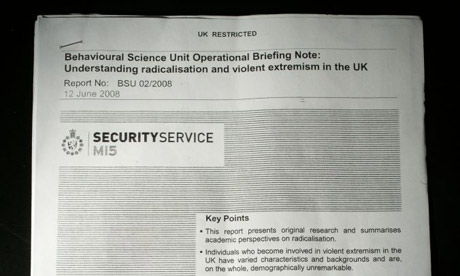
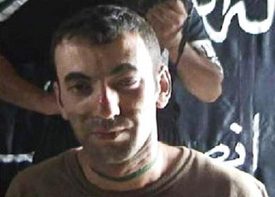
Much excitement, and it has to be described as excitement at how one of our very own has succeeded in blowing himself sky high (literally, in the whole "martyrdom operation" means instant entry to paradise belief of jihadists) in Syria, going where others have previously feared to tread. It's difficult to know exactly whether it is the intelligence agencies that are so concerned at the potential for those who have gone to Syria to fight, the majority of whom it has to be presumed have gone to join up with the jihadis, to then come back here and plot attacks, or whether it's the media exaggerating those fears in line with how Michael Adebolajo had gone to Kenya looking to join al-Shabaab before returning here.
Whichever it is, and considering how proactive Theresa May has been in removing British citizenship from those of dual nationality who've travelled to Syria the former is just as plausible, it seems a little strange that much of the coverage has been on how those who do go out are likely to be further radicalised. The obvious historical parallel most have reached for is the Spanish civil war, which I don't think is exactly analogous for the reason that whatever Syria is, it's not a fight about ideology. The very reason those who joined the International Brigades went to fight was they saw the war as being about putting a halt to the march of fascism across Europe. Although not universal, many of those who went to fight in Spain returned disullisoned, most notably George Orwell.
It's difficult not to think many will experience the same in Syria, especially as the infighting among the rebel groups has intensified. Moreover, to have made the decision to travel to Syria in the first place suggests almost all will have been what we'd describe as radical in the first place. Again, as most seem to be ending up with either al-Nusra or ISIS, the two most hardline jihadist groups rather than with the more "moderate" FSA battalions is indicative of that. One fact that mitigates against the potential for those who have specifically gone to Syria to fight the Assad government to return and plot is that this is the first time in a decade that a British citizen has carried out a suicide attack in a foreign country. There have been no such examples of a Brit going to Iraq and becoming a suicide bomber, or in Afghanistan or Pakistan for that matter. Indeed, there is only one disputed case of someone linked with a group other than al-Shabaab or al-Qaida central returning and carrying out an attack, that of Bilal Abdullah, who had at the least a tenuous connection with the aforementioned Islamic State of Iraq.
The reason for this is obvious: ISIS and other groups, including the Taliban, are far more focused on their own internal conflicts than on attacking the West, unlike al-Qaida central. ISI did notoriously carry out an attack in Jordan, and it resulted in a backlash. Those who are more inclined towards the belief that the whole world is a battlefield understandably gravitate towards the likes of al-Qaida, or the increasingly ambitious al-Shabaab. This isn't a universal rule, as we know that the ringleader of the 7/7 attackers, Mohammad Sidique Khan, travelled to Pakistan with the intention of training and fighting either there or in Afghanistan, only for his plans to change.
Without wanting to say the threat is being completely overblown, you can't help but feel the only reason the the head of counter-terrorism at the CPS is saying those who do travel will be charged on their return is precisely because they are Muslims, and likely to have fought alongside those we consider to be terrorists. Fighting for a cause you believe in is despite Sue Hemming's reading of the 2006 Terrorism Act not illegal, nor should it be. Some of those who have gone out to Syria have done so with the very best of intentions; the majority perhaps not so much. They don't however deserve to be stripped of their citizenship without recourse, nor treated as criminals or terrorists universally.
Whichever it is, and considering how proactive Theresa May has been in removing British citizenship from those of dual nationality who've travelled to Syria the former is just as plausible, it seems a little strange that much of the coverage has been on how those who do go out are likely to be further radicalised. The obvious historical parallel most have reached for is the Spanish civil war, which I don't think is exactly analogous for the reason that whatever Syria is, it's not a fight about ideology. The very reason those who joined the International Brigades went to fight was they saw the war as being about putting a halt to the march of fascism across Europe. Although not universal, many of those who went to fight in Spain returned disullisoned, most notably George Orwell.
It's difficult not to think many will experience the same in Syria, especially as the infighting among the rebel groups has intensified. Moreover, to have made the decision to travel to Syria in the first place suggests almost all will have been what we'd describe as radical in the first place. Again, as most seem to be ending up with either al-Nusra or ISIS, the two most hardline jihadist groups rather than with the more "moderate" FSA battalions is indicative of that. One fact that mitigates against the potential for those who have specifically gone to Syria to fight the Assad government to return and plot is that this is the first time in a decade that a British citizen has carried out a suicide attack in a foreign country. There have been no such examples of a Brit going to Iraq and becoming a suicide bomber, or in Afghanistan or Pakistan for that matter. Indeed, there is only one disputed case of someone linked with a group other than al-Shabaab or al-Qaida central returning and carrying out an attack, that of Bilal Abdullah, who had at the least a tenuous connection with the aforementioned Islamic State of Iraq.
The reason for this is obvious: ISIS and other groups, including the Taliban, are far more focused on their own internal conflicts than on attacking the West, unlike al-Qaida central. ISI did notoriously carry out an attack in Jordan, and it resulted in a backlash. Those who are more inclined towards the belief that the whole world is a battlefield understandably gravitate towards the likes of al-Qaida, or the increasingly ambitious al-Shabaab. This isn't a universal rule, as we know that the ringleader of the 7/7 attackers, Mohammad Sidique Khan, travelled to Pakistan with the intention of training and fighting either there or in Afghanistan, only for his plans to change.
Without wanting to say the threat is being completely overblown, you can't help but feel the only reason the the head of counter-terrorism at the CPS is saying those who do travel will be charged on their return is precisely because they are Muslims, and likely to have fought alongside those we consider to be terrorists. Fighting for a cause you believe in is despite Sue Hemming's reading of the 2006 Terrorism Act not illegal, nor should it be. Some of those who have gone out to Syria have done so with the very best of intentions; the majority perhaps not so much. They don't however deserve to be stripped of their citizenship without recourse, nor treated as criminals or terrorists universally.
Labels: Abdul Waheed Majeed, al-Qaida, Islamic State of Iraq, jihadists, online jihadists, politics, Syria, terror, terrorism
| Permalink