Tuesday, September 03, 2013 

How not to tackle the next big scandal.

When a government of any stripe wants to either bury bad news or in this instance, let loose a bad bill, it usually releases it just before parliament goes into recess.  Infamously, on the day Tony Blair was interviewed by the police over the loans for peerages scandal, the government published a veritable boatload of reviews and initiatives, in one of the most transparent attempts to distract attention away from the boss getting a visit from Inspector Knacker.  Only rarely though does it then follow up this attempt at subterfuge by attempting to ram in through the Commons almost as soon as MPs have returned to Westminster.  Instinct alone then ought to suggest that the transparency of lobbying, non-party campaigning and trade union administration bill is a wretched piece of legislation.

Sadly, such is the level Polly Toynbee has reduced herself to, and I speak as someone who is still sympathetic towards her comment pieces (meaning I will at least read them, unlike those scraped together by Zoe Williams), when she writes about how terrible something is, I find it hard not to suspect it perhaps isn't as awful as she's making it out to be.  Then you read the reservations the Electoral Commission, the independent body meant to implement it has (PDF), and it becomes clear that if anything, on this occasion Polly has actually undersold how dreadful the bill could be in practice.

What's at stake most certainly isn't being helped by the BBC's lackadasical reporting of the bill.  The only figure they mention is the overall cap on spending by third-party organisations of £390,000, which is only accurate if the spending is spread across the UK as a whole.  The actual limits are £320,000 in England, 35k in Scotland, 24k in Wales and 11k in Northern Ireland.  What's more, the limits before you have to register with the EC in the year prior to an election seem ridiculously low outside of England: £5,000 is a 50% reduction on the limit as it is, but this falls to a mere £2,000 in Wales, Scotland or NI.  The activities deemed to be political have also been considerably widened, to encompass rallies, media work, polling and "transport for the purpose of obtaining publicity".

How a bill that was supposed to deal with "next big scandal waiting to happen" has transmogrified into an act that looks to muzzle charities, third parties and trade unions isn't initially clear, but it can certainly be guessed at.  With the reforms to constituencies and party funding both deadlocked thanks respectively to the coalition bust-up and intransigence on all sides, the coalition seems to have hit on the next best thing.  Unwilling to accept that the spending by Lord Ashcroft and the Midlands Industrial Council in individual constituencies is akin to that of Unison, the Tories are looking to staunch it by the back door.  Additionally, despite having come into office promising to boost the Big Society, the coalition has also swiftly recognised that come the election, charities, while not advocating a vote for any particular party as the Charities Act prohibits from doing so, are going to be blunt about just how austerity has affected the most vulnerable in society (the Lib Dems especially are worried about how the NUS will campaign on their u-turn on tuition fees).  By making the rules on what is or isn't spending on "political purposes" as clear as mud, they seem determined to frighten organisations into saying as little as possible.

Andrew Lansley certainly didn't go out of his way to deny that this was precisely what the second part of the bill was intended to do, merely that people were scaremongering and that charities shouldn't be running campaigns that look to be partisan without registering in the first place.  As the EC briefing sets out, the potential impact could be draconian.  A local campaign on a planning issue within Wales for instance could have to register, and as spending on employees is included, they could quickly find themselves over first the £2,000 limit and then the £9,750 within a constituency.  As the campaigns against the pylons needed to connect wind farms to the national grid, HS2 and fracking are likely to metastasise between now and the election, a whole new regulatory burden is swiftly going to be placed on activist groups.  The same is the case when it comes to the larger blogs: Wings Over Scotland recently crowd-funded a poll on independence, despite not having any direct affiliation to a party.  Any blog that follows suit should this bill pass will almost certainly have to register, while it's more than possible that other blogs could also be caught up in the regulations, hence why Guido is up in arms.

Quite apart from the potential impact on freedom of speech itself, or indeed the ability of the electorate to be able to make an informed choice on who to vote for, as independent fact checking organisations are also likely to be hit, what really surprises is just how open the coalition seems to be about the direction this takes politics in.  At the same time as some MPs have realised that the old closed off world of Westminster only breeds apathy or worse, others seem to want to turn the clock back to when debate was between parties and the established media only, and for nothing other than the potential of short-term gain.  Shameless, shameful and shaming doesn't even begin to cover it.  And failing a major rebellion, or a rethink from a government that doesn't appear to have any intention of doing so, it looks set to become law.

Labels: , , , , , ,

Share |

Monday, November 14, 2011 

Stupid question, stupid answer.


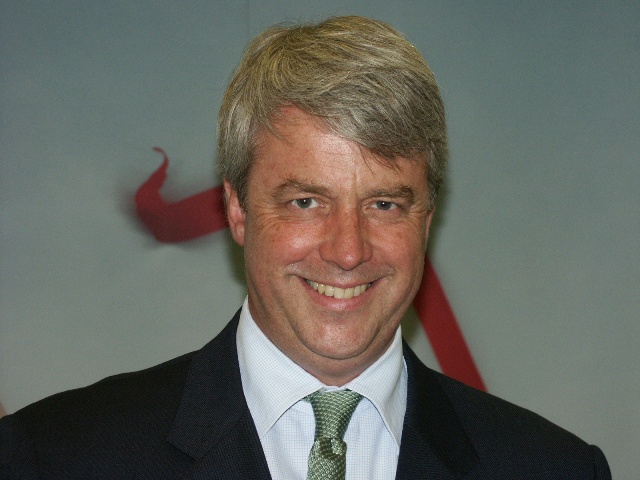
Health secretary Andrew Lansley is to announce that he is prepared to sack NHS bosses who attempt to save money by rationing treatment or making patients wait longer for operations.

So when exactly is Lansley going to sack himself?

Labels: , , ,

Share |

Tuesday, June 14, 2011 

Pause? Repeat.

There are times when you can't help but marvel at the amazing feats of rhetorical dexterity achieved by politicians. It's even more remarkable when the modern media, that supposed cynical, feral beast which always manages to cut through the bullshit to the truth takes on the main role of convincing the nation that their leaders aren't in fact men with feet of clay.

The government's success in turning its "pause" on their proposed NHS reforms into a substantial victory will probably become a case study in how to rescue presumed lost causes. Just two months ago Andrew Lansley stood up in the Commons and announced that his seemingly well-laid plans were in fact causing such disquiet that they needed to be brought to an immediate halt. Never mind that the consultation period on his initial white paper,which the Department of Health had presented as giving overwhelming support to his proposals had long since passed. There now needed to be more scrutiny, more thinking done on something so major.

Those of us who imagined that this was another example of the government attempting to legislate too quickly and not being able to see the wood for the trees couldn't have been more wrong. Everything had been sown up in advance. In was brought Prof. Steve Field, a practising GP, not an outright critic of Lansley's plans but in fact a keen supporter, albeit it one with some reservations. He and his future forum would review everything, and make recommendations in due course. Out would go the worst excesses, those parts which would have always been politically unacceptable once it was actually noticed they had been proposed in the first place, such as the opening up of the NHS to any outside provider who could offer a better deal and the role of Monitor in actively promoting such competition, and in would come ever so slight changes which most likely would have been inserted during further readings or forced by the Lords. Hence now the commissioning boards which would have been purely made up of GPs must have at least two lay members, as well as a nurse and a consultant on them, while the 2013 deadline for the abolition of primary care trusts will be "relaxed".

Everyone then has either had their personal objections somewhat pandered to, or can claim victory for their part in either ordering or demanding the "pause", with the exception of Lansley himself. GPs concerned they were going to be left holding the blame if things went wrong can point to the others on their boards, not to mention the health secretary, who takes on ultimate responsibility for the NHS and its continuation as a "comprehensive service". Managers, hospital consultants and nurses have all been told their views have been taken on board and will have representatives at various points of the commissioning process. Those healthcare firms looking to cream off the easy jobs might be perturbed at first, but nothing has actually substantially changed from the initial plan: their opportunities will just be "slowly phased" in. The Liberal Democrats can claim it was down to their sudden discovery of how disastrous the bill was that the "pause" took place, as they did at the weekend, despite Clegg and friends having initially signed off and voted for it, while Cameron has had a smashing time over the past few weeks making the same speech over and over again about how much he loves the NHS, just to drill it in to anyone who thinks the fact he's a Tory means he secretly wants to privatise the whole damn thing as soon as he can. The Tory backbenchers, ever wary of the Lib Dems gaining the upper hand, looked like mutinying until they saw the actual changes and decided quite reasonably that they're fairly minor. Potential banana skin sighted, the Conservatives have deftly skipped over it.

As for the media, the majority still can't get enough of Cameron's shiny bonce. The novelty effect of having another party leader alongside him also hasn't yet worn off, and everyone's written Lansley's obituary already anyway, so it was only natural to portray this as another great success for this new Teflon leader. Oh, and there was a shouty doctor too, always helpful when going into actual details is as mundane as it is on this topic. This whole nauseating stunt had it been attempted by Labour would have resulted in those involved being pilloried for resorting to such spin, a word it seems which has mysteriously fallen out of favour now the Tory-supporting press have their one true loves back in power. Only a few naysayers are pointing out that this top-down reorganisation, the exact thing the coalition promised they wouldn't do is now going to take place just as the NHS needs to be making massive efficiency savings. Cameron after all made his one great promise that he'd cut the deficit rather than the NHS, while Labour for once being both realistic and honest declined to ringfence the health budget, knowing that savings have got to come from somewhere.

This isn't by any means the end of the matter; it's just another temporary sticking plaster on reforms that haven't been anywhere near properly thought through, where it's still not clear that GPs are ready to take on a commissioning role despite have signed up to the pathfinder consortia, and where if the waiting lists continue to increase real, open, discontent with the coalition's promises and policies will begin to develop. A highly embarrassing political mess though, one of the coalition's own making, has been turned into a shining example of Cameron's leadership abilities and the Liberal Democrats' influence within the government, with all the blame shifted onto the unfortunate Lansley. Everyone wins, except for us plebs in the long term. And isn't that what modern politics sets out to achieve?

Labels: , , , , , , , ,

Share |

Tuesday, April 05, 2011 

An accident prone coalition.

For a government less than a year into its first term, the coalition is already becoming remarkably accident prone. All governments through initial hubris or power of will tend to implement reforms which they either later regret or have to put right; others become so addicted to legislation that they either manage to bore or overwhelm those potentially opposed into submission: just witness New Labour's astonishing 21 criminal justice acts, a figure which itself can't be properly verified so prolific were the additions to the statute book.

The key difference with the coalition is that the policy u-turns and clarifications it's been forced to make ought to have been glaringly obvious to anyone even slightly in touch with the political mainstream. Caroline Spelman's crackpot scheme to sell off the nation's forests, regardless of the possible merits of reforming the Forestry Commission, was the kind of idea which should have been squashed when first proposed. Excepting banning the WI and riding roughshod over objections to new housing developments (which, oh, the coalition is also planning to do) nothing could be more seemingly calculated to rile up the Tory heartlands than the potential padlocking off of local woodland. Yet somehow it not only went through cabinet, all but three from the respective coalition parties also voted against an amendment urging the government to rethink the sell-off.

Once again proving the truism that politicians and indeed we as a species never learn anything from our mistakes, Andrew Lansley duly stood up in the Commons yesterday and channelled Spelman over his reforms to the NHS. While the changes are not being abandoned wholesale as the forest sell-off was, we are instead going to have a "pause" or a "natural break" in the proceedings as everyone is being urged to reconsider their respective positions. Lansley's gambit from the beginning in promoting his white paper was cunning, so cunning in fact that it was just too clever: his idea was through handing over commissioning to GPs, many of whom have long believed that they could do a much better of running the NHS if only they were given the chance, he could at the same time buy support for the work of building on Labour's introduction of the private sector, allowing or more accurately forcing the newly formed GP consortia to buy services from "any willing provider".

What's more, it almost worked. With most GPs so delighted at the prospect of wielding the knife as it were, with "pathfinder" consortia already representing 87% of England, it took a while for most to take notice of the other changes being introduced. It was only last month at an extraordinary special representative meeting that the British Medical Association called for the withdrawal of the entire Health and Social Care bill, while the Liberal Democrat spring conference, motivated by the opposition of Shirley Williams and Evan Harris called for major changes.

Quite why it took the Liberal Democrats so long to realise that they'd been duped is unfathomable. After all, the coalition agreement specifically called for an end to top down restructuring of the NHS, while the white paper proposed the abolition of both primary care trusts, which the Liberal Democrats had wanted to democratise, and strategic health authorities. It's the top down restructuring to end all top down restructuring, and yet without the disquiet at the speed of the reform rising they may well have voted for it regardless. Whether you go with Nigel Lawson's observation that the closest thing we have to a national religion is the NHS, or Tory MP David Ruffley admitting that it even makes them socialists, the only thing more popular than trees is our free at the point of use health care system, however much we complain about it and want to improve it. Once you get even close to suggesting that much of what it does can be farmed out, or that private firms can cherry pick what they want to do at a profit while the state is left with the hard cases, you have a problem on your hands.

And yet David Cameron, the man who said his priority was the NHS and that he'd protect it from cuts was up until very recently not only defending the bill but praising Lansley's work to everyone. Almost needless to say, along with everyone else in the cabinet who'd let Lansley get on with it, Cameron was nowhere to be seen as his health secretary was forced into his new strategy of delay. If Gordon Brown became known as Macavity, never being around when the shit hit the fan or when it was time to take responsibility, then Cameron is putting in a remarkably similar performance. This failure to pin the blame directly on the prime minister has been the biggest failure of the opposition to the coalition so far: Nick Clegg and the Liberal Democrats have rightly been targeted for propping up a Tory government intent on using however much time it has to embark on an economic and social experiment of slashing the state and hoping the private sector can fill in the gaps; unfortunately this has been to the detriment of properly nailing Cameron first and the Conservatives second for their aloofness at what they're about to unleash.

This ultimately is why Lansley's plans have had to be temporarily frozen. It's not that the Liberal Democrats are threatening to oppose the bill, or that the doctors themselves have become militant, it's that Cameron's image, carefully cultivated as the protector of the NHS, was in danger of being permanently sullied. Lansley instead is the one being left out in the cold, widely being described as dogmatic and unwilling to compromise, having only done what was asked of him regardless of it conflicting so obviously with both the coalition agreement and indeed with the manifestos of both parties. It could well be that this is a bluff, with only piecemeal changes to the bill made, as after all, Cameron himself is still fully behind plans which would see the entire public sector opened up to the private sector. More likely however is that the Liberal Democrats will be given enough compromises to claim that they've stopped Lansley's worst excesses, something they'll especially prize if the AV referendum fails, while the Conservatives will show themselves as being willing to listen to reasonable criticism. Even if this turns out to be the case, it shows once again that the coalition firstly isn't as clever as it thinks it is and secondly that through the right strategy and target it can be potentially defeated. Cameron, if it wasn't already clear enough, is the key.

Labels: , , , , , ,

Share |

Wednesday, December 15, 2010 

Opaque consultations and Andrew Lansley's NHS reforms.

As political U-turns go, the Liberal Democrat about face on tuition fees has absolutely nothing on the promise made in the coalition agreement that the new government would not indulge in top-down reorganisations of the NHS. The full pact between the Lib Dems and the Conservatives was published on the 20th of May; on the 12th of July the government published the Liberating the NHS white paper, advocating the abolition of strategic health authorities and primary care trusts. If you were feeling cynical you might fall into the belief that the two parties had no intention whatsoever of honouring the pledge made in the agreement, and had been planning all along to do exactly the opposite. Appropriately enough, the website setting out the coalition's Programme for Government has already been closed down, and is now only available through the National Archives' cache.

Today the government published its response to the consultations launched by that previous health white paper. Considering how quick the coalition was to abandon its opposition to carrying out the kind of top-down reforms which had so angered and demoralised NHS staff during Labour's years in power, you'd expect it to at the least recognise or catalogue just how many responses were either in favour of their proposals and how many were against. While this would be time-consuming as there were over 6,000 submissions, it would not only signify this government's dedication to transparency but also enable us to ensure that they aren't misrepresenting the overall tone of those responding.

Instead the document cherry picks from this vast cache of opinions, and while it does provide a small amount of space for trenchant criticisms of the original plans (paragraph 1.15, page 10), it quotes at far greater length those who were supportive, which it describes as coming from "across the spectrum". It's impossible to know whether this is an accurate summary of the consultation submissions for the simple reason that the only thing we have apart from the tiny pieces directly lifted from them littered throughout the paper is the names of the organisations that took part. These are listed in this highly professional 58 page PDF file (original mirrored here in case it's replaced), 27 pages of which are either completely blank or have what may have been the remnants of earlier edits to the document strewn across them.

This wouldn't be so bad or so hilariously hypocritical if the document itself didn't propose an NHS "information revolution" (paragraph 2.23, page 22), the kind where "information can drive better and safer care, improve outcomes, support people to be more involved in decisions about their treatment and care, and, through extending opportunities for people to provide feedback on their service experience, improve service design and quality". Such as by perhaps asking whether those responding to consultations would mind having their submissions published alongside the official government paper, ensuring that their own objections and proposals can be used to hold the department to account? A further consultation was incidentally launched on this "Information Revolution", alongside another on greater choice and control, with very little fanfare back in October (an introduction to the "IR" on the DoH website has so far received only 18 comments). Most will only now be learning of them, with the consultations closing on the 14th of January, leaving little real time for many to respond.

It may well be the case that the responses to the consultation have somewhat altered the government's plans, as it sets out (paragraph 1.13, page 8), although you certainly wouldn't know if from the way it's presented the opposing submissions. For instance, while the summary of how the government has listened suggests that it's changed its view on the commissioning of maternity services due to the response, a look at the actual relevant section (paragraph 4.97, page 79) sees four different organisations quoted as supporting the original plan while another four, described as representing the majority view, differed. Here's where it would have been incredibly useful to have the full submissions to be able to see the real strength of opinion. Without them you're left to take the Department of Health's word for it, which judging by previous performance would be a very foolish thing to do indeed.

As with so much else the coalition is proposing, speed is being favoured over properly thinking through the possible consequences of such rapid and untested reform. The response given in the white paper to those arguing that the proposed changes are a "revolutionary" leap in the dark (paragraph 1.20, page 12) is that they would be better characterised as a logical evolution of the reforms put in place by the last government, with it commenting that practice-based commissioning and GP fundholding have been around for 20 years. This is despite Andrew Lansley previously arguing that comparing the former and GP commissioning is meaningless as they are completely different things. It also doesn't make clear that £80bn of NHS funding will be going straight to the new GP consortia to allocate and spend, a truly massive change, and one which the government is yet to prove the majority of GPs actually want. The cost of this reorganisation, yet to be revealed despite the health secretary apparently knowing the figures, comes as it seems unlikely the government will be able to keep its other promise of a real terms increase in spending on the NHS without making further cuts in other departmental budgets. If no one other than NHS staff originally cared about the breaking of the "no more top-down reforms" pledge, millions of voters will come to if it leads inexorably to Cameron's "cutting the deficit rather than the NHS" policy becoming just another election soundbite.

Labels: , , , ,

Share |

Monday, May 11, 2009 

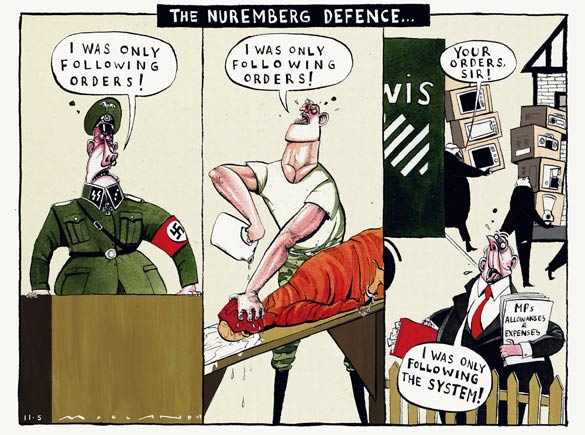
The Nuremberg defence and democracy following it.

In The Thick of It, probably the closest television has come to getting close to the reality of being an MP since Yes Minister, the politicians are almost uniquely portrayed not as venal, corrupt or stupid, although Hugh Abbott is certainly close to being incompetent, but caught in-between the spin doctors, the media and the public at large, all of whom are shown in a far more negative light. From the outraged woman who wants to know what Abbott is going to do about how she has to clean up her own mother's piss, to those who leave insults on the Conservative MP's blog about his sexual predilection for cats, you can't help but feel sorry for the MPs who work incredibly long hours only to be abused by all and sundry around them.

Sadly for the few honourable members who have not made outlandish expenses claims, and there are indeed some who haven't, it's now going to be a long time before anyone feels sorry for the political class as a whole. If things seemed bad when the Telegraph first unleashed the leaked disc sold to them for around a six figure sum on Friday, on Monday night, with still more abuses to be revealed tomorrow and presumably over the coming days, it's the continuous drip drip which is now in danger of doing lasting, long standing damage not just to this parliament, but potentially to democracy itself for some time to come.

The last time parliament felt under siege like this was when there seemed to be "sleaze" stories concerning the last Conservative government emerging week by week. This went from the highly serious, concerning Neil Hamilton and Jonathan Aitken to the sex "scandals" which we have since rather stopped putting so much importance on. The difference was that these were almost uniquely affecting the Conservatives, and New Labour was doing its utmost to gain from them. No one is pretending now that any party has been more "pure" than the others, although it remains to be seen whether the Lib Dems and the nationalist parties (Sinn Fein apart) will have as many apparently on the take in their ranks as the two main parties seem to. The cliché used to be that it was the Conservatives caught with their trousers down, while with Labour it was money. Despite a recent Daily Mail story that suggested that the expenses would reveal affairs and that Labour whips were on suicide watch, such was the fear of what was to come among some on the backbenches, it now seems to be money, or rather claiming both for property and for the furniture to fill it that dazzles all.

If anything, some of the claims by the Conservative frontbench look worse than that of their Labour counterparts. Some are defending Michael Gove from the accusation that he was one of the politicians who "flipped" his second home, but claiming £7,000 for furniture still leaves a bad taste in the month when you consider that Gove has not just the one salary, but undoubtedly another if not others, continuing to write a column for the Times, serving on the board of the hilarious Standpoint magazine, often appearing on Newsnight Review and also writing the equally laughable Celsisus 7/7, which makes Melanie Phillips' Londonistan look like a paragon of research by comparison. Andrew Lansley, who appeared recently on Question Time and let everyone know that he earns £24,000 a year for 12 days' work serving as a corporate director on the board of a company, renovated a Tudor cottage on expenses, sold it, then switched his second home to a flat in London. Francis Maude, another man with lucrative secondary income, tried claiming mortgage interest.

Apart from John Prescott claiming for two toilet seats and panelling for the front of his house, Barbara Follett (another hardly impoverished individual considering she's married to the novelist Ken Follett) claiming £20,000 for security, Margaret Moran with her second home in Southampton, because without it she wouldn't be able to see her husband who works there, Hazel Blears seems to the Labour MP most deserving of having ordure thrown at her, with both Sunny and the Heresiarch outlining in detail exactly why. Not only did she "flip" her second home three times in one year, claim furniture for them and then apparently avoid paying capital gains tax when she sold one of the properties, earning herself a tidy £45,000 profit, but she is the most prominent individual who seems to find the whole scandal to be frivolous; it isn't her fault, it's the system, she intones, all the while beaming in the same crooked smile which never seems to leave her face. Even today's Guardian leader, having described Blears in such beaming terms just last Monday, suddenly finds that she perhaps isn't the "decent, well-motivated and genuine" person it thought she was. It is of course nice to find that those MPs whom we most love to loathe for their loyalty and lack of independence are not just lacking intellectually but also in the honesty stakes, but those who aren't guilty, such as the Ed Milibands, Alan Johnsons, Philip Dunnes and David Howarths will be dragged down with them.

Although the politicians themselves have been pointing towards them by means of creating a distraction, there is no doubt whatsoever that those most likely to benefit from parliament as a whole being dragged through the mire are the extremists, and the British National Party must be regarding the Telegraph stories as manna from heaven, coming so close to the European elections when they were already likely to do well. How can any party, not just Labour or the Conservatives, try and campaign on the actual issues while this is going on? True, most might just declare a plague on all their houses and not vote at all in what would already be a low turnout election, but the worry must now be that those seats which the BNP could potentially grasp are now theirs for the taking.

The one thing that is abundantly clear is that the politicians themselves can now no longer have any control over their own expenses or their salaries. That not a single one of the 47 MPs named so far by the Torygraph was willing to go on Newsnight to defend themselves was just not a display of cowardice, it was also that they know they simply can't blame a system and not apportion blame on themselves as well. The new regime will have to be overseen by a completely independent committee, otherwise faith in parliament might never return. The second home allowance has to be scrapped altogether, or at least far more heavily policed or regulated, as does the John Lewis list. Those earning £64,000 or more a year simply cannot expect the taxpayer to furnish their homes for them. The tax breaks also have to be ended.

One of the few boasts that could be made about our political system was that compared to some of our European neighbours, not to mention the banana republics and kleptocracies around the globe, ours was remarkably free of corruption, and when it comes to out and out buying of votes, or payments for policies, that still mostly holds true. No one could have predicted that it would be bath plugs and bags of manure which would bring politics into such disrepute, but now that it's happened the shovels have to be brought out. The worst culprits need to be held to account in some way, and as the only way might well be the ballot box itself, there's now even more reason than ever to vote tactically. Ensuring that the likes of Hazel Blears and Michael Gove are not MPs in around a year's time might well be the only way we can hope to restore parliament to even a shadow of its former standing.

Labels: , , , , , ,

Share |

Monday, September 29, 2008 

Our new overlords.

If the Liberal Democrats' conference was overshadowed by "Meltdown Monday" two weeks ago, the Conservatives hardly seem to be cursing their luck for suffering the same fate. Even with the polls suggesting that Labour's conference, or rather, Gordon Brown's well-received speech, has given the government a boost, the edict from on high was obvious: try not to look too triumphalist.

Accordingly, even if the swinging dicks in the party are on the inside brimming with confidence which only the most expensive private education followed by Oxbridge can provide you with, their faces and actions must be the opposite: stern, determined, serious. It's almost reminiscent of a faintly apocalyptic sect that are constantly reminded that they are living in the last days, and that The End could come at any time; when it does, they must be ready, lest the outsiders be put off by their exuberance at being saved whilst all around them are set to burn in economic hellfire.

The deeply depressing thing, apart from that fact that all the banks are going to collapse tomorrow leaving us in a Threads-like future eating rats to survive, is that the Conservatives truly do look like the government in waiting. A party flush with cash and the knowledge that they probably already have the next election in the bag is always likely to be able to put such a powerful show on, but that it's so apparently natural is what digs in and inspires anxiety. Not only are they appealling aesthetically, but also on policy they are finally starting to cobble together something approaching the beginnings of a manifesto. Their plan to set-up an Office for Budget Responsibility to monitor government spending is one of those simple ideas which is all the more effective for it. The announcement that they will not build a third runway at Heathrow and instead opt for a high-speed TGV line between St Pancras and Leeds was a master stroke - pissing off all the right people while further underlining their "green" credentials. It's hardly likely to win over the real greens, but those worried about about the contribution of flying to CO2 emissions will likely be impressed.

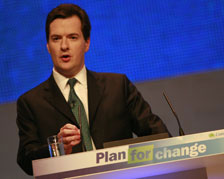
Take as a further example George Osborne, who ought to be on an absolute hiding to nothing. He's young, resembles a caricature of the smarmy, upper-class snob that spent his tender years smashing up restaurants when he wasn't shovelling white powder up his nostrils, with a face so punchable it's a marvel that he hasn't got a broken nose and a good number of teeth missing, knows next to nothing about economics, and has all the charm (to this writer at least) of a self-portrait of Kate Moss drawn in lipstick and Pete Doherty's blood. Instead his speech was pretty much as good as it could have been: for a party that has been absolutely anonymous on the economic fall-out of the past two weeks, he came across as ready to take over the reins should become available. The message about the cupboard being bare with there being no possibility of sharing the proceeds of growth, as they promised and as Vince Cable mocked them for, with a recession about to bite may have been stating the obvious but was still jarring. He declared that the party was over, and while you somehow doubt that is by any means the thinking within the Tory party, he undoubtedly meant it. While acknowledging the party's own role in deregulating the City while encouraging the housing bubble, he attacked the bankers "partly responsible" harder if anything than New Labour has ever dared to or would dare to.

There was of course chutzpah along with the clarity, Osborne hilariously claiming that they were "not bedazzled and don't fawn over big money", just as a Dispatches documentary showed that a donation of £50,000 to the party brought membership to the Leader's Club, where they could argue the toss over Champagne with Cameron, but the right tone had been struck. It will though be the promise of a two-year council tax freeze that gets the headlines, despite the cupboard from where it was presumably pulled being bare. This has all the makings of being just as much a con as the inheritance pledge was, with many being under the illusion that they will benefit when they most likely won't, as councils will have to decide to take part, before you even bother to actually look at the figures. None of this though will matter, just as the IHT pledge didn't last year, as the Conservatives are getting away with their promises barely being examined, as Labour's invariably weren't prior to 97.

This was further apparent when Andrew Lansley stepped up to the lectern, holding forth on the NHS just as Osborne had stated that the party was over. His big promise was a single room for any patient who wanted one, despite the unlikeliness of there being any extra cash to deliver such a bold pledge. When you consider that the NHS cannot even currently deliver single-sex wards, this was the sort of unachievable ideal that the Tories would have once criticised, and which Labour would have been crucified for as yet more wasted spending. He had previously promised to end the constant reforms under New Labour by introducing even more reforms, but this time ones which will democratise, empower and free the staff, as if Labour hadn't sold their constant rejiggings on exactly the same buzzwords. The contradictory, contrary thinking would have been mocked normally, but these are not normal times, and with the economy taking precedence over everything, Lansley and the party will probably be glad that few will take much notice.

There's likely to be more such flummery tomorrow, when the favourite Conservative subject, the "broken society", will be the main topic. Dominic Grieve, fresh from attacking multiculturalism as he enters one of the most multicultural cities in the country, will apparently offer changes in the law to help "have-a-go heroes" who are supposedly being prosecuted for daring to interfere when they see crimes occurring, often highlighted by the tabloids who hardly ever report the full real story, such as when they were outraged by the man and son who were arrested after they performed a citizen's arrest on a boy who had err, allegedly committed a crime the day before. He will also look to change health and safety laws supposedly stopping the police from doing their jobs, highlighting the case of Jordan Lyon, which err, involved community support officers, and as this blog has previously noted, was not the scandal which it was made out to be, as the boy had already disappeared from sight when they arrived and the police themselves were there within a few minutes of that.

The underlings though have been thoroughly overshadow by Osborne, just as they will be also by Cameron. While Osborne ineffectively threw back the "novice" tag at Gordon Brown, something not shown in many bulletins, his "stop go" soundbite will have a struck a chord with those tired of a government which has just one strength remaining, the experience of Brown in a crisis. This, lamentably, may be the end of even that.

Labels: , , , , , , ,

Share |

Wednesday, August 27, 2008 

No excuses for being Andrew Lansley.

There are, according to Andrew Lansley, no excuses for being fat. Or to be slightly more specific, being obese. Apparently, the idea that biology or environment has any bearing on whether someone is overweight is simply making excuses. Making excuses is bad. As is nannying. Our government does both. That makes the government bad.

This is an extension of Cameron's speech a few weeks back that a lot of people's problems are self-inflicted. To a certain extent this is undeniably true; saying so is not something radically new, or something that has been actively discouraged, despite how the Conservatives have tried to portray it as doing so. It's more simply that somebody noticed that most bristle at being told that everything is entirely their fault; rather that doing so more subtly, not being quite so confrontational and being more feel-good tends to work far better. This isn't political correctness, this is simply being far more sensitive, which is more likely to work.

In fact, Lansley is actually taking it a step further than Cameron by rejecting the idea that there are any excuses. Cameron added:

"Of course, circumstances - where you are born, your neighbourhood, your school, and the choices your parents make - have a huge impact. But social problems are often the consequence of the choices that people make.

Cameron then does indeed believe that both biology and environment have their effect on obesity, which is wise, because they both obviously do.

Ignoring where you were born and what you are born into for half a second, would Lansley agree that there is an excuse for someone being overweight if the medication which they take has a side-effect of weight gain (Yes, bear with me, I'm being rhetorical, I'm sure he would)? After all, that is most certainly an excuse which some could make when they were overweight to begin with, but it could also be a valid one.

Like with Cameron, Lansley again isn't aiming this at the obese members of his own party. It's the nod and the wink - it's not the Fatty Soameses of this world that are the problem, obviously, but rather all those gigantic, wobbling, welded to the pushchair, acne-riddled layabouts that stuff their faces all day and then have the audacity to walk around our towns and cities where other members of the public might see them. Likewise, Lansley must surely agree that there are no excuses for the put upon single-mother, the kind that has to allocate every single penny of her income, the one that shops not at Waitrose or M&S or even Tesco or Sainsbury's, but at Netto, Farmfoods, Iceland, Lidl, etc. The one that doesn't have the time, or energy, to as this person on CiF says, "produce healthy food from basic ingredients". She could do that, if she wanted to be on her feet for another two hours of the day, but why bother when she can buy the economy pizzas, ready meals at however many for £5 and otherwise which can either be popped straight in the oven or straight in the microwave?

Now that we've agreed that there are no excuses whatsoever for being the size of a house, what then are Lansley's suggestions for altering the situation. Let's start with some cod-psychological behavioural theory:

If we are going to defuse the time-bomb of obesity-related ill-health, we must change the behaviour of adults today, as well as our children. Tell people that biology and the environment causes obesity and they are offered an excuse not to change their behaviour. As it is, people who see more fat people around them may themselves be more likely to gain weight. Young people who think many of their friends binge-drink are likely to do so themselves. Girls who think their peers engage in early sex are more likely to do so themselves. Peer pressure and social norms are powerful influences on behaviour and they are classic excuses. We have to take away the excuses.

Quite so. But isn't there also peer pressure not to be fat? Perhaps things have deteriorated still further since I left school, but I'm pretty certain that being overweight was not exactly a barrel of laughs, unless of course you happen to be the barrel and the laughs were directed at you and you laughed along in a feeble attempt to pretend you weren't the butt of the joke. In fact, let's not beat around the bush here: I called fat people fat. You called fat people fat (probably). I was an unpleasant little pustule (and still am) and on one occasion I told a girl that she should consider the Slim Fast plan, thinking this was devastatingly witty. She descended into floods of tears and I became enemy number one with her friends, quite rightly, for a good time afterwards. I felt like a shallow little twat and still do. I'm pretty certain that it's probably much the same in some of the more immature offices across the land, and that those especially overweight have to face up to a fair amount of abuse when they venture out. Do these things therefore balance out, or not? I don't know. I'm pretty sure that they can't simply be dismissed as "excuses", however.

For teenagers, I believe we also have to think specifically how we can deploy leadership, role models and social marketing approaches, not just to warn them about the harmful consequences of risky behaviour, but inspire them with what they can achieve by choosing healthy living. We must not constantly warn people about the negative effects of obesity – instead we must be positive – positive about the fun and benefits to be had from healthy living.

Again, perhaps I'm being a little simple here, but aren't there plenty of role models out there that are anything but overweight? Indeed, I'm struggling to honestly think of someone obese or overweight that's a positive role model, unless we perhaps count a few singers that have emerged recently, such as Adele or those two reality show debutantes, Rik Waller and Michelle McManus. Inspiring is a noble and obvious aim - but it's one that's a hell of a lot harder to do in practice than it is when making a speech.

Today, I propose that our second responsibility deal should be on public health. I have invited Dave Lewis, chairman of Unilever UK, to chair a working group of business representatives, voluntary groups and experts. Together, we will invite views on these proposals and hammer out the details of the deal. Our proposals for the responsibility deal include: supporting EU plans for a mandatory GDA-based front-of-pack food labelling system; industry-led reformulation initiatives and reduction of portion sizes; proportionate regulation on advertising and positive campaigns from the industry and government to promote better diets; a responsible drinking campaign matched by community action projects to address drug abuse, sexually transmitted infections and alcohol abuse, using a proportion of drinks industry advertising budgets and supported by the government; and incentives and a local structure, through business organisations, for small and medium-sized companies to improve the health of their employees, working with business organisations, NHS Plus and the Fitness Industry Association.

Ah, details. On the GDA front, I'm pretty certain that it's either already became law for firms to have similar details on the packaging or have rolled them out voluntarily; the Diet Coke bottle sitting in front of me has the exact scheme described on Lansley's link on the label. This is opposing the so-called traffic light scheme, which while simplistic was far easier to understand and which the Food Standards Agency set-up. Firms like Coke, and supermarkets like Tesco opposed it. On the reformulation initatives and reduction of portion sizes, again, I think most manufacturers have already been responding to that, reducing salt and fat levels, etc. They've probably not done as much as they could, but I can't see how the Conservatives rather than Labour are going to be any more successful in persuading them to do so. On positive campaigns from industry and government, it's not as if the government has not already been doing so: there's a whole Choosing Health section on the Department of Health website, and there's been a White Paper on the subject. There's currently a responsible drinking campaign being run by the government, one which I think is actually rather good, but whether such things ever have any effect is open to question, and the community action project again seems to be the Tories deciding that the voluntary and private sector will pick up the slack, whilst the last proposal just seems to be in there to make up the numbers.

In other words, Lansley seems to be more or less siding with some of the less reputable sides of the food industry in blocking the traffic lights scheme, proposing pretty much all that the government is already doing, and not a lot else. All while being slightly more in your face, less open to the idea that there are reasons for being overweight not just limited to eating too much and not exercising enough, and not offering anything approaching new except a harsher line in rhetoric. Do I really need to keep repeating the bit about the new Blairites, except with a slightly less kind face?

Labels: , , , , ,

Share |

About

  • This is septicisle
profile

Archives

Powered by Blogger
and Blogger Templates