Wednesday, April 09, 2014 

Miller in the Floss.

Off then goes Maria Miller, to spend more time with her converted barn in the paradise that is Basingstoke.  Often when politicians are forced to resign it can be written that events conspired against them; not in Miller's case it can't.  Miller clearly could have survived had she made a more fulsome apology than the now infamous non-sorry which only just managed to escape her lips, the kind of basic mistake a more adroit individual would have avoided.  If there's one thing you can't do enough of in modern politics, it's apologising, regardless of whether you mean it or not.  Do it, get it out of the way, reach for an onion if necessary, just don't give the impression you don't care about any mistakes in your expenses whatsoever.

We can't though divorce Miller's forced resignation from the coverage she's received since last week.  This might be one of the first examples of newspapers not claiming to have been responsible for getting a minister sacked, such is the level of embarrassment at knowing full well much of this has been about Leveson and to a lesser extent gay marriage, a whole swathe of hacks pretending their work has been motivated by the levels of public outrage still with us since the expenses scandal was first uncovered.  Have voters really been jamming the phone lines on call-ins as they were back then, all but demanding heads on pikes and the immediate destruction of all duck houses?  If they have, I must have missed it.  True, it doesn't usually take a personal animus for newspapers to splash day after day on a certain minister's problems in an attempt to claim a scalp, as it's something that comes naturally; this though has been something else.  Why after all would Tory papers otherwise fairly happy with their party of late be the ones leading the way, instead of making excuses or saying nothing to see here as they so often have in the past?

Not that it was anything approaching a good idea for Miller's loyal to the end parliamentary private secretary to send a text to presumably sympathetic backbenchers making just this point.  If there was a defend Miller campaign being ran by Number 10, it must rank as one of the understated and incompetent of recent times.  No one seemed to be willing to stand up for her in public other than spokesmen and Boris Johnson, and that was in his usual not entirely serious manner.  Indeed, Esther McVey said she wouldn't have gone about it the way Miller had.  Again though, was no one from Downing Street advising Miller on how to deal with the standards commissioner?  Wasn't it obvious from when the Telegraph suddenly discovered in December of 2012 that there were questions marks over her expenses this was going to be a campaign?  Why then wasn't she told to be completely open, instead of threatening the commissioner and all but telling the Torygraph to leave it?  It suggests a lack of attention to detail, David Cameron not willing to let his sort-of supporters in Fleet Street determine his cabinet, while apparently not caring enough to tell his loyalists to get out there and make clear Miller wasn't going anywhere.

Much as it's been pointed out how ruthless Cameron was to those within his own party over their expenses when he wasn't prime minister, Miller could have been saved, as Hopi Sen argues.  They managed it with Jeremy Hunt, when Number 10 just rode it out and claimed it was all the fault of his PPS Adam Smith that News Corporation was getting information on the Ofcom bid in advance.  It raises the question of why once it was obvious Miller's non-apology hadn't been anything close to adequate she wasn't sent out to try again in front of the cameras, told to accept she had got it badly wrong and apologise for having done so. A clue is perhaps in Cameron's reply to Miller's resignation letter, where he all but agrees with her pleas of innocence, prompting Ed Miliband at PMQ's to ask why she then had to go.

It certainly isn't any clearer tonight. Most likely is a combination of the factors, knowing the press wasn't going to give up, the lack of support from her colleagues and the feared impact on an already tough European campaign. In a way, it's also a case of the Tories reaping what they have sown. This week was meant to be about yet more welfare crackdowns, requiring the unemployed to have a CV and be signed up on the Jobmatch website before they can claim JSA, as well as further restrictions on what EU migrants can claim and when. Instead it's been nothing but Miller and her own outrageous entitlements. Why shouldn't people be angry about MP's expenses when those claiming anything other than middle class benefits are attacked as scroungers, day in, day out?

Cameron as a result has finished up looking weak and indecisive. The only positives to be taken are it will be a passing frenzy, soon forgotten, and that anger over expenses affects politics as a whole rather than any particular party, hence why Ed Miliband prior to today hadn't called for Miller to go. If there is any further embarrassment, it's in how Miller's replacement as minister for women, Nicky Morgan, couldn't also taken on the equalities brief as she voted against gay marriage. It just underlines how few ministers, let alone backbenchers share Cameron's view of both society and the economy. Miller for all her faults did, and he can ill afford to lose many more such supporters.

Labels: , , , , , ,

Share |

Monday, April 07, 2014 

Miller time.

Ah, Maria Miller.  Every so often a politician does something that just sums up the way an increasing number of people think their elected representatives operate.  Before doubt was thrown on almost the entire altercation, we had Plebgate, which seemed to show the contempt and arrogance of the political class to everyone they saw as below them.  Now we have Maria Miller, with her 34 second non-apology.  You have to presume that Miller simply didn't think the media would pay attention, normally a reasonable assumption considering the current lack of "action" in parliament, and how only the broadsheets bother to so much as have a daily politics blog dealing with Westminster, if that.

Except, err, Miller is the goddamn culture secretary, in charge of the hated royal charter on the regulation of the press.  It doesn't matter that the majority of the old media has completely ignored the charter and instead got on with setting up yet another "independent" regulator, did she really not think the Telegraph at least would take an interest?  As it turns out, her "statement" wasn't so much the equivalent of a red rag to a bull as Miller covering herself from head to toe in crimson body paint, whispering in the animal's ear that its mother was of easy virtue and then for good measure grabbing hold of its ball sack and yanking, hard.

After all, in the I don't give two figs for your rules stakes, no one can quite match Nadine Dorries, who managed to "apologise" to the Commons in even less time than it took Miller after her decision to go and eat dingo anus to increase her bank balance.  It's just no one took any notice, and well, Dorries is Dorries.  Miller is a mere amateur compared, but then no one would trust Dorries with an office of state, unless the office in question was the one for Narnia.

Some of the coverage has then been over-the-top and in contradiction of the findings by the parliamentary standards commissioner, precisely you suspect because of the Leveson/press charter situation.  The reason the amount Miller was ordered to pay back was wrote down from £45,000 to £5,300 is she produced documentation proving she hadn't overclaimed by the amount first estimated by the commissioner.  Indeed, it seems she probably overclaimed by less than the amount she's paid back, and the commissioner herself is happy with the £5,300 arrived at.  Also nonsense is the Telegraph claiming Miller's adviser Jo Hindley threatened the paper with Leveson if they kept up their investigation. As the Telegraph's own transcript of the conversation shows, and hamfisted as it was, Hindley was complaining more about the Torygraph intruding on Miller's father when he had just had an operation than really laying out something serious, and the journalist takes it that way rather than as something more menacing.

This isn't to let Miller off the hook by any means.  When compared though say to David Laws, who did claim over £40,000 he wasn't entitled to and was welcomed back into the cabinet with open arms, while other MPs went to prison for less egregious breaches of the rules, it's almost small time.  It's more that Miller has almost no discernible talents whatsoever, beyond being loyal to Dave and helping him combat the allegation he has a problem with those of the non-male gender.  The Tory backbenches have moved so far to the right it's getting increasingly difficult to find anyone who's ready for elevation to something approaching a position of influence who won't then embarrass the leadership or speak out of turn.  Miller knows absolutely nothing about the arts except she knows what she likes, as demonstrated by her speech urging the chattering classes to sell Britain to the world, which is precisely what Cameron wants in a culture secretary.  Replacing her would be a pain, and besides, sacking her when he didn't sack Jeremy Hunt for trying his darnedest to get the News Corp takeover of Sky past Ofcom would look really bad.

One suspects then Miller will survive, if only because as bad as it is, it could still be worse.  Treating people like idiots, threatening an independent investigator for daring to do their job and wrongly claiming an amount that would get those on benefits into very serious trouble with the law isn't good for the public perception of politics and politicians, it's true, but giving another scalp to the Cameron disliking if still Tory press just can't be countenanced, especially over expenses which have now been thoroughly reformed.  Us proles can but dream of such leniency.

Labels: , , , , ,

Share |

Monday, December 09, 2013 

The system we deserve.

There are perhaps only two topics in politics more likely to bring out the bores than the perennial issue of how much our glorious elected representatives are paid.  The first, of course, is immigration where a certain kind of dullard insists on arguing that you couldn't even broach the subject for decades lest you be called a racist, despite the debate having been going on for over 40 years now (we'll quickly brush over how many objections to immigration during that time most certainly were couched in stereotypes and irrational fear, and how there's a difference between calling someone out for being racist and closing debate down completely), while a close second is those who just can't discuss foreign policy without bringing Iraq into it in some way and how they were completely right and everyone else was wrong.

In a way, the bile thrown at MPs illustrates how as jobs go, it's hardly the first one most would choose.  The hours are long; you have to deal with the public, plenty of whom will detest you purely on the grounds of the party you represent; if your constituency is outside London then you'll have to do a lot of travelling, and if you happen not to have copious resources at your disposal, claiming for a flat in the capital won't go down well; if you happen to be of independent mind, then your career opportunities are severely limited as complete loyalty to the current party line is required for you to become so much as a parliamentary private secretary, or a shadow junior minister; and there's also nowhere to hide.  Make a duff speech, or not quite measure up to Paxman test, and your ignominy is now recorded for all time.  This said, it's not all bad: your holidays fall roughly in line with those during the school year, so you get hell of a lot more than that required by law; job satisfaction can be high; and getting things done locally in your constituency will almost certainly mean more than anything that happens at parliament itself.

Let's be honest, though.  Pay has never measured proper, exhausting hard work, and it never will.  The manual worker picking vegetables gets a relative pittance, as does the average market stall trader and (some) farmers, while a director on the board of a medium sized company can earn more for 12 days' work than the former do for a year's worth of labour.  £66,000 a year is almost exactly 3 times the average wage, and a hell of a lot of people would rip their MPs' arm off for that sort of money.  As we are told repeatedly, the way the system used to work was that the basic salary was kept low on the proviso that you could claim either as little or as much as you wanted on expenses.  When it turned out that was exactly what the more egregious had done, we ended up with the independent body (mostly made up of ex-public sector execs) now proposing the 11% pay rise, which as the more astute have noticed, is in fact a 9% rise as it doesn't happen until 2015.  The deal overall also includes further changes to pensions, and so in fact would be cost neutral.  The previous proposals would have cost a further £500,000.

When you're imposing austerity on both the public sector and those down on their luck however, with pay in general not keeping pace with inflation, it's all but impossible to say MPs have been hard done by.  The job might not be either that terrible or that great, but it's hard to argue it's comparable with the work or stress involved with being either a headteacher or GP, as some MPs have.  Pay for ministers and cabinet ministers is higher, so with greater responsibility and power comes greater reward.  The bitterness, such as there is, mostly comes from those who see the pay of council chief executives which with benefits is sometimes above that the prime minister receives, but the problem there is down to how there isn't the same level of public awareness and pressure to keep localincreases down.

IPSA's recommendation isn't outrageous, it's that it simply isn't acceptable now.  Instead of pencilling in the increase for 2015, it should instead rise towards the proposed level in increments once the pay freeze on the public sector and benefits has been lifted.  If nothing else, this might just encourage politicians to think before they slap another real terms cut on those who can least afford it, or to at least oppose Osborne's setting of supposed traps for Labour.  Fundamentally, it's not the overall wage that's the issue, it's how we go about encouraging those with more to offer than the current lot to enter politics.  On that score, it's not about the money, it's about the cynicism that now surrounds and inhibits our democracy (which I'm most definitely a part of), and the party system that goes hand in hand with it.  Neither seem likely to be toned down or reformed any time soon.

Labels: , , , , , ,

Share |

Thursday, July 11, 2013 

Expecting the worst.

As the poll released by Ipsos-Mori this week makes clear, the great British public think pretty much the worst about our glorious United Kingdom. It's an island nation where 15% of girls under 16 get pregnant every year, 24% of the population are Muslims, 31% are immigrants, and 29% think more is spent on JSA than on pensions.  Now, we could blame this projected image of Britain on the media, and it would be perverse if they didn't take some of the responsibility.  The real reason most don't know though is far simpler: it's that they don't really care that much, and aren't interested.  Poll after poll suggests that while our experience of local services tends to be positive, we imagine that things must be worse elsewhere.  We don't know, so we expect the worst.  You could call it the British disease, except compared to the insularity of other nations, we're surely not that self-obsessed.

Everyone though, and I mean everyone, thinks the worst of politicians, regardless of how again by world standards our parliamentarians are very clean indeed.  They're only out for themselves, they feather their own nests, they claim expenses for second homes, and they're either funded by the nasty trade unions or the greedy hedge funds.  In this respect, I honestly can't imagine that the proposal by IPSA that MPs' pay should rise by around 9% in 2015 is going to have any great effect on their already dismal reputation.  In a way, it's just of a piece with what's going on at the top in both the public and the private sector: while wages for workers are either stagnating or just about making pace with inflation, the bosses continue to award themselves massive pay increases, whether they be council leaders or FTSE 100 CEOs.  This is how late capitalism has developed.

It doesn't matter then that as well as proposing this 9% increase, which will equate to a salary of around £74,000 a year, IPSA also recommends a further crackdown on expenses, the closing of an "unaffordable" pension scheme and the abolition of parachute payments for those who lose their seats, meaning in their estimation the overall cost to the taxpayer will be £500,000, as IPSA seem to believe politicians are operating in a vacuum.  They claim that they've taken into account the austerity being imposed by the same politicians they say should get a huge by comparison rise, but this is as good a time as any for the problem to be sorted out, as "there has never been a good time".  It might well be true that compared to those in similarly demanding jobs in the public sector MPs' pay has fell behind, yet this is hardly a reason for the difference to be made up all in one go.  If IPSA were instead proposing that pay only increase once the fixed 1% rise for the rest of the public sector is rescinded, and then by say, 3% or the equivalent a year rather than all at once, it's doubtful that we would have the situation today where most MPs are saying they won't take the rise. Which at least makes a change.

The issue of public trust and faith in politicians ultimately has very little to do with money.  What it comes down to is two things: competence and difference.  The real start of Gordon Brown's downfall wasn't so much the economic crash as it was the loss of the child benefit data discs by HMRC.  Tony Blair never recovered from the failure to find WMDs in Iraq, even though he won the next election partially due to the continuing uselessness of the Tories.  The situation as it stands now is that we have three parties with pretty much the same policies on the economy; while this didn't matter during the boom, it matters very much now we're still in the bust.  The coalition isn't competent in the slightest, but it doesn't matter because Labour now believes that to win in 2015 it has to offer the same harsh medicine that hasn't worked.  Labour thinks doing so will make them seem competent. It won't.  As long as politicians continue to aim for one of the two rather than both, trust simply isn't going to return, and we'll go on expecting the worst.  And frankly, why shouldn't we?

Labels: , , , , , ,

Share |

Thursday, February 18, 2010 

Your new overlord has been overcome.

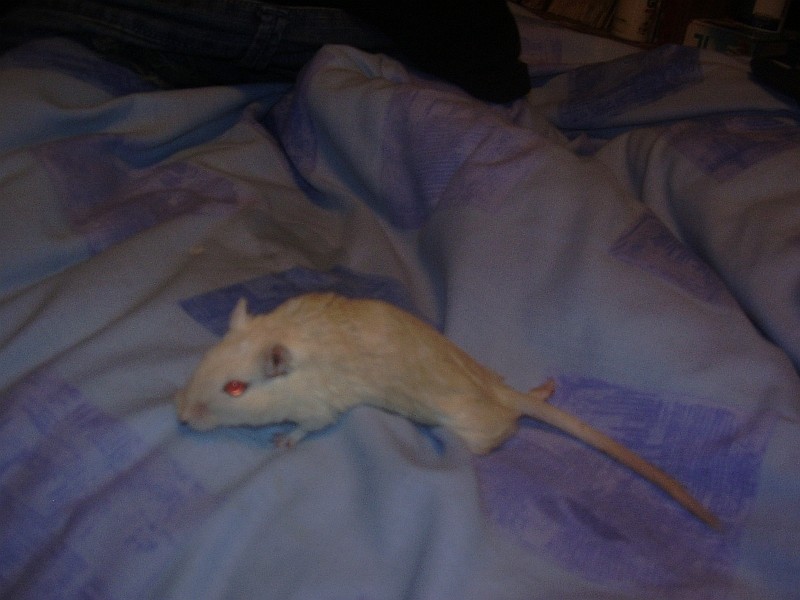
I have to announce the sad news that Stumpy the Gerbil, who put himself forward as a Conservative candidate for the next election after David Cameron's appeal for those who shared his values to join the party, will be unable to take part in the long promised debate with Katie the Dog as he has, as rodents tend to do with depressing regularity, died.

For a rodent who lost the use of his back limbs after an apparent accident in a wheel, he lived to a fine old age of over 3, and as I can't quite recall in which litter he was born, he was either between 3 years and 5 months or 3 years and 2 months old, outliving all but two of his brothers and sisters. He simply crawled into the wheel in his cage, curled up, and died peacefully, leaving his father who he had lived with all his life as the only remaining occupant. Thankfully, as he had no estate, he will not be liable for any form of death tax, which he would have doubtlessly been pleased about considering his long-held Conservative value system.

I again don't know whether this photo actually features Stumpy as a pup, but hey, it's cute, and there isn't nearly enough cute stuff on this blog:

RIP Stump. You will be missed.

Labels: , , , , , ,

Share |

Monday, February 08, 2010 

The same old new politics.

At times during the expenses furore, which continues to flicker, further fuelled by David Cameron's denunciations of Gordon Brown today, I sometimes felt like the only person in the country not enraged by the graft and misappropriation of public money. That was what, when you reduced the entire fiasco down to its very bare bones, it was all about. It wasn't, as the Tory MP notoriously complained, that people were envious or jealous of his "very large house", but he was in the right area. It was instead that these already generally well off individuals were feather-bedded to the extent that they didn't even have to pay for their food or to furnish their houses. If you want to be pretentious about it, it was a microcosm of what our society itself has become: a turbo-economy where those, whether either rich or extremely poor, are to a certain extent protected against the effects which the rest are beholden to, with the result being a sometimes justifiable sense of grievance against them. Where wealth is everything, don't be surprised if the bitten occasionally bite back.

The mood was, and still is, profoundly anti-politics. It isn't anger directed at one political party, but at politics itself, which is why Cameron's attempt to try to associate Gordon Brown directly with those MPs who have been charged with false accounting is unlikely to succeed. It also overlooks that even though no Conservative or Liberal Democrat MP was charged with a criminal offence, of those who had to pay back the most, 5 of the top 6 were Conservatives, including Liam Fox, Cameron's defence spokesman. As also previously argued, the attempt, mainly by politicians themselves as well as the ex-broadsheet media excluding the Telegraph to turn the anger into a case for constitutional and parliamentary reform also seemed to miss the point of the rage: those who wanted the equivalent of heads on pikes or an immediate general election weren't interested in slow and steady changes to fix how parliament works; they just wanted the MPs who had abused their expenses out. That also hasn't changed over time, and while Cameron is to be commended for keeping up the pressure for change, it's hardly likely that many votes for the Tories are going to be picked up on the back of reforming the current lobbying system.

It's difficult not to think that Cameron personally attacking Brown might have something to do with Brown's mentioning of he who must not be named: Lord Ashcroft. Ashcroft is also the spectre hanging over Cameron's entire speech: he wants anyone sitting in parliament to be a full UK taxpayer in the United Kingdom, yet he can't even confirm that the deputy chairman of his party is just that. He wants to "shine the light of transparency on lobbying in our country", yet if you donate £50,000 a year to the party you can join "The Leader's Group" and gain personal access to "David Cameron and other senior figures from the Conservative Party at dinners, post-PMQ lunches, drinks receptions, election result events and important campaign launches".

The entire speech is one that just screams of either never coming close to being implemented or coming back to haunt them. At four separate occasions he claims that "we are a new generation at ease with openness and trust". Really? Would this be the same Conservative party that seems to be imposing top-down control on MPs and prospective MPs use of blogs and social-networking sites? This is a party that even as it denounces Labour's past use of various spin doctors employs the likes of Andy Coulson and Steve Hilton, the former accused at an employment tribunal of leading the bullying of a journalist who suffered from depression. It's an easy allusion to make, but it really is all so reminiscent of Tony Blair: the repetition, the claims of being entirely clean, a new break, yet even while it sounds good, it's next to impossible to believe almost any of it. In that sense, it's Blair at his very worst: trying desperately to convince of his good intentions whilst failing to do just that. Even Blair at his worst though wouldn't have made such stonking great errors as talking up parliament as formerly being an unimpeachable institution once famous for "radical legislation, elevated debate and forensic scrutiny of laws"; has it really been anything like that since the 60s? Nor would he have made the mistake of claiming that a monologue exists where parliament talks and the country listens; parliament may well talk but the country either doesn't listen, or as the Heresiarch suggests, it jeers.

The only part that rings true is also the funniest and most puzzling. At the end he desperately appeals to the media to change its attitude as well, a part worth quoting in full:

But this change also needs something else. It requires a change in the attitude not just of politicians, but of the media too. I want to see a whole new culture of responsibility from those who report the news. You are the lens through which people view the actions of this Parliament. That gives you a great duty to our democracy.

I want to see a proper distinction between honest mistakes made by good, decent people whose intentions were honourable and those who set out to deliberately mislead, swindle and deceive.

Most people who pursue a career in politics do so because they want to serve and because they want to do good. That should be recognised. Parliament does important and effective work, yet it is barely reported.

And remember when you’re putting good people down, you could be putting good people off from entering politics. I’m not telling you how to do your job. I’m just saying that if you want to change politics as much as I do, this is something we’ve got to do together. We have a shared responsibility.


The idea of certain parts of the media treating any politician other than the very few it decides it likes in such a way is hilarious. This though is someone who has been treated up till now by the vast majority of it in a completely timorous, even sycophantic fashion, in difference to how those outside it have routinely ridiculed him. He surely doesn't believe that this will change anything, and in any event he uses them just as much as they use him; why then make the appeal at all? Is it for public consumption, although again few are likely to read or have seen his speech in full? Just as you don't believe for a second that Cameron has any real truck with what he calls "social responsibility", the idea that the media think they have any wider responsibility other than to their shareholders or owners is ludicrous.

It is instructive though that the one real reform that would truly redistribute power to the people is the one that the Conservatives refuse to trust the electorate with: Brown's sudden conversion to the alternative vote may be cynical or have ulterior motives, and it may not be proportional, but it would give voters something approaching a real choice over who governs us. A new politics sounds good, but it will remain the same old politics unless you genuinely feel you can make a difference. Starting with the electoral system itself would make the most sense, and would still fit in with the actual anti-politics mood, enabling you to vote the equivalent of none of the above and still make a point. Anything else is likely to fail to make an impact.

Labels: , , , , , , , , ,

Share |

Wednesday, February 03, 2010 

Piecemeal reform will still result in contempt.

There are two questions you should always immediately ask when an otherwise completely unexpected political proposal comes along, in this instance Gordon Brown's sudden apparent conversion to an ever so slightly fairer system of voting. Firstly, why now? Second, who benefits?

Well, all right, that's what every cynic will consider. To be fair to Brown, he did ascend to the Labour leadership on the promise of carrying out constitutional reform, which has mostly been either forgotten, watered down to the point of near worthlessness, or handed to Jack Straw to think as shallowly as possible on those much vaunted rights 'n' responsibilities. As everyone knows, Labour has been promising a referendum on proportional representation since 1997, back when Blair was flirting with Paddy Ashdown as he feared not winning an outright majority. We all know what happened next, and despite still setting up the Jenkins commission, which recommended the alternative vote system with an additional top-up element to make it somewhat proportional, there has been no movement until now.

Why then now? Despite there being some voices at the height of the expenses scandal last year calling for a referendum on PR to be held on the same day as the general election, like most of the proposals for reform floated at the time it had come to nothing. While it would be lovely if Brown had suddenly had a epiphany in which he decided that the innate unfairness of the first past the post system means that many votes are all but wasted, and that it's an insult to democracy itself that a party can be elected with a workable majority when it received the support of only 22% of the electorate as a whole, a far more compelling explanation is that it's another last ditch attempt at shoring up the Grauniad-reading core vote whilst also appealing to erstwhile Liberal Democrat supporters. It's also impossible to rule out that it's not a throwback to the thinking of Blair in 97: despite everything, a hung parliament at the moment is a real possibility, and a far more plausible outcome than it was back then. The Liberal Democrats, otherwise regarded by the main two parties as a joke suddenly become incredibly popular, and while it's difficult to imagine them making a deal with the Conservatives, one of their demands in exchange for entering into a coalition would almost certainly be voting reform: by holding out the promise now of a referendum on AV, which they could negotiate into a vote on PR-proper, there's already a basis on which the two parties could work together.

This has the added bonus, and this also falls into the who benefits category, of showing the Conservatives up as opponents of progressive (yes, that word I loathe) reform, a trap which they're more happy to fall straight into, as Eric Pickles' bone-headed performance on Newsnight yesterday showed. According to him, the Alternative Vote system was "unfair"; unfair perhaps if you win the largest share of the vote on the initial count but fail to win an overall majority from all those entitled to, which as the Graun's leader points out not a single one of the current members of parliament has, and then lose after the votes have been re-assigned, but an improvement over FPTP it certainly is, even if only a slight one. There's no doubt whatsoever that self-interest informs both Brown's manoeuvring and the Tories' opposition to any form of PR, but even if Labour's motives are hardly pure, the Conservative position is not down to anything as principled as a belief that PR makes for weak governments, but because of their certainty in getting a large enough majority in which to dominate parliament in a similar way to Labour has for the past 13 years, even if its backbenchers have rebelled against the party whip on an unprecendented number of occasions. The "elective dictatorship" which some have railed against is suddenly no longer a problem when you're inside the tent pissing out rather than the one getting wet.

If that answers why now, then while it's assumed that Labour will benefit under AV or a proportional system, it's not necessarily as clear cut, as while in 2005 most Lab/Lib supporters would have voted tactically to keep the Tories out, the opposite might now be the case, with voters determined to get Labour out of office. There is one thing we haven't considered though: what if this isn't in fact a grand ruse to damage AV and PR with Brown's reverse Midas touch? Key is that any referendum would only be held in the event of a Labour victory, and that's if it manages to rush the legislation through parliament in time, itself difficult with Tory opposition and with less than 2 months before an election will have to be called if the vote is indeed to be on May the 6th. Doing this now only encourages the cynical view Brown will do anything to stay in power, even if it doesn't affect the actual vote this time round. It also distracts attention from that other unresolved constitutional issue increasingly affecting parliament: the West Lothian question, where this time round it could be Scottish Labour MPs which stop the Conservatives from gaining an absolute majority.

More fundamentally, the real reason why a referendum on just AV isn't good enough is that it doesn't allow the electorate to make the decision for themselves on just which electoral system this country should have. Why shouldn't we be allowed to choose a fully proportional system, even if it involves the scrapping of the current constituency system? What's the point of AV when the single transferable vote is very similar but actually proportional? Why not lay all the options out, or aren't we considered intelligent or interested enough to be able to make an educated and informed choice? All Brown is offering is the illusion of change, knowing that he almost certainly won't still be around to implement it. The lesson that should have been learned from the expenses fiasco is that the public both demands the right to know and to be able to act; until parties offer that they are likely to continue to be held in contempt, piecemeal electoral reform or not.

Labels: , , , , ,

Share |

Monday, June 22, 2009 

Dragged kicking and screaming.

A lot of nonsense has been written and spoken, not least by the candidates for the job themselves, about just how big a role the speaker of the Commons can have in reforming parliament. The worst candidate, by a huge margin, was easily Margaret Beckett, the establishment while not resembling the standard establishment figure. No longer with a government job to perform abysmally in, it was a frightening prospect that she'd be the one to be calling the shots, and that she didn't even bother to make even the slightest noises about change was a sign that she might perhaps just wing it.

As it turned out, the original predictions that John Bercow would walk it came true. To my mind, and this may well cause some surprise, the best candidate was Ann Widdecombe. Ignore her politics, and instead you had someone who clearly is as tough as old boots and could have shaken things up slightly. More to the point, she was only to be an interim candidate, and so if she turned out be useless or hopelessly biased, she'd be gone by next year anyway. Bercow was though however the second best alternative, and that he so coveted the job was not necessarily a downside. That he was so loathed by the Tories themselves, who seemed to imagine they had a divine right to control the chair, also helped, and just how grim they looked when he took the chair has to be one of the most satisfying sights in parliament for quite some time. It seems doubtful though that he will be any more partisan than Michael Martin was at his worst, and his prospectus to be speaker, while inevitably unlikely to be instituted in full, may well help with the reform that is needed. No one was going to be a panacea, but Bercow is hardly going to be the worst of all worlds.

Labels: , , , , ,

Share |

Friday, June 19, 2009 

Hardly the end of the affair.

When it comes to shooting yourself in the foot, the parliamentary authorities have done the equivalent of blowing the entire appendage off with a sawn-off shotgun. The expenses scandal was finally begin to simmer down, the Telegraph having already deciphered and disseminated all the most outrageous claims, with the full release of the documents in full threatening to be a damp squib, only of interest for those who really wish to know exactly what their MP's favourite taxpayer-funded meal is. By censoring almost the entirety of some of the claims, all they've succeeded in doing is bringing the bile back to the very front of the throat of every phone-in ranter in the country.

At times since the Telegraph first splashed on their ill-gotten gained CD/DVD, I've felt like the only person in the country not to be demanding that MPs be summarily executed with their heads then displayed atop spikes on London Bridge. Of course, that MPs have turned out to be such humongous hypocrites, evading tax, whether it was "allowed" under the rules or not, claiming that they live with their sister and spending our money on duck houses and cleaning moats is certainly disreputable, but I find it hard to summon any great fury mainly because except in a very few tiny cases, there seems to have been no actual rules broken, let alone fraud. As much as some claim to be whiter than whiter, most of us will probably admit to trying it on at times; at worst, what most have done is simply stretched the rules as they existed, while some went further and did so to absolute breaking point, such as Gerald Kaufman with his attempt to charge the taxpayer for an £8,000 Bang and Olfsen TV. That I find for some reason far more enraging than some of the more notorious claims. Equally, the opprobrium hasn't fallen on those most deserving of it: those that have other highly rewarding interests that still didn't think that claiming for "seagrass", mugs from Tate Modern and "Elephant lamps", as Michael Gove did could possibly be objectionable. Then there's just bitter, wormwood-esque irony, like George Osborne claiming a staggering £47 for 2 DVDs featuring a speech of his on "value for taxpayers' money".

Mostly though, as I've mentioned before, there just seems little reason to get angry when there are so many more important things to be livid about. We are talking at most, of millions of pounds being improperly spent or claimed; at the moment we're currently paying around £30bn simply on the interest from our current debt. There's the millions, if not billions being spent on management consultants; the billions being wasted because of the government obsession with the private finance initative; and the countless billions being poured into the toilet which is this government's repeated, incessant, hapless IT schemes. These though are mindboggling sums, which cannot be directly linked to any one individual, hence there's no one to blame. Whether it's bankers, where Fred Goodwin rapidly became the biggest hate figure in the country, or Margaret Moran or Hazel Blears, we can instead put a face to the fury. It's the same with benefit fraud, where the newspapers always have a field day. It doesn't seem though that anything other than money could have caused such a scandal, or at least one which has inspired such rage and gone on for so long. It isn't the case, as Anthony Steen put it, that people were envious of his big house; it is however those whom have failed to benefit from the boom years who are now falling even further behind are fuming at how MPs could kit out their houses and pay their food bills without even a thought for how their own constituents are having to live.

More depressing is how the momentum which was behind the moves towards reform, which went hand in hand with the revelations in the Telegraph for some time, has suddenly dropped off. Partially it fell away as attention turned to whether Gordon Brown was going to survive as prime minister or not, but it also seems to have failed because MPs were only ever paying lip service to it, and as the race to be the next speaker has shown, as attention has turned away so has the belief that there has to be change. The House of Commons is a notoriously conservative institution, overturning even Robin Cook's minor reforms to the working hours because some MPs felt it had ruined the "atmosphere", and as the everlasting cliche goes, turkeys are unlikely to vote for Christmas given the choice, but you would have thought that even they would have realised that something has to be done. It does remain whether or not the public themselves ever were really behind such wide-ranging reform, but it is still quite clearly what is needed to re-energise politics. The exchanges of the last week, with the nonsense on stilts which has been the portraying of Cameron as "Mr 10%" and the general refusal to even be slightly straight with the public on the cuts which are going to have to come have only reinforced that. The European election results were both a warning and an opportunity: they showed politics at its worst and best, with the BNP victories because Labour voters stayed at home, and the successes of other minor parties showing the breadth of political dissent and debate which is stifled in the three party consensus which is Westminster. Only those that are prepared to end that monopoly deserve to be supported at the next election, and whatever our thoughts on the expenses furore, we will have them to thank if it does eventually lead to the change which is so desperately needed.

Labels: , , , , , ,

Share |

Friday, June 05, 2009 

Brown's bastards and the death of a once proud party.

To call Friday the 5th of June 2009 a day of contrasts would be something of an understatement. On the positive side for Labour and Gordon Brown, what was almost certainly a Blairite coup appears to have been averted, and with it, the Blairites themselves have almost to an individual been purged, or rather, for the most part purged themselves. The only Blairite true believers who remain in the cabinet are probably Tessa Jowell, who ought to be history, Andy Burnham and Peter Mandelson, but who now seems to have bizarrely became as pro-Brown as he was pro-Blair. Thanks to James Purnell, Brown has also apparently been foiled from carrying out the wholesale changes he wanted: Alistair Darling stays chancellor and Ed Balls, his supposed replacement, remains at education, both of which are non-changes for the better. Likewise, that both John Denham and Alan Johnson have been promoted, two of the most capable and pleasant ministers within the government is also a wise move. Johnson has the potential to be a vast improvement over the last three home secretaries (what happened to Shaun Woodward, being so talked up earlier in the week?), and you can also detect perhaps an ulterior motive from Brown, to be giving probably the most poisoned chalice within government to the man so heavily tipped to be his successor.

Those are however the only positives to be taken, as the local election results have been completely cataclysmic for Labour, something which the media, fascinated and intrigued by the machinations at Westminster has failed to really delve into. Labour lost control of its last four remaining county councils, and some of the wipeouts have been breathtaking, losing 30 of 32 seats in Staffordshire and 17 of 21 seats in Lincolnshire. Earlier in the week the talk was that if Derbyshire was lost then Brown should have been finished; it's gone, and he's for the moment clinging on. The results leave Labour with only around 130 councillors across such councils, and the party itself reduced to a rump, moribund with the activists in despair. We shouldn't write the party off, and the Conservatives have recovered from similar disasters, but it does make you wonder whether this isn't the slow, agonising death, not yet ofLabour itself, but New Labour certainly.

The ostensible Labour share of the vote is 23%, 1% down on its previous poorest showing, but that covers up just how terrible the kicking has been. Almost certainly the European election results will be even worse; it surely isn't unthinkable now that Labour's share of the vote could be well below 20%, and that is especially chilling when you consider how many former Labour supporters will have crossed the box for the BNP. Hopefully most will have plumped instead for UKIP or the Greens, but Nick Griffin gaining the respectability of a Europe seat is an ill wind about politics in general. That the Conservative vote has dipped to 38% from its previous high suggests that all are suffering to some extent, but Labour the most. The one consolation that remains is that on a similar share of the vote at a general election, unlikely as most who voted for the minor parties or stayed at home will return to the big three and turn out, the Tories will only have a majority of around 4 seats. This is still not yet a Conservative walkover, with the voters attacking Labour and politics as a whole rather than coalescing around David Cameron, although that may well be the next step.

Like earlier in the week, we should again be celebrating that another Labour careerist Blairite, as even John Prescott described James Purnell, walked the plank in such a sickeningly self-righteous manner. In his resignation letter, Purnell hilariously wrote that "[I]t calls for a government that measures itself on how it treats the poorest in society." This is the man that has just presided over changes to the benefit system that penalise, punish, harass and prosecute those very people. Even more staggering has been Caroline Flint's mood swing from backing Brown to the hilt only last night to deciding today that he had been using her and the other women in the cabinet as nothing more than "window-dressing". Mercilessly satirised by the Heresiarch, this seems to have far more to do with the fact that Brown didn't consider her for promotion, despite offering that she could attend cabinet, hence the throwing of the toys out of the pram in a political hissy fit that will have doubtless delighted the "women against Gordon" she was alleged to have been associated with. That she recently posed for the Observer in a range of dresses, some of which have predictably found their way onto the front pages of tomorrow's newspapers (not to mention this blog) seems to have done nothing to deter her from using such a potentially hypocritical turn of phrase.

One thing should be made clear. Despite the fact this is almost definitely a coup attempt led by Blairites (and every single resignation with the exception of Margaret Beckett has been by Blairites), there is no real quarrel here about policies. While there were policy differences in the past between the Blairites and Brownites, however slight, there is now nothing whatsoever to separate them. This is purely about Brown, and how they don't think they can win the election with him in charge, not that Alan Johnson or David Miliband will lead the party back into the promised lead of constant reforming revolution; Johnson after all has just been successful as health secretary mainly because he has allowed the NHS to settle after constant restructuring. This is why if Brown is to be overthrown, and that still in my opinion, despite everything, should not happen, it should be by the backbenchers, not the "bastards who have never had a job in their lives". There are still differences in opinion back there, and it is only they who can claim to have the interests of the party at heart. The anger at the grassroots at the manoveuring of Blears and Purnell is palpable, as the Grauniad's letters page shows, making a bad situation for those already stricken by the expenses scandal even worse.

Even then though, there is no indication whatsoever that they would be listened to. Brown certainly doesn't trust them, or rate them, as there will now be 7 unelected ministers in the cabinet. How can Brown or anyone else claim to be interested in genuine reform when he has to turn to the Lords repeatedly to shore himself up? While he may not have appointed peers in the same way that Blair did, this apparent contempt both for backbenchers and for the idea that our reprensentatives should be elected rather than cronies is another sign of his weakness. For now he might have saved himself, or rather the Blairites might have saved him through their own pitiful conspiring, but Labour is set to sink whoever is at the helm. 15 years of New Labour has destroyed it, and who knows how long it will be before even the slightest recovery will begin.

Labels: , , , , , , , , , , , ,

Share |

Wednesday, June 03, 2009 

With a bang, not a whimper.

Normally the departure of Hazel Blears would be a wonderful cause for celebration. The epitome of absolutely everything wrong, not just with New Labour, but with politics as a whole, she jumped before she was pushed. No one imagined that Blears, despite being an awful politician, was also on the make or out to "take what was hers", in the words of Michael Martin; perhaps her expenses are still a genuine oversight or based upon bad advice from the fees office. It was however the icing on the cake when it came to someone who based their entire career up until very recently on unstinting, unquestioning loyalty and belief in the righteousness of absolutely everything that New Labour has done, manifesting itself most vividly in her recent interview with George Monbiot, when her wild-eyed fanaticism looked as if turning instead into sad, desperately lonely certainty.

In normal times, Blears would be a pygmy, in more than one sense. There is however no other interpretation but that this was further revenge from a woman who has been both scorned and wronged, who knew she had the power to inflict yet more damage on an already flailing prime minister. Whether she was involved in the leaking of Jacqui Smith's resignation, as alleged by some in Downing Street or not, this was without doubt a further act to that. Her resignation letter is as pointed, both in its repeated emphasis on how she will be returning to her roots, and in its failure to pay any real tribute to Brown.

Downing Street should have been able to laugh this off. This is after all a non-entity, someone with ideas above their station who failed miserably when she stood for the deputy leadership, coming dead last. Her brand of clap-happy, shiny smiley ultra-Blairism could not be more out of fashion, and her brandishing of a cheque on television to pay back the over £10,000 she owed in capital gains tax could not have been further removed from those she claims to have backed and defended her entire life. Some of those doubtless could not have put together a cheque for £100, let alone that sum. Indeed, for someone who claims to have the interests of the Labour party at heart, she has almost certainly just cost some Labour councillors their seats, and taken votes away from their European candidates. The irony of the local government minister, through an act of petulant, pathetic self-indulgence, doing the equivalent of shoving a bottle up local Labour activists will ensure that her return to Salford is unlikely to be a happy one.

Quite how weakened Number 10 has been by this is shown by someone having the temerity to claim that Brown and others had "smeared" Blears by apparently leaking further information about her tax payments to the Torygraph. Blears has just done the equivalent of leaving a turd on the doorstep of Brown's den, and her allies are suggesting she's the victim in all of it! Whether there is a concerted plot by "friends" of Blears, almost all Blairite women, which includes Jacqui Smith, who seemed to laugh her way through a Sky News interview to kill Gordon through bleeding to death from a thousand cuts or not is impossible to tell. What is clear however is that despite the claims of Polly Toynbee, this does have the potential to cause deep resentment within the party, perhaps not on the level which consumed some Tories after Thatcher was deposed, but poison nonetheless. The plotters almost to an individual all seem to be Blairites, or Blairite-sympathisers, some who have always either disliked or loathed Brown, and now seem to finally sense they can have their revenge. This wouldn't be completely ignoble if there was a genuine leader waiting in the wings who could unite the party once Brown goes, but there isn't. Does anyone honestly believe that Alan Johnson is a long-term Labour leader rather than a stop gap? Is David Miliband even approaching ready to become prime minister, even only for a couple of months until he'd have to call an election?

There is however still one way out of all this, as proposed by the Heresiarch, which I thoroughly agree with and am rather shamelessly borrowing. Brown on Friday should go to the palace and ask for parliament to be dissolved for an election. It's the one thing that would wrongfoot absolutely everybody, his opponents in the party, the Conservatives and Liberal Democrats, and doubtless the Queen herself. The Labour ranks would be forced to get behind him, the other parties would have to actually tell us what their alternative will look like, and it would also appease those who are demanding an election now because of the expenses scandal. It would remove those who have said they are standing down far quicker than they might like, also a very good thing. At the same time there could also be that referendum on voting reform, a vote for which David Cameron could almost certainly not ignore, and which would be one thing which Brown could cite as his legacy, as well as being the biggest change which the expenses debacle demands. Whatever Brown now does, he's going to lose. Why doesn't he go down fighting, not just for his leadership but for the country as well?

Labels: , , , , , , ,

Share |

Tuesday, June 02, 2009 

Even the Mona Lisa is falling apart.

If the weekend and yesterday were bleak times for the government and especially Gordon Brown, then today can only be described as the worst of times. Normally, the announcement that three ministers would be stepping down would be only met with a shrug, even if the home secretary was among them. Such though is the precarious position which Labour finds itself in, it instead looks as if this a complete breakdown of control from the very top.

Again, no one will be shedding any tears for the departure of Jacqui Smith. She may be, as Iain Dale says, "a thoroughly nice woman", but she was simply the worst of all worlds when it came to being in charge of the Home Office. Having been promoted from chief whip, it was her expenses claims which did for her, but it really should have been both her dreadful failure to make the case for any of the policies which she was attempting to ram through parliament, and doubtless connected to that, the fact that all she seemed to be doing was instituting policies that had been decided for her. The one policy that she did have any real apparent interest in, the ridiculous and dangerous idea that men that paid for sex with women that were "controlled" by others could be charged with rape has had to be toned down, with the police highly critical of how on earth they were supposed to be able to enforce it. She can't exactly be blamed for the 42 days debacle, as that was undoubtedly Brown's policy as much as it was hers, but her continuing attraction to identity cards, her knee-jerk response to the knife crime panic of last summer, and most of all the Damian Green disaster, as well as the ludicrous banning of various "extreme" individuals all made her a typically tin-eared Labour home secretary. She wasn't quite as bad as either David Blunkett or John Reid, both of whom could have been accurately described as two of the most dangerous men in the country when they were at the Home Office, but that's hardly a ringing endorsement of her tenure.

Everyone though expected Smith to be out of a job come the reshuffle. It's that somehow, either she or someone couldn't keep the fact she was leaving out of the public domain until the time as when Brown had made his decision as to who her replacement will be. The question, as always, has to be whether it's conspiracy or cock-up, whether the leak is meant as a passing fusillade against Brown for the lack of support she seems to have been given. There is, it must be said, always rumour mills whirling furiously before expected reshuffles, but when a prime minister is as weak as Brown currently is, it seems utterly bizarre that he should be adding to it himself as he seems to have been by not given Alistair Darling his full support. Darling, as others have pointed out, has spent the last couple of years taking the flak for Brown, as it is after all his work while chancellor which has left Darling in such an enfeebled position, yet despite his loyalty and willingness to eat the equivalent of a shit sandwich repeatedly for his master, he's now been left out in the cold like the other miscreants which Brown thinks he can sacrifice. We all know why Hazel Blears' expenses claims can be described as "totally unacceptable" while James Purnell and others are given more equivocal backing, but why treat Darling in such a way?

It gives the impression that Brown has lost whatever remaining grip he had. Not the grip on the party itself - that had long gone, but now his hand seems to have left the tiller of the cabinet as well, those few that will still publicly defend him. Such events will always be exaggerated, but the Daily Mail again doesn't seem too far off tomorrow when it screams that the rats are leaving the sinking ship. If you wanted to indulge in conspiracy, as alluded to above, you might think that Smith's leaving was designed to make everyone engage in just this sort of speculation. Why else would you further undermine a prime minister prior to elections where it now seems credible that Labour could face its worst ever post-WW2 results unless you wanted to throw a spanner completely into the works?

Right on cue, the muttering in the Grauniad by the likes of Pollyanna Toynbee, Jackie Ashley and Martin Kettle has moved from their columns into the editorial itself. Tomorrow it calls for Brown to go with dignity. It isn't a bad argument, as far as they go, but it's the wrong timing again. The time for Brown to go and still retain some respect was last summer, not now. To go now would be utter humiliation, and surely those who wrote it must realise that. Regardless of Brown's mistakes and his personal failings, he still doesn't deserve such an ignominious fate. It is however typical of the modern Guardian that it called far too late for Blair to go and it now abandons Brown at the worst possible time, both for him and for the party. For far too long it indulged Blair's worst excesses with meek criticism while it has repeatedly failed to show the same fairness towards Brown. Who are these other individuals in the cabinet that would do a better job, but which the paper doesn't even deign to name? It too can't face up to the reality: that regardless of leader Labour in its current form is doomed. It needs to be rebuilt from the bottom up, to re-engage with its roots, to become a genuine party of the working person again. No one in the current cabinet is prepared for such radical thinking. It has become a small "c" conservative party, on some measures even more right-wing than the actual Tories themselves are. No party can so disengage from its supporters for so long and expect to survive, and it is at long last facing its denouement. The Mona Lisa itself is falling apart.

Labels: , , , , , ,

Share |

Monday, June 01, 2009 

The slow death of New Labour part 94.

Come up with any cliché of impending doom, and it will probably at the moment apply to Labour. Not since the Tories self-destructed so spectacularly during the early 90s has any party looked so utterly broken and devoid of hope. The difference it seems is that the Conservatives by 97 had all but accepted their fate; even now a few true believers and party hacks seem to imagine that by overthrowing Brown and installing someone, anyone, most likely either a Johnson or a Miliband, the inevitable might still be avoided, or at least a complete wipeout fought off. The polls though offer no comfort whatsoever: volatile as they may be, to be down on 22%, behind the Liberal Democrats on voting intentions if there was to be a general election now is to be staring into that hackneyed abyss, with a new poll now suggesting it could be as low as 18%.

Much as such a pitiful score deserves sympathy, no one can claim that Labour didn't bring this on themselves, or that politicians as a whole didn't know what was coming. Our political system rewards two things above all else: loyalty and strength, or at least a faux variety of it. The problem is that when those two things are combined, hubris, contempt and complacency take over. Most notably this seems to have claimed Hazel Blears, James Purnell and Geoff Hoon. Even those that have minute majorities, such as Jacqui Smith, were not immune to the belief that Labour, despite every past indication, was set to become the natural party of government. It would be nice to imagine that this is belated justice for Iraq, but the real reason has now been hanging around for 3 weeks, and still shows no sign of coming to an end.

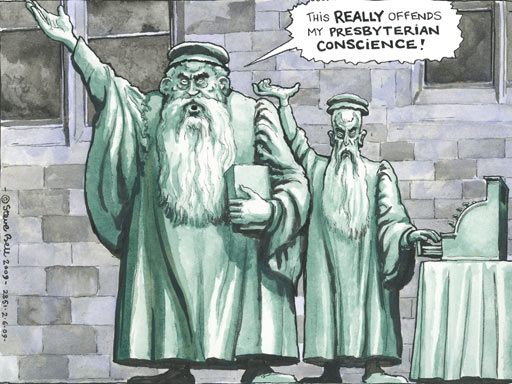
The latest victim, Alistair Darling, previously the most boring and presumably with it least extravagant member of the cabinet is reduced to saying he is "very sorry" for his various expenses claims, not to mention his repeated apparent flipping of his second home. That it seems increasingly likely that Brown will move him from the Treasury after the coming disaster of the local and Euro elections in 72 hours, most probably with his equally egregious acolyte Ed Balls as the replacement, it brings to mind another cliché, the one about reshuffling the deck chairs on the Titanic. Again, there is no one here to blame but themselves, so woeful has the Labour response been to the expenses disaster. Politicians certainly deserve something resembling a break, and overreacting can often be worse than doing nothing, but while both David Cameron and Nick Clegg were doing something last week, even if it was self-serving calls for reform, Brown was nowhere in sight. When he does finally reappear, on Andrew Marr's soft sofa to answer his soft questions, he bizarrely brings up his "Presbyterian conscience", something that has up until now seemingly left him completely untroubled.

The way that the opprobrium seems to have landed almost squarely on Labour is certainly to an extent unfair. Both main parties have their villains; the difference has been that Cameron has played his cards both superbly and cruelly. Even while some of his closest allies and shadow cabinet members have been found to have been some of the worst cheats, most notably Michael Gove, who flipped his second home, claimed £7,000 for furniture and £500 for a night's stay at a hotel, while earning just as much from his newspaper column as he does as an MP, he's succeeded at hugging them close while throwing his backbenchers to have erred to the lions. Brown, by contrast, although alleged by supporters of Hazel Blears to have snubbed her, in contrast to those less explicitly critical of him, has left all those accused out in the cold, and with it ensured that his party as a whole has become tarred with the same brush. Part of it also that as the government they're always going to be the ones to take the biggest kicking, but such has been Labour's inertia that any chance of lessening the damage has been abandoned.

It's still strange though to see the Mail front page claiming that "the vultures" are circling: even though we know that Paul Dacre and Gordon are such wonderful friends, the Mail has hardly ever gone out of its way to give him anything approaching real support, much less his party. It does though has it right: getting rid of Brown now remains the most ridiculous act of vanity which the party could indulge in. Nothing now is going to save them, not even Alan Johnson with his "wonderful" background. Only a party (and its supporters) that has completely lost its grip on reality could imagine that installing a second "unelected" prime minister within a parliament at a time of such cynicism and anger could turn things around. The best possible thing that the party and government could do now is spend the next year being as uncontroversial and all things to all people as it possibly can; go into the dark night with dignity, accepting defeat and then start to rebuild from the ground up. Instead its humiliation and time in the wilderness will be all the more damaging because it still has pretensions which can no longer be justified. And to stretch emphasis by repetition to breaking point, they have no one to blame but themselves.

Labels: , , , , ,

Share |

Tuesday, May 26, 2009 

From expenses to going soft in the head.

After taking an age to respond, with Labour still yet to make anything like the stand which the Conservatives have, you have to wonder whether what began as a crisis in politicians rather than necessarily in parliament itself has started to get out of hand. Not because the proposals for more general reform, especially those set out today by David Cameron, are too radical, but instead because they don't seem to be actually targeting what enraged the public in the first place: personal enrichment rather than general democratic failings.

One of the things that few commentators seem to have attempted to adequately answer is why the expenses debacle, rather than other recent general failures, whether you include the Iraq war, the previous loans for coronets scandal, or more recently the banking collapse and with it the breakdown of what had been a consensus of how the country could be run, has been the straw that broke the camel's back. The former and the latter have cost and will cost sums that dwarf the money which MPs have claimed for second houses, duck houses or duck a l'orange, while our involvement in Iraq has directly cost the lives of thousands, and indirectly hundreds of thousands, and from which it will take our reputation decades to recover.

Certainly, part of it is just a logical progression from the rage that was briefly directed at bankers, although again their greed puts MPs' second home allowances and other perks into stark contrast, albeit bankers were then not using public money for their bonuses. Recessions often are cathartic, and the anger and bitterness that come with the sudden change in circumstances has to be directed somewhere, but at MPs as a whole rather than just at a set of individuals within a party or at one party in particular is something new. Admittedly, this has been building for some time, as more and more, again admittedly with some justice, have started decrying politicians as all the same. Still though this alone doesn't quite explain why the loathing has reached such a crescendo. We seem to want our MPs both to be above the kind of temptations which befall many of us mere mortals, while also being as normal as politicians can be. When it turns out that MPs are, unsurprisingly, just as liable to bend the rules as far as they can go as the rest of us are, for which they should nontheless be condemned, it still seems completely disproportionate for them to come in for the savaging which has been raining down on their heads now for close to 3 weeks.

From this has spawned the obvious look for quick fixes to a system which has been broken for quite some time. The real demand though seems to be far more simple: everyone out, and everyone out now. This is something that the current politicians are hardly likely to accede to, and so there has to be an alternative found. Those who have long sought reform for principles both pure and personal have also found a perfect opportunity to perhaps finally get their way, echoing the Rahm Emanuel quote that you should not let a good crisis go to waste. All this though seems to be ignoring what the public themselves want: they mostly don't seem to care about the inner workings of parliamentary committees or what votes are whipped and which aren't; they just want the rotten out and a new lot in and to let them work it out.

All of us are however making numerous assumptions here. Fact is, we simply don't know how this is going to pan out; it might yet peter out as the Telegraph's revelations eventually do, or it might keep going until an election has to sort it out. This is why the most attractive proposal of all so far has been Alan Johnson's, for a referendum on proportional representation to be held at the same time as that election. That will fundamentally answer the question on whether the thirst for reform is long lasting and thoughtful or short and ugly.

It's also instructive that proportional representation is one of the few things that David Cameron has actively ruled out, in what has been variously described as either the most radical thing ever, "the spirit of Glasnost", as Cameron's Guardian article rather pompously puts it, or more plausiably, as politics having gone soft in the head. Instructive in that it's one of the few things that genuinely would change the way politics is run, while Cameron's other lauded promises, or not even that, potential aspirations are tinkering at the edge. Some of his proposals are simply laughable, such as the idea that the person who currently employs Andy Coulson as his chief spin doctor is going to be the one that puts an end to sofa government, promised by Brown and also broken. He wants to end the quangocracy without naming a single one which he actually plans to abolish, as so do many others who rant against them. He wants to tackle the power grabs by the EU and judges, without leaving Europe and without withdrawing presumably from the ECHR, making the ripping up of the Human Rights Act and its replacement with a British bill of rights an utter waste of time. Then there is just the madness of ultra-Blairism still writ large within the Cameroons: ending the "state monopoly" in education, which is in actual fact local authority control, giving parents the power to set up their own schools, as if they have the time or will to do so. The similar powers on housing seem to be a recipe for banana-ism: build absolutely nothing anywhere near anything, while on policing seem destined to result in the futility of "bobbies on the beat" while politicising the organisation. He meanwhile has nothing whatsoever to say on Lords reform, the monarchy or on the anachronisms of Westminster itself which seem to be kept only so that tourists can experience the quaint old-worldiness of the mother of all parliaments.

Cynicism is easy, but it's difficult not to be when you reflect of how many in opposition have promised reform along these lines only for it not to materialise once power has been grabbed and when such changes are no longer so attractive. You can't help but think all we might eventually get from Cameron's changes are the schools and parliamentary debate on YouTube; that again though, might all be the public themselves want. It's difficult not to reflect that the old adage we get the politicians and politics we deserve still rings as true as ever.

Labels: , , , , , , , ,

Share |

Monday, May 25, 2009 

Your new overlord.

In line with Jamie's decision to enter his dog as a Conservative candidate for the next election, as a response to David Cameron's call for those who shares his values but who are not robots or necessarily Tories to join his party and become prospective MPs, I have decided that Stumpy the gerbil is the sensible candidate for these sensible times.

Stumpy is everything a modern Conservative should be: he may be hideously white, but his red eyes certainly make him stand out from the crowd. Despite suffering an accident while in a wheel which resulted in him losing the use of his back legs, which he then chewed down to stumps in frustration at his predicament, he still believes in standing on his own two (front) feet, and has more than overcame his adversity through nothing more than pure hard work. He might not have had a job prior to becoming a Conservative candidate, but he very rarely bites, and his food allowance will be negligible. He will fight for disability rights, which are very close to his heart, but he has no truck with the equality agenda of Harriet Harperson, who seeks to discriminate against white gerbils for no other reason than a fanatical feminist agenda. That, and he's unlikely to ever get his end away, which considering the past of the Tory party is also another evident bonus. He's also unlikely to live long enough to serve a full parliament, so if anyone subsequently regrets voting for a gerbil, it won't be too long before they'll be able to elect in an actual Conservative, although probably one with even less intellect.

Labels: , , , , , ,

Share |

Thursday, May 21, 2009 

The wonderful world of Nadine Dorries.

How then go things with the expenses of Ms Nadine Dorries MP, who at the weekend was facing questions concerning her allowances? Like Margaret Moran, the Labour MP for Luton South who is facing the possibility of being in a who's the more repellent fight with Esther Rantzen at the next election (Rantzen, despite everything, easily wins) after she claimed the additional costs allowance for a house in Southampton, as well as claiming for the treatment of dry rot at the property, she faced allegations that she was using the second home allowance, not to claim for a house in London but instead for the one in her constituency, which she claims she spends less time at than her digs in the Cotswolds.

Unfortunately when you're an MP that blogs about the mundane things in life, this tend to leaves a trail which might not be to her advantage. Tim points out that she has talked plenty about her time spent in Woburn, but not so much about her bolthole out in Chipping Camden. This could be because she's only recently been spending more time at the latter, and also because she "didn't want her constituents" to think she wasn't dedicating enough time to them, in her rather feeble defence, but it certainly raises questions for the internal review body which is going through the Conservatives' expenses claims and considering whether or not they're squeaky clean.

Meanwhile, there's another hole in her defence regarding other properties which she claims rather emphatically that she does not own:

I've finished going through all my receipts and thought I had better make some things crystal clear:

I do NOT own a home in South Africa.

I do NOT own a home from which I receive a rental income
.

That sadly isn't what the register of members' interests says:

DORRIES, Nadine (Mid Bedfordshire)

8. Land and Property
House in Gloucestershire, from which rental income is received.
Holiday home in South Africa.

This could just be Nadine's unfortunate forgetfulness. In response to a Mail on Sunday article last weekend, she wrote:

Have an article on me today which is just a joke. I haven't owned a holiday home in South Africa or owned a home in the Cotswolds since marriage split. As I have said over and over, I rent two homes. They probably got that information from the register which I probably havent up-dated but they really should have just asked me, they phone often enough!

Is it really their fault when you've forgotten, presumably, not to update the register for two years, which is when Dorries' marriage ended? Despite the publicity, Dorries has still apparently forgotten to correct this oversight: the register was last updated yesterday, and still has Dorries down as not just having two homes, but four. If it stays like it much longer it might again be worth wondering whether she's telling the whole truth.

You would forgive embattled MPs who haven't done anything wrong descending into conspiracy theories to explain just what has befallen them over the last couple of weeks. Sadly, for Nadine, such flights of fancy are a natural reflex, whether it's over a photograph she claims shows a baby thrusting its arm through the womb despite the surgeon himself denying that was the case, or over how her amendment aimed at reducing the time limit in which to have an abortion was defeated by a government whipping operation, despite the vote being a free one. Even by her standards however, the rumour mill she claims to have overheard at Westminster is a furiously operating one:

The Telegraph are uncovering a few cases of fraud, but not enough, so they are more than slightly embellishing some of the stories. I write as a case in point.

Enter the Barclay brothers, the billionaire owners of The Daily Telegraph.
Rumour is that they are fiercely Euro sceptic and do not feel that either of the main parties are Euro sceptic enough. They have set upon a deliberate course to destabilise Parliament, with the hope that the winners will be UKIP and BNP.

A quick online check of the Barclay brothers and their antics on the Island of Sark is enough to give this part of the rumour credence.

Another rumour is that the disc was never acquired and sold by an amateur, but it was in fact a long term undercover operation run by the Telegraph for some considerable time, carefully planned and executed; and that the stories of the naive disc nabber ringing the news desk in an attempt to sell the stolen information are entirely the work of gossip and fiction.

These rumours do have some credibility given that this has all erupted during the European Election Campaign and turn out is expected to be high with protest votes, courtesy of the Daily Telegraph, or should I say the Barclay brothers.

Now, if this is all a power game executed by the BBs, how would they do that?
It is a fact that these men are no fools and are in fact self-made billionaires.
I would imagine and believe that if any of this is true, they know the British psyche well enough to whip up a mood of public anger, hence the long running revelations in the DT.

Where do I get this from? Well, at heart I am just a cheeky scouser. I like to go into the rooms of the faceless and nameless in Parliament, sit on their desk and ask pertinent questions like: who are you? What do you do? I've made friends with one or two. One in particular I am very fond of. He is a mine of very astute information; and whilst in his office yesterday, we chunnered over the 'what is this all about?' question.

He reckons this is all a power game. That the British public are being worked like puppets by two very powerful men. Whipped up into a frenzy to achieve exactly what they want.

His very poignant words to me were “if any of this conjecture is true, Parliament will become full of racists, fantasists, and has-been celebrities. We will be rendered impotent and may never again regain the authority to withstand the pressure, opinion and whims of the overtly wealthy.”

Yeeessss, or it could just be that a minor official who was a civil servant has just become fantastically wealthy after he saw the opportunity to copy a hard drive containing all the expenses details, as outlined by the Wall Street Journal, Sunday Times, Mail on Sunday and the Guardian. Or are they all in on this conspiracy as well, masterminded by two gentlemen on an island, presumably stroking white cats in a sinister manner? Wouldn't it have been rather easier for the Barclays to just get the Telegraph to support UKIP, rather than the Conservatives, therefore pressurising the party to become even more Eurosceptic than embark on such a fantastically complicated and fiendish plot to forever bend the whim of parliament to them? Still, helped to distract from her own predicament for a while at least.

Labels: , , , ,

Share |

About

  • This is septicisle
profile

Archives

Powered by Blogger
and Blogger Templates