Monday, August 24, 2015 

The interminable adventures of a Labour supporter, pt. 1.

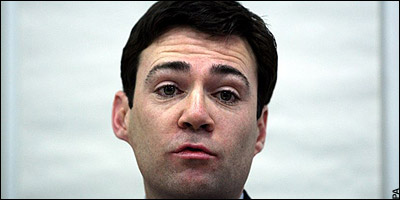
There are many ways to spend a weekend.  I doubt most people's idea of a good time would be going to see the former frontrunner in the Labour leadership election try his best to persuade other legendarily boring gits to vote for him, but this apparently is my life now as an official Labour supporter™.  Or at least it will be until some bright spark connects my real name to this blog, where I have previously said to vote for parties other than Labour, something considered enough to bar you from being a member or supporter, even if you campaigned for the party or said to vote for them this year.  With new friends, eh?

Anyway, just a few points:

1. I estimate between 150 to 200 turned up to see Andy Burnham speak and then take questions, certainly more than I expected.  Jeremy Corbyn has been filling far bigger places than where we were, getting numbers in the region of 800-1200, but Burnham himself seem pleased with the turnout.  Considering where I live is at the best of times devoid of anything approaching culture (the coming attraction at the local theatre is Shrek The Musical) and completely apolitical, I don't think it was bad going.  I've been to stand-up gigs where the numbers could be counted on a single pair of hands, if that's a comparable metric.  (Yes, yes it is).

2. The only person to mention Jeremy Corbyn was... Andy Burnham.  To the point where it almost seemed as though he was the man who couldn't be named.

3. The most intriguing thing Burnham said by far was that if he'd resigned from the shadow cabinet over the welfare bill, he expects he'd probably still be the frontrunner.  And indeed, he's almost certainly right to think so.  He didn't however because he's never broken the Labour whip, loyalty to the party being far more important than taking personal advantage.  Unity is strength, he repeated, a number of times.  Apart from being just a word away from one of the key slogans of Ingsoc from 1984, it seemed on a number of levels to be a truly odd line to take and regard as a plus point.  There's nothing wrong with resigning over a point of principle, especially when the politics behind the line being pushed are so utterly wrongheaded.  Moreover, if Burnham had resigned and gained accolades for doing so, much of the ridiculously damaging in-fighting that has since been conducted over the rise of Corbyn would have been avoided.  It seemed like a false line, precisely what the rival campaigns of Cooper and Kendall have accused him repeatedly of adopting.

4.  Regardless, Burnham was more impressive than I expected him to be.  Yes, he's obviously had a lot of practice in delivering his short speech and in answering questions put to him, but he did so with admirable fluency, taking three questions at a time and answering them in turn, without resorting to cliches, platitudes or padding out his responses.  His only real annoying tick was in referring to Cameron and pals more than once as "the Bullingdon boys", which apart from being increasingly old and a bit rich from a Cambridge graduate, hasn't really posed said "Bullingdon boys" much trouble with the voters, has it?  Should he come through on second preferences, I'm less concerned than before that he will just be Ed Miliband Mk2.

5.  I wasn't though in the slightest bit convinced.  On the surface, there's much to like about Burnham: his manifesto is the most detailed apart from Corbyn's, has a good line in creating a National Health and Care Service, funded through a care levy, and behind Kendall would be the candidate the Tories most fear.  He seems to be a Thoroughly Good Bloke, certainly less weird or geeky than that loser MIliband, something we're informed voters respect greatly, despite also much liking politicians who are complete dicks. 

What he lacks is that ruthlessness Ed did occasionally show; the point I felt like making, but didn't, both because it was more of a statement than a question and although this blog hides it, I'm far more shy and retiring than you might imagine, was that if he had resigned over the welfare vote and hadn't joined in with the others in the aftermath of the election in the accepting everything the Tories, Blairites and right-wing press said about why Labour lost, he might already have it in the bag.  He answered a question about conviction from someone who was clearly leaning towards Corbyn by saying that we should look at his role in the Hillsborough inquiry as to how he will challenge vested interests and the right people.  This would mean more if it hadn't taken the 20th anniversary memorial at Anfield to spark his determination; the passing of time meant there was little real opposition to taking another look, the Sun having repeatedly tried by that point to apologise, if the police and state were yet to.

Labour needs, deserves better than someone who only acts once the time is right, who only moves once others have done so.  Burnham seems the compromise, and despite the party needing to come to a compromise once the leader is elected, doing so over the leader isn't the answer.  That said, I would now like to see Liz Kendall speak and answer questions in person, although she seems to have abandoned the pretence of doing much other than TV and radio appearances and calling individual members, for obvious reasons.

6.  The only entryist in evidence was a Tory councillor who for reasons known only to himself decided to gatecrash the event and prove he had an even more pathetic existence than the rest of us.  His question, when he could have easily made everyone uncomfortable by asking about the deficit or Corbyn, was to ask Burnham why Tony Blair lied over Iraq.  Yes, really.

Labels: , , , , , , ,

Share |

Tuesday, August 18, 2015 

"Self-improvement is masturbation. Now, self-destruction?"

(Yeah, I can quote Fight Club as well.  Oh, and incidentally Liz Kendall's campaign did get round to emailing me today.

Of all the ill-judged and misguided interventions in the Labour leadership contest, David Miliband's is without question the most tone deaf.  He name checks both Chuka Umunna and Tristram Hunt, two of the figures who have most helped push party members towards Corbyn with their intemperate outbursts, repeats the nonsense that Labour lost because his brother retreated from the true Blairite way,  and then advises that Britain could become an effective one party Conservative state.  Well yes, it certainly could if whoever becomes leader follows the D Miliband path of reform, reform, reform.  It's either reform or Conservatism, folks, it's simple as that.

Except of course it isn't.  To portray Jeremy Corbyn's platform as pure nostalgia, the failed policies of the past, a wholehearted return to the 80s is a caricature and no more comforting for it.  Whether you like the idea or not, the Corbyn proposal for people's quantitative easing offers an alternative to austerity that none of the other candidates have come close to matching.  Miliband responds to the retaliatory accusations that the other three merely want to reheat what worked in the 90s by claiming nothing could be further the truth, only to produce a list of policies, or rather "ideas" almost indistinguishable from the ones that became increasingly less popular in each successive election.  Only the references to secular stagnation and a low-carbon European energy future mask what is an incredibly familiar programme, complete with the same old euphemisms.  What else is the reference to "combat humanitarian catastrophe where it occurs" other than a call for more liberal interventionism?  Miliband is clearly referring to Syria, rather forgetting that it was our invoking of the responsibility to protect in Libya that has had just a big an impact on the numbers seeking asylum as anything else.

If there's one message that each of the successive figures from the past have wanted to drill into the newly signed up supporters, affiliates and members, it's that Labour has to be a party of government, not protest.  And yet the irony is that Jeremy Corbyn has been by the far the most leader-like of all the candidates.  He's declined to respond in kind to all the various insults both he and his supporters have received, has repeatedly set out in detail exactly what his policies would entail, in complete difference to the other three, and when confronted with the accusations of being acquainted with antisemites has given straight answers, if not at the first time of asking.

The contrast with Andy Burnham and Yvette Cooper, who have spent the past day fighting like two tomcats in a sack could not be more stark.  Cooper, having seemingly let all the various transfers of allegiance from the those on the right of the party go to her head, demanded that Burnham withdraw both because he clearly can't be trusted to properly oppose Corbyn and only she can possibly win.  Considering Cooper's strategy from the outset was to say almost nothing in the slightest bit challenging and in the end triumph on the basis of second preference votes, her extremely late in the day conversion to attacking Corbyn head on is just a little rich.  Besides, regardless of Burnham's similar lack of anything remotely approaching conviction, the next leader will need to work not just with the various factions within the party but also with those who have been enthused by Corbyn.  To regard him and those who've supported him as beyond the pale completely, as Cooper and Liz Kendall apparently do just isn't going to work.  Corbyn probably won't want a shadow cabinet position, but there's no reason why he couldn't play a similar role to the one say Jon Cruddas does currently.  He certainly couldn't do any worse, as the latest batch of risible research commissioned by Cruddas shows.  Prospectors, pioneers and settlers, fuck me sideways.

As the man formerly known as Anton Vowl tweeted, if we didn't know it before, there are an awful lot of arseholes in the Labour party.  Arseholes with remarkably thin skins, it should be added.  Some of the same people who have gone around shouting about Marxists, Hezbollah and Hamas lovers, or simply called anyone thinking of voting for Corbyn idiots or in need of a heart transplant are it turns out really quite hurt when they're called Tories by anonymous people on the internet.  Liz Kendall took to moaning about this at the weekend, and repeated her message today.  To be fair, Kendall has not herself been one of those going around insulting people, even if those who are or at least were supporting her were in the vanguard of doing so.  Calling those on the right of the party Tories is not helpful, but nor is it as Kendall claims, an "enormous strategic mistake".  An enormous strategic mistake is to carry on acting like spoilt children, spitting out dummies when things don't go your way.  For Yvette Cooper's campaign to repeatedly play the sexist card when Burnham's has as far as we know simply been stating the facts as we know them, that she can't win, is exceptionally low politics.

It's also indicative of the hole the "mainstream" of the party has dug itself into.  Their hope was to have a simple, straightforward contest where all the candidates agreed with the Tory and right-wing media consensus on why Labour lost, elect whoever emerged on top and go from there.  This fell apart not with Corbyn's entry into the contest, but when Harriet Harman declared the party would not oppose the government's welfare bill.  Everything that has happened since has its root in that unbelievably damaging capitulation, an act of self-harm from a party leadership that claims it has to be in power in order to protect the vulnerable.

Any doubts about Corbyn, and they are many and myriad, have been overlooked both because of those making them, whether they be the Decents that ignore the realities of the Middle East and cheer lead for Israel regardless of how it acts and who have been making the same hysterical arguments for years,  the ex-party figures that have simply lost any influence they once had, or down to how the other three candidates are just so woefully lacking in every regard.  Rather than accept they might have made any mistakes, their reaction has been to turn on each other, to the point where it looks as though regardless of who wins, the first task will be to rebuild trust and relationships that should never have broken down in the first place.  Rather than welcome new members the major response has been to treat them with suspicion if not outright contempt.  Rather than work with whoever the new leader is, many have said they will refuse to serve under one person or another, while others are plotting practically in the open.

The reason the Conservatives as a party have barely bothered to comment on the woe of their rival is they don't need to.  Labour's self-destruction these past few weeks has been completely unnecessary and all the more damaging for it.  Nothing makes a party look less electable or serious than the recriminations that probably haven't as much as started yet.  Absolutely nothing I've seen or heard, regardless of all the entreaties and pleas has made me alter my view that the party needs either Jeremy Corbyn or Liz Kendall to win, if only so that all the bad blood can be purged in one go, however it is that turns out.  If it means a split in the party, frankly so be it.  The quicker the left gets itself organised the better.  This didn't have to happen, but now that it has it might as well come to a conclusive end.  Voting for either Cooper or Burnham is only going to prolong the agony.

Labels: , , , , , , ,

Share |

Monday, July 27, 2015 

Too sensible by half.

Something politicians often fail to understand, as is being demonstrated all too well by the Labour leadership election, is that the public doesn't expect them to be serious all the time all of the time.  Indeed, as demonstrated by Nigel Farage and Boris Johnson to name but two, not always being serious can often work spectacularly in their favour.  It probably won't lead to Downing Street, all things considered, but you might as well have some fun failing to get there.  It's certainly better than being permanently on message, permanently miserable as a result, and still failing.

When a member of the House of Lords is then caught in flagrante, snorting cocaine off the breast of a lady whose services he has procured for the evening, someone they have never heard of from an institution they don't care about, the immediate reaction is not to descend into bilious outrage, but to laugh.  And for damn good reason: regardless of what you think about drugs, prostitution, politicians, privacy, newspaper hypocrisy and all the rest, to see an old fart wearing a red bra and being wonderfully indiscreet, not realising he has been absolutely gloriously stitched up by the women he's paid a miserly £200 to essentially own for a couple of hours is hilarious.  Of course, the justification for exposing him isn't just that he's breaking the law while being in a position to alter said laws, it's also that he brings shame on parliament as a whole by acting in such a fashion, but most people aren't bothered in the slightest by such considerations.  The assumption, like it or not, is the majority if not all politicians are hypocrites and adulterers and moochers, and someone being confirmed as such in fact does relatively little to alter perceptions.  Acting like a maiden aunt after the fact is pointless: those disgusted were disgusted and disgusting anyway.

Which brings us back to said leadership contest, I'm afraid.  As evidenced by Tristram Hunt's article for the Torygraph at the weekend, the Blairite tendency's solution to everything is to be serious and sensible at all times.  One of a friend's most withering criticisms of someone we knew at school, one that has always stayed with me, was this person was too sensible by half.  They went through life not so much living it as doing what was expected of them at every turn.  This person is no doubt more successful than either of us, and we couldn't give a rat's cock.  Perhaps that just confirms we're both idiots.  Or, it might be there's more to life and also to politics than permanently doing what the serious people recommend you do, especially when it ought to have become self-evident that carrying on in such a fashion has not resulted in the benefits you were told it would.

Jeremy Corbyn's lead in nominations from constituency parties is not then because Ed Miliband, on whom everything and anything is being blamed, brought in a load of leftards convinced that if he won he'd immediately create a socialist utopia.  It's because they look at Corbyn, then they look at Burnham, Cooper and Kendall, and realise that if that's the best the supposed sensible, moderate, election winning centre of the party can come up with, they can keep them.  The reason that Diane Abbott got only 20 nominations from constituency parties 5 years ago and came dead last is because the alternatives were far, far more attractive.  The Blairites never forgave Ed for being just that little bit to the left of his brother and appealing to the heart as well as the head, and spent the rest of the parliament simmering with bitter resentment, convinced they were right and everyone else was wrong.  The defeat in their minds proved they were 100% right.

For them to be confronted now with Corbyn apparently in the lead, destined to win, only increases their rage and their determination to carry on, unwilling to consider if they might be wrong or if another approach is needed.  Not all of this is out of sheer bloodymindedness: the Graun for instance is not running all the anti-Corbyn pieces it has because it's a den of Blairites.  If it was it wouldn't have so strongly supported Ed.  When new recruit Matthew d'Anconservative writes saying he doesn't think a Corbyn win would be the disaster everyone thinks and would move the Tories back towards the centre, clearly there is mischief afoot.  For Corbyn to win the leadership and then the election in 2020 is A Very British Coup territory.

The odd thing is Labour knows full well the Burnham, Cooper, Kendall platform looks awful.  This hasn't led to the soul searching it should have done, Hunt's call for a "summer of hard truths" being about only what the serious and sensible people in the party declare to be "hard truths", but rather a simple increase in the factions insulting each other.  It doesn't matter that Burnham appears to suffer from the same problem as the scarecrow in the Wizard of Oz, that Cooper has even less personality than a wet sock and Kendall's strategy of telling anyone minded to vote for her they are idiots results only in the same back with bells on ("Fuck Kendall" is about the most effusive endorsement she has received thus far), the problem is everyone else, not them.

Like Atul Hatwal, I don't think Corbyn will win the leadership.  This won't however be a result of the serious and sensible people realising they've screwed up spectacularly and that they can't go on treating the party's membership like dirt, while regarding the electorate as always being right however contradictory their urges.  They've gone so far down that route now it would be far too jarring to do an about turn.  It will be because the idiots and morons at the grassroots will do the rethinking instead.  Sadly, this almost certainly means that the serious and sensible people will conclude they were right and everyone else was wrong.  Even worse, it means the party will be saddled with either Burnham or Cooper.  Plus ça change.

Labels: , , , , , , , , ,

Share |

Thursday, July 16, 2015 

Kendall or Corbyn, either will do.

All of us have at some point needed a friend to tell us to stop being stupid.  Tristram Hunt needs that friend right now.  Not so much to get him to stop his raving about Jeremy Corbyn being "politically and economically bankrupt", but his far more idiotic remarks about Labour in general.  Labour, according to Hunt, is "uneasy" about “the modern landscape of Englishness – of St George’s flags, music festivals, soap operas, Premier League football, shopping, gardening and baking”.  Now, quite apart from how this conflates Englishness with things that are self-evidently not definitively English by any stretch of the imagination, it's also complete tosh. Is it really Labour that's uneasy about all those things, not just perhaps St. George's flags, when the prime minister can't so much as remember what team it is he pretends to support?  Hunt's pal needs to take him to one side and whisper in his ear, "mate, you're talking bollocks, get a grip".

Labour's problems do nonetheless look far deeper than those facing the all but annihilated Liberal Democrats.  For them, the only possible way is up, and whether they had chosen Norman Lamb or Tim Farron it's difficult to see how things could possibly get worse.  Indeed, if the party once again discovers its radicalism, such as by building on the momentum started by Nick Clegg on the liberalisation of our utterly broken drug laws, as Lamb suggested during the campaign, it might just attract those like me.  Those who are frankly utterly bewildered by Labour and its inability to realise that if it's going to keep losing, it might as well lose better.

As such, I'm fairly indifferent as to whether either Liz Kendall or Jeremy Corbyn win the leadership contest, as long as it's one of the two.  I might even persuade myself to sign up as a supporter and do the incredibly daft thing of voting for Kendall as my first preference and Corbyn as my second, just to add to the contradictions.  My politics are fairly obviously far closer to Corbyn's than they are Kendall's, but what both promise is change.  Kendall is not the shy Tory or uber-Blairite of caricature; she's to the right of Ed Miliband certainly, and it would be silly to suggest she wouldn't move the party towards the Conservatives.  She would.  She would also though do much to energise the Labour party, whether it would be through pressurising her to not abandon every policy that was developed under Miliband, or by convincing those still clinging on to to the party more out of sentimentality than conviction that it's finally time to abandon ship.

Corbyn would do much the same.  Again, to see him as the caricatured bearded leftie is foolish: the Tories and the Telegraph can imagine all they like he would doom the party, but the idea he wouldn't be far more centrist as leader than remain the permanent rebel is risible.  A victory for Corbyn would result in pretty much the scenario outlined above, only inverted.  It would electrify the wider left, put the SNP's phony purity into a quandary, and rather than leave the Tories with even more room to move into on the centre, just as likely give them an even bigger false sense of security.  There's little the public enjoys less than a sense of unwarranted triumphalism, and who knows, they might even warm to Corbyn in the same way as Labour supporters have, down to how he says what he thinks.  A novel concept, I know.  Kendall also fits that trait to a certain extent: to go along with Harriet Harman's bungled gambit on not opposing parts of the budget after the response the acting leader got took courage.

Both, in short, would challenge Labour to look at itself and where it has gone wrong.  In that respect, Andy Burnham and Yvette Cooper are the continuity candidates.  You can, as I do, think the Labour manifesto was decent and worth defending as Burnham also does, and at the same time know full well the party must not fall into the one more heave mindset, waiting for the Tories to fuck it all up.  Harriet Harman was right in her motives, as the party must examine why it is has twice been rejected, but remarkably ill-judged in her execution.  Burnham's heart is in the right place, but he hasn't as yet demonstrated what he would do differently; if Ed Miliband wasn't the answer, why go with another safe option?  As for Yvette Cooper, I have absolutely no idea what she stands for.  If I don't, who does?

You can at least see where Tristram Hunt and all the other hysterics over Corbyn are coming from (Labour Uncut has been especially amusing over the past few weeks in this regard), even if many do carry the trait of having been radicals in their youth, and now somehow can't understand why anyone would find such a position attractive or worth a go.  Not many, or rather none of Corbyn's supporters will have gone on University Challenge and answered either Marx, Che Guevara or Trotsky to every question, as David Aaronovitch and his University of Manchester team did, for instance.

All the more reason that we put this nonsense to the test once and for all: let's have either Corbyn or Kendall as leader, let's see how well or how badly they do, and then see if it finally brings home to either the left or right of the party how right (or wrong) they are.  It won't of course, not least because I expect despite the mewling about Corbyn possibly being in the lead, Andy Burnham will in the end triumph and nothing will be solved.  If Labour supporters don't want their party to follow the same path as the Liberal Democrats, standing dead in the centre and getting knocked down as a result, they might want to think again before casting their vote.

Labels: , , , , ,

Share |

Saturday, September 25, 2010 

Worst possible way to win.

Having already been branded "Red Ed" by the tabloids and the Blairites (however laughably), for the younger Miliband to win the Labour leadership on essentially the votes of the unions is not exactly the most auspicious of starts. Least worst option as he was and still is, he's going to be reminded of his debt to the unions, both by his opponents and by the likes of Unite until he wins the support of the public themselves.

(Incidentally, the number of spoilt union ballots was huge, as the breakdown shows. More in Unite spoilt their votes than plumped for Ed Balls and Andy Burnham combined. Whether those are protests or not understanding the voting system is open to question.)

Hardly any better is his winning statement as being distributed by the party:

"Today a new generation has stepped forward to change our party. We are united in our mission to transform Labour so that, once again, we stand up for the hardworking majority who play by the rules and want a less divided and more prosperous Britain. I know we have a lot of work to do. The journey starts today.

It really doesn't get much more Blairite than that. Those of us seeking someone who is prepared to put the case for the indolent minority who sometimes err on the wrong side of the law must go on searching.

Labels: , , , , , , , ,

Share |

Wednesday, September 22, 2010 

New Labour's dead cat bounce.

At long last, the seemingly unending Labour leadership contest has gasped its last, with only the ballots left to count. Congratulations must go to all five candidates: it must take a truly superhuman effort to keep repeating yourself over and over again daily for such an extended period of time and not find yourself going slowly but surely insane (Whoops, I seem to have just inadvertently insulted myself and all bloggers). Expectations at the outset were low, both for the standard of debate and for the potential for full, painstaking examination of why the party lost, and those expectations were more than exceeded. The party has essentially just spent the last three months travelling the country conducting a navel-gazing exercise that hasn't even begun to scratch the surface of how and why it lost, and in Ed Balls has someone who is just as myopic to the changing of the political tide as any of the deeply deluded Blairites. When it's Andy Burnham dropping truth bombs, trying desperately to make Balls realise that some cuts are going to have to be necessary and would have been made by Labour had it remained in power, even if not this year, you know the party's in a bad way.

In fact, Burnham has been the surprise candidate in that he's at least tried to think differently even if still within the Blairite prism: his "aspirational socialism" might be risible intellectually and in practice, yet using the "s" word in the current climate when Vince Cable gets derided for daring to make even the slightest critique of capitalism takes a certain amount of bottle. Embarrassing by contrast has been Diane Abbott, who's ran an invisible campaign and seemingly treated the entire thing as a joke. We have to make an allowance for how it takes money to do anything political these days and she's had almost none pledged in her direction, but that's no excuse for not even seeming to put an ounce of her heart in it. It has to be remembered that John McDonnell stood down in favour of her, who just might have managed to drag the debate leftwards and make the party's apparatus think about those who have been systematically abandoned and marginalised by New Labour. Instead Abbott's acted as the party's false conscience, sitting in yet contributing nothing. When Abbott is the face of the Labour left, that section of the party shouldn't be surprised when it finds itself derided and ridiculed.

The fear from the beginning was that it would be personalities rather than policies which would be the main topic of debate and so it has proved. Admittedly, when the two main candidates are brothers it's always likely that the media, already about as interested in the leadership contest as it has been with the floods in Pakistan, was going to focus on that to the detriment of everything else; the problem has been that it's been their camps which have been playing it up more than anyone else. Their relationship might well have turned poisonous if we're to believe Neil Kinnock, and the interventions by Blair and Mandelson have hardly helped, yet still the entire fixation on it has been dispiriting.

What then, if despite all the speculation surrounding his brother and second preference votes, it does turn out to be David Miliband who becomes Labour leader on Saturday? Having been anointed as the only apparent successor to Blair and Brown, it would be a vote for a continuation of the New Labour project, even in its current decrepit state. Moreover, it would be an endorsement of all that Miliband stood for while he was a cabinet minister, and especially his record as foreign secretary. While much has been made during the campaign of how the elder Miliband continues to support the Iraq war in the obfuscatory Blairite fashion of having made the right decision at the time while Ed apparently opposed it, that ought to be the least of concerns. Far more significant is how he didn't just frustrate the attempts by Binyam Mohamed to find out the contents of the "seven paragraphs", which detailed that MI5 were fully aware of how he was being mistreated by the Americans and their proxies, he authorised Jonathan Sumption to criticise the legal opinion of Lord Neuberger for getting far too close to the truth.

Some of Miliband's actions in blocking the Binyam Mohamed case may have been down to protecting our relationship with the US, supposedly in danger due to our breaching of the "control" principle, whereby another country does not reveal intelligence shared with it without authorisation. The same cannot be said for Miliband's apparent authorisation of intelligence-gathering operations in countries with atrocious human rights records, as revealed by the Guardian today. For Miliband to have apparently returned to the Foreign Office to revisit his decisions is an indication of how serious he himself considers the allegations. It's one thing to defend the actions of your predecessors and the intelligence services they were responsible for at the time; it's something else to potentially give the OK for MI6 to seek access to information obtained via torture.

At the outset of the leadership contest it was clear that Ed Miliband was the best realistic option for leader, as in the potential to actually win, and absolutely nothing has changed since then. None of the candidates has shown a real willingness to take the few things that New Labour achieved and build upon them by revitalising the party's relationship both with its members and the public at large, and none has yet demonstrated anything even resembling a real alternative to the cuts agenda as articulated by the coalition. Ed has done the bare minimum required to deserve to lead the party, as Labour itself so often did when it was in power. Whichever brother triumphs, 2015 remains a year which the party and indeed the country should fear rather than look forward to.

Labels: , , , , , , , , ,

Share |

Wednesday, June 09, 2010 

Postponing the inevitable.

It seems that I should make rash predictions more often: after expelling nigh on 1,800 words centred on neither of the "left" candidates getting the required nominations to run for the Labour leadership, Diane Abbott duly did scrape together the 33 required, although only after it seems a number of former ministers felt they had to support her to ensure that they themselves weren't heavily criticised for all but silencing the entire left of the party.

Diane nonetheless wouldn't have got on the ballot if it hadn't been for John McDonnell stepping down, something which, as usual, he doesn't seem to be getting enough credit for. If anything, it was Abbott who should have stood down having 11 nominations at the beginning of the morning to McDonnell's 16, just one of the things which Dave Semple is quite rightly bitter about, but McDonnell perceived, almost certainly rightly, that Abbott's support wouldn't then back him.

You can either view these last gasps from such notable socialists as Chris Bryant, Denis MacShane, Jack Straw and Phil Woolas as noble attempts to allow the left the say, even as they have vehemently disagreed with it in the past and even attempted to crush it, or as a simple way to show that the parliamentary Labour party is representative and a wide church after all, despite all the naysaying. And we shouldn't completely dismiss Abbott as the token candidate. As Don Paskins argues convincingly, it's more likely that Andy Burnham will come last than Abbott will, and it's even possible she could come ahead of Ed Balls, neither of whom have anywhere near the appeal or mass support of the two Milibands, nor are they likely to gain much support from the trade unions. It will also ensure that this will not completely be a leadership election based around the politics and policies of the centre-right, as Diane will inevitably pull the debate leftwards.

None of this will however make up for the fact that yet again a genuine socialist voice with real grassroots support has been completely excluded from the wider leadership debate. It's almost as if the party hierarchy is frightened of even the mention of the "s" word, let alone someone representing those values. As welcome as Diane Abbott's inclusion on the ballot is, and how she will definitely energise it far beyond how it would have been if it was the four white Oxbridge educated middle aged males, there's no getting away from the fact that she's become a media luvvie who is now on the left of the soft left rather than in the ever dwindling socialist grouping. We needed a true left voice with the nous and real courage to take on and attack those only interested in the status quo, as was evidenced by the tensions at the hustings on Monday when McDonnell and the elder Miliband clashed.

We may well have been saved from a debate along the terms of that outlined by John Denham in a speech to the Fabians last night, which was an even harsher and even more deluded take on why Labour lost the election - namely, that through not turning the welfare state into a social insurance scheme Labour lost the support of the comfortably well-off, the "aspirational" voters who were outraged by the inequities of the benefits system, of those beneath them getting something for nothing, of the eastern Europeans claiming tiny amounts of child benefit as is required under EU regulations, when obviously it should be them the state should be helping. Labour is often accused by the right-wing press of envy politics, yet Denham seems to be suggesting that the party should take up the class war waged by the Mail and Telegraph in favour of the middle classes. Equally though, we shouldn't pretend this won't be the ultimate result. The best realistic result we can hope for is Ed Miliband to triumph rather than his brother. All the party has done is postpone the inevitable.

Labels: , , , , , , , , ,

Share |

Tuesday, June 08, 2010 

New Labour is dead. Long live New Labour.

The nominations for the Labour leadership close at 12:30 tomorrow. At the moment, neither Diane Abbot or John McDonnell is even close to gaining enough support from their parliamentary colleagues to stand; whether one or the other decides to acknowledge defeat before then, giving the opportunity for their nominees to swap to the other is uncertain. Even if they do, it's still up in the air whether or not they'll garner the 33 required, as they'll still need another six even if every single nominee changes sides. It's worth remembering that in 2007 Michael Meacher's supporters didn't decamp en masse once he stood down, leaving McDonnell 16 short of the number he needed, with Gordon Brown therefore elected unopposed, in what everyone now acknowledges was little short of a disaster.

To make a rash prediction, my gut feeling is that the same will happen this time, and with Andy Burnham only two nominations from the amount he needs, it seems all but certain that while we will have a contest, it will be a contest based on personalities foremost and policies a very distant second, with the winner almost equally certainly sharing a surname with another candidate. Not, it should be acknowledged, is this much different from what's happened in Labour leadership elections since the fateful 1980 vote which resulted in Michael Foot becoming leader of the opposition. Every contest since then has either been a foregone conclusion, with one candidate winning an overwhelming majority, or has involved a battle of egos rather than beliefs. The key difference is that the Labour party itself then had far more of an influence over policy than it does now, with conferences that mattered rather than being merely either a rubber-stamping session or an opportunity to express a grievance which was then completely ignored by the leadership.

In one sense, the party clearly has no one else to blame than itself for this state of affairs. Despite everything, the parliamentary party is still a relatively wide church: you have the Socialist Campaign Group on the left, the softer left Compass grouping, which if it had wanted to could clearly have stood a candidate whom would have found it much easier to get the nominations required, either a Jon Cruddas or even though he's outside it John Denham; the centrists such as Ed Miliband and maybe Ed Balls if you were pushing it, then the centre-right "Progress" style grouping which encompasses both David Miliband and Andy Burnham. If they had really meant what they'd said, they could have easily decided to tactically vote for someone so that it wasn't just the centre and centre-right of the party yet again monopolising opinion and then making clear that any dissension was back to the 1980s Militant-style bolshiness that simply won't wash in 2010.

The elder Miliband, despite initial murmurings about how much he wanted a wide selection of possible candidates has since shown his clear Blaritie centralising tendencies in his contempt yesterday for John McDonnell at a hustings, while none of the other three have put their words into action. In any case, the debate which has so energised the four likely to be on the ballot has not been about why Labour lost the election and attempting to understand the reasons why the party received 2 million less votes than the Conservatives; the reasons why have already been set in stone. It wasn't seemingly the recession itself, Gordon Brown, the general feeling that it was time for a change, or the stewardship of the economy, let alone Iraq or anything as crass as civil libertarian concerns, but rather immigration first and foremost and which all four have been determined to talk about as much as possible now the election's over, along with anti-social behaviour and the welfare state. Ed Balls went so far at the weekend to criticise his former master and indeed the person that he personally advised on immigration, while also penning a mea culpa that Labour was wrong to impose no controls on the A8 eastern European accession states, which led to the huge flow of migrant workers, arguing in addition that the European Union needs to drop its open borders policy when it comes to unskilled labour.

Even if we accept that immigration was, as Dave Osler says, the number one issue on the doorstep, it still didn't lose Labour the election on its own. If this was the case then the party would have almost certainly lost Rochdale after the Gillian Duffy incident and many other of the seats which it held onto. As has been pointed out so astutely by Jon Cruddas and Jonathan Rutherford, concern about immigration wasn't borne of hatred of foreigners or about the country being full to bursting, but instead because Labour failed to acknowledge the problems which go hand in hand with it, by ignoring the dismal state which social housing was in, by failing to make the minimum wage a living wage, and by letting agency workers undercut those at the bottom by not regularising them, failing as it did to implement the EU agency workers directive, something even Ed Balls now admits was a mistake.

Coupled with these failures were related ones, such as not explaining in simple terms where, as Mrs Duffy put it, all these eastern Europeans were coming from. There was not some grand conspiracy to open the borders and turn Britain into a multicultural paradise where immigration powered economic growth at the expense of the working class, but rather the far more benign mistake of assuming the the other EU countries would open their borders immediately as well, which with the exceptions of Ireland and Spain they didn't. This failure of explanation went along with the refusal to defend the decision. Lastly, the government failed to respond and defend itself against the repeated onslaughts from the tabloids on both immigration and the asylum system, so often packed with falsehoods and distortions; indeed, on numerous occasions it either colluded with them or agreed, regardless of the facts, further encouraging them while leading the readers to believe the absolute worst even if they didn't recognise the picture painted on their own patch. It decided that it couldn't beat them, so it joined them, with the appointment of the ghastly political thug Phil Woolas as immigration minister, whose only regret was that he didn't push the "points system" hard enough.

Through the emphasis on immigration it's all too clear where the leadership debate, or rather lack of it is going to head. Some of this is reflected in Neal Lawson's comment piece for the Guardian tomorrow, although it has to be remembered that Lawson, even if he's since moved somewhat to the left, was just as much a part of New Labour from the beginning as all four of the candidates were. He's right that Labour has lost its purpose, but it lost that long ago; where he's wrong is that the party has not yet hit bottom. We have to separate the party from the leadership, for the crucial reason that despite everything, Labour won councils and increased its number of local government seats last month, something pitifully under-reported. There is still life in the party, just as there always has been; it's the leadership and its refusal to integrate itself into local communities, which was the difference between winning in places like Birmingham Edgbaston and Tooting and losing in broadly similar seats. He says Labour didn't become the nasty party, but that it did become lumbering and arrogant; I beg to differ. It did become nasty, not because it had to, but because it wanted to and because New Labour knew nothing other than triangulation and reacting to headlines. Even now it doesn't know how to react to the new political landscape, where a new government is actually attempting to be something other than rigidly authoritarian, even if it no longer defends ID cards. As Diane Abbott despaired, how did it ever in the first place move to the right of the Conservatives on civil liberties? For the simple reason that it felt it it had to do, because the Sun said so, and because it's fell into the belief that only the chattering middle classes care about such things, not those C2s more concerned with the loutish teenagers hanging around on street corners than their damned right to do so.

More than anything, the real reason to despair at these four men and the contest which awaits is because as could have predicted, even with the Liberal Democrats in tow, the government is already moving to start the slashing and burning in the public sector as soon as is feasibly possible. David Cameron's speech yesterday was what we're going to have to get used to now, Labour being blamed for everything with no regard for what the Conservatives would have done differently had they been in the same position, the public sector being the enemy rather than the private sector which caused the crisis, the "economically inactive" being lined up to take the pain while the originators of the crisis continue to be amazed at how they're getting away all but scot free, first bailed out and then being readied to restart the cycle, while lip service is paid to "rebalancing" the economy, as if Cameron had even the first idea about strengthening manufacturing, when those jobs have sadly gone for good. To be fair, Liam Byrne and Alistair Darling's responses yesterday and today have been reasonably good, but we need the potential leaders of the party to be raising their voices and signalling their opposition to ideologically inclined cuts. We've heard nothing about the cuts, but plenty about irrelevancies.

The reality is that the party itself and its leadership, as well as some of the parliamentary party, are all but completely different entities. If neither McDonnell or Abbott get the required nominees, then they must finally realise that if the MPs won't allow their voices to be heard, it's not because they have nothing to say or offer, but because the elected representatives are actively ignoring the views of the activists that get them elected. As Diane Abbott has again so accurately put it, for a party that is so diverse to be ultimately represented by one of four individuals from the "narrowest gene pool in history" is a joke that simply isn't funny any more. New Labour crushed dissent and centralised itself to such an absurd degree because it felt it had to in order to get itself elected again. As the 97 and 01 results showed, it would have won if its leader had been the clichéd donkey or monkey pinned with a red rosette. Despite this, because it had become so wedded to control freakery and spin it believed had brought it to power, it never let go, and the ultimate conclusion is the four candidates before us today.

Those of us on the left thought we could support the Liberal Democrats as an alternative to a party which had abandoned so many of its principles; now we're effectively disenfranchised, unless Labour changes its ways. It shows every sign of doing the exact opposite. The tragedy is not just one of representation, but also for any real alternative to the current consensus. New Labour is dead. Long live New Labour.

Labels: , , , , , , , , ,

Share |

Saturday, May 22, 2010 

The Labour leadership contest: This is Yesterday.

I know you don't want to, but take a good, hard look at the four main Labour leadership candidates. Go on, force yourself. Like it or not, one of these fine upstanding gentlemen is going to become the focal point of opposition to the shotgun marriage of the Conservative and Liberal Democrats. OK, you can turn away now. Dispiriting, isn't it, to say the least? I'm reminded of both high and slightly lower culture: of Ozymandias by Shelley, looking on their works and despairing, but also of the last ever episode of Blackadder, where Melchett visits the western front and comments on the nature of the troops he will soon be sending to their deaths, to which Blackadder responds with "Yes sir - shortly to become fine bodies of men".

For all the platitudes, especially from the two Milibands, about wanting the widest possible field of candidates, this line-up is the logical endgame of New Labour, the equivalent of a policy akin to Stalin's socialism in one country. Having suffocated all dissent, centralised the party to a ridiculous extent, micro-managed the selections process to parachute in favoured, endlessly loyal apparatchiks and luvvies, these four are the perfect representation of the New Labour project, while also being the finest imaginable illustration of just how the party can no longer even begin to pretend to be representative of the country at large. It's also indicative of just how limited politics in this country has become, another of the ultimate successes of the Blair era: don't like the fact that all three of the party leaders will be male 40-somethings from the white, upper middle classes? Tough.

Just like the Conservatives toiled and struggled to escape from the shadow of Margaret Thatcher, so now will Labour desperately flail in a bid to remove themselves from the legacies of both Blair and Brown. In fact, this process was already started somewhat during the deputy leadership contest back in 2007, when Hazel Blears resorted to claiming that there was no longer any distinction between Blairites and Brownites, there was just Labour. As risible as it was then, it has something approaching a smidgen of truth now: the last three years showed just how few real differences there were between two, but then that also just shows their triumph; having all but completely recreated the party in their own image. As much as David Miliband wants to leave behind the Blairite and Brownite labels, thinking only of "Next Labour", if you remove their adherences and preferences to the two separate leaders then there are even fewer ways of explaining the differences between David, the two Eds and Andy.

In any case, if you want to show that the party has moved on, then you have to come up with policies that are genuinely different and show that you've learned from your defeat. The task facing Labour is nowhere near as unforgiving as the one the Tories woke up to on the 2nd of May 1997, and that itself seems to be shaping the party's incredibly limited post-election thinking. So wedded has the party become to the triangulation strategy it pursued without mercy or hesitation in those 13 years of power that it still believes it only failed at the ballot box because it wasn't right-wing enough on immigration, "anti-social behaviour" and on those omnipresent welfare malingerers. They've adopted the excellent class-based analysis of Jon Cruddas without endorsing his solutions of giving protection to agency workers, introducing a living rather than a minimum wage and a full social housing programme. Instead they still to seem to think the only reason the public didn't appreciate their policies was because they didn't explain them well enough, as Andy Burnham, Ed Balls and ghastly Phil Woolas have all claimed. There's an element of truth in this, but far more damaging was the failure to even begin to challenge the repeated lies and misinformation which was bellowed from the tabloids on an almost daily basis on the subject. Coupled with the decision to not even begin to defend the scale of immigration, which the public will always give credit for even if they don't agree with you, it allowed a whole series of myths to develop which will be all but impossible to shift.

One of the biggest insights into just how warped the party's thinking has become is provided by the continuing obsession with middle class benefits, as elucidated by the supposed left-leaning Ed Miliband and also by Burnham. Rather than being concerned with those losing their jobs, who could presumably be depended upon to vote Labour regardless, they instead worry about the falling disposable income of those in work, embittered that those "who weren't doing the right thing" were being "rewarded" while they had to cut back ever so slightly. Rather than dismiss this as an unreasonable grievance during a recession when everyone's spending power diminishes, the party always seems to believe that the state should do more, regardless of the cost. Labour has become caught in its own trap: why vote for a party that has moved so far to the right on so many policies when you can instead plump for the real thing in the shape of the Tories?

My initial conclusion after the election was that at last Labour could have a real debate, both with itself and the country at large about where it had gone so wrong during its time in office. Instead, it seems to have already decided that rather than oppose the Con-Dem coalition from the left, it's far easier to do so from the right. The party was always going to defend its policies on crime and civil liberties, the latter of which the two opposition parties were always to the left of Labour on, yet the all the other noises being made so far have been in much the same vein. This was where Jon Cruddas could have made such a valuable impact had he decided to stand: he may have been a loyalist with a poor voting record, but he would have pushed the leadership debate leftwards without his candidacy being dismissed as irrelevant or doomed to inevitable failure. As refreshing as Diane Abbott's candidacy is, and important as her rebuttal of the consensus on how immigration lost Labour the election also was, she's now split the left vote just as Meacher and McDonnell did back in 07, making it less likely either herself or John will end up on the final ballot paper.

Labour lost on May the 6th because of a whole myriad of factors: Gordon Brown, the recession, the sheer amount of people wanting a change, and only then because of individual policies. To limit the inquiry to just the same, familiar number of issues which the party so often focused on is a sign of how it has yet to come to terms with the defeat, let alone with how it brought so much of it upon itself through its authoritarian stance on almost any dissent or difference of internal opinion. Only by being open with itself and with its supporters about all of this can it even begin to start the rebuilding work necessary. Not a single one of the four candidates with a chance has expressed anything even resembling such doubt; and as the Con-Dem coalition looks to be far more stable than anyone could ever have imagined it would be, the time the party could have to spend in the wilderness might be far longer than the five years or less which some first thought. The party desperately needs a realistic candidate without the baggage of being a Blair or Brown supporter; it doesn't look as if it's going to get one. Next Labour looks to be a very long way in the future.

Labels: , , , , , , , ,

Share |

Thursday, June 19, 2008 

David likes Shami!

Andy Burnham's comments on David Davis and Shami Chakrabarti in the oxymoronic Progress magazine are a typical resort to the kind of smearing and innuendo which comes when an individual has nothing left to resort to than insults and shit-stirring.

It's quite clear that Burnham knew exactly what he was doing with his less than subtle remarks on how civil liberties campaigners had been "seduced" by Davis, despite his support for capital punishment, and that Davis had been involved in "late-night heart-melting" phone calls, despite his spokesman claiming that he'd been misintrepreted. Burnham was simply picking up on rumours and grumblings from some Tories that Davis had had "his head turned" by Chakrabarti, and extending them even further by putting them directly into the public domain. Labour can't win the argument, doesn't want to even fight the argument, but they're more than happy to return to the days when the prime minister's spokesman suggested that Dr David Kelly was a "Walter Mitty" type character.

As pathetic as Burnham's remarks were however, it's an overreaction by Shami to threaten legal action, even if it's only if he continues, something he's obviously not going to do now. That said, when both Davis and Chakrabarti are happily married, such insinuations are intended to embarrass and cause casual suspicion, even if the suggestion is laughable.

Worth dealing with at the same time is this squeamishness, verging on blatant partisanship which is the refusal of many who consider themselves defenders of civil liberties to support David Davis, or that there should be someone who should stand to the left of Davis on a fully libertarian ticket. If this was a general election, I would completely agree. It isn't however; this is a stand by one man who along with many others considered 42 days to be the line in the sand that if crossed meant enough was enough. As such, this means we ought to hold our noses, ensure that Davis gets as large a majority as possible, and at the same time ensure that a debate on civil liberties, as all encompassing as possible, takes place. Burnham's remarks were also designed to be a distraction from this, as his party and leader cower in the darkness, too afraid to mention Davis in an abject speech on liberty and to stand a candidate against him, but not enough to pass off old Tory mumurings as new slurs. Conor Foley has said it best:

If there is also a strong vote for DD in the by-election, that can also be used to counter Brown’s “will of the people” argument. If the vote is weak then supporters of 42 days will argue the opposite. In fact they are already doing so.

You can wring their hands on this, but that is the reality. A vote for DD on this occasion is a vote against 42 days.

It's not difficult; that's all there is to it.

Labels: , , , , ,

Share |

Saturday, October 13, 2007 

Bribing the middle classes Labour style.

After such a tumultuous, ignominious week for Labour, you would have thought that they would have retreated, taken stock, figured where they'd gone so hideously wrong, and moved on from there. No such luck. For some reason, Andy Burnham decided to give an interview to the Torygraph over how he believes that there's a "moral case" for the tax system to "recognise commitment and marriage".

If these were, as the Treasury has been furiously spinning, either Burnham's own views or related to comments about inheritance tax, the former would be fair enough while the latter would deserve to be vigorously challenged. As it is, especially considering the week we've just been through, there's only one prism through which this will be viewed: yet another attempt by Labour to shift onto the Conservative's traditional ground.

It's even more questionable when you consider two highly pertinent facts. Firstly, that Brown in one of his few memorable and entirely correct passages of his speech to conference, denounced the Tories' proposed £20 a week bribe to married couples:

"I say to the children of two-parent families, one-parent families, foster parent families; to the widow bringing up children: I stand for a Britain that supports as first-class citizens not just some children and some families but supports all children and all families."

Secondly, the time when such recognition of marriage would be wholeheartedly welcomed has long since passed. Just after the Tories first made their plans known, the audience on Question Time was almost unanimous in both picking holes in and making clear the inherent unfairness in such a scheme. Around the only people who did celebrate it were the moralist, right-wing newspapers: the Mail, Torygraph and Sun all saluting the discriminatory scheme, it has to be said not just on the grounds that it encouraged the establishment and "stability" of the family unit, but also because of the pound signs in their eyes: £20 a week simply for being already married! £1000 a year! When you consider that a married couple, simply for having tied the knot will be getting more back a month than the average person on income support will get in a week on which they have to live on, it only emphasises what an iniquitous and dubious use of taxpayers' money this would be.

Even after all of this, Brown and his acolytes seem blind to the dangers of trying to appease someone who holds the equivalent of all the cards. The Daily Mail, regardless of Dacre's friendship with Brown will never be brought onside, no matter how many of the Conservatives' clothes Labour decides to wear. To go to the Mail itself with this latest shamelessness would have been too brazen and obvious. Instead, Burnham chose the next best place to drop the latest sign that under Brown Labour will be just as opportunistic and shape-shifting as the party was under the helm of Blair. Then again, why should we expect anything else? Today's interview with Cameron in the Grauniad shows that he doesn't care about Labour's cross-dressing, as he knows full well that it only makes him and his party look all the stronger. Labour is only hurting itself, and the Tories are understandably overjoyed.

Labels: , , , ,

Share |

About

  • This is septicisle
profile

Archives

Powered by Blogger
and Blogger Templates