Monday, August 24, 2015 

The interminable adventures of a Labour supporter, pt. 1.

There are many ways to spend a weekend.  I doubt most people's idea of a good time would be going to see the former frontrunner in the Labour leadership election try his best to persuade other legendarily boring gits to vote for him, but this apparently is my life now as an official Labour supporter™.  Or at least it will be until some bright spark connects my real name to this blog, where I have previously said to vote for parties other than Labour, something considered enough to bar you from being a member or supporter, even if you campaigned for the party or said to vote for them this year.  With new friends, eh?

Anyway, just a few points:

1. I estimate between 150 to 200 turned up to see Andy Burnham speak and then take questions, certainly more than I expected.  Jeremy Corbyn has been filling far bigger places than where we were, getting numbers in the region of 800-1200, but Burnham himself seem pleased with the turnout.  Considering where I live is at the best of times devoid of anything approaching culture (the coming attraction at the local theatre is Shrek The Musical) and completely apolitical, I don't think it was bad going.  I've been to stand-up gigs where the numbers could be counted on a single pair of hands, if that's a comparable metric.  (Yes, yes it is).

2. The only person to mention Jeremy Corbyn was... Andy Burnham.  To the point where it almost seemed as though he was the man who couldn't be named.

3. The most intriguing thing Burnham said by far was that if he'd resigned from the shadow cabinet over the welfare bill, he expects he'd probably still be the frontrunner.  And indeed, he's almost certainly right to think so.  He didn't however because he's never broken the Labour whip, loyalty to the party being far more important than taking personal advantage.  Unity is strength, he repeated, a number of times.  Apart from being just a word away from one of the key slogans of Ingsoc from 1984, it seemed on a number of levels to be a truly odd line to take and regard as a plus point.  There's nothing wrong with resigning over a point of principle, especially when the politics behind the line being pushed are so utterly wrongheaded.  Moreover, if Burnham had resigned and gained accolades for doing so, much of the ridiculously damaging in-fighting that has since been conducted over the rise of Corbyn would have been avoided.  It seemed like a false line, precisely what the rival campaigns of Cooper and Kendall have accused him repeatedly of adopting.

4.  Regardless, Burnham was more impressive than I expected him to be.  Yes, he's obviously had a lot of practice in delivering his short speech and in answering questions put to him, but he did so with admirable fluency, taking three questions at a time and answering them in turn, without resorting to cliches, platitudes or padding out his responses.  His only real annoying tick was in referring to Cameron and pals more than once as "the Bullingdon boys", which apart from being increasingly old and a bit rich from a Cambridge graduate, hasn't really posed said "Bullingdon boys" much trouble with the voters, has it?  Should he come through on second preferences, I'm less concerned than before that he will just be Ed Miliband Mk2.

5.  I wasn't though in the slightest bit convinced.  On the surface, there's much to like about Burnham: his manifesto is the most detailed apart from Corbyn's, has a good line in creating a National Health and Care Service, funded through a care levy, and behind Kendall would be the candidate the Tories most fear.  He seems to be a Thoroughly Good Bloke, certainly less weird or geeky than that loser MIliband, something we're informed voters respect greatly, despite also much liking politicians who are complete dicks. 

What he lacks is that ruthlessness Ed did occasionally show; the point I felt like making, but didn't, both because it was more of a statement than a question and although this blog hides it, I'm far more shy and retiring than you might imagine, was that if he had resigned over the welfare vote and hadn't joined in with the others in the aftermath of the election in the accepting everything the Tories, Blairites and right-wing press said about why Labour lost, he might already have it in the bag.  He answered a question about conviction from someone who was clearly leaning towards Corbyn by saying that we should look at his role in the Hillsborough inquiry as to how he will challenge vested interests and the right people.  This would mean more if it hadn't taken the 20th anniversary memorial at Anfield to spark his determination; the passing of time meant there was little real opposition to taking another look, the Sun having repeatedly tried by that point to apologise, if the police and state were yet to.

Labour needs, deserves better than someone who only acts once the time is right, who only moves once others have done so.  Burnham seems the compromise, and despite the party needing to come to a compromise once the leader is elected, doing so over the leader isn't the answer.  That said, I would now like to see Liz Kendall speak and answer questions in person, although she seems to have abandoned the pretence of doing much other than TV and radio appearances and calling individual members, for obvious reasons.

6.  The only entryist in evidence was a Tory councillor who for reasons known only to himself decided to gatecrash the event and prove he had an even more pathetic existence than the rest of us.  His question, when he could have easily made everyone uncomfortable by asking about the deficit or Corbyn, was to ask Burnham why Tony Blair lied over Iraq.  Yes, really.

Labels: , , , , , , ,

Share |

Tuesday, August 18, 2015 

"Self-improvement is masturbation. Now, self-destruction?"

(Yeah, I can quote Fight Club as well.  Oh, and incidentally Liz Kendall's campaign did get round to emailing me today.

Of all the ill-judged and misguided interventions in the Labour leadership contest, David Miliband's is without question the most tone deaf.  He name checks both Chuka Umunna and Tristram Hunt, two of the figures who have most helped push party members towards Corbyn with their intemperate outbursts, repeats the nonsense that Labour lost because his brother retreated from the true Blairite way,  and then advises that Britain could become an effective one party Conservative state.  Well yes, it certainly could if whoever becomes leader follows the D Miliband path of reform, reform, reform.  It's either reform or Conservatism, folks, it's simple as that.

Except of course it isn't.  To portray Jeremy Corbyn's platform as pure nostalgia, the failed policies of the past, a wholehearted return to the 80s is a caricature and no more comforting for it.  Whether you like the idea or not, the Corbyn proposal for people's quantitative easing offers an alternative to austerity that none of the other candidates have come close to matching.  Miliband responds to the retaliatory accusations that the other three merely want to reheat what worked in the 90s by claiming nothing could be further the truth, only to produce a list of policies, or rather "ideas" almost indistinguishable from the ones that became increasingly less popular in each successive election.  Only the references to secular stagnation and a low-carbon European energy future mask what is an incredibly familiar programme, complete with the same old euphemisms.  What else is the reference to "combat humanitarian catastrophe where it occurs" other than a call for more liberal interventionism?  Miliband is clearly referring to Syria, rather forgetting that it was our invoking of the responsibility to protect in Libya that has had just a big an impact on the numbers seeking asylum as anything else.

If there's one message that each of the successive figures from the past have wanted to drill into the newly signed up supporters, affiliates and members, it's that Labour has to be a party of government, not protest.  And yet the irony is that Jeremy Corbyn has been by the far the most leader-like of all the candidates.  He's declined to respond in kind to all the various insults both he and his supporters have received, has repeatedly set out in detail exactly what his policies would entail, in complete difference to the other three, and when confronted with the accusations of being acquainted with antisemites has given straight answers, if not at the first time of asking.

The contrast with Andy Burnham and Yvette Cooper, who have spent the past day fighting like two tomcats in a sack could not be more stark.  Cooper, having seemingly let all the various transfers of allegiance from the those on the right of the party go to her head, demanded that Burnham withdraw both because he clearly can't be trusted to properly oppose Corbyn and only she can possibly win.  Considering Cooper's strategy from the outset was to say almost nothing in the slightest bit challenging and in the end triumph on the basis of second preference votes, her extremely late in the day conversion to attacking Corbyn head on is just a little rich.  Besides, regardless of Burnham's similar lack of anything remotely approaching conviction, the next leader will need to work not just with the various factions within the party but also with those who have been enthused by Corbyn.  To regard him and those who've supported him as beyond the pale completely, as Cooper and Liz Kendall apparently do just isn't going to work.  Corbyn probably won't want a shadow cabinet position, but there's no reason why he couldn't play a similar role to the one say Jon Cruddas does currently.  He certainly couldn't do any worse, as the latest batch of risible research commissioned by Cruddas shows.  Prospectors, pioneers and settlers, fuck me sideways.

As the man formerly known as Anton Vowl tweeted, if we didn't know it before, there are an awful lot of arseholes in the Labour party.  Arseholes with remarkably thin skins, it should be added.  Some of the same people who have gone around shouting about Marxists, Hezbollah and Hamas lovers, or simply called anyone thinking of voting for Corbyn idiots or in need of a heart transplant are it turns out really quite hurt when they're called Tories by anonymous people on the internet.  Liz Kendall took to moaning about this at the weekend, and repeated her message today.  To be fair, Kendall has not herself been one of those going around insulting people, even if those who are or at least were supporting her were in the vanguard of doing so.  Calling those on the right of the party Tories is not helpful, but nor is it as Kendall claims, an "enormous strategic mistake".  An enormous strategic mistake is to carry on acting like spoilt children, spitting out dummies when things don't go your way.  For Yvette Cooper's campaign to repeatedly play the sexist card when Burnham's has as far as we know simply been stating the facts as we know them, that she can't win, is exceptionally low politics.

It's also indicative of the hole the "mainstream" of the party has dug itself into.  Their hope was to have a simple, straightforward contest where all the candidates agreed with the Tory and right-wing media consensus on why Labour lost, elect whoever emerged on top and go from there.  This fell apart not with Corbyn's entry into the contest, but when Harriet Harman declared the party would not oppose the government's welfare bill.  Everything that has happened since has its root in that unbelievably damaging capitulation, an act of self-harm from a party leadership that claims it has to be in power in order to protect the vulnerable.

Any doubts about Corbyn, and they are many and myriad, have been overlooked both because of those making them, whether they be the Decents that ignore the realities of the Middle East and cheer lead for Israel regardless of how it acts and who have been making the same hysterical arguments for years,  the ex-party figures that have simply lost any influence they once had, or down to how the other three candidates are just so woefully lacking in every regard.  Rather than accept they might have made any mistakes, their reaction has been to turn on each other, to the point where it looks as though regardless of who wins, the first task will be to rebuild trust and relationships that should never have broken down in the first place.  Rather than welcome new members the major response has been to treat them with suspicion if not outright contempt.  Rather than work with whoever the new leader is, many have said they will refuse to serve under one person or another, while others are plotting practically in the open.

The reason the Conservatives as a party have barely bothered to comment on the woe of their rival is they don't need to.  Labour's self-destruction these past few weeks has been completely unnecessary and all the more damaging for it.  Nothing makes a party look less electable or serious than the recriminations that probably haven't as much as started yet.  Absolutely nothing I've seen or heard, regardless of all the entreaties and pleas has made me alter my view that the party needs either Jeremy Corbyn or Liz Kendall to win, if only so that all the bad blood can be purged in one go, however it is that turns out.  If it means a split in the party, frankly so be it.  The quicker the left gets itself organised the better.  This didn't have to happen, but now that it has it might as well come to a conclusive end.  Voting for either Cooper or Burnham is only going to prolong the agony.

Labels: , , , , , , ,

Share |

Monday, July 27, 2015 

Too sensible by half.

Something politicians often fail to understand, as is being demonstrated all too well by the Labour leadership election, is that the public doesn't expect them to be serious all the time all of the time.  Indeed, as demonstrated by Nigel Farage and Boris Johnson to name but two, not always being serious can often work spectacularly in their favour.  It probably won't lead to Downing Street, all things considered, but you might as well have some fun failing to get there.  It's certainly better than being permanently on message, permanently miserable as a result, and still failing.

When a member of the House of Lords is then caught in flagrante, snorting cocaine off the breast of a lady whose services he has procured for the evening, someone they have never heard of from an institution they don't care about, the immediate reaction is not to descend into bilious outrage, but to laugh.  And for damn good reason: regardless of what you think about drugs, prostitution, politicians, privacy, newspaper hypocrisy and all the rest, to see an old fart wearing a red bra and being wonderfully indiscreet, not realising he has been absolutely gloriously stitched up by the women he's paid a miserly £200 to essentially own for a couple of hours is hilarious.  Of course, the justification for exposing him isn't just that he's breaking the law while being in a position to alter said laws, it's also that he brings shame on parliament as a whole by acting in such a fashion, but most people aren't bothered in the slightest by such considerations.  The assumption, like it or not, is the majority if not all politicians are hypocrites and adulterers and moochers, and someone being confirmed as such in fact does relatively little to alter perceptions.  Acting like a maiden aunt after the fact is pointless: those disgusted were disgusted and disgusting anyway.

Which brings us back to said leadership contest, I'm afraid.  As evidenced by Tristram Hunt's article for the Torygraph at the weekend, the Blairite tendency's solution to everything is to be serious and sensible at all times.  One of a friend's most withering criticisms of someone we knew at school, one that has always stayed with me, was this person was too sensible by half.  They went through life not so much living it as doing what was expected of them at every turn.  This person is no doubt more successful than either of us, and we couldn't give a rat's cock.  Perhaps that just confirms we're both idiots.  Or, it might be there's more to life and also to politics than permanently doing what the serious people recommend you do, especially when it ought to have become self-evident that carrying on in such a fashion has not resulted in the benefits you were told it would.

Jeremy Corbyn's lead in nominations from constituency parties is not then because Ed Miliband, on whom everything and anything is being blamed, brought in a load of leftards convinced that if he won he'd immediately create a socialist utopia.  It's because they look at Corbyn, then they look at Burnham, Cooper and Kendall, and realise that if that's the best the supposed sensible, moderate, election winning centre of the party can come up with, they can keep them.  The reason that Diane Abbott got only 20 nominations from constituency parties 5 years ago and came dead last is because the alternatives were far, far more attractive.  The Blairites never forgave Ed for being just that little bit to the left of his brother and appealing to the heart as well as the head, and spent the rest of the parliament simmering with bitter resentment, convinced they were right and everyone else was wrong.  The defeat in their minds proved they were 100% right.

For them to be confronted now with Corbyn apparently in the lead, destined to win, only increases their rage and their determination to carry on, unwilling to consider if they might be wrong or if another approach is needed.  Not all of this is out of sheer bloodymindedness: the Graun for instance is not running all the anti-Corbyn pieces it has because it's a den of Blairites.  If it was it wouldn't have so strongly supported Ed.  When new recruit Matthew d'Anconservative writes saying he doesn't think a Corbyn win would be the disaster everyone thinks and would move the Tories back towards the centre, clearly there is mischief afoot.  For Corbyn to win the leadership and then the election in 2020 is A Very British Coup territory.

The odd thing is Labour knows full well the Burnham, Cooper, Kendall platform looks awful.  This hasn't led to the soul searching it should have done, Hunt's call for a "summer of hard truths" being about only what the serious and sensible people in the party declare to be "hard truths", but rather a simple increase in the factions insulting each other.  It doesn't matter that Burnham appears to suffer from the same problem as the scarecrow in the Wizard of Oz, that Cooper has even less personality than a wet sock and Kendall's strategy of telling anyone minded to vote for her they are idiots results only in the same back with bells on ("Fuck Kendall" is about the most effusive endorsement she has received thus far), the problem is everyone else, not them.

Like Atul Hatwal, I don't think Corbyn will win the leadership.  This won't however be a result of the serious and sensible people realising they've screwed up spectacularly and that they can't go on treating the party's membership like dirt, while regarding the electorate as always being right however contradictory their urges.  They've gone so far down that route now it would be far too jarring to do an about turn.  It will be because the idiots and morons at the grassroots will do the rethinking instead.  Sadly, this almost certainly means that the serious and sensible people will conclude they were right and everyone else was wrong.  Even worse, it means the party will be saddled with either Burnham or Cooper.  Plus ça change.

Labels: , , , , , , , , ,

Share |

Tuesday, March 04, 2014 

The more things change, the more tiresome this line staying the same becomes.

You wait ages for a frontbench politician to so much as address the continuing Snowden files saga, and then two do (almost) at once.  Oddly, the Cleggster (who he?) and Yvette Cooper both came up with proposals that were almost identical.  Both said the Intelligence and Security Committee needed to be further beefed up, and while Cooper prevaricated somewhat, raising the possibility of emulating the Australian system of oversight, Clegg made clear he and his party are committed to the creation of an Inspector General.

Clegg's speech especially made all the right noises, with Cooper predictably saying national security had been damaged in an attempt to be even-handed, it was just there was a lack of reality about both.  Ed Miliband's Labour has become a different party in some ways, but really hasn't in plenty of others.  It takes a lot of chutzpah for instance for a party which has shown no sign whatsoever of regretting trying to foist ID cards on the country to criticise the government over the botched introduction of the new NHS care.data database, even more so when Labour introduced its also controversial predecessor, Spine.  Up until now Labour had been almost as silent as the government itself on the Snowden revelations, with if anything less backbenchers speaking out.  The party has made the odd attempt to suggest it understands partially why it became so loathed for its disregard for civil liberties while in power, yet is no nearer now to modifying its approach than it was in 2010, as the response to the TPIMs absconders showed.

As for the Lib Dems, it's the same old story.  In power, and yet so clearly not at the same time.  In a position to do something about how the intelligence services, GCHQ especially, have been operating, and there isn't even the slightest signal that they've put any sort of pressure on their coalition partners to do anything about it.   Then again, this isn't surprising when Clegg himself seems caught in two minds, defending the arrest of David Miranda in almost exactly the same style as the Conservatives did, then saying err, actually, maybe we do need the sort of journalism Miranda was helping with after all.

It was always instructive how William Hague's first resort was the old "nothing to hide, nothing to fear" line, something brought into sharp relief by the Yahoo Webcam revelations, and there has not been the slightest indication since that anything has changed in either the minds of the securocrats or that of the government.  Nor is there any reason to believe Yvette Cooper would follow through on her fine words were Labour to return to power in just over a year's time.  Even as the technology and threats change, the spooks have an eerie way of preserving themselves.  Anyone would think they might have a few files on people.

Labels: , , , , , , , ,

Share |

Thursday, March 07, 2013 

Immigration: just the facts, Ma'am.

Panic, as even the slightest glance at recent history attests is infectious, and politicians for their part are just as susceptible as everyone else, if not more so.  Just a few weeks back it seemed as though immigration had dropped down the political agenda, or was at least not the hot button topic it had been in recent years. Cue a few scaremongering articles in the Mail and Express about the imminent flood of Romanians and Bulgarians (for which read gypsies, gangs, organised criminals and foreign scroungers) and the continuing rise in support for UKIP, and suddenly we have politicians of all stripes scrapping over who can be the harshest on the new arrivals and anyone else non-British claiming benefits. It at least makes a slight change from the seemingly constant assaults on British welfare claimants, but not much of one.

The last few weeks have been a great example of how politics often seems to work now.  Our representatives haven't been responding to public concern, as there was little in the way of complaints about immigrants claiming benefits as opposed to immigrants in general, but rather taking a non-issue, massively exaggerating it to the point at which it then does worry the public, and so demands a response.  As Jonathan Portes sets out at length, immigrants overwhelmingly put more in than they take out (they also speak English to a far greater extent than is often claimed). The only real potential problems are the NHS, where it's non-EU migrants and visitors who have been accused of taking advantage, and the issue of child benefit payments going to parents when their children have never even visited this country, and in that instance it works both ways, even if the payments in other EU countries aren't as high.


Due to this, there's not really much point in arguing with the policies outlined by Yvette Cooper today in her speech.  If making the rules on when migrants can claim Jobseeker's Allowance slightly more stringent than they already are reassures some people, then fine.  Much more useful would be a crackdown on those who exploit migrant labour, as Cooper also proposed, but just how many employers or agencies do succeed in not paying the minimum wage is debatable; it's almost certainly not as many as the public suspect and politicians make out.


Much of the attempt by Labour to get back on the front foot is though a waste of time.  Immigration has become one of those issues that regardless of how you approach it, how sensitively it's debated or how many times you repeat the facts, very few minds are changed.  The evidence for the undercutting of wages, for instance, is slight, yet it is repeatedly brought up and complained about, just as it was once a common claim that social housing being taken almost exclusively by black and Asian families.  


In part, this is the legacy of Labour's great cock-up: the failure to put in place initial controls on the 8 accession states in 2005, and the much quoted estimate that only 14,000 migrants would come a year, which was based on the belief that the other EU states would open their borders at the same time when as it turned out only ourselves, Sweden and Ireland did.  Apologising for that mistake is pointless when the effect has turned out to be so massive, as is Cooper's other comment that diversity makes us stronger when she and other politicians then say in the next sentence that immigration must now either be extremely limited or stopped altogether.  Indeed, it achieves exactly the opposite of the effect intended when, as the statistics continue to show, net migration continues to be in the hundreds of thousands.

The only way to tackle the disquiet caused by immigration is to be brutally honest.  Freedom of movement is clearly here to stay, and if anything borders are likely to become ever more open rather than closed, with a few exceptions.  It is the utter hypocrisy on the part of the Western world to say to the poor in developing countries that they must stay where they are while those lucky enough to be born in the West can essentially go wherever they please so long as they have the money to back them.  Moreover, the attempts to bring net migration down to the tens of thousands are likely to damage the economy in both the short and the long term, as we're already seeing with the numbers of foreign students wanting to come here dropping dramatically.  Closing the door to those who take almost nothing out in services whilst putting so much in isn't only phenomenally stupid, it does nothing to help those already here who have either been failed somewhere along the line or for whatever reason find themselves out of work.


This isn't a popular argument currently, it's true, and it's certainly not going to go down well initially.  When though we're still discussing immigration come 2015, when it turns out that the coalition has failed miserably to get the numbers down to the tens of thousands, and when it might well be Labour that are making the running due to that, perhaps some will come to the conclusion that it's about time they stopped treating people like fools and confronted them with the cold hard reality.  It might turn out not to be the vote loser they assume.

Labels: , , , , ,

Share |

Friday, October 08, 2010 

Labour's new generation part deux.

When you're blessed with such a surfeit of talent as Ed Miliband was in the shadow cabinet elections, there's always going to be a great difficulty in pleasing everyone when picking the jobs to place them in, and so it has proved. Frankly though, there was never much of Ed Balls becoming shadow chancellor; as effective as he might well have been in facing George Osborne, he both has a "reputation" as Gordon Brown's main protege and spent large parts of his leadership campaign all but denying that any cuts were going to have to be made.

This said, putting Alan Johnson in the position instead is potentially a gamble. As much as I'm inclined to agree with the ten reasons put forward by Martin Kettle for why he'll do a good job, all too noticeable by their absence is any actual economic credentials. True, George Osborne didn't and doesn't have any either and it's done little harm to his position apart from the occasional jibe about inexperience from the City, yet Yvette Cooper was surely the best compromise figure. It might as some have suggested led to another soap opera between her and Balls as to whether they agree and to as to how much influence her husband potentially has over her, but she clearly has experience on her side having both been an economist (researcher and journalist) before becoming an MP as well as formerly chief secretary to the Treasury.

Balls as shadow home secretary is also hardly ideal, again as we know little on his actual views outside of immigration - on which the party seems likely to move even further to the right following the major impact it had on the leadership election. It was however impossible for Johnson to stay in his position having in effect criticised Ed Miliband for saying the party had got it wrong on civil liberties, not being able to remember a "single issue" where it had got the balance wrong. Also constricting Miliband was that he had to consider the leadership contenders' relative placings; Balls might have best suited to his post while in government at education, yet his high profile and share of the vote meant he had little choice but to promote him, with either shadow home or foreign secretary the choices as chancellor was out. Somehow you just can't imagine Balls as foreign secretary, although how Cooper will perform there is equally open to question, even if as Sunder Katwala suggests she was moving towards a closer position to the new leader's one on Iraq three years ago.

Outside of those choices, the only other one worthy of critique is perhaps Miliband's choice of defence secretary. John Denham would have been a good choice, considering his opposition to the Iraq war, signifying a break with the past, although whether he would have wanted the job is open to question. It has to be hoped that some of the more lowly shadow ministerial positions will go to some of the new intake - the true next generation, unencumbered by having previously supported such destructive and disastrous policies as almost the entirety of the new shadow cabinet.

Labels: , , , , , , , , ,

Share |

Monday, August 18, 2008 

The book of Dave.

Being around 9 months behind everyone else as usual, I'm still reading the Alastair Campbell diaries, which I'll probably eventually post a review of. One of the things that hits you, apart from how unpleasant Campbell is towards anyone who steps so much as an inch out of line, Clare Short being a perennial target, is how much of his time is taken up by the most inane and vacuous garbage which made up both New Labour's modus operandi and much of the press coverage which accompanied it. It's all focus groups, policy discussions which resemble Blair's verb-less speeches, and Blair's constant panic attacks over delivering those self-same speeches. It's little wonder that Campbell is such a misanthropist; such bumpf would be enough to turn anyone stark raving mad.

As this blog has noted on a number of previous occasions, the Conservative party under Cameron wants to be the new Blairites. It's increasingly clear also that they're using Campbell's diaries as a sort of Bible as to how to present Cameron and their policies, or at least those ones which they've sketched out. Labour's response has been to paint Cameron as the ultimate vapid spokesperson, the shallow PR salesman. This attack doesn't work because we all know that's exactly how Blair presented himself; as the thoroughly straight kind of guy who wasn't Anthony but Tony. This got Blair an almost free ride until half-way through the second term, when it turned out that he did in fact have principles, but they weren't ones that the bulk of the Labour party shared. By then it was too late.

The vital difference with Cameron is that he's all the things that Blair was whilst at the same time being an undoubted dyed-in-the-wool Conservative, albeit a Modern One. To soften this slightly, the Conservatives have gone through the self same PR-tricks that New Labour did. Perhaps the ultimate summation of everything that Blair has bequeathed is that he vastly preferred the sofa on This Morning and later Richard to Judy to being interrogated by either Paxman or on the Today programme. That's understandable, but it made a mockery of serious politics. At the same time as Campbell was moaning endlessly about media triviality, his boss was preening himself in front of the execrable daytime TV couple.

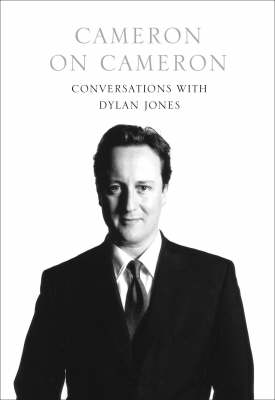
Cameron and his media suits are slightly more canny than that. While there's no doubting he'll be occupying plenty of sofas in the times to come, in the here and now he's given a series of interviews to the editor of GQ magazine, Dylan Jones, published today as a book which Jones describes in the introduction as "the book of Dave". It's described, entirely accurately, as being a book about a politician for people who don't buy books about politicians. In about the only political entry in the entire thing, or at least in the excerpts the media have provided us with, Cameron informs us that he intends to be as radical a social reformer as Thatcher was an economic reformer. Even this is hardly an exclusive, as he's said it already on more than one occasion. Still, with the politics out of the way, Dave can get on to talking about himself some more and who he really is: he, like with Blair, wishes to be seen as classless, lest anyone have any illusions about the nature of his rather privileged upbringing; his favourite novel is Goodbye to All That; he prefers dogs to cats; his favourite soap is Neighbours, when Kylie Minogue was in it; and he prefers Little Britain to Alan Partridge, proving he really does have no taste whatsoever. There's only two questions that he doesn't seems to have been asked: boxers or briefs and pink or brown.

All this feels fairly sordid. I really don't care what soap the potential prime minister prefers, and rather resent the idea that I either need to know or want to know. I'm far more interested in why he thinks it's a good thing to act like someone with no knowledge of history whatsoever, or at least with no proper analysis of it, apropos his visit to Georgia and comments before it. Thing is, I have a horrible feeling that I'm in a minority here. This man of the people crap, as phoney and see-through as it is, seems to sell. After all, we put up with Blair for ten years, and even as he left the myth that he was the "great communicator" was still going round. As long as you're young, reasonably good-looking and can do a decent speech, even if it means precisely nothing, you can apparently get anywhere.

This is where Labour has gone wrong in attacking Cameron. However much shit you throw at him, for the moment nothing is sticking. Blair wasn't called Teflon Tony for nothing. It will probably take a couple of years, if not longer before people start to tire of his face and his complete analytical failure. Politics, ladies and gentlemen, however much we wish otherwise, is now all in the presentation, and Cameron and co are winning hands down.

Yvette Cooper, for her part, almost gets it. Unlike Miliband's shambles earlier in the month, she does hit a few of Cameron's weak spots, focusing as she does on the economy. As much as she quotes Clinton however, it's not just the slowdown, it's also the fact that it's Gordon Brown who's the leader of the country and that he's overwhelmingly responsible. We all know that Cameron's wheezes on tax are either focused directly at those who can afford it (inheritance tax) or those who don't need it (the long married middle classes who will overwhelming benefit from whatever amount the Tories decide marriage should be worth), while stamp duty is a side issue. She's right that the Conservative position on Northern Rock was a shambles, where they didn't have a clue what to do, leading to Vince Cable, who did know what he was talking about, being the first person the media went to for comment.

She, like all the others though, has almost completely ignored his "Broken Britain" gambit, which is just screaming out to be knocked into touch. There is no getting away from the fact that in the inner cities especially there are real intractable problems, whether involving worklessness, crime or family breakdown, but to apply this simplistic, solipsistic diagnosis to the entire country isn't just wrong, it ought to be seen as laughable, amateurish, and most of all, insulting. What's even more outrageous is that their solutions to this, whether they be the welfare reform they propose or the tax cuts mentioned above, are only likely to make things worse. The only real obstacle to an all-out assault on the Conservatives over this, and really, when better a time was there to do it than after the last set of crime figures, is that the tabloids themselves have been promoting the idea, especially the Sun. Again, if we're meant to be learning from New Labour's rise to power, their soundbite that was Britain deserved better, and that things could only get better. It was an attack on the Tories while at the same time being positive. It wasn't especially meaningful, but it was better than half of the other stuff they'd come up with. Broken Britain instead is wholly negative, giving an image of a nation which is in such a state that radical social reform on the scale of Thatcher's economic reforms, which ironically caused much of the social stagnation we now have, are the only solution. There's a huge open goal, and Labour are refusing to score. Vacuousness it seems, as always, is here to stay.

Labels: , , , , , ,

Share |

Friday, April 18, 2008 

Imagine... imagine... imagine a story....

It's difficult to even begin to imagine what was going through the mind of Angela Smith MP yesterday. Perhaps she was laying there in bed on Wednesday night, tossing and turning, thinking about the meetings she's had with her constituents, rereading the letters in her head from those who've previously loyally voted Labour that were not angry, but just bitterly disappointed with how they'd been betrayed by a supposedly socially democratic government over the removal of the 10p top rate of tax, feeling disillusioned with how her own party was taking from the lowest paid and giving to middle earners just as the economic weather has turned. Resigning would have been extreme, and damaged the government as a whole, but it would have been highly principled and could, just could force a change in the policy, unlikely, but vaguely possible. Most of her spineless colleagues would have thought this over, finally fell to sleep and then would have dismissed it in the morning, like most do those bizarre, foolish ideas that tend to plague you in the middle of the night and then instantly regret even thinking up. But no, she would be strong, and go through with it!

It's even more difficult to begin to imagine what was going through her mind when she suddenly decided that she wasn't then going to resign after all. It's easy to see government as an extended family, Smith as the disobedient child, having told Cooper, her furious, snarling, teeth-gnawing mother, the corners of her mouth already flecked with spit, that she was going to quit. "You better well phone up your father Gordon and tell him then!"

And so she did. Quite what Gordon, away in Washington on important business, told her that reassured is even more difficult to imagine. It certainly wasn't the news that they weren't going to go through with the tax rate change after all. The terse, through gritted teeth statement, so obviously spin doctor scripted, saying that Gordon had convinced her that the government's anti-poverty agenda remains unchanged even while 5.2 million will be losing out, just made an embarrassing situation even more mortifying. Perhaps the real reason she rowed back was because Gordon had threatened to have her sent to Siberia. It's more a convincing explanation than Brown winning her over with the sheer power of his argument. From standing up to her parents to making even Clare Short look dignified all within 24 hours, not even Armando Iannucci could have imagined it.

Labels: , , , , ,

Share |

About

  • This is septicisle
profile

Archives

Powered by Blogger
and Blogger Templates